

This article is a part of Poland Unpacked. Weekly intelligence for decision-makers
KGHM, the Polish mining giant, is also planning further international projects. Its management board will travel to Morocco soon to discuss potential opportunities.
The Sierra Gorda mine in Chile, which began commercial operations in 2015, is copper giant KGHM’s largest foreign investment. The Polish company’s partner is Australian mining group South32, which owns a 45% stake in the mine. The owners have decided to expand the operation by increasing the capacity of the processing plant. The project was formally launched on Thursday, October 1, 2026. Its cost will reach USD 725m, or around PLN 2.8bn.
“Today, after years of operation, we can say that Sierra Gorda is the jewel in KGHM’s crown. It is one of the largest copper mines in Chile. The operation is already profitable and has begun repaying its debt. In the first half of 2026 alone, it repaid USD 500m, and by the end of the year it will have repaid a total of USD 1bn. Last year, KGHM Group generated around 50% of its EBITDA [earnings before interest, tax, depreciation and amortization — ed.] from its foreign assets,” says Remigiusz Paszkiewicz, chief executive of KGHM.
If favorable conditions on the copper market persist, the Chilean mine could repay all of its debt within four to five years. In the first half of 2026, Sierra Gorda contributed PLN 1.7bn to KGHM Group’s EBITDA. Total EBITDA reached PLN 9.2bn, up 89% year on year.
A larger processing plant
The project involves building a fourth ore-grinding line, together with a new crusher, mill and associated infrastructure. The processing plant is located next to the mine. Ore extracted from the open pit is transported there, then crushed, ground and processed into concentrate containing 22.5% copper.
The concentrate is shipped to smelters in different parts of the world, including China. The plant processes around 120,000 tonnes of ore a day, producing roughly 1,000 tonnes of copper concentrate. It also produces molybdenum concentrate.
The Sierra Gorda copper mine is located in the Atacama Desert in northern Chile, at an altitude of around 1,700 metres above sea level.
Expanding the processing plant is a way to increase copper output without building a new mine. The investment will raise annual processing capacity from around 48m to around 60m tonnes of ore and increase copper concentrate production by around 20%. Construction will continue until 2029, while the new installation is expected to reach full production capacity in the second half of 2030. Sierra Gorda will finance the project from its own funds and debt.
At the Sierra Gorda processing plant, ore is crushed and ground. The mine currently has three grinding lines, and construction of a fourth has now begun.
Rich deposits
Sierra Gorda is one of many mines located in the copper-rich Atacama Desert in northern Chile. In 2025, the mine produced around 160,000 tonnes of copper and more than 8m pounds of molybdenum. The open pit is around 2.5 km in diameter and 700 metres deep. It continues to expand and is ultimately expected to reach a depth of 1,000 metres.
Around 5,000 people work at Sierra Gorda, including Poles. The new investment will add another 900 employees. A large part of the workforce operates on two shifts, working 12 hours a day for seven consecutive days, followed by seven days off. The facility operates almost continuously, 24 hours a day and throughout the year.
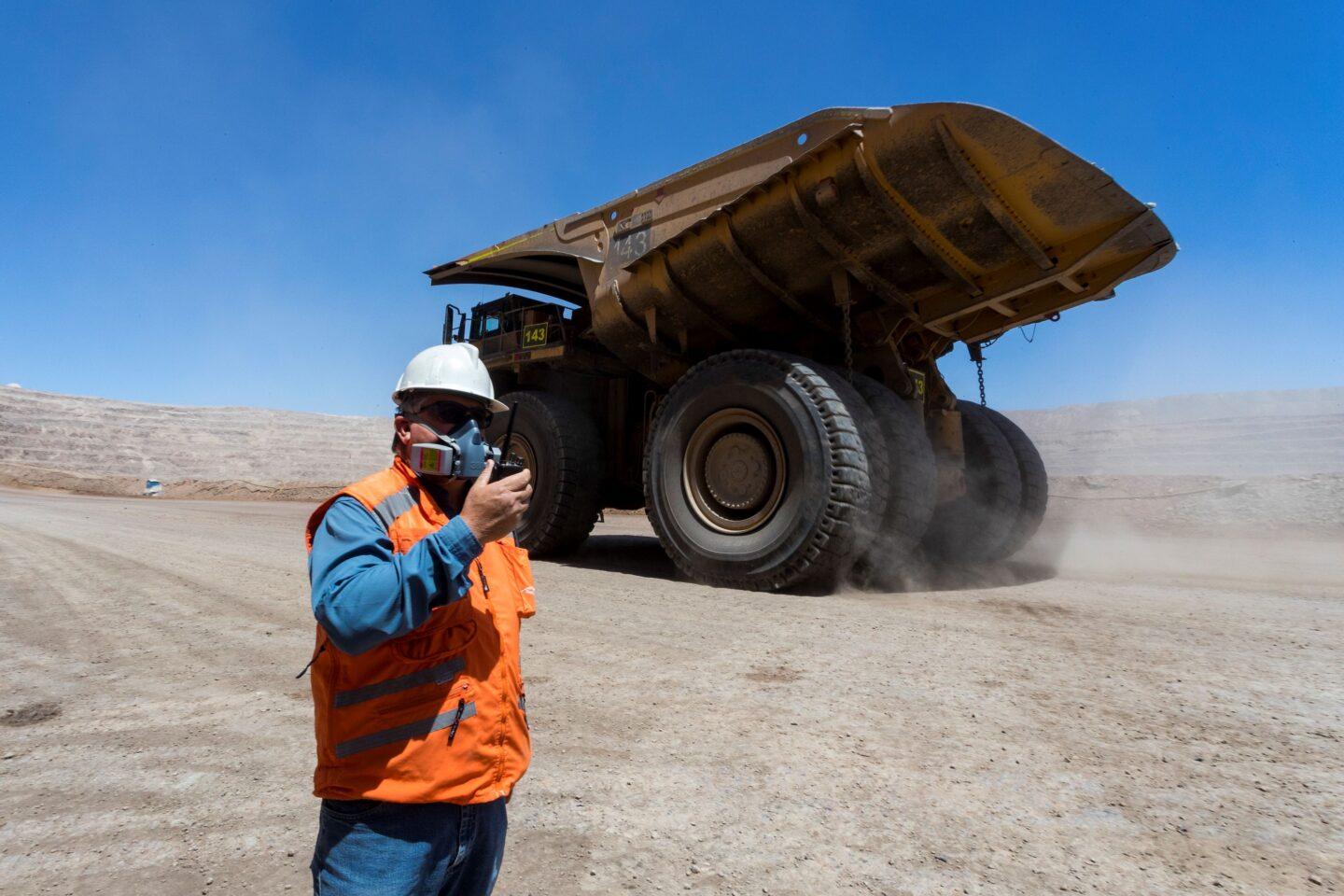
The workforce includes heavy-equipment operators. The mine has 76 haul trucks used to transport ore from the pit to the processing plant or waste dumps. These are enormous machines, with wheel diameters of 3.6 metres. They run on diesel and electricity. A single truck consumes around 180 litres of diesel per hour of operation, making transport costs one of the mine’s key expenses. Electric excavators and drilling rigs also operate on site.
Sierra Gorda uses seawater supplied by pipeline from the Mejillones area. Electricity comes from the national grid, and since 2023 the mine has had supply contracts covering energy generated entirely from renewable sources, including wind and solar farms, hydropower plants and energy-storage systems.
KGHM is not stopping there
KGHM is already exploring opportunities for further expansion in the area. The most promising direction is the Catabela Northeast project, located directly next to Sierra Gorda. The company is also looking at more distant areas with longer-term development potential. Preliminary estimates suggest that these zones are rich in copper and molybdenum. KGHM is currently analysing the extent, quality and size of the deposits.
“The construction of another grinding line is one of the elements of Sierra Gorda’s development strategy, which we adopted with our Australian partner. We are exploring surrounding areas, drilling and assessing the potential for further copper production in the region. Our very preliminary analysis suggests that we may be looking at copper resources of 1–3bn tonnes. The market is currently favorable. We estimate that at today’s copper prices Sierra Gorda could repay all of its existing debt within four to five years,” says Anna Sobieraj-Kozakiewicz, KGHM vice-president for international assets.
Not just Chile
KGHM is not focusing solely on developing its copper assets in Chile. It is also looking at other parts of the world.
“We are looking at everything that is available globally,” says Remigiusz Paszkiewicz.
In the coming days, KGHM’s management board will travel to Morocco to meet potential partners and discuss possible cooperation on mining projects. The group is not ruling out acquisitions either. It is currently analysing one potential takeover and expects to make a decision by the end of the year. Abroad, however, it prefers to work with partners.
“The global trend is for mining companies to seek partners for their investments. That allows them to share costs and risks, and of course profits later on. We are very active in the market and looking for new opportunities. Copper prices are currently high. Given that demand for the metal will continue to grow while supply will not change quickly, I expect copper prices to stabilize at elevated levels,” the KGHM chief executive says.
Promoting Poland
For Poland’s Ministry of State Assets, KGHM’s investment in Chile is also an opportunity to promote Poland abroad.
“We want to emphasize strongly that a Polish company is a partner in the Sierra Gorda investment. We can see that local awareness of this is too low. We are also looking for ways to involve more Polish companies in the project. Poland has very substantial expertise in the mining sector, and we are already discussing this,” says Eliza Zeidler, deputy minister of state assets.


Key Takeaways
- The expansion of the processing plant at the Sierra Gorda copper mine in Chile has begun. The project is a joint investment by Poland’s KGHM and Australia’s South32. It will increase processing capacity from around 48m to around 60m tonnes of ore a year and raise copper production by around 20%. The investment will cost USD 725m.
- KGHM is exploring further expansion in the area. The most promising direction is the Catabela Northeast project, located directly next to Sierra Gorda. The company is also looking at more distant areas with longer-term development potential. Analysis of the size and quality of local deposits is underway.
- The group also wants to expand in other parts of the world. In a few days, KGHM’s management board will meet potential partners in Morocco to discuss mining projects. Acquisitions are also on the agenda. “We are looking at everything that is available globally,” says KGHM chief executive Remigiusz Paszkiewicz.