

This article is a part of Poland Unpacked. Weekly intelligence for decision-makers
More than 50 million coffees, 85 million hot dogs and 16.5 million pizzas a year. Żabka has become one of the biggest players in Poland's fast-food market. But does its expansion threaten traditional restaurants? Restaurateurs and industry experts are divided.
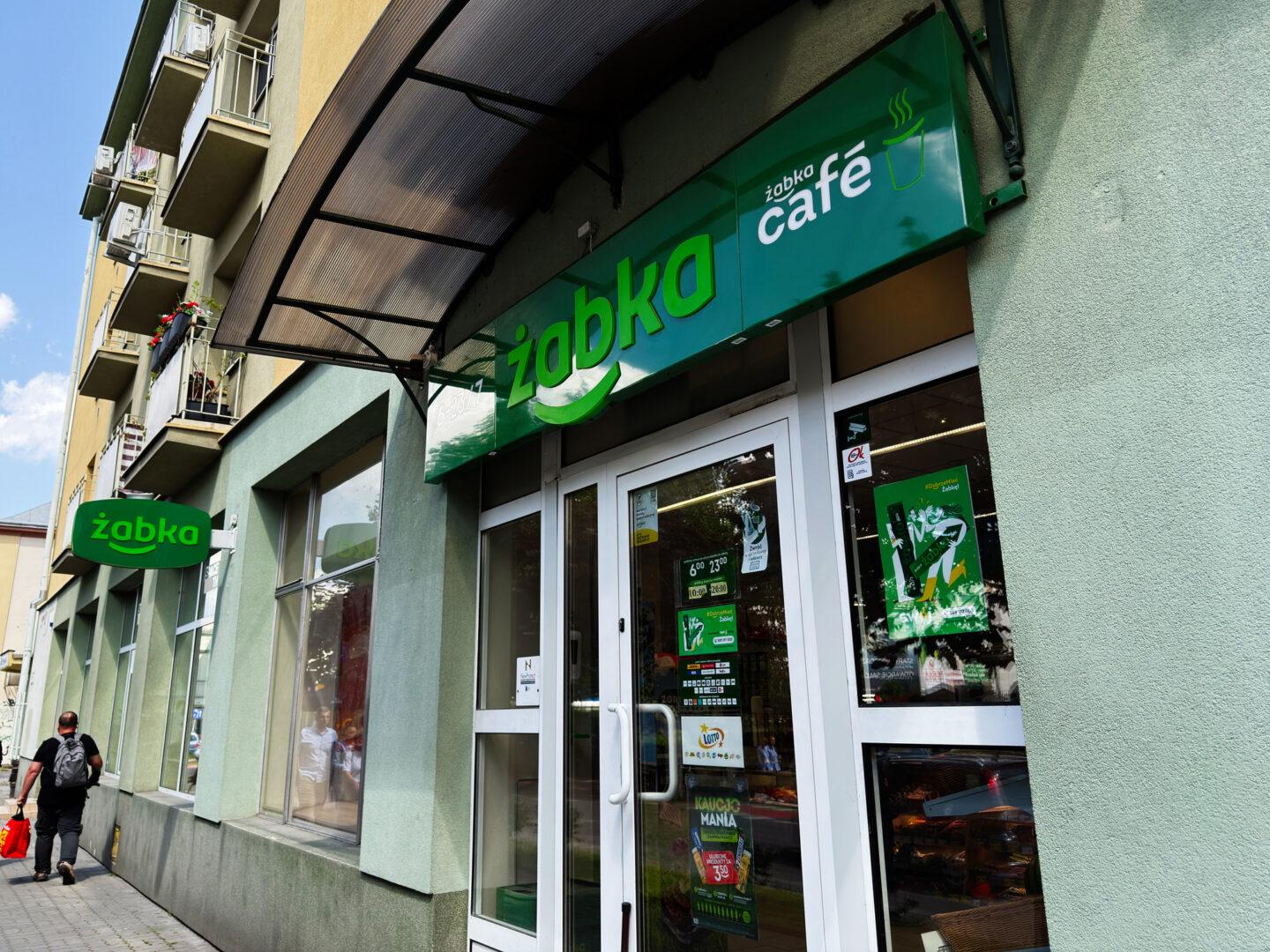
The pace of modern life is changing consumer habits and expectations. As our lives become increasingly hectic, we look for convenient ways to meet basic needs without wasting time. Hunger is one of them. Convenience-store chains have responded to this demand. Just a decade or two ago, they were associated mainly with groceries, alcohol and cigarettes. Today, Żabka, with more than 13,000 stores selling ready-to-eat food, is one of Poland's biggest players in the quick-service food market.
The scale of its operations is striking. According to Statistics Poland (GUS), the country had around 101,500 food-service establishments in 2024, including restaurants, bars, canteens and other eateries. Meanwhile, McDonald's, the largest traditional restaurant chain in Poland, operates more than 620 outlets. Although Żabka's business model differs from that of conventional restaurants, the sheer number of its locations makes it increasingly difficult to ignore in analyses of the food-service market.
Explainer
How Żabka is growing
Żabka is Poland’s largest modern convenience store chain, focused on quick shopping, ready-to-eat meals and services such as parcel collection. As of the end of June 2026, Żabka operated 12,823 stores, while the wider group — including Nano locations and its Romanian network — had 13,063 outlets in total. The company’s growth is driven mainly by organic expansion: in 2025 it opened 1,394 new stores and plans to maintain a pace of more than 1,300 openings annually.
Franchising is the foundation of the business. Around 11,000 independent entrepreneurs operate stores under the Żabka brand, managing day-to-day operations, employees and financial performance. The company’s headquarters provides the business concept, recognizable brand, locations, equipment, logistics, product range, technology, as well as operational and marketing support. Żabka is also developing its Żappka app, food service offering, delivery services and autonomous Nano stores.
Żabka becomes a food-service giant
What can customers eat at Żabka these days? The chain's menu has long since expanded beyond hot dogs and sandwiches. It now includes pizza, panini, burgers, hot snacks and ready-made meals. Its most popular products, however, remain those that customers buy almost every day.
"Coffee is among the most popular products in our stores, with more than 50 million cups sold annually. Neapolitan-style pizza is also very popular. Customers bought more than 16.5 million pizzas in 2025, while sandwich sales have reached almost 48 million since the beginning of this year," Żabka's press office told XYZ.
"Our food offering is available in all 13,000 of our stores. Demand is driven primarily by changing lifestyles, the growing importance of convenience and consumers looking for quick, affordable food options. Customers increasingly expect to be able to do their everyday shopping and pick up a ready-made meal, snack or coffee in the same place."
The chain also sold 85 million hot dogs in 2024 alone. Żabka plans to expand its food offering further, using data analytics and artificial intelligence-based solutions.
"Our ability to adapt quickly comes from combining data analytics, AI-powered solutions and operational flexibility. This allows us to bring innovative products and services to market efficiently. A good example is our 'Thursday Lunches' campaign, which proved highly successful. Sales of ready-made meals increased by more than 30% in value and more than 40% in volume. We now sell over half a million meals every Thursday. At the same time, we are consistently expanding our digital businesses," Tomasz Blicharski, chief strategy and development officer at Żabka Group, said in an April statement.
Expert's perspective
The Żabka phenomenon: As diverse as Poland itself. It offers something for everyone without losing its identity
What makes it exceptional is its combination of operational excellence, flexibility and an ability to understand consumers' very specific needs. Żabka is probably one of the best-equipped retail formats today to respond to impulse purchases, situational and seasonal needs, and rapidly changing microtrends.
You could say it has created an ecosystem that not only responds to existing demand but can also generate it to some extent. By combining operational excellence with partnerships in the influencer community, it has a genuine ability to introduce new products and build the popularity of particular fast-moving consumer goods (FMCG) brands.
But I would draw a clear distinction between creating needs and creating demand. I believe that a brand cannot create a need, but it can respond to one extremely effectively, propose a new way of satisfying it and sometimes create an entirely new category of pleasure or consumer experience. In Żabka's case, the feedback loop between consumer needs and its offering has become so intense that it is difficult to identify precisely where responding to trends ends and helping to create them begins.
There is something about this that reminds me of the InPost phenomenon. Both brands have integrated themselves into the everyday rhythm of Polish life with remarkable efficiency, almost seamlessly. They do not require us to plan ahead or change our behavior. They are simply there when and where we need them.
Just look at any Żabka store and the different people who visit throughout the day. Someone drops in for their morning coffee, someone else grabs a quick meal, a runner buys water or an isotonic drink after a workout, children embark on their latest little quests for treats promoted by their favorite influencers, and an older person picks up a few everyday essentials.
Żabka is as diverse as Poland itself. Most importantly, it caters to almost everything without being about nothing in particular. That may sound paradoxical, but I see this versatility as its greatest strength. In a market where there is so much talk about personalization, precise positioning, transparency and building brands around specific values, Żabka manages to accommodate remarkably different needs, aspirations, emotions and consumption styles under one roof.
Within the same, necessarily limited retail space, there is room both for a nutrition-conscious consumer seeking products with good ingredients or functional foods, and for someone who pays no attention whatsoever to ingredients, coming instead for a new snack flavor, pure enjoyment and a few minutes of dopamine-driven reward. Both find what they are looking for. Neither is bothered by the presence of the other.


Is Żabka competing with restaurants?
Piotr Grajewski, owner of hospitality consultancy Horeca Works, believes Żabka has already become a major player in the food-service market. From restaurateurs' perspective, what matters most is that the chain competes with them for particular meals and a share of customers' spending.
"Its business model combines retail with a substantial convenience-food offering. Convenience is exactly what the name suggests: a store close by where I can buy something quickly, eat it immediately and take care of several things in one visit.
"Food service also helps increase the average shopping basket. Someone comes in for a sandwich, adds a drink and picks up something for home along the way. A hot meal can be either an addition to a shopping trip or the main reason for entering the store.
"We know this approach from chains such as 7-Eleven, where ready-to-eat food is part of the retail concept. Orlen has undergone a similar transformation. Today's gas stations meet a range of needs: customers can refuel, eat, have a coffee and shop. Żabka operates on a similar principle, tailoring its offering to everyday shopping occasions," Grajewski explains.
Someone comes in for a sandwich, adds a drink and picks up something for home along the way. A hot meal can be either an addition to a shopping trip or the main reason for entering the store. We know this approach from chains such as 7-Eleven, where ready-to-eat food is part of the retail concept. Orlen has undergone a similar transformation.
In his view, the chain's strength lies precisely in its ability to identify these occasions.
"Someone taking a short break or heading home often just wants something hot to eat, quickly and at a reasonable price. Żabka has accurately identified this need, and the reach of its network allows it to meet that demand on an enormous scale.
"The group is also expanding its presence in the meal market through Maczfit, a prepared-meal delivery service. This demonstrates that its interest in food service extends well beyond hot dogs or pizza bought in convenience stores.
"The impact on traditional food-service businesses is noticeable, particularly in lower-priced segments and among outlets selling simple takeaway meals. Żabka is regularly discussed at industry conferences. That alone shows how important a market player it has become.
"For restaurateurs, this raises a very specific question: what am I offering customers that will make them choose my establishment and pay for my product?" Grajewski adds.
Marta Glinka, a brand strategist specializing in the food and hospitality sectors, also believes Żabka represents genuine competition for restaurants, particularly in the market for quick, everyday meals.
"Its competitive advantage lies not only in its scale and accessibility but also in its ability to respond to changing consumer needs. This is evident in an offering that has expanded far beyond hot dogs and sandwiches.
"Pinsa, panini, kebabs and wraps are examples of dishes inspired by popular restaurant formats that customers can buy quickly, without having to plan a restaurant visit.
"Żabka is also responding to other trends. It is expanding its plant-based range, introducing high-protein products and broadening its selection of ready-made meals.
"It no longer sells only snacks for people on the move. It is trying to cater to different eating occasions, from breakfast to lunch. This reflects the growing importance of convenience. With increasingly busy lifestyles, we are looking more often for ways to save time, and not every meal needs to involve a restaurant visit," Glinka explains.
She does not believe, however, that Żabka will replace traditional restaurants.
"Restaurants have advantages that are difficult to replicate in a convenience-store format: distinctive cuisine, the quality of ingredients and dishes, service, and atmosphere.
"The most vulnerable establishments are those without a clear specialization, which simply offer a quick meal without giving customers a compelling reason to choose them over a more convenient alternative.
"Żabka is not taking away all restaurant customers, but it is capturing some of the occasions that would previously have meant visiting a café or a lunch spot.
"For restaurants, this is a signal that they need to define their concept and competitive advantages more clearly," says Glinka.
Żabka versus small eateries: Restaurateurs are divided
How do traditional restaurant operators view Żabka's expansion into food service? Opinions differ.
Kamil Hagemajer, who manages a chain of 25 Polish milk bars – traditional canteens serving inexpensive meals – believes that all businesses in the food-service market compete with one another to some extent.
That does not necessarily mean, however, that customers are abandoning restaurants and eateries where meals are prepared on-site in favor of hot dogs and reheated food from convenience stores.
"If we want to talk about competition, we would effectively have to compare two completely different worlds.
"On one hand, there is conscious, balanced eating, where we know what we are consuming. On the other, there is food intended simply to satisfy hunger, often in ways that are not particularly healthy.
"Żabka itself is an interesting business concept, built to a considerable extent around distributing potentially addictive products such as cigarettes and alcohol, as well as selling low-quality food.
"If someone eats compulsively or shops in a particular way, it is worth considering their psychological well-being. There may be a relationship between the consumption of stimulants, unhealthy food and a person's mood or mental state.
"Building a business around such behaviors is questionable, at least from an ethical perspective," Hagemajer comments.
Żabka itself is an interesting business concept, built to a considerable extent around distributing potentially addictive products such as cigarettes and alcohol, as well as selling low-quality food. If someone eats compulsively or shops in a particular way, it is worth considering their psychological well-being.
The restaurateur emphasizes that he takes a broader view of nutrition and sees a continued need to educate consumers about healthy eating habits.
Łukasz B. Błażejewski, a restaurateur developing the Carat Kebab, Probe Burger and Frentzza – Pizza & Friends brands, has a different perspective. He argues that Żabka's presence has not led to a decline in customer numbers at his establishments.
"In the burger, pizza and kebab segments, we do not feel competitive pressure from Żabka. This is also true at several locations where we operate immediately next to one of its stores.
"We have not observed Żabka taking customers away from us. The number of outlets selling food does not, in itself, determine their impact on restaurants.
"What matters is the reason for the purchase and the customer's expectations. The same person may buy food from Żabka and visit one of our restaurants on different occasions.
"Having customers in common does not automatically mean that one offering replaces the other.
"A strong restaurant brand gives customers a specific reason to choose it, regardless of how many other places sell food nearby," says Błażejewski.
Mateusz Cacek, vice president of Sfinks Polska, acknowledges that Żabka's success in the quick-service food segment is impressive. However, he does not believe it poses a direct threat to every type of restaurant.
"In our segment, full-service restaurants with table service, the threat is smaller because visiting a restaurant fulfills a completely different need and is associated with different occasions.
"I think independent quick-service food concepts that serve a similar purpose to Żabka's food offering may be more vulnerable," Cacek adds.
Expert's perspective
Żabka isn't beating restaurants on taste. It's beating them with its operating model
We can shrug and say, "That's not real food. Our customers are looking for something different." But those 85 million receipts demonstrate an enormous consumer need that someone has managed to satisfy with ease. Meanwhile, those of us in the restaurant business pretend it does not exist.
Who actually buys that hot dog on the corner? It is not someone planning a night out with friends or looking for an extraordinary culinary experience. That person simply wants something to eat quickly. Cheaply, on the way somewhere, without fuss or waiting.
They are not comparing that hot dog with your artisanal burger or homemade pasta. They are choosing between a hot dog and a rumbling stomach, a candy bar or a dry sandwich left over from breakfast.
Żabka has not beaten restaurants. It has beaten the rush and hunger. That is a fundamental difference.
This is ruthless operational mathematics. Labor costs per item are low and predictable.
What about us? Labor is becoming increasingly expensive, and finding good staff is getting harder.
Żabka is not competing with us on taste. It is outperforming us through its business model.
It has demonstrated that hot food can be served to millions of people while keeping labor costs to a minimum and eliminating human error.
That is why the threat is not a sausage in a bun. The threat is a system capable of selling that product 85 million times, cheaply, and still making a profit.
Many of us do not even know the structure of our own costs. We do not know our break-even point or how many meals we need to serve each month just to cover our expenses.
Without those numbers, trying to compete with a highly optimized machine is like boxing with your eyes closed.


Key Takeaways
- Żabka has become one of the biggest players in Poland's quick-service food market. The chain operates more than 13,000 stores offering ready-to-eat food. It sells more than 50 million cups of coffee annually. Customers bought over 16.5 million pizzas in 2025 and nearly 48 million sandwiches between the beginning of 2026 and the end of September. In 2024 alone, Żabka also sold 85 million hot dogs.
- Żabka competes primarily with businesses offering quick, inexpensive meals. Experts point to its scale, accessibility and efficient operating model as its main competitive advantages. Restaurateurs remain divided, however. Some see growing competitive pressure, while others emphasize that customers visit Żabka and traditional restaurants for different reasons.
- Żabka's success stems from its ability to integrate itself into consumers' everyday lives. The chain combines retail, food service and other services, using data analytics and new technologies to respond rapidly to emerging trends. For traditional restaurants, this means a greater need to define what sets them apart, from the quality of their food to the overall dining experience.