

This article is a part of Poland Unpacked. Weekly intelligence for decision-makers
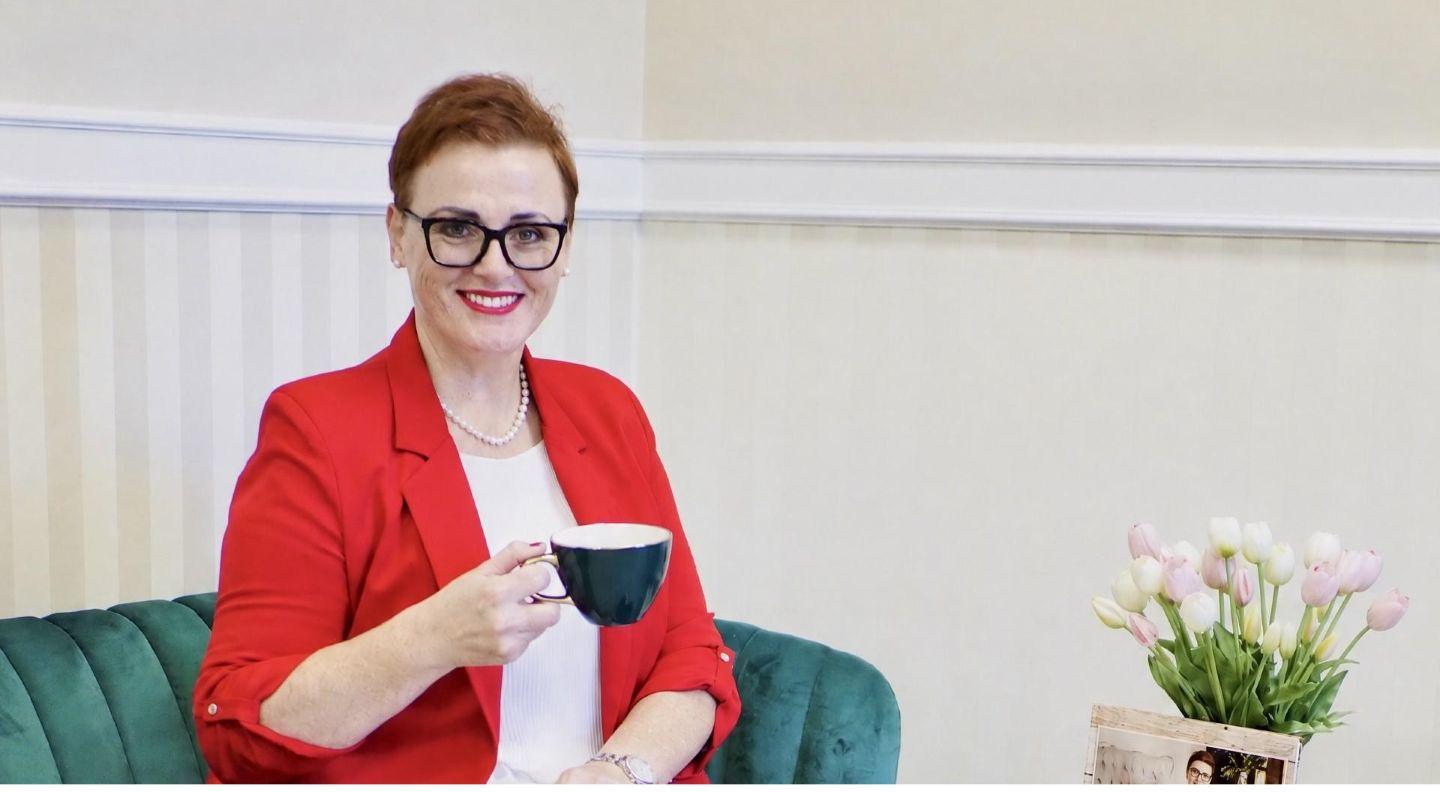
MB Pneumatyka has become one of the few European manufacturers of pneumatic fittings for trucks and buses. After rapid growth in India, the company is looking to the United States, Turkey and Hong Kong. “Our problem today is not a lack of markets. It is deciding which one to enter first,” says owner Małgorzata Bieniaszewska.
Few Polish companies have managed to dominate a niche in Europe. One is MB Pneumatyka, based in Sulechów. Without its components, safety on European roads would be much lower. The company specializes in one of the most demanding niches of the automotive industry, producing pneumatic fittings used in the braking and suspension systems of tractor units, semitrailers, trailers, agricultural vehicles and buses. Its European competitors can be counted on the fingers of one hand.
The business began more than 40 years ago as a small workshop founded by Andrzej Bieniaszewski. His daughter Małgorzata took the helm in 2002. Since then, the company has evolved from a family business into a specialist supplier to the automotive industry, with its own research and development facilities, international sales and production outside Poland. Last year, it generated PLN 35.6m in revenue and PLN 8m in net profit. But that is only the beginning.
“Our problem today is not a lack of markets. It is deciding which market to enter first and how to structure our strategy so we do not overstretch the company financially and organizationally,” says Małgorzata Bieniaszewska, owner of MB Pneumatyka.
The company has already been through a period of rapid expansion in several foreign markets at once. From a business perspective, it was a success, but organizationally, the owner admits, it was almost a struggle for survival.
“A sudden leap in growth can bring a company down. When we expanded more broadly into India and the United States at the same time, we found we could not keep up. It was not even about production workers, but technology, quality, design and administration. Those teams simply had too much work,” the entrepreneur says.
Two years of costs. Then India took off
MB Pneumatyka entered India in 2022. The move illustrates both the company’s potential and the price of international expansion.
Bieniaszewska gave herself three years to build a business there, with a plan to withdraw if it did not succeed. The first two years meant spending money.
“I called them the investment years so I would not have to say they were years of continuous costs. By the end of the third year, the business was looking good enough for us to consider starting production. Before that, we had simply exported from Poland,” she says.
In the third year, the Indian operation reached roughly the break-even point with sales of around PLN 1m. A year later, sales had reached PLN 4m. According to Bieniaszewska, the company has contracted sales of around PLN 10m for the next period.
Growth may not stop there. MB Pneumatyka has spent three years working to win a major customer: one of the largest manufacturers of valves for braking and suspension systems in commercial vehicles. The company already supplies it in Europe, China, Mexico and Brazil, but its Indian operation is a separate business.
The contract is not yet included in the PLN 10m figure mentioned above.
“If we were carrying out this project in Poland, the contract would be large enough to double the Polish company’s turnover [the Indian company operates as a separate entity; the businesses do not form a tax group — ed.],” Bieniaszewska says.
She cannot yet disclose the customer’s name.
At first, she was told: we do not need your fittings
The story of winning the contract is also a good example of how Bieniaszewska approaches expansion. When she first visited the Indian customer, she expected the discussion to be relatively straightforward. After all, MB Pneumatyka worked with the same group in Europe. The opposite happened.
The Indian company used steel screw fittings and saw no reason to switch to MB Pneumatyka’s more expensive solution. Bieniaszewska therefore decided to go around the supplier and approach its customers directly: commercial vehicle manufacturers. She offered to let them test the fittings at virtually no cost. The tests lasted many months.
“They came back saying the fittings were very good. They began pressing their valve supplier, saying they no longer wanted steel screw fittings because they exposed their vehicles to constant leaks in the pneumatic systems. That is how we got a customer that initially did not want to talk to us to start working with us,” Bieniaszewska says.
The technology used by MB Pneumatyka is still not standard on the Indian market. That is both an advantage and a barrier.
“Many customers say they will not pay more for a better solution. India is not yet entirely ready for it. But there is also a large group of manufacturers that want to export their vehicles to Europe or have simply understood how important the quality of their products is. They look at quality differently,” she says.
The company has made a strong entry into the bus manufacturing segment, including electric buses. Local production also allows it to fit in with policies supporting products made in India.
The head of the Indian company was found on LinkedIn
Bieniaszewska is now convinced that foreign subsidiaries should be run by local managers. Interestingly, she did not reach that conclusion through an extensive strategic analysis.
She met the first head of the Indian business through a LinkedIn post about family values. An Indian entrepreneur who ran his own small manufacturing company commented on it, and they began talking. Initially, they communicated mainly through a messaging app and online translations because his English was weak. After several months, Bieniaszewska invited him to Poland.
“He had never even left his own state in India before. He came for two weeks to visit an entrepreneur he knew only from LinkedIn. We showed him everything. Later, I visited him. He is a young man who is very eager to learn. He became head of our manufacturing company in India, and it was one of the best steps we have taken,” she says.
Today, she says without hesitation that she would always choose a local manager in a foreign market — but on one condition: intensive knowledge transfer.
During the first years, Polish engineers and HR specialists regularly traveled to India, while employees of the Indian company came to Poland. Technology and quality standards are still developed in Sulechów.
“A local person knows the market. But they need to be trained to our standards,” Bieniaszewska says.
Good to know
Poland and India: economic ties
According to Statistics Poland (GUS), trade between Poland and India was worth EUR 5.68m last year. Polish exports amounted to EUR 1.36m and imports to EUR 4.31m. Experts nevertheless point to room for growth. Trade with Vietnam, a country ten times smaller, was significantly higher, at around EUR 7.27bn.
Indian investment in Poland — mainly by IT companies — amounts to around USD 460m. If investments made through subsidiaries of Indian corporations registered in other European countries are included, the figure rises to around USD 3bn. The largest Indian investors and employers in Poland include Tata Consultancy Services, Infosys, Videocon, Escorts, Strides Arcolab, Ranbaxy, EsselPropack, KPIT Cummins, Zensar Technologies, HCL Technologies, Wipro, Jindal Stainless, Berger Paints, UFLEX, Glenmark Pharmaceuticals, Rishab Instruments (Lumel) and CRISIL.
Polish companies invest in India primarily in industry, automotive and IT. Their investments to date have reached nearly EUR 550m. It is the second-largest destination market for investment from Poland.
The largest Polish investors in India include companies producing packaging, such as CanPack; hygiene products, such as TZMO; and components for the automotive and railway industries, including Maflow, MB Pneumatyka, Elimen and Polmor. IT and ICT service companies such as Transition Technologies and Billennium also play an important role. Billennium is celebrating 10 years of operations in India this year. Mining, furniture and cosmetics companies are active there as well.
In 2024, Poland and India concluded a historic strategic partnership agreement. In October 2026, Prime Minister Donald Tusk traveled to India with Finance Minister Andrzej Domański and a business delegation of nearly 150 people, as well as representatives of the Polish Development Fund and banks, among others. They declared an aim of doubling or tripling trade by 2030. An EU–India free trade agreement, expected to enter into force in 2027, is intended to help achieve that goal.
The US is already the largest export market
India attracts the most attention today, but it is not the only pillar of MB Pneumatyka’s international business. The United States is currently its largest export market, accounting for around 20% of the company’s exports, according to its owner.
The US is also expected to be one of the main areas for growth next year. Asia will be another. MB Pneumatyka wants to open a sales office in Hong Kong to help it expand into other Asian markets. For now, there are no production plans there.
At the same time, the company has been investing more heavily in Turkey since this year.
“We are in the first year there of the same story we had in India. But it is easier because we already have orders. It is a great market with enormous potential,” Bieniaszewska says.
China, the Middle East and Africa are on the longer-term map. In China, MB Pneumatyka already sells products supplied from Europe. Bieniaszewska makes no secret of her ambition to start production there eventually.
Europe, meanwhile, is no longer the company’s primary focus.
“We no longer see our future mainly in Europe. It is certainly not our priority market,” she admits.
That does not mean withdrawing from the continent. The aim is diversification: Europe, the US and Asia are to become pillars of the business that are as independent of one another as possible.
Expert's perspective
How to expand abroad
In 2012, we decided to enter the Turkish market with quality control services. Interestingly, the initiative came from our future general manager, who found us himself and convinced us that Turkey was a place where a Polish company could succeed. The results exceeded our expectations. After just nine months, the Turkish company broke even and could finance its operations without support from the parent company. It was the fastest such result in the history of our international expansion. Today, 14 years later, Turkey remains an important and promising country in our portfolio and is recording the fastest growth this year among the 14 markets where we operate. The experience reinforced my belief that local managers are among the most important factors in successful international growth. Knowledge of business culture, relationships and the ability to navigate local conditions can be just as important as the product or service itself.
I also like the way MB Pneumatyka persuaded the Indian market to adopt a new solution. Instead of competing on price alone, the company let customers see the product’s value in practice. This shows that Polish businesses can succeed in distant markets not because they are cheaper, but because they offer better solutions.


A new product could change the company’s economics
Alongside its geographic expansion, the company is developing its products.
MB Pneumatyka is completing work on a solution for commercial vehicles that, according to its owner, is entirely different from its existing products. It has already been patented and tested. The company is preparing a production run and then wants to begin tests with major semitrailer and trailer manufacturers.
Bieniaszewska does not yet want to disclose exactly what the product is. She will reveal its economics: a standard MB Pneumatyka fitting costs a few dozen euro cents. The new product is expected to cost around EUR 5 per unit, with potentially comparable volumes.
“If the market accepts it — and we believe it will — the sales potential is enormous. And then I will have another problem: what to do with it,” she says.
In this case, the answer is expected to be automation. Production and assembly of the new solution have been designed to be fully automated. That is no accident. Bieniaszewska does not want to build growth at an industrial company primarily by increasing employment.
“I hope we will not have more people”
MB Pneumatyka employs just over 100 people in Poland and around 60–70 in India, the vast majority of them in production. Its Indian office staff consists of only a few people. Asked about further hiring, Bieniaszewska responds in a way that is unusual for the owner of a fast-growing company.
“I hope we will not have more people. Not because I do not like people. If we had to increase employment in proportion to production growth, it would mean we were heading in the wrong direction and had neglected automation and robotics,” she says.
She admits MB Pneumatyka still has much to do in this area. The company has automated production and assembly-and-testing lines, but now wants to use robots more extensively to operate machinery. The process is expected to take around a year.
“The question ‘How many people do you employ?’ is slowly losing its meaning in our industry. Employee numbers should not determine the scale of an industrial company,” Bieniaszewska says.
In Poland, MB Pneumatyka has already prepared some infrastructure for growth. Two years ago, it bought a building opposite its existing headquarters and recently moved assembly there, freeing up space for more machinery. It is considering further expansion.
In India, the issue is more immediate: the factory it currently rents is becoming too small as the company adds more equipment and production lines. It therefore plans to consider a larger manufacturing investment next year.
Brass forced three price increases in one year
Rapid growth does not mean market conditions are helping the manufacturer. Alongside unstable transportation costs, metal prices are its biggest short-term problem.
“For the first time in the company’s 42-year history, we raised prices three times in one year. In February, the material-related portion of the price alone rose by as much as a percentage in the teens. There was another change in May, and we are being forced to react again,” Bieniaszewska says.
For its largest contracts, the company has therefore moved to an indexation mechanism. The material-related portion of the price is updated every three months based on market quotations, while the remainder covers more predictable costs. Bieniaszewska emphasizes that rising commodity prices affect the entire industry, so customers understand the reasons for the increases. That does not mean they accept them without frustration.
The defense industry and dual-use applications could provide an additional source of growth. For MB Pneumatyka, however, this is not a new market.
“We have supplied Jelcz since the mid-1980s. All Jelcz vehicles since then have been equipped with our fittings,” Bieniaszewska says.
She recalls this year’s MSPO defense trade fair, where she inspected military vehicles and looked for her company’s products.
“I walked underneath the vehicles and took pictures of my fittings. People looked at me as though I were crazy, but I was simply moved,” she says.
The company also supplies materials to other manufacturers operating in the segment. It has already gained its first defense customers in India too. One is among the country’s largest military vehicle manufacturers, although MB Pneumatyka is not yet its main supplier.
The owner sells, the CEO manages
The company’s rapid growth has also led to a division of authority that is unusual for a Polish family business.
Bieniaszewska owns MB Pneumatyka but is not its CEO. Day-to-day management is handled by Paweł Andersz, who started at the company as a production planner. He later moved into quality, prepared the company for a key automotive industry audit, became head of quality, joined the management board and eventually became CEO.
The division is now clear: Bieniaszewska is primarily responsible for sales and business development, while the CEO oversees organization, production and technical and technological matters.
“Paweł says to me, ‘Bring me a customer and leave the rest to me.’ That is how we operate. We do not have two centers of power in the company. People know they cannot come to the owner to have her change the CEO’s decision,” she says.
They discuss the most important decisions together, but Bieniaszewska says she does not interfere in the CEO’s operational responsibilities.
The daughter starts in design, not the executive office
Another process is beginning at MB Pneumatyka: succession. The owner’s 19-year-old daughter, Ola, studies mechanics and mechanical engineering. After her first year of university, she came to the family company for a three-month internship. Bieniaszewska deliberately decided that her daughter would not report to her.
“I do not want a boss-employee relationship with her. That would not support her development. That is why the CEO is training her,” Bieniaszewska explains.
Her daughter rotated through departments and began working on the design of an assembly and production line for the company’s new product. She is now expected to continue some of the work remotely while studying. Bieniaszewska emphasizes that she has never told her daughter she must take over the family business.
That approach reflects her own experience. The company was almost constantly present in her family home, and as a child she felt it took her parents’ attention away from her. In her own home, she adopted the opposite rule: the company was hardly discussed.
“She only joined the company now, and it was really only then that she learned how it works. I never forced her to do it,” Bieniaszewska says.
She nevertheless wants to begin succession early if her daughter does decide to tie her future to the business.
“My own succession was effectively completed in one day because of my father’s illness. I would like to spare her that. I expect we will be able to work together for many years, gradually changing roles,” she says.
A fund? No. A stock market listing? Perhaps in two or three years
With expansion planned on this scale, the question of capital naturally arises. Bieniaszewska does not currently want to bring a private equity fund into the company. She stresses the importance of its family character and says MB Pneumatyka does not currently need external capital for its ongoing development.
“We keep a very close eye on finances. A family company that wants to think long term has to be prepared for different scenarios. COVID showed us that this way of managing works,” she says.
Selling the company is also out of the question, although she says there is no shortage of offers. She views a stock market listing differently.
“That is something we can consider. If I had to name a time today, I would say in two or three years,” Bieniaszewska says.
The conditions would include first stabilizing the Indian business, testing the Hong Kong operating model and further developing Turkey. The timing could fall before a substantially larger investment in China.
For now, the owner wants to finance growth cautiously. In her view, the biggest threat today is not a lack of opportunities but too many of them.
“India, the United States, Turkey, then Hong Kong, China, the Middle East and Africa. There are many markets. The hardest part is deciding in what order to enter them. I have already learned that you can have excellent prospects and at the same time exhaust an organization so much that it begins fighting for survival,” Bieniaszewska says.


Key Takeaways
- India has become an important driver of growth for Małgorzata Bieniaszewska’s business. Sales at the local company rose from around EUR 1m to EUR 4m in one year. This shows that expertise developed by the family business in Sulechów can also be used outside Europe. The company sees further opportunities in the US, Turkey and Asia.
- The biggest challenge is choosing the order of markets and a safe pace of expansion. New sales opportunities require capital, people and appropriate management. Bieniaszewska stresses that a sudden leap in growth can threaten a company if its financial and organizational capacity does not keep pace with its operations.
- A stock market debut is one of the scenarios being considered for further development. The owner does not rule out a listing in two or three years, but she does not present it as a settled decision. For now, the priority remains working out a strategy for which market to enter first.