Poland Unpacked week 46 (2 - 8 November 2026)
Welcome to this week’s edition of our Poland Unpacked, where we deliver key insights and trends shaping the economic, corporate and political landscape. Catch the most important insights from Poland in this week’s briefing.
This article is a part of Poland Unpacked. Weekly intelligence for decision-makers
A mass shooting in the center of Kraków on November 7 left six people dead and more than a dozen wounded, shocking a country and its citizens. Prosecutors are investigating the shooting as a terrorist offense.
Shortly after 3 p.m., a gunman drove onto the crowded Main Market Square and opened fire at random passersby. He continued through the city center, also firing at a tram before police confronted him. A British citizen was among those killed, and several foreign nationals were among the injured.
The attacker was identified in Polish media as a 24-year-old Polish citizen. He had a firearms permit, and Interior Minister Marcin Kierwiński said there were indications that he held radical far-right views; investigators are still examining his motive. Authorities also found the bodies of his parents and sister at the family home outside of Kraków. Prosecutors say evidence indicates the same person was responsible for both shootings.
Two police officers confronted the gunman within minutes and exchanged fire with him. Despite being seriously wounded, one of them managed to restrain the attacker. Both officers underwent surgery; officials said their intervention likely prevented further deaths.
A remarkable coincidence brought trained rescuers instantly to the Main Square. Six volunteers from Dublin Civil Defence were visiting Kraków on a city break and happened to be nearby. They rushed to help the wounded, performing CPR and working to stop bleeding. Separately, two Kraków surgeons had just finished a meal with their families near the place where the gunman was stopped. They went to help the injured, including the police officers.
President Karol Nawrocki declared national mourning on November 8 and 9, while Kraków introduced its own mourning period through November 11. Flags were lowered to half-staff, and the city’s traditional hourly trumpet call from St. Mary’s Basilica fell silent for 12 hours in tribute to the victims.
The results of the latest edition of our ranking of Poland’s largest corporate income tax (CIT) payers made waves. The awards at our gala at the Warsaw Stock Exchange were presented by Andrzej Domański, minister of finance and economy. Before the certificates were handed out, a debate featuring some of the largest taxpayers explored how Polish companies could grow faster, earn higher profits and, in turn, pay more tax. We recognized the highest taxpayers in 27 industries. Here are the winners.
A major dispute has erupted in Poland’s insurance industry over Ominimo. The company tells Polish drivers that they are overpaying for compulsory motor liability insurance, even though figures show that only drivers in Serbia, Albania and North Macedonia pay less. Insurers operating in Poland have made no secret of their anger at the newcomer’s aggressive pricing and want to bring the matter to the attention of the Polish Financial Supervision Authority. Adam Uszpolewicz, head of the Polish Insurance Association, warns of the consequences of the company’s pricing policy. Here's the full story.
A franchise specialist, a healthcare entrepreneur and a longtime former CCC vice president are building a dental network they hope will reach 100 clinics. Their growth plan has three tracks: owned facilities, acquisitions and franchising. Investment in Pro Dent Clinic could reach PLN 100m. Here is what they have planned.
“Our problem today is not a lack of markets. It is deciding which market to enter first.” Few entrepreneurs can say that about their company, especially when it is an industrial manufacturer rather than an AI business. But that is the position of Małgorzata Bieniaszewska, an unconventional entrepreneur who runs MB Pneumatyka in Sulechów. It is one of the few Polish companies to have established a dominant position in a European niche. The company entered India several years ago. The move was not without problems, but today it is growing rapidly there and preparing further expansion, including in the US, Turkey and Hong Kong. We spoke about how to build an international business, a new product that could change the scale of the company’s operations, the use of robotics, and why Bieniaszewska is considering a Warsaw Stock Exchange listing rather than selling to a fund.
Finally, I recommend a special conversation with a remarkable business couple. It is the first time Agnieszka Grabowska-Gacek and Przemysław Gacek have given a joint interview about their approach to investing. What makes them remarkable? You can find out in the interview. The success of Grupa Pracuj has placed them among Poland’s wealthiest people and given them independence in investing. Their portfolio already includes four billion-dollar startups. They also devote millions of zlotys to philanthropy and criticize the lack of financial education.
The main event in the Polish economy last week was the Monetary Policy Council’s (RPP) meeting. As economists had expected, the council left interest rates unchanged, keeping the benchmark rate at 3.75%. Inflation fell to 3.5% year over year in October, from 4.1% in September, returning to the National Bank of Poland’s (NBP) tolerance band.
At the same time, the NBP’s latest projection points to a significantly worse inflation outlook. The midpoint of its forecast for 2027 rose from 2.75% to 4.2% — an increase of 1.45 percentage points. High energy commodity prices and the possible expiry at the end of 2026 of the Ceny Paliwa Niżej (CPN), or Lower Fuel Prices, program remain the main risks. In that scenario, inflation could rise to around 4.5% in the first half of 2027. Slower wage growth, an economic slowdown and companies’ limited ability to pass rising costs on to consumers are, however, helping to contain price pressures.
NBP Governor Adam Glapiński’s comments at his press conference pointed to a more hawkish stance from the council. An interest rate increase is not expected in December, however. The beginning of 2027 will be crucial, particularly the decision on whether to extend CPN, geopolitical developments in the Middle East, and data on economic activity and wages. Despite these uncertainties, rate increases in 2027 appear difficult to avoid, especially if higher energy prices begin to feed into other goods and services.
In our monthly review of the Polish economy, we examined the main macroeconomic indicators and developments in financial markets. The latest data suggest that the economy remains in relatively good shape, although the outlook for 2027 is less optimistic. Retail sales and industrial production both rose by 3.3% year over year in September, while exports increased by 12% year over year in the June–August period. Construction was notably weaker, with output down 7.2% year over year. Financial markets saw a weaker zloty and increased political uncertainty. High energy prices, slower consumption growth and political risk will be among the main threats to the economy in 2027.
In another analysis, we examined the latest trends in the Polish labor market using Statistics Poland (GUS) data on the distribution of wages across the economy. We looked at how pay growth differs between women and men, which sectors are seeing the fastest wage increases, and how large the differences are between counties. Here's the analysis.
We also took a closer look at the structure of Polish exports and the products in which the country ranks among the world’s leading suppliers. Our analysis examines the categories where Poland is a global leader, how its position has changed over the past decade, and the factors behind the success of its export specializations.
The Constitutional Tribunal still dominated Polish politics last week. In the final days of October, judges elected by the current Sejm, the lower house of parliament, took control of the court, sidelining its president, Bogdan Święczkowski, who was chosen by the previous Sejm, then dominated by Law and Justice (PiS), now the largest opposition party. Around the same time, President Karol Nawrocki entered the tribunal’s headquarters, pushing past the new judges, whom he had refused to swear in for months.
Representatives of all major right-wing opposition groups have joined protests outside the tribunal and courts in other Polish cities. They include PiS, Rozwój Plus, an association led by former Prime Minister Mateusz Morawiecki, who left PiS, as well as Confederation and the Confederation of the Polish Crown.
The dispute over the tribunal opened Tuesday’s meeting of the National Security Council, where the president meets government members, the speakers of both houses of parliament and political leaders. Nawrocki used the occasion to accuse Prime Minister Donald Tusk of attacking the court.
The meeting also covered plans to establish a permanent base for US troops in Poland. Tusk said he and the president had reached an agreement on the matter.
That same day, the new judges met to select members of disciplinary panels that will deal with the tribunal’s previous president and vice president. Legal experts have raised doubts about how the panels would operate.
The protests outside the tribunal have since taken on a more relaxed atmosphere. Several concerts have been held there, including one performed by PiS lawmaker Michał Wójcik.
Parliament made another attempt to lift the two-term limit for mayors and heads of municipalities, introduced under PiS. The governing coalition lost a vote on the matter in the Sejm in October, but a bill passed by the Senate a year ago returned to the agenda in November.
The parliamentary week ended with the rejection of a no-confidence motion against Interior Minister Marcin Kierwiński and an address by European Parliament President Roberta Metsola.
Metsola emphasized Poland’s importance in the European Union, praised its deregulation efforts and noted that the country had warned Europe about the threat posed by Russia. She also said Poland was the first EU country to demonstrate the importance of funding European defense.
This week Poland marks the anniversary of regaining its independence. Parades will take place in many cities on November 11, while Warsaw will host the annual Independence March, organized by nationalist groups. President Nawrocki has said he will attend, and right-wing groups want to give the event an anti-government character. We’ll see if anything changes following the Saturday shooting in Kraków.
The biggest news of the week for Poland’s innovation ecosystem was the expansion of Innovate Poland, a program supporting the country’s technology sector, to include private-sector investors. Three banks - Erste, PKO BP and Pekao – have joined the initiative, bringing its capitalization to PLN 4.5 billion.
Innovate Poland’s framework was announced last November, with an initial value of PLN 4 billion. The capital is intended to reach several hundred companies through equity investments. A year after the program’s launch, the first six funds have also been accredited to invest in the Polish market. More in our article.
There was also news from Polish-founded startup TesterArmy, which raised another USD 8 million just months after its previous funding round. But the company is changing its name, product and business approach, founder Szymon Rybczak told XYZ. It is shifting to open source and targeting Fortune 500 companies, with its first deployments already completed.
Other startups had updates to share, too. SuppMatch raised USD 1.3 million for its AI tool that helps users choose dietary supplements. Its investors include ElevenLabs co-founder Mati Staniszewski.
Polish startup Primio surpassed PLN 93,000 in monthly recurring revenue within a few quarters of its launch. Founded by former executives of Warsaw-listed Huuuge Games, the company has also secured its first investors and is preparing for another funding round.
Israeli company Wonderful is looking to expand in Poland as well. It plans to invest PLN 200 million in the country and increase its Warsaw workforce more than tenfold.
This is part of a broader trend of foreign companies and investors expanding their presence in Poland. They are increasingly investing in Polish venture capital funds, among other areas. Our latest analysis takes a closer look at these trends.
If you’re planning a visit to Kraków, Wawel Royal Castle offers a chance to explore the dramatic world of Baroque art. Ecstasies. Bernini at Wawel brings together works by Italian master Gian Lorenzo Bernini and other artists to explore how sculptors and painters portrayed spiritual ecstasy.
The exhibition takes Bernini’s The Ecstasy of Saint Teresa – which remains in Rome – as its starting point. Visitors can see a model of the saint’s face, drawings and a terracotta sketch, alongside paintings including Giovanni Battista Gaulli’s The Death of Saint Francis Xavier, on public display for the first time. The show runs until January 6, 2027. Admission is free throughout November, though a free Castle Second Floor ticket is required.

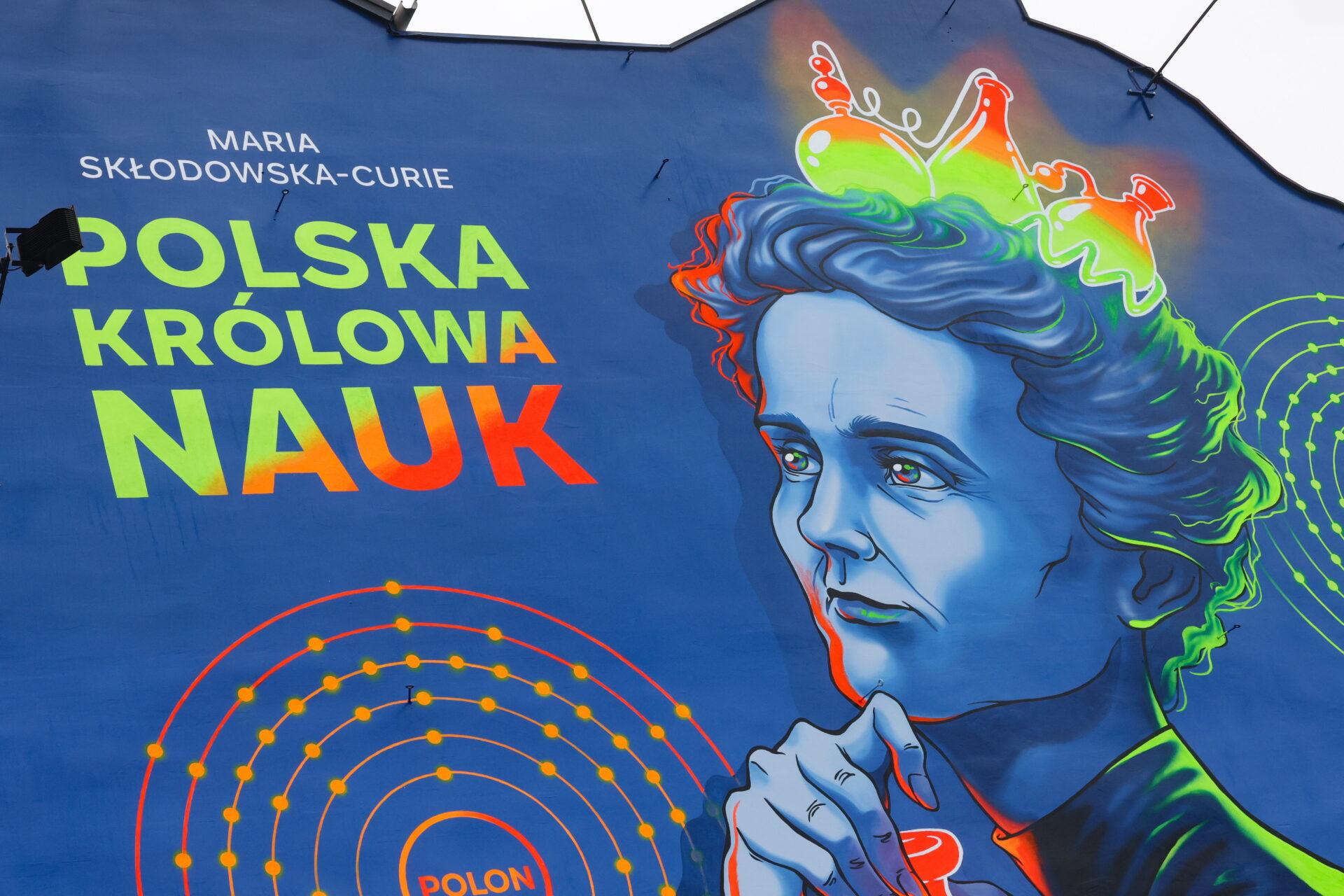
This November marks two milestones in the life of Polish scientist Maria Skłodowska-Curie, known internationally as Marie Curie. She was born in Warsaw on November 7, 1867, when Poland was partitioned and the city was under Russian rule. She attended Warsaw’s underground Flying University before moving to Paris to study at the Sorbonne. Years later, she named an element she discovered with her husband Pierre polonium, in honor of her homeland.
On November 5, 1906, Skłodowska-Curie gave her first lecture at the Sorbonne, taking over a course previously taught by Pierre, who had died earlier that year. She became the university’s first female full professor in 1908. By then, she had already shared the Nobel Prize in Physics; a second Nobel, in chemistry, would follow in 1911, making her the first person to receive the prize twice.