Poland Unpacked week 47 (9-15 November 2026)

Welcome to this week’s edition of our Poland Unpacked, where we deliver key insights and trends shaping the economic, corporate and political landscape. Catch the most important insights from Poland in this week’s briefing.

Loading the Elevenlabs Text to Speech AudioNative Player...
Business
Rising costs, changing appetites
Małgorzata Grzegorczyk

Over the past few years, the EU's fertilizer makers have cut their production capacity by 9%. Gas, their key strategic raw material, is now so expensive that some firms may halt production, says Marcin Celejewski, who became chief executive of Grupa Azoty in April. Azoty is Poland's biggest fertilizer producer and Europe's second-biggest. It is listed on the stock exchange, and the State Treasury holds 33% of its shares. With plants in Poland, Spain and Germany, the company should be adding capacity. Instead, it is still struggling with a polypropylene project it began in 2015. The PLN7bn (EUR 1.65bn) venture nearly drove Grupa Azoty into bankruptcy. The group now spends PLN800m (EUR 188m) a year on interest payments and PLN100m (EUR 24m) on advisers and lawyers. It is hoping that Orlen will buy the plant, which is still not working. Orlen is a listed fuel company in which the State Treasury holds 49.9%. In the first three quarters of 2026 Grupa Azoty had revenues of PLN10.3bn (EUR 2.42bn), EBITDA of PLN586m (EUR 138m) and a net loss of PLN1.14bn (EUR 268m). Read our interview with Grupa Azoty's chief executive to find out what the company plans to do next.

Even in a shrinking market, a strong brand can keep a business going, says Krzysztof Pawiński, chief executive of Grupa Maspex, Poland's biggest food company and one of the largest in Europe. In 2025 its revenues fell from PLN16bn (EUR 3.76bn) to PLN15.5bn (EUR 3.65bn). The drop came from its two main categories, soft drinks and alcohol. Several regulations add to the pressure: Poland's alcohol-control law, a sugar tax and a deposit-return scheme for bottles and cans. Over the past five years, Maspex has invested more than PLN2bn (EUR 470m) in factories in Poland, Bulgaria, Romania, Czechia and Hungary. It is waiting impatiently for consumer sentiment to improve and sales to pick up. Find out which of its brands are growing in Poland and abroad.

Maspex and other food producers face another challenge, and so do the hospitality and beauty industries: people taking GLP-1 drugs, such as Ozempic, are changing how they shop. They are spending less on sweets, salty snacks, bread and fizzy drinks. They are showing more interest in fresh fruit and vegetables, protein products and supplements. Some food makers have already launched brands aimed at GLP-1 users. Others are focusing on functional benefits, such as protein, fiber or vitamin content. Experts expect restaurants and bars to see weaker demand for alcohol and more interest in smaller portions or dishes that diners can put together themselves. In the beauty business, more and more customers who have lost weight quickly want to improve the condition of their skin. Experts recommend preventive care that starts before patients begin taking weight-loss drugs. See how Ozempic is changing the market.

Economy & Markets
Cut spending, spare my benefits
Michał Kulbacki

Poles want the government to cut spending, according to a survey of 3,000 respondents conducted for XYZ. As many as 74% are concerned about the state of public finances. Poland’s general government deficit is expected to reach around 7% of GDP in 2026, the second-highest level in the EU.

As is often the case, however, few people want cuts to the benefits they receive themselves. Among retirees, support for reducing the 13th and 14th pension payments is very low, while many more favor cutting the 800 Plus benefit, a monthly payment of PLN 800 for each child under 18. What else does the survey tell us?

The second part of the survey looked at the retirement age, with somewhat more encouraging results. Older Poles are more likely to support equalizing the retirement age for women and men at 65. One might expect that, as older people account for a growing share of the electorate, raising the retirement age would become increasingly difficult. The survey suggests a more complex picture - an encouraging finding for a rapidly aging society. Pension reforms may prove less difficult to implement in the future than they appear. Here's the full picture.

Another issue linked to the aging population is inheritance. In 2025, Poland recorded nearly 170,000 fewer births than deaths. As a result, future generations are likely to inherit more than their parents, as the wealth accumulated by a larger generation is divided among fewer heirs.

How will this wealth be passed on? Data show that a growing number of Polish women do not have children. Among women born in 1983, the figure exceeded 27%. This means that more wealth will be inherited by relatives outside the direct line, such as siblings, nieces and nephews.

In our article, we examine the assets likely to be passed down and what effect this shift could have on inequality.

Politics & Policy
The right marches together
Krzysztof Figlarz

The shocking attack in Kraków, which killed six people, cast a shadow over Polish politics last week. Before the shooting, the attacker, who has since died, also killed three members of his family. Prosecutors have begun investigating his motives. Much of the public outrage in Poland focused on the right-wing broadcaster Telewizja Republika, which falsely claimed that police were absent from the scene. In fact, Kraków police neutralized the attacker just three minutes after the first report.

The station, which is sympathetic to Law and Justice (PiS), had already come under fire — including from the political right. By organizing protests outside the Constitutional Tribunal, it turned a political demonstration into a carnival of singing and on-site watch sales that raised money for the channel. Right-wing politicians reportedly disliked the spectacle, which turned the dispute into an object of ridicule and mockery.

The right did, however, have a brighter moment last week. On the 108th anniversary of Poland regaining its independence, hundreds of thousands of people took to the streets of Warsaw for the Independence March. The march was held for the 17th time, but had never drawn such large crowds: Warsaw City Hall estimated attendance at 250,000, while organizers claimed as many as one million.

The march is organized by nationalist groups. For years, it was a smaller event attended mainly by supporters of groups including the National Movement (here's the story of the march). Much of the rest of the right was reluctant to join, largely because of the series of incidents that had become an integral part of the event.

Today, however, the march attracts figures from across the Polish right. It also drew crowds from around the country, including people who do not necessarily share the organizers’ views. This year’s march passed without incident, and its large turnout — along with the anti-government slogans heard there — could give the governing coalition parties a November headache.

President Karol Nawrocki also joined the march. On Friday, he vetoed a second bill implementing the EU’s Digital Services Act. The president signed the first bill, allowing a Polish contact point through which citizens can submit complaints to Big Tech companies to launch on November 6. But the second, more comprehensive bill — which would have given state authorities powers to remove illegal content — did not take effect.

The president claims the legislation could be used to silence the government’s political opponents. The government and a number of experts have criticized his veto as a concession to the influence of American Big Tech companies, whose almost unlimited autonomy over the visibility of posts and the design of algorithms will remain in place.

Nawrocki had previously vetoed an earlier version of the bill. With an election campaign approaching, there is little to suggest that a third attempt will succeed either.

Startups / VC / Tech
Big moves in tech
Cezary Szczepański

Poland’s Bielik AI model is expanding its multilingual reach and gaining capabilities needed to build AI agents. The SpeakLeash Foundation and AGH University’s Cyfronet have unveiled Bielik 11B v3.1, which supports 56 languages, up from 32. The new version can also use external tools, plan its next steps, and pass results to other IT systems.

“We are not building Bielik just so Poland can have its own language model. We are building it in the belief that Polish technology can set standards rather than merely follow them. We want Bielik to become the model of choice in Europe and, eventually, beyond,” Sebastian Kondracki, president of the SpeakLeash Foundation, tells XYZ.

Another, more advanced version is expected soon.

EUR 4 million without selling more equity: that is how Czech startup Hedepy plans to finance the next stage of its expansion in Europe’s mental health market. The company has secured venture debt from Orbit Capital, a form of financing for growing businesses. Poland has become a foundation for the group’s growth: Hedepy is expanding on the back of its acquisition of Polish startup Hearme, and Polish managers play an important role. Read all about it here.

It was a busy week elsewhere in the startup world. Onodrim Industries raised more than PLN 1 billion for investments in the defense industry, with Polish investors contributing over PLN 100 million. They include ElevenLabs co-founder Mati Staniszewski and Pracuj Group founder Przemysław Gacek.

Meanwhile, British company Quiver, backed by Polish fund Market One Capital, acquired logistics platform Stuart and plans to expand further in Poland. Balnord and the European Bank for Reconstruction and Development led an EUR 14.5 million funding round in PORT, a British network of microhubs offering e-bikes for couriers.

We also recommend an inside look at the transformation of Welyo, a technology company valued at PLN 161 million by investment fund MCI. After a decline in revenue in 2025, Welyo aims to return to growth through a new technology platform and a change in its business model. The next step is to consolidate the market in Central and Eastern Europe - a Polish plan for surviving in the age of AI tools. Here's the story.

After hours
Creatures of art and imagination
Michał Szcześniewski

From mythical creatures to scientific specimens, animals have long fascinated humans. A new exhibition at the National Museum in Warsaw explores how people have imagined, studied and lived alongside other species over the centuries. Bestiary, opening on November 20, takes visitors from animal-like deities and fantastic hybrids to early natural-history collections.

The exhibition brings together paintings, sculptures, prints, textiles and everyday objects, as well as contemporary installations. It also turns to questions facing us today, including species extinction, climate change and changing attitudes toward animals. The show runs until March 14, 2027.
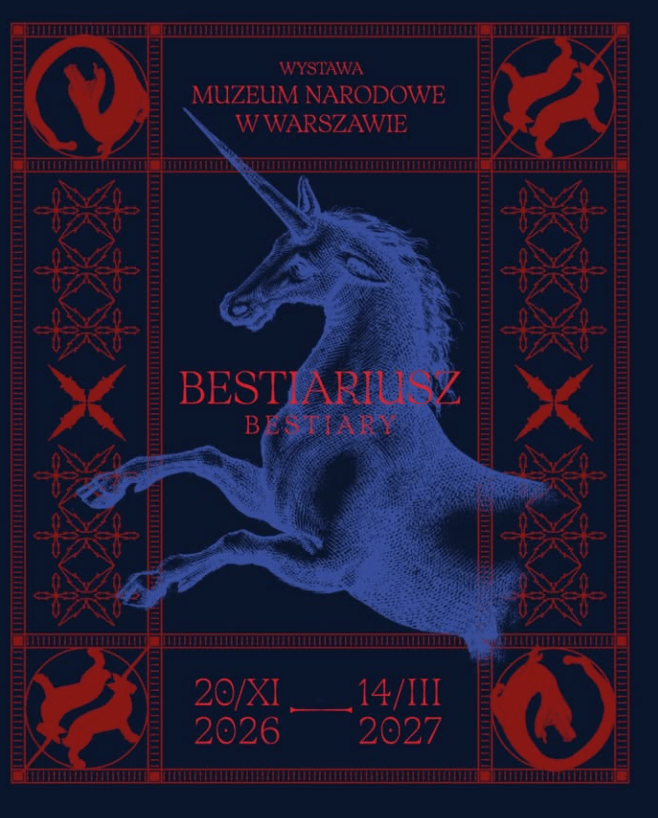
The show runs from November 20 until March 14, 2027. Source: IG account of the National Museum
fun fact about poland
The most unusual wartime companion
Michał Szcześniewski

One of the most unusual companions of the Polish army during World War II had four paws and a thick brown coat. His name was Wojtek, and he was a bear.

Polish soldiers adopted Wojtek as a cub in Iran in 1942. He became the mascot of the 22nd Artillery Supply Company and traveled with the troops through the Middle East and on to Italy. Stories say he helped carry ammunition during the 1944 Battle of Monte Cassino, although accounts differ on whether that happened. A bear holding an artillery shell nevertheless became the company’s emblem.

After the war, Wojtek followed his comrades to Scotland. On November 15, 1947, after the unit was demobilized, he was moved to Edinburgh Zoo, where he lived until his death in 1963. Former Polish soldiers visited him there, and today a statue in Edinburgh commemorates the bear and the Polish troops whose wartime journey brought them to Scotland.
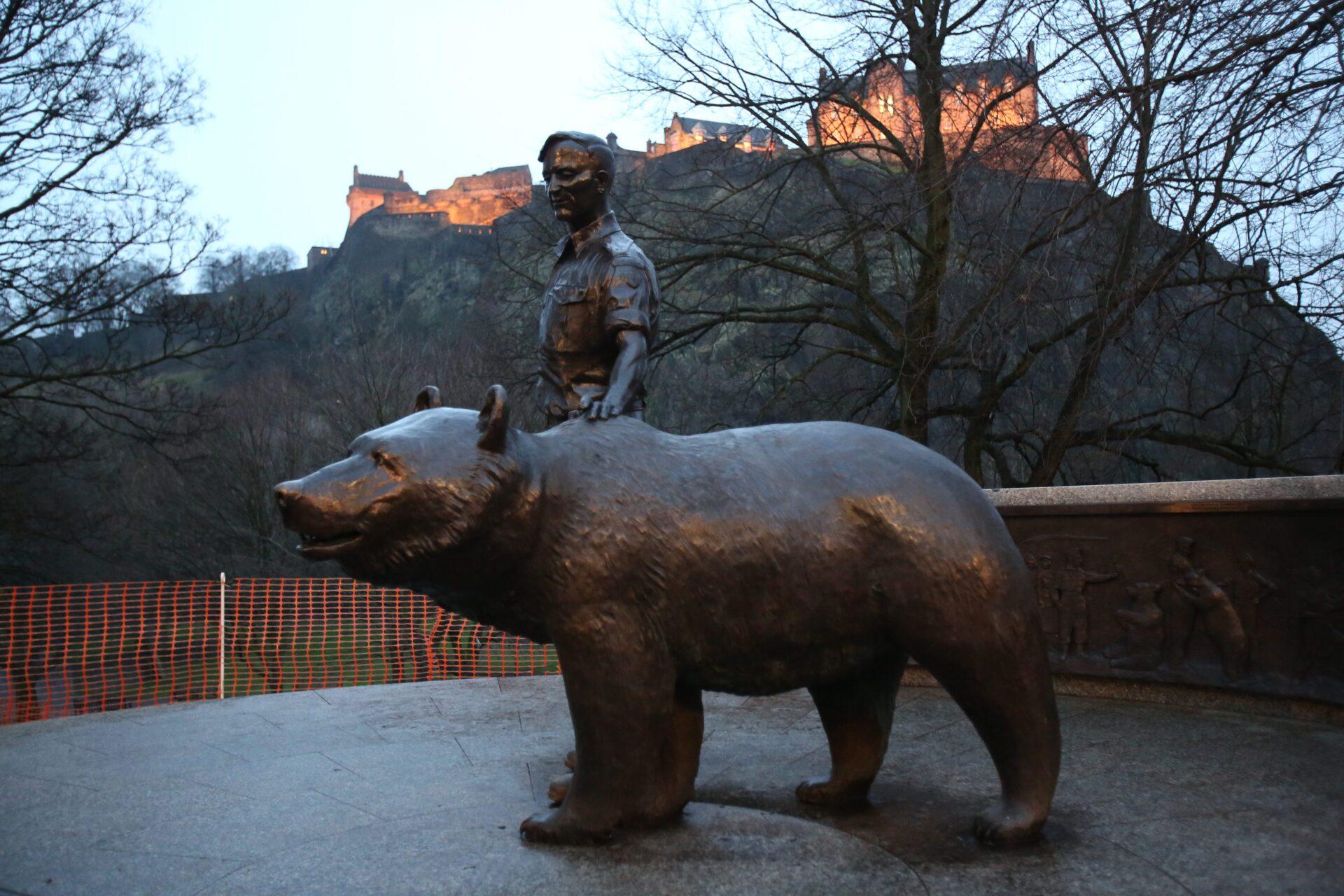
Polish soldiers adopted Wojtek as a cub in Iran in 1942. He became the mascot of the 22nd Artillery Supply Company. A statue in Edinburgh commemorates the bear and the Polish troops whose wartime journey brought them to Scotland. Photo: PAP/Leszek Szymański