

This article is a part of Poland Unpacked. Weekly intelligence for decision-makers
Blue Gravity Capital has invested tens of millions of złoty (PLN), or roughly EUR 5–15 million, in Spectrum Group, a Polish manufacturer of materials for 3D printing. The fund has taken a majority stake. The capital is to be used to double production capacity, expand international sales, and enter a new phase of competition with Asian rivals.
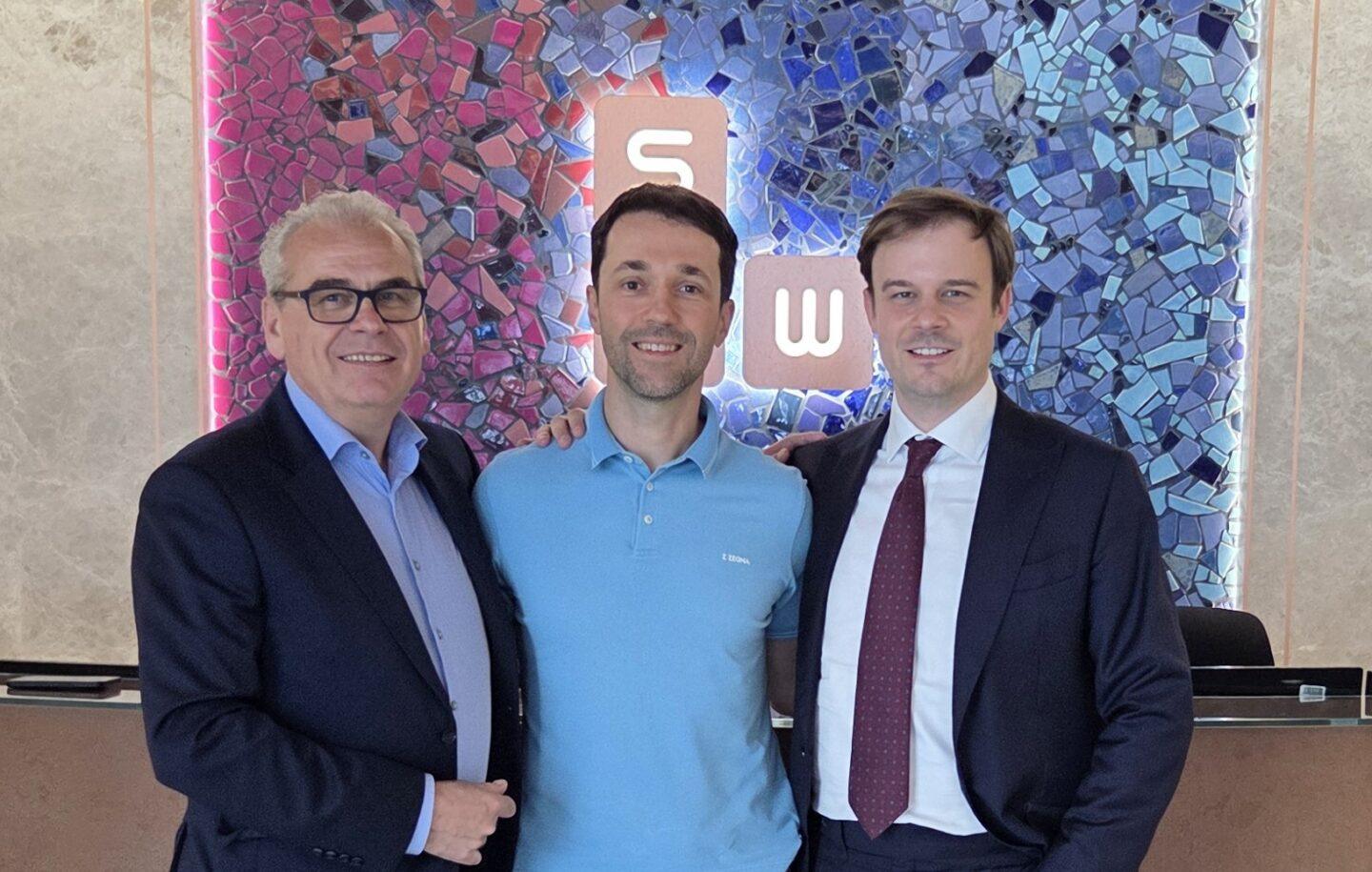
Blue Gravity Capital has completed its investment in Spectrum Group in recent days. Spectrum is a Polish producer of 3D printing filaments. Neither side has disclosed the exact value of the transaction or its detailed terms. They confirm, however, that it is an investment worth tens of millions of złoty, as a result of which the fund has acquired a majority stake in the company.
“We do not disclose the parameters of the round, as that is our policy. I can say that we have taken a majority stake in Spectrum. We are a private equity fund that actively supports the development of portfolio companies, contributing not only capital but also expertise and strategic support. We are very hands-on investors, but at the same time we like founders to remain in the company and continue developing it together with us,” Wojciech Fedorowicz, managing partner at Blue Gravity Capital, tells XYZ.pl.
Spectrum’s founder, Michał Żołądek, remains at the helm of the company. Blue Gravity Capital describes the deal not as a standard financial investment, but as a multi-year partnership aimed at building a Polish company into one of the key global players in the 3D printing materials segment.
“For us, this is like a marriage for five to seven years. Because we are very active investors, we always want to get to know well the people we will be working with going forward. Both sides have to be a good fit,” adds Wojciech Fedorowicz.
Why Blue Gravity Capital chose Spectrum
Blue Gravity Capital positions itself as a private equity fund investing in “small-cap” companies: profitable, growing businesses with revenues in the PLN 20–100 million (EUR 4.6–23 million) range. Spectrum Group fits that profile.
The company has been operating since 2015. From the outset, it grew organically, financing expansion primarily through operating cash flow, leasing, and bank debt. In 2025, it generated over PLN 30 million (EUR 6.9 million) in revenue and several million złoty in profit. In 2024, the figures were PLN 27 million (EUR 6.2 million) in revenue and PLN 5 million (EUR 1.15 million) in gross profit.
“From our perspective, Spectrum is a great example of a fast-growing company that is performing very well. Michał has been running it very effectively from the beginning, in a very interesting market,” notes Wojciech Fedorowicz.
The fund emphasizes that one of the key investment arguments was the founder himself. Between 2018 and 2025, Spectrum recorded an average annual production volume growth rate of around 50%, significantly outpacing most competitors. However, the company reached a point where further organic growth became too slow relative to demand.
“We reached that point while growing organically and relying on bank financing. Thanks to a new generation of 3D printers, the market is in a phase of very dynamic expansion, and the positions of future leaders are being built right now. At this stage, simply adding one or two production lines is no longer enough. We need to think more broadly – about scale, organization, and further expansion,” says Michał Żołądek.
Good to know
What are 3D printer filaments?
Filaments are consumable materials used in 3D printers, primarily those operating in FDM or FFF technology. They come in the form of a thin thermoplastic strand wound onto a spool.
During printing, the filament is fed into the printer’s heated nozzle, where it melts and is then deposited layer by layer according to a digital design. This process gradually builds the final object – whether a prototype, a technical component, a decorative item, or a functional tool.
Capital will primarily go into production
The main objective of the investment is to increase production capacity. Rising demand, combined with insufficient output, had become a major bottleneck.
“For the past five years, we have been operating in a permanent state of backorders. Despite continuously adding production capacity, demand still exceeded our ability to deliver. First and foremost, we need to add capacity – meaning production lines,” says Michał Żołądek.
Today, Spectrum’s production capacity stands at around 1,200–1,500 tons per year, depending on the material type. The company plans to double that within 12 months. For now, this does not require building a new factory, but rather reorganizing existing space and installing additional production lines. However, company representatives acknowledge that at the current pace of growth, the existing facility may soon become insufficient.
The capital will also be allocated to expanding the team, professionalizing the organization, and strengthening international sales. Spectrum currently employs around 30 people on full-time contracts, plus additional contractors. As the company scales production, headcount is expected to grow significantly – both on the operational and managerial side.
“Companies built around a strong founder often remain under-hired. To unlock their full potential and scale five- or tenfold, you cannot do it within the existing model. You need to build an organization, including an entire management layer,” declares Wojciech Fedorowicz.
From organic exports to aggressive expansion
Spectrum is already an international business. Foreign sales account for a significant share of revenue – around 80% - but until now, growth abroad has been largely organic. It was driven mainly by customers approaching the company directly and by expanding orders from existing partners.
That is set to change after the investment. Blue Gravity Capital aims to help the company build a more proactive sales function and enter new markets. The fund commits to supporting recruitment, organizational processes, reporting systems, KPIs, international expansion, and access to contacts in major markets.
The ambition extends beyond Europe. Blue Gravity Capital and Spectrum are also looking at non-European markets, although they remain cautious about Asia, where local manufacturers hold a structural advantage.
“We do not want to limit ourselves to Europe. I have no illusions that we will conquer Asia, because China is simply closer there. But the entire Western Hemisphere and parts of the Southern Hemisphere are very much within Spectrum’s reach,” declares Wojciech Fedorowicz.
The market is being driven by cheaper and better printers
Blue Gravity Capital’s investment is based on the thesis that the 3D printing market is undergoing a fundamental shift. Just a few years ago, 3D printers were devices that required patience and significant technical expertise. Today, thanks to Chinese hardware manufacturers – particularly in the desktop segment – the entry barrier has dropped sharply.
“Chinese companies have taken over the hardware market not only through price, but above all through quality. They have introduced features such as lidar, flow calibration, and error detection into printers. They have eliminated the problems that used to plague the average user or production engineer. Today, these devices are fully plug-and-play and easy to use,” says Michał Żołądek.
Low-cost desktop printers are increasingly replacing expensive industrial machines in many applications. Devices that once cost EUR 10,000–20,000 are now, in some areas, being outcompeted by machines priced at EUR 800–1,000. This is fueling demand for filaments.
According to data cited by the interviewees, exports of Chinese desktop 3D printers rose from 3.7 million units in 2024 to 5.2 million in 2025, and are expected to reach around 8 million units in 2026.
Blue Gravity Capital estimates that the global filament market is currently worth around USD 1 billion and, under base-case forecasts, could grow at roughly 20% annually. However, the fund believes these projections may be too conservative, as they do not fully account for the structural shift in the printer segment.
“In our view, growth will be significantly stronger, because current forecasts have not yet incorporated the major changes in the printer market. This progress in hardware and models will dramatically accelerate the market. CAGR could rise to 30%, and temporarily even reach 40%,” says a fund representative.
Competing with China is not only about price
The biggest challenge for Spectrum remains competition from Asia. Chinese manufacturers are particularly strong in the segment of simple, mass-produced filaments. Representatives of both Spectrum and Blue Gravity Capital are candid that price alone will not be enough to beat them.
Instead, Spectrum aims to compete through a combination of factors: greater scale, shorter delivery times, European-based production, consistent quality, and an expanded portfolio of more advanced materials. Logistics also play an important role. Shipping from Asia is a significant cost component, and freight rates are highly volatile.
The company sees a particular opportunity in technical, engineering-grade, specialty, eco-friendly, and compostable filaments. It also plans to carry out part of its R&D on new formulations in-house. Until now, many such projects were developed with external partners.
The company stresses that even at its current production scale, Spectrum is already effectively competing on price with Asian manufacturers in the standard materials segment.
“In our view, further automation of production and logistics processes, combined with scaling up operations, will allow us to maintain this competitiveness in the long term as well, despite growing pressure from global producers,” says Michał Żołądek.
Expert's perspective
3D printing also has potential in other areas
3D bioprinting can be treated as a distinct field. It has evolved from conventional 3D printing, but – through the combination of biological and technological domains – it has become a complex, multi-threaded area in its own right. The vision of printed organs, implants, or reducing animal testing through organoids is only part of why the bioprinting market has attracted sustained social and investment interest for years.
Thanks to their broad capabilities, 3D bioprinters are widely used in R&D work and preclinical research. Among projects in the domestic market involving our machine are efforts focused on arterial implants, corneal implants, and new methods of drug delivery.


Spectrum aims to consolidate the market
Market estimates suggest that Spectrum is currently one of the largest filament producers in Europe by production volume. Michał Żołądek notes, however, that there are older European brands on the market that may be better known, even if they produce less.
The company does not rule out acquisitions. In previous years, it acquired, among others, the Hungarian brand Filaticum, which is set to be revived, as well as the Polish brand Prografen, specializing in niche graphene-based filaments. Its pipeline includes further potential deals, including one Polish brand.
“In the short term, we do not exclude consolidating the European market,” says the founder of Spectrum.
Blue Gravity Capital, however, takes an opportunistic approach to M&A. The core strategy is to scale Spectrum’s existing business organically, but with more capital, a stronger organizational structure, and a more robust sales backbone.
“M&A is an option for me. You never fully know whether such a transaction will succeed. You may find an opportunity, but fail to reach agreement with the founders, or the price may be too high. That is why the foundation is to develop what Michał has been doing so far,” says Wojciech Fedorowicz.
Good to know
What is happening in the 3D printing market
The 3D printing market is growing, but unevenly. On the one hand, the broader additive manufacturing (AM) sector continues to expand. According to the Wohlers Report 2025, the global AM industry increased in value by 9.1%, reaching USD 21.9 billion, with the strongest momentum coming from Asia – particularly China. At the same time, growth in Europe, the Middle East, and the Americas was weaker, and local hardware manufacturers came under pressure. Even regional players such as Poland’s Zortrax faced difficulties.
The fastest-growing segment is low-cost desktop 3D printers. Data from CONTEXT for 2025 show a clear market split: entry-level devices priced below USD 2,500 recorded strong sales growth, while professional, mid-range, and industrial segments remained under pressure from high interest rates, inflation, and more cautious corporate investment. In Q2 2025, revenues in the entry-level segment rose by 21%, while revenues declined across professional, mid-range, and industrial categories.
Long-term forecasts remain optimistic, though they vary significantly depending on how the market is defined. MarketsandMarkets estimates that the global 3D printing market will grow from USD 16.16 billion in 2025 to USD 35.79 billion in 2030, implying a compound annual growth rate of 17.2%. Grand View Research offers a higher estimate, valuing the market at USD 30.55 billion in 2025 and projecting growth to USD 168.93 billion by 2033.
Across these projections, the main growth drivers remain consistent: product customization, rapid prototyping, short-run production, applications in aerospace, medicine, automotive and defense, as well as the increasing accessibility of hardware.
The goal: build a leader and exit to a larger player
Blue Gravity Capital’s investment horizon is around six years. The fund assumes that within that time Spectrum will become an undisputed leader in its part of the world and a company ready for the next ownership stage.
“The most natural exit route for us is usually a sale to a large private equity fund. But we are not locked into a single model. It may turn out that large plastics companies will want to build this kind of business line. It is also possible that major Asian producers will expand globally. We are keeping all options open,” says Wojciech Fedorowicz.
If the thesis proves correct, the company is set for strong growth.
“We believe the market is currently at a very interesting stage of development. Increasing accessibility and improving quality of 3D printers are translating into rapidly growing demand for consumables. Our ambition is to use this trend to further strengthen Spectrum’s position in the European market and build a strong presence in key international markets. The partnership with Blue Gravity Capital is intended to help us achieve these goals faster and at a larger scale,” concludes Michał Żołądek.


Key Takeaways
- Blue Gravity Capital has acquired a majority stake in Spectrum Group, a Polish manufacturer of 3D printing filaments. The fund has not disclosed the exact value of the investment, but confirms that it amounts to tens of millions of złoty (PLN). The company’s founder, Michał Żołądek, remains with Spectrum and will continue to lead its development. The goal of the partnership is to transform Spectrum from a fast-growing producer into one of the most important players in the global 3D printing materials market.
- The most urgent post-investment priority is to expand production capacity. Spectrum currently produces around 1,200–1,500 tons of filament annually and plans to double that within 12 months without building a new factory. The capital will also be used to expand the team, professionalize the organization, build a stronger management layer, and step up international sales.
- Spectrum’s strategy is based on the belief that the 3D printing market is entering a new growth phase driven by cheaper, increasingly capable, and easier-to-use desktop printers. This is boosting demand for filaments, while also intensifying competition from Chinese manufacturers. Spectrum aims to respond to this pressure not only through price, but also via European production, shorter delivery times, quality, automation, and a broader portfolio of advanced materials. The company does not rule out acquisitions.