

This article is a part of Poland Unpacked. Weekly intelligence for decision-makers
Before construction of a nuclear power plant begins, investors must first build up the workforce. At the peak of the investment phase, as many as 12,000 people will be needed. The companies involved are already training staff, accrediting contractors and sending students on specialized internships. The government, however, wants to understand how to develop talent for the nuclear sector in the long term as an entirely new industry – beyond the first plant in Pomerania in northern Poland. A dedicated project is set to launch in April.
Preparing the human resources base for Poland’s nuclear sector has become a priority. According to estimates by the head of Polish Nuclear Plants (PEJ), which is responsible for building the first plant in Pomerania, more than 10,000 workers will be required to bring the facility online. At the peak of the investment, the figure could reach as high as 12,000.
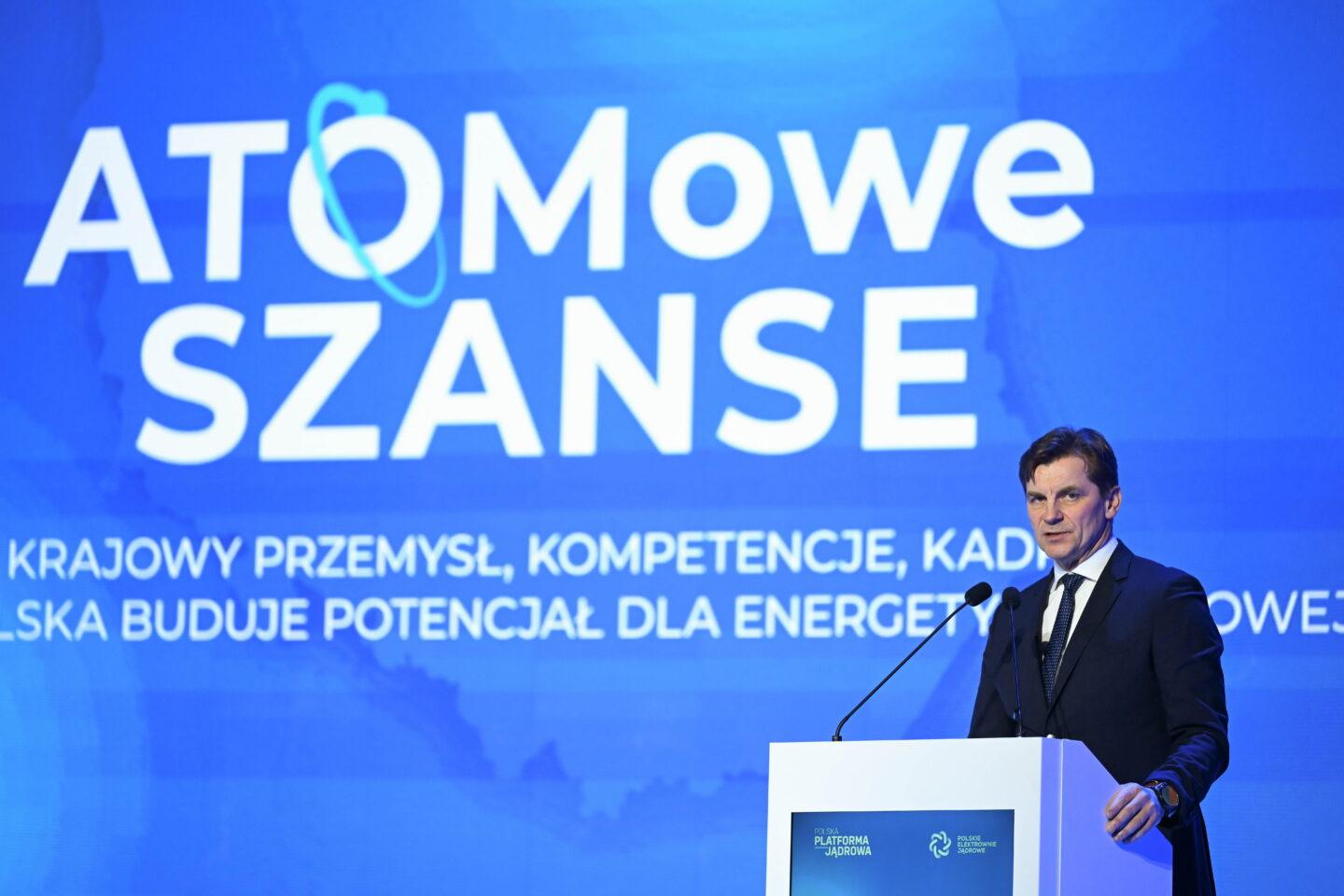
— In May, the first machines operated by our partners will arrive on the investment site. We will then begin extensive groundworks, which will prepare us for pouring the first nuclear-grade concrete in 2028 — said Marek Woszczyk, president of PEJ, speaking at the Baltic Nuclear Energy forum.
The ministry wants an analysis of the talent base
A completely new labor market is therefore emerging in Poland – one with strong long-term prospects. All indications suggest that the country will not stop at a single nuclear power plant. Discussions are under way regarding a second site. Investors are also planning small modular reactors (SMRs).
The process of building a nuclear workforce is to be systematized by the Ministry of Energy. The ministry is updating a catalogue of companies with competencies relevant to the nuclear sector. These companies, in turn, make it clear that they face a shortage of workers who meet the hiring criteria required by the industry.
What is needed is a reliable analysis of both current capabilities and, above all, future needs in terms of educating and training personnel for the sector. Such a detailed study of the emerging market will be prepared by a team led by researchers from the Silesian University of Technology (Politechnika Śląska - PŚ).
A long-term workforce training policy will be established
On April 1, a project will launch to define how workforce education for the nuclear sector should function across different levels of the education system. The program will also address how to reconcile the staffing needs of this industry with other strategic public investments being carried out in Poland at the same time.
— We will create a broadly framed, long-term plan for developing human capital for the nuclear sector — says Łukasz Bartela of PŚ.
He leads a consortium implementing a project co-financed by the National Centre for Research and Development (NCBR), with the endorsement of the Ministry of Energy, titled “Plan and Pilot Activities Supporting the Development of Competencies for the Nuclear Sector in Poland.”
The Ministry of Energy is also one of the consortium members and will ultimately receive the diagnosis and education proposals as the implementing authority. The project also involves the National Centre for Nuclear Research and the University of Economics in Katowice. The aim is to deliver concrete recommendations to the ministries responsible for education. It will be their decisions that determine whether proposed changes across various levels of the education system are implemented.
The project is set to last three years, but Professor Bartela stresses that this does not mean feedback from researchers will only begin to emerge in 2029. Within 18 months, the team expects to have developed key diagnoses and tools.
— The project is divided into two phases. Within 18 months, we will carry out a diagnosis of the current state and develop appropriate tools, which will be implemented in the second phase — says the researcher from PŚ.
Nuclear networking
In parallel, Professor Łukasz Bartela’s team has planned a series of workshops and seminars aimed at popularizing the nuclear sector.
— The entire project is strongly focused on integration – on building a network of cooperation between schools, universities and business. The pre-implementation phase involves close contact and discussion of proposed solutions with stakeholders. We are counting on feedback from companies, as they will be the creators of new jobs – the project leader emphasizes.
He notes that there are several hundred companies in Poland from various sectors that want to engage in building the value chain for nuclear energy.
— These are not only stakeholders currently operating in the nuclear industry. They also include firms supplying construction materials, machinery and steel structures. Each of them is already reporting a need to hire specialists, including welders, fitters, electricians, operators and construction workers. This will be a substantial market – the professor stresses.
PEJ and Westinghouse are not waiting
The analysis conducted by the team from PŚ is not the first initiative aimed at building a workforce base for Poland’s nuclear sector. Much earlier, two companies directly involved in the construction took on this task: the investor, PEJ, and the contractor, the U.S.-based Westinghouse Electric Company.
Their efforts are, understandably, focused on their own operational needs. Both companies are running internship programs for students and are discussing cooperation with other entities in Poland.
Westinghouse is collaborating with the National Centre for Nuclear Research on joint research in the field of nuclear energy. They are also working together on training initiatives and projects supporting the development of skills and technologies in the nuclear sector.
Good to know
Student internships at a nuclear industry giant
Westinghouse Electric Company has been preparing talent from Poland for the past three years. During this period, nearly 70 students from Polish universities have completed internships at the company’s offices in the United States and Sweden. More than 60 individuals from this group have secured permanent employment with the company in Poland.
The internship programs cover areas such as supply chain and nuclear fuel engineering. Interns gain experience across different reactor technologies, preparing them for roles not only in Poland but across Europe.
Recruitment procedures are currently under way for the latest edition of the internship program, scheduled for July and August. Selected students will work at various offices in the United States. As part of the program, interns will receive a monthly salary, accommodation, coverage of travel expenses, and visa support.
The program comprises two main tracks. The first focuses on the design and operation of nuclear power plants, while the second is related to engineering and project management for new nuclear investments.
Westinghouse already employs 500 people in Poland.
PEJ is placing strong emphasis on cooperation with universities. The company has signed agreements with 12 technical schools and universities that have launched – or plan to launch – degree programs focused on the nuclear sector.
— We are aware that demand for workforce in nuclear energy will only continue to grow. Within our company, we already need professionals across a range of specializations, and these are not limited to nuclear physicists — says Marcin Skolimowski.
The company has recently established a dedicated team comprising three key ministries, contractors and academic institutions.
— The team is tasked, among other things, with developing recommendations that will help create an integrated competency system — says Mr. Skolimowski.
Good to know
An internship with Poland’s nuclear power company within reach
PEJ is accepting applications until the end of March for the third edition of its internship program. The program is paid and aimed at students in the final years of master’s and engineering studies. The thematic scope is broad – PEJ is seeking candidates from fields such as energy, electrical engineering, mechanical engineering, automation and robotics, construction, IT, quality management, nuclear physics, chemistry, environmental protection, law, economics, international relations, human resources management and sociology.
PEJ specialists also deliver lectures at universities and participate in job fairs. In this way, the company reaches all those interested in building a career in the nuclear energy sector.
Nuclear staffing is not limited to professionals with higher education degrees – the industry also requires specialists with secondary and vocational education. PEJ has for years supported, among others, Secondary School No. 2 in Wejherowo in northern Poland. Over the past year, the County Energy Center was established there, where lectures and classes on new technologies and trends in the energy sector are held.
Together with the Provincial Office and the Marshal’s Office, the company plans to develop a dedicated curriculum for vocational education.
Schrödinger’s workforce
As experts often repeat, working at a nuclear power plant does not fundamentally differ from working at other types of power plants. However, they acknowledge that such facilities require certain competencies that currently do not exist in Poland. And, in a sense, could not exist – Poland’s experience in the nuclear sector is limited to Świerk and the “Maria” research reactor.
Explainer
Maria the Reactor
Tucked away in Świerk, a quiet village about 30 kilometers south-east of Warsaw, sits one of Poland's best-kept scientific secrets. The Maria reactor — named in honor of Maria Skłodowska-Curie — is Poland's only operating nuclear reactor, commissioned in December 1974 and the sole reactor of entirely Polish design.
It doesn't generate electricity; instead, it serves as a research tool for nuclear physics, trains staff for the nuclear industry, and produces radiopharmaceuticals and radioactive sources used in healthcare, industry, and environmental protection.
The reactor's global footprint is surprisingly large: an estimated 380,000 nuclear medicine procedures using Maria-produced isotopes are carried out annually in Poland alone, while around 17 million people worldwide benefit from its radioisotopes.
Things got tense earlier in 2025, when Maria's operating licence expired on 31 March and the reactor was suspended while Poland's National Atomic Energy Agency worked through a months-long review of the renewal application. The licence was ultimately granted in August 2025 – for an indefinite period – with Energy Minister Miłosz Motyka calling it “a relief,” and pledging that a modernization program would allow the reactor to operate for another 20 years.
In the view of an expert from the Silesian University of Technology, it would be inaccurate to claim that Poland lacks competencies in nuclear energy altogether. Specialists from the conventional energy sector would perform well in nuclear roles.
The problem is that a closer look reveals an ageing workforce nearing retirement, while successors are scarcely being trained today. In other words, they exist – and yet, in practice, they are almost absent.
— For many years, I have been warning that we have stopped training experts for conventional energy. Young people are not interested in this field because they are exposed to the message that conventional power plants are nearing the end of their life cycle. In the context of building a nuclear power plant, this will translate into significant difficulties in finding people for design, monitoring, diagnostics and all other tasks that are essential in any power plant, regardless of the energy source. This is one of the issues that needs to be addressed as soon as possible — warns Łukasz Bartela.
The professor also points to potentially problematic aspects of the education model for nuclear-focused degree programs.
— Nuclear energy programs are becoming extremely popular. However, they are often offered only at the graduate (master’s) level. This makes them accessible to graduates from outside energy studies. These are often engineers with a broad range of specializations, but without the foundational knowledge required in energy engineering. Such gaps in knowledge will inevitably become apparent in their professional work in the future. Therefore, this area also requires refinement — the researcher emphasises.
Vocational schools and technical colleges: From defense to offense
Proper coordination of the education process will make it possible not only to reduce the risk of shortages in specific specializations, but also to avoid oversupply in others.
An important element in preparing the labor market is rebuilding the capacity of secondary technical and vocational schools. In the past, these institutions formed the backbone of the workforce for every large manufacturing company. For many years, however, they have been underappreciated and on the defensive.
— At the beginning of this century, we closed many vocational schools and technical colleges, to the detriment of the economy. In the past, there were also schools operating alongside power plants, where education was continuously aligned with the needs of those facilities. Today, there are significantly fewer secondary vocational schools with profiles aligned to the needs and requirements of the nuclear sector — says Łukasz Bartela of PŚ.
Part of the process will involve identifying solutions that enable schools and universities to make use of specialized scientific and research infrastructure.
— One of the tasks is specifically aimed at developing a roadmap for the use of research infrastructure in building nuclear competencies. First, it is necessary to diagnose where such resources already exist and where they should be further developed. Next, the needs of schools in terms of access must be defined, followed by the pathways that make this possible, including financial arrangements — explains Professor Bartela.
Connecting the dots: Business, school specializations and job offers
In his view, it would be advisable for investors, contractors and operators involved in nuclear projects to contribute to the costs of maintaining this type of educational infrastructure, as it ultimately works to their benefit.
Data from the ELA database (Graduate Economic Outcomes) indicate that labor market needs across individual regions in Poland are poorly identified. For this reason, the plan envisages the development of systemic tools that will enable the efficient flow of information about labor market demand to secondary schools and universities, with sufficient lead time.
— Today, the education system, even when it responds, does so here and now, based on individual signals from companies. However, we do not know precisely how the nuclear sector will develop in Poland. That is why we want to prepare a scenario-based diagnosis covering different variants. For example, we do not know how the SMR market will evolve. Perhaps 20 such facilities will be built, or perhaps nothing will come of it. Workforce development plans must take into account various initiatives — signals an expert from the Silesian University of Technology.
Poland versus Poland: The competition for specialists
In addition, graduates leaving secondary vocational schools with concrete skills are today in high demand across a wide range of investment projects. It is already clear that, for example, welders – who will be in strong demand during the construction of the Pomeranian nuclear power plant and are currently in short supply – will also, at the appropriate moment, be sought after by CPK.
Explainer
CPK
Centralny Port Komunikacyjny (CPK), rebranded in late 2025 as Port Polska, is Poland’s flagship mega-infrastructure project. Located between Warsaw and Łódź, it combines a massive new international airport – aiming for 34 million passengers initially – with integrated high-speed rail and road networks. The project was renamed to rebrand it away from previous administration associations, but the strategic goal of enhancing Polish transport infrastructure remains.
Over a similar timeframe, multiple major projects will overlap: the construction of a high-speed rail network, AI gigafactories, the Eastern Shield defense program, the expansion of the defense industry, and the development of a new defense research center for the European Space Agency. Each of these initiatives will require hundreds of specialized workers – first during construction, and later for operations.
Read more about major projects to be kicked off in Poland: The year 2026 is set to mark the start of several major infrastructure projects
It is estimated that by 2050, the CPK project alone could generate more than 53,000 jobs. PGZ is already recruiting engineers, technicians and production operators. Only the PGZ Naval Shipyard in Gdynia has already doubled its workforce and plans to hire an additional 200 employees.
— We will take this into account. In the diagnosis, we will strive to embed nuclear energy within Poland’s broader economic needs — assures the project’s author.
Explainer
PGZ
Polska Grupa Zbrojeniowa (PGZ) is a capital group concentrating several dozen production plants, service facilities and research centers crucial for the Polish defence industry.
PGZ manufactures innovative systems and solutions used by the Armed Forces of the Republic of Poland and allied formations.
PGZ products are based on the Polish technological inventions and cooperation with global leaders in the defence sector. They are developed and produced under the supervision of experienced engineers, constructors and specialists.
Europe expands nuclear power and needs workers
At the peak of construction of Poland’s nuclear power plant (2032–2034), as many as 12,000 people are expected to be involved in the project. At the same time, specialists in this sector are once again in demand worldwide.
The nuclear energy market is experiencing a revival. Across Europe alone, 10 countries are either building or expanding nuclear power capacity. France has announced a nuclear renaissance and plans to build at least six new reactors by 2050. More recently, the premier of the German state of Bavaria announced plans to develop small nuclear power plants in his region. At the same time, he is calling for Germany to abandon its policy of phasing out nuclear energy nationwide – a demand that, in light of developments in the Middle East, is no longer unrealistic.
Good to know
Plans for nuclear energy investments in Europe
• Poland: Plans to build its first nuclear power plant in Pomerania (Lubiatowo–Kopalino) using technology supplied by Westinghouse Electric Company. Work is also under way on smaller modular reactors (SMRs), for example through Orlen Synthos Green Energy.
• United Kingdom: Developing the Hinkley Point C project and planning additional plants (such as Sizewell C).
• France: A nuclear leader, planning at least six new reactors, with the option to build more.
• Czechia: Expanding the Dukovany nuclear power plant; has selected Korea Hydro & Nuclear Power (KHNP) to build new units.
• Hungary: Expanding the Paks nuclear power plant in cooperation with Rosatom.
• Sweden: Plans to build new reactors, including up to 10 additional units by 2045.
• Slovakia: Constructing additional units, including at the Mochovce nuclear power plant.
• Romania: Plans to expand the Cernavodă nuclear power plant.
• Bulgaria: Plans to build new units, including at the Kozloduy plant.
• Slovenia: Planning an expansion of the Krško nuclear power plant.
• Finland: Considering the construction of a second nuclear power plant.
Work without borders
It must also be assumed that no specialist trained in Poland is obliged to work in Poland. Professionals are often willing to seek assignments in better-paying labor markets.
— Demand for nuclear energy specialists is rising worldwide. In France alone, around 10,000 specialists are needed annually in the nuclear sector to rebuild the country’s capacity as a developer and technology supplier. There is always a risk, therefore, that young people educated in Poland will disperse globally to work in this sector in other countries. I believe that Poland’s strategy should include appropriate mechanisms to make our labor market more attractive for nuclear sector workers — says Łukasz Bartela of PŚ.
This is all the more relevant as nuclear expertise is not only needed by conventional power plants. Even big tech companies are investing in their own nuclear energy capabilities. Meanwhile, NASA plans to deploy a nuclear reactor on the Moon in just four years.


Key Takeaways
- Stages, infrastructure, and challenges: The project is divided into two phases: 1.5 years dedicated to analyzing the current state and formulating recommendations, followed by a period of discussion and implementation. Key tasks include identifying workforce needs, defining an appropriate model, assessing training capacity, ensuring access to training infrastructure, and establishing a platform for cooperation among the various stakeholders involved in developing human capital for the nuclear sector.
- New initiative to develop human capital for Poland’s nuclear sector: In April, a three-year research project will begin aimed at developing a comprehensive plan to ensure an adequate workforce for the nuclear sector through 2040. The project will diagnose labor market needs and assess education and training capacity. It will conclude with recommendations for the Ministry of Education and the Ministry of Science. The consortium tasked with preparing the analysis is led by Silesian University of Technology.
- Scenario-based recommendations and a broad perspective: The diagnosis will account for multiple scenarios, as the future trajectory of nuclear energy development remains uncertain. The plan will consider: the competencies of the existing workforce (including those from conventional energy), the capacity to train new specialists, and competition for talent arising from the implementation of large-scale public projects such as Centralny Port Komunikacyjny (CPK), the defense sector, and offshore wind. The authors of the study place strong emphasis on engaging a wide range of stakeholders.