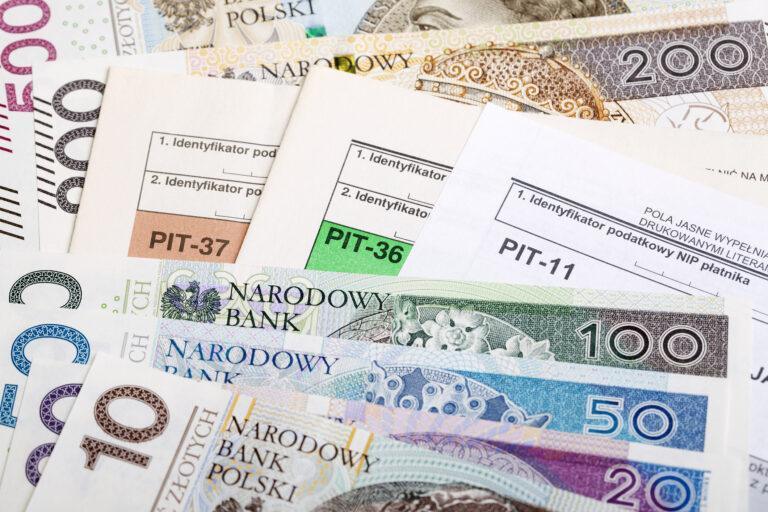
Freezing tax thresholds is a mechanism that works quietly but effectively. It allows the state to boost budget revenues without raising tax rates and without headline-grabbing political decisions. For taxpayers, however, it means something quite different. If nothing changes, as early as 2030 a person earning the average wage could be paying a 32% tax rate on every additional PLN of income. Yet there are also relative winners in this process.
Markets are pricing in an economic acceleration next year and moderate inflation. We are even more optimistic than the median forecast (3.6%) and expect real GDP growth to start with a four.
Poland’s economy is growing faster than most of Europe’s, but its public finances are moving in the opposite direction. A sharp rise in debt – driven by military spending and looser fiscal constraints – puts domestic safeguards under strain and leaves little room for error if growth or revenues disappoint.
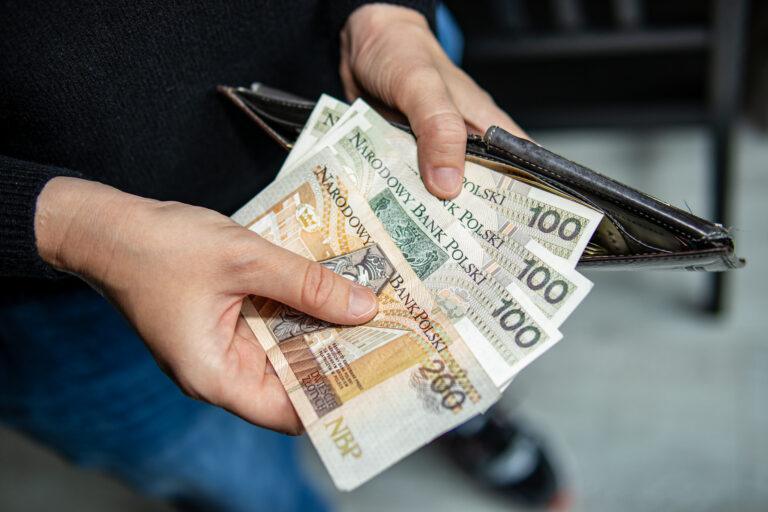
In November, the average gross wage in the enterprise sector reached PLN 9,078.16, (EUR 2,100 – before taxes) according to the latest release from Statistics Poland (GUS). This represents a slight acceleration in nominal wage growth to 7.1% year on year, up from 6.6% in October.
Seasonally adjusted industrial output rose by 0.8% year on year in November, according to preliminary data from Statistics Poland (GUS). This is broadly in line with October, when output increased by 1.1% year on year. Before seasonal adjustment, November’s production was 1.1% lower than a year earlier, reflecting a smaller number of working days. The result is not bad, though it leaves something to be desired.
This year, the region’s currencies have posted substantial gains against the world’s key reserve currencies – the euro and the dollar. Among the three economies with their own currencies and floating exchange rates, the Hungarian forint has strengthened the most. It has appreciated by 7% against the euro so far this year, and by as much as 20.6% against the dollar. The Czech koruna has gained 3.5% against the euro and 16.7% against the dollar.
Poland’s goods exports are gathering pace, while imports are easing slightly. According to new data released by the National Bank of Poland (NBP), the value of goods exports rose by 4.5% year on year in October (three-month average, calculations based on euro-denominated data). This marks the strongest growth rate since mid-2023
The 1999 reform theoretically keeps the state’s pension bill under control. Projections show this spending category remaining broadly stable as a share of GDP. But this is an illusion. The very low projected level of future pension benefits will force changes – either to the retirement age or to contribution rates.
The inflow of foreign direct investment (FDI) into Poland has slowed markedly. In 2024, it fell to its lowest level in more than a decade. Is this merely the fading of the exceptionally favorable impulses that followed the pandemic, or a sign of a deeper shift – one in which rising labor costs and stagnation in European industry are beginning to curb investors’ willingness to place capital in Poland?
“Poland’s economic growth remains exceptionally strong. But the budget deficit is far too high for an economy performing this well,” says Geoff Gottlieb, an economist at the International Monetary Fund, summing up the Fund’s recently concluded mission to Poland. He argues that continued convergence with Western Europe will depend on deeper integration and more uniform rules across EU markets.

 Marek Skawiński
 Michał Kulbacki