

This article is a part of Poland Unpacked. Weekly intelligence for decision-makers
After 14 years of building Booksy, Konrad Howard could have chosen the comfortable life of an investor. Instead, he turned his attention to Ukraine, defense tech and startups designed to have a tangible impact on security. He explains why he travels to the war zone, what Poland should learn from Ukrainians, and why the industry needs to take concrete action.
Cezary Szczepański: Are you still involved in Booksy’s day-to-day operations?
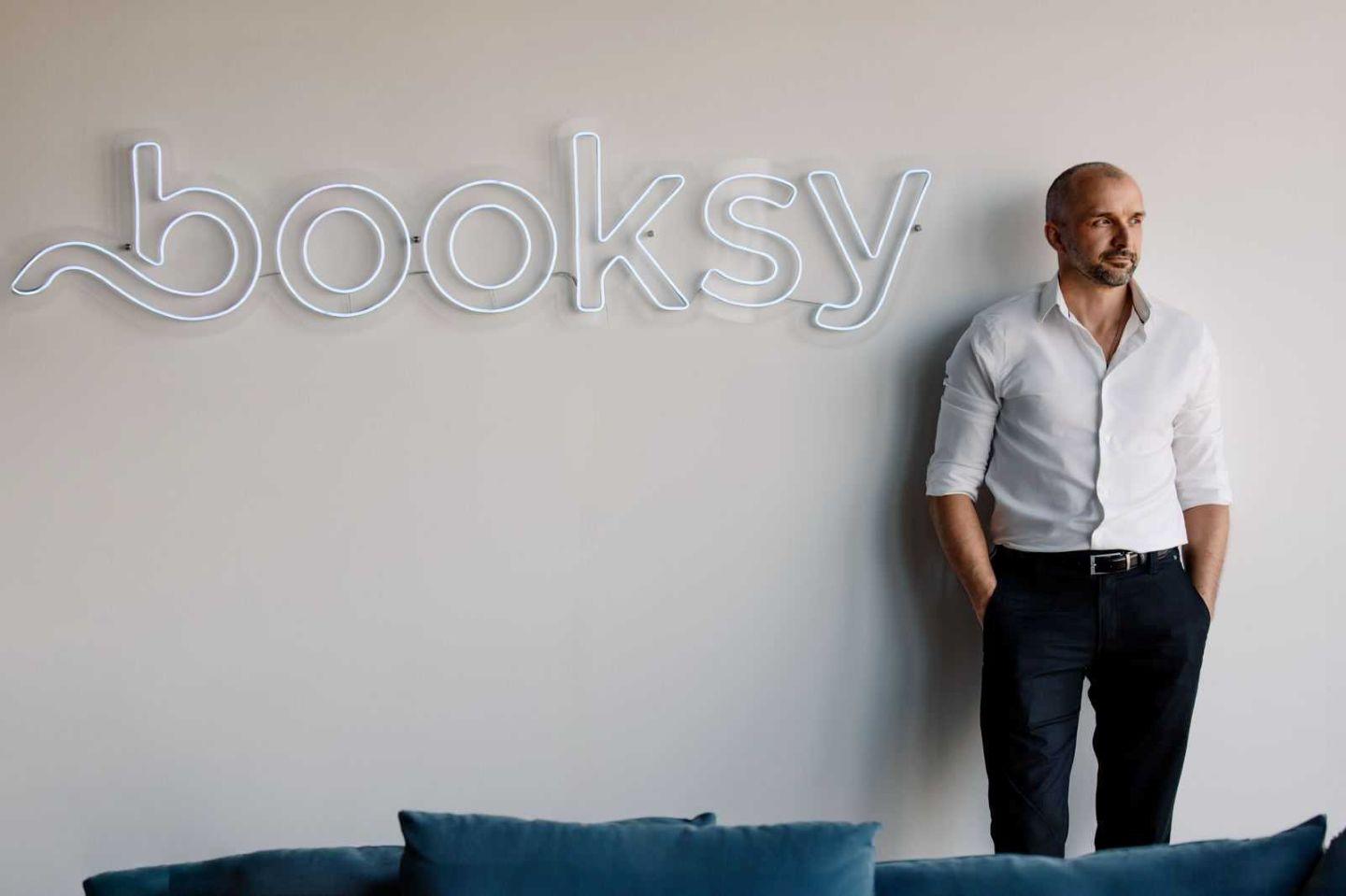
Konrad Howard, co-founder of Booksy: No. I support my business partner Stefan Batory in reaching the point we have always dreamed of: for Booksy to go public and become the world’s leading solution in its category. That gives me more time now for other projects. I am basically traveling all the time. I am about to go to Ukraine, and afterwards I am heading to the United States to help develop another startup.
Are you looking for promising startups from Ukraine?
Yes. I work with funds and people who invest in defense startups and are active in Ukraine. I also invest independently. I am going there now to meet with startups. I believe you need to observe this conflict firsthand to better understand what the priorities are, what works, what does not, and how technology in this field can be developed even faster.
Who's who
Konrad Howard
Konrad Howard is an entrepreneur, angel investor and co-founder of Booksy, one of Poland’s most recognizable technology companies. He previously co-founded iTaxi and the software house SensiSoft. At Booksy, he was responsible, among other things, for innovation and product development, helping the company grow into a global beauty services booking platform operating across multiple markets. In 2026, he stepped away from the company’s day-to-day management while remaining its co-founder and shareholder. Today, he invests in startups focused on AI, sports, education and defense tech.
What Konrad Howard invests in
So you want to find out which technologies currently have the greatest potential?
Yes. The defense sector is changing at an extraordinary pace. The war in Ukraine shows us that technologies are evolving practically every six weeks. A solution developed by one side is often copied by the other within just a few weeks. Without understanding this ecosystem and working with people on the ground, we will not be able to build innovations that are also valuable for Poland.
And what about the United States?
I provide financial support and personally get involved in the startups I have invested in. For example, For Active has just completed its seed round, led by Polish fund Simpact VC. We are also working on new projects.
You do not like boredom?
After 14 years at Booksy, I needed something that would provide new challenges and genuinely keep me engaged. Technological shifts related to AI, robotics and the relatively new sector of defense tech were particularly compelling to me. I wanted to do something more. I am already 50, and I did not want to simply live off past achievements or keep tightening screws at Booksy. I wanted to build something exciting, useful and something that would help me continue growing personally.
How Howard supports the “Booksy Mafia”
For many years, I have heard people complain that one of the weaknesses of the Polish market is the small number of founders who support new initiatives. You have invested in For Active and TridentAI – ventures launched by people from Booksy. Are you building the so-called “Booksy mafia”?
These are different products, different categories and different problems to solve, but it is true that the common element is the team that previously built Booksy. Another thing they share is that they are projects designed to change the lives of many people. They are not boring management software or some kind of game, but solutions with a positive social impact. That gives us tremendous satisfaction not only from a business perspective, but also on a human level.
What drives you to invest today? I assume money matters, but it is not the most important factor.
Everyone says money is not the most important thing, and then it turns out that everyone is focused on making more and more money. But in the case of startup founders, there is another factor: we genuinely need adrenaline, a sense of agency and the feeling that we are doing something at the edge of risk.
Founders have to be a little crazy…
Startups are companies that create innovations, operate amid extreme business uncertainty and face enormous time pressure. They often do not have a ready, profitable product, guaranteed revenues, a clear understanding of the market or an established customer base. They are still searching for all of these things. But once they find that initial spark and manage to create a product and business model, they can scale it exponentially.
Technology is changing very quickly. We are accustomed to the adrenaline and the constant change that drive us. That is just as important as the business itself. We want to build things that are exciting – things that change reality. If it works, money comes as a result of that effort.
It is not that you start a company solely with the goal of making money. Rather, you have an idea that excites you and that has the potential to make a major impact. Money is the result of a good idea, determination and luck. I rarely meet people in this environment who, at the beginning, are thinking not about the product and a great idea, but primarily about the financial upside.
That is what distinguishes a startup from a “regular” company. You have to take significant risks to achieve significant rewards.
Without putting the product first, it would be impossible to succeed in the startup world. This profession requires so many sacrifices that if someone does not have passion and commitment, and is motivated only by financial gain, they will not be able to navigate all the obstacles along the way.
The world has now entered an era of chaos: in geopolitics, technology and society more broadly. This chaos creates opportunities for entrepreneurs and for my industry. Reality is changing so quickly that new opportunities and ideas are emerging – ideas that people simply want to pursue. Life is short; you have to do things that are interesting and exciting.
You spoke about the adrenaline that comes with building a business. Did you feel a greater dose of adrenaline when you were developing Booksy, or now, when you have several or even a dozen or so startup founders you invest in? You are putting in your own money, but it is ultimately their business.
Today, I have a completely different perspective. I can help them do certain things faster and open more doors for them. I see what they are doing from a different level.
When we were building Booksy, we were cutting our way through the jungle with a machete. It was the classic American dream: going to the United States and building something from nothing, without having any real foundation to start from. No funding, no finished product, no local connections and speaking only mediocre English.
Risk in the startup world
Risky!
It was a great adventure that, from the outside, may have appeared to lack any real business logic. People launching new startups today have the same energy we had 14 years ago – only the circumstances have changed. They also do not realize that many things are supposedly “impossible” to achieve. If you looked at it in an Excel spreadsheet, the numbers would not add up. But they are persistent, they have dreams, and being around people like that is something that continues to motivate me.
After more than a decade of building a startup together with my business partner Stefan, we see that we still need new challenges. That is why helping others is, in a way, a chance to reinvent ourselves.
It is a bit like being a parent. Sometimes what your child does is more stressful than what you were doing yourself at the same age.
Exactly. Booksy has become a bit like a grown-up child. In fact, it is no longer a child at all – it is someone who is heading off to university and about to get married. We are beginning to realize that we have a little more time and more opportunities. It would be great to do something else interesting with our lives. That is the stage we are at.
How Konrad Howard invests
So tell me, which of these younger “children” do you love the most?
Right now, the most activity is happening at ForActive. The idea is close to me not only because of the sports angle, but also because of its social impact. I like projects that have a purpose. I like it when people recognize the value of something and say: this really matters. ForActive has that sense of purpose, which is why I am involved both financially and operationally.
Another startup I have invested in is Trident AI. It uses artificial intelligence in the defense tech sector to increase the autonomy of, among other things, various types of drones and to protect critical infrastructure. I feel that I can contribute to something I may actually understand to some extent – and help ensure that the world does not move in the wrong direction, as it has been doing recently.
Did you support the project because you believe in its mission?
Partly out of patriotism, and partly because I wanted to help Ukraine. The team managed to bring together some truly exceptional people who had built projects for the world’s largest companies and had been teaching neural networks and artificial intelligence at Oxford before AI became a mainstream topic.
The changes driven by artificial intelligence have created an entirely new wave of opportunities – both within AI itself and in other fields powered by AI, such as robotics.
The war in Ukraine illustrates that to some extent.
So the “Booksy Mafia” is still sticking together?
Yes. It is great to see that people who were shaped, at least in part, by their experience at Booksy are now succeeding in other fields. So far, more than 47 different startups have emerged from Booksy. It shows how important it is to support companies like this and showcase their success, because they later give rise to dozens of other companies that contribute to the broader ecosystem.
Departures from Booksy? A business opportunity
When you were still heavily involved in Booksy’s day-to-day operations, did you ever feel negative emotions when someone key to the company came to you and said: “I have a business idea, I am filing the paperwork and moving on - thank you”?
No, we never felt that way. We worked with truly outstanding people. Of course, we would have liked to continue working with them. A good example is Tomek Nowiński, our COO and previously the founder of Travelista. We worked together extremely well, but at some point he decided that his biggest dream was to complete his studies at Stanford. It had always been one of his life goals. And he got accepted. It broke our hearts a little, but we knew it was his dream, so we were genuinely happy for him. Later, we visited him at the university.
The Karwatka brothers often talk about this as well. When someone came to them asking for support or saying they wanted to build something of their own, they not only did not stand in their way, but actually got involved and helped.
A good company attracts good people. Working together can be incredibly rewarding, but the truth is that all of us are replaceable. It is a difficult reality. Sometimes parting ways is painful, but it also creates an opportunity for another outstanding person to join the team and take the company in a new direction. You never know whether, in the end, it turned out to be a better decision or a worse one.
Dual-use is the future
What prompted you to become more deeply involved in dual-use technologies, particularly the military side, given that this has become the main focus of your activity?
I did not want to remain indifferent. I am not the kind of person who stands on the sidelines, criticizes, lectures others and acts as if they have all the answers. I am more the type of person who first tries to understand how things really are and then does everything possible to change reality, rather than simply standing aside, commenting and criticizing.
Do you believe investors or people with broader horizons and a stronger focus on the technology sector should become more involved in this area?
Yes. If war breaks out, it will not matter how much money we make here. This is the responsibility of all of us – and it means using the potential we know can actually help.
Do we need to be more active?
What is happening in Ukraine is completely changing our reality and the circumstances around us. We no longer feel as comfortable as we did before the war. The threat is real. The prime minister talks about it, generals talk about it, and so do people who are deeply involved in this field.
When you travel to Ukraine, you see that this is not some distant war that we can simply ignore. It is happening very close to us, and it is changing everything because it is also changing our priorities.
If security is the priority, it is difficult to continue with business as usual and ignore what is happening around us. It is a bit like in the film Don’t Look Up. A meteor is heading toward you, and you can pretend it does not exist – but if it hits, the consequences could be devastating.
There are thousands of people who are taking action. Of course, not everyone is doing so, but there is no point focusing on those who do nothing. What matters is what we ourselves are able to contribute.
We are living a good life
Especially in the technology world. Today, the war in Ukraine is, in reality, a technological race.
Yes, it is a race for innovation, speed of information processing, situational awareness and the ability to deliver innovations directly to the battlefield. In many cases, units fighting on the front line include engineers among their members.
That is why Poles can contribute to security – both in the region and at home. It would be good for Poland to look at how this is being done next door and adjust its approach. We are still living a bit like jam inside a doughnut. We have significant resources and spend enormous amounts of money, but even experts have many doubts about whether we are doing it the right way and whether we are spending those resources in a way that will provide us with resilience and an innovation advantage.
What do you think can be done?
The key is not only the equipment itself, but also the way innovation is created, introduced and scaled, because all resources eventually run out. What distinguishes Ukraine is the framework in which it operates: a high degree of autonomy, the democratization of the defense market, rapid testing and a genuine ability to scale solutions.
There are companies there that three years ago were logistics businesses delivering doughnuts, and today they produce more than 40,000 highly advanced drones.
This speed is often the result of work by people from our startup ecosystem. These are not huge amounts of money, major corporations or heavyweight executives. They are people with strong technical knowledge who learn extremely quickly and are then able to scale solutions. That makes a difference.
Will this be needed in Poland? I believe that even if it is not needed today, we should be working on it. Instead of buying expensive equipment designed for wars that may no longer exist, we need to learn very quickly.
It would be good if we remained closely connected with Ukraine, learned as much as possible and worked with people who have experience from a real, full-scale war. Then we should implement those lessons at home rather than insist on our own theories.
How the startup world is supporting Ukraine
I have heard about several Poles and Central European investors who have become more actively involved in Ukraine. But are Western investors and founders also there?
Let me give you an example. When I was in Ukraine, at a location I cannot disclose, I met two people. One was a co-founder of Deliveroo, a U.S. unicorn, and the other was a co-founder of Bolt. Three people from the startup world meeting somewhere in a trench, wearing helmets, learning what is actually needed on the ground and trying to provide real help.
It would be great if people from other fields were there as well – including more representatives from the military – learning firsthand from the experience.
Is that what you believe is missing the most?
We do not have a problem with developing good technology. WB Electronics has been supplying drones to Ukraine from the very beginning, and this is genuinely world-class technology. The problem is our approach to reality: how much of it we need, how we develop new solutions and how quickly we can scale them.
If after three years of war we had 1,200 drones and are now scaling up to 3,000, while Russia plans to produce 6 million drones this year, the question is what our capacity will be to deliver such capabilities to the military if a conflict breaks out.
We like Apache helicopters, we like F-35s...
Innovation? We need to build our own
Some of them have recently joined our armed forces...
The F-35 is, of course, an impressive piece of technology, but it is only one element of a broader system. That system needs to exist and all of its components must work together seamlessly. The question is whether someone could eventually turn off the tap on certain technologies, as has happened to Ukraine, and dictate what we can and cannot do.
I support buying the most advanced technologies available, but I also believe we need to give Polish companies a chance when we are capable of developing something ourselves. We need to allow them to grow, accept that they will make mistakes while learning, and buy their innovations. Otherwise, we will never build anything of our own.
Traditional business is about minimizing risk: you try to prepare the best possible budget, make rational decisions and reduce the likelihood of mistakes. Poor decisions often become a stigma attached to the people who made them.
In Ukraine and in the startup world, it works differently. Let’s remember when SpaceX launched one of its early SN8 rockets and it crashed. Everyone said: “What a disaster, they spent so much money.” But Elon Musk’s team said: “We succeeded — we learned something.” Today, they launch such rockets every few days and learn quickly from each attempt. That is the key to rapid development.
We need to accept risk?
Yes, but in Poland we do not give companies enough opportunities. There are several companies that receive priority treatment, but there is no democratization of the market. That does not create an environment capable of delivering genuine innovation quickly and at scale, because companies do not even get the chance to learn from their own mistakes.
We buy expensive Western technologies over which we have no control and which are sometimes disconnected from the realities of modern warfare.
Another example is the way the war in Ukraine is currently measured through the cost-per-kill metric. If you can shoot down or destroy something worth a huge amount of money with a tool costing a few hundred or a few thousand dollars, why buy only the expensive systems? Yet we continue to do so, often without much justification.
And we have Polish technology and drone companies that export their solutions and have for years developed drones capable of flying more than 1,000 km, carrying payloads above 70 kg and backed by strong intellectual property. These capabilities have existed for several years.
We simply are not using our own potential because we are afraid of setbacks and bad decisions — and, above all, because we are operating on a dramatically small scale.
Why go to Ukraine?
Why does this matter so much to you, and why are you so deeply involved? You have achieved great success in life. You could easily be sitting in the United States, in Florida, smoking cigars and drinking whisky. Why do you travel to Ukraine, and why are you looking in Poland for companies that can help?
When more than 20 drones fly across Poland, we manage to shoot down four of them using borrowed F-35 aircraft, and the government asks the public where the rest landed and whether anyone saw anything in the fields, that is the moment when you start wondering whether you need to get involved and help.
You also start thinking about whether your friends, your family and the place you have a deep connection to – the place that raised you and shaped who you are – are still safe, when they may not be.
But you are not investing exclusively in defense and dual-use companies now?
No. For example, I recently invested in a project called Teleport. The company “teleports” founders from our region directly to the United States, to Silicon Valley. It helps them on the ground: providing office space, legal and accounting support, access to a network of leading founders, assistance with raising investment rounds, and it also invests itself.
The goal is to remove the barriers that appear at the very beginning, when someone wants to give themselves a chance and try building a business in the U.S. People are afraid of paperwork, additional costs and the lack of a network. Teleport makes that process easier.
Not only dual-use: the idea behind teleport
Is it a Polish idea?
It is being built, among others, by Aga Mroczkowska, who previously founded Smartschool. There are also several other co-founders involved, including people with three major exits behind them, who are well known in Silicon Valley and have built a very strong team.
And there is a market for it. When I started Booksy with Stefan Batory, we had to fight our way into the U.S. market with backpacks on our shoulders. We slept in some terrible hotel, bitten by cockroaches, sharing one bed with a dog. Now, with Teleport, we want to create something that means the next generation of founders will not face those same barriers and can focus on building businesses and doing valuable things.
If we can help them and invest in them, why would we not do it?
Is this a commercial project?
Yes, I am an investor in it.
And what about Smartschool?
It is developing at its own pace. The guys are working very hard. I see enormous potential in using artificial intelligence to make access to knowledge easier – allowing children to learn without having to spend money on private tutors and ensuring that everyone has access to the best teachers, ideally for free.
If we can replicate the knowledge of an outstanding scientist or the best teacher tens of thousands of times and give children access to it, why would we not do that?
Seven investments in his portfolio
How many companies have you invested in so far?
Seven in total.
Do you have a specific numerical target?
It is not about numbers. I would like to work on projects that broaden my horizons and where I can contribute something beyond just capital. That was the case with ForActive, where my involvement goes far beyond the financial side. The same applies to Trident AI, Smartschool, Teleport and other defense tech projects that I cannot disclose.
These are projects that matter to me. I do not see them as being solely about making money.
I assume this is not the end of your investments?
That is correct. But I do not want to simply invest money, so I am not going to build a portfolio of dozens of startups like a VC fund would. I invest in startups whose missions I understand and whose founders I believe in – and where I can actually help.
When will Booksy go public?
So when will Booksy’s IPO happen?
As I said earlier, operationally we are moving in that direction. These are no longer distant dreams or abstract goals. There is significant consolidation happening in the market. We want to win this market. We do not yet have a date we can point to and say it will happen in a year or in six months, but operationally we are doing everything necessary to be ready.
I assume the most likely IPO scenario is a Nasdaq listing?
Yes, that has always been a dream of mine and Stefan’s. Apparently, holding the horns of the Wall Street bull is supposed to bring good luck. Maybe I will go there next month, give it a pat and help speed things up a little.


Key Takeaways
- Konrad Howard is no longer involved in Booksy’s day-to-day operations, but he continues to support the company on its path toward an IPO. His focus has shifted toward investing and personally engaging in new technology ventures. He is particularly interested in startups in AI, robotics, defense tech and projects founded by people with previous ties to Booksy. Howard believes that after years of building one major company, the natural next step is to support the next generation of founders and use his experience to open doors for them.
- The Booksy co-founder describes the war in Ukraine as an accelerated testing ground for new technologies, where competitive advantage depends on the speed of innovation deployment, production capacity and the ability to learn from failure. He argues that Poland should pay closer attention to Ukraine’s operating model, particularly in areas such as drones, autonomy, rapid testing and the democratization of the defense market. In his view, simply buying expensive Western technologies is not enough if the country does not develop its own manufacturing and technological capabilities.
- For Howard, investing is not only about financial returns, but about backing projects with a mission, social value and the potential to create real change. He describes ForActive, Trident AI, Smartschool, Teleport and other initiatives – including undisclosed defense tech projects – in these terms. He also speaks about the adrenaline, sense of agency and desire to take on difficult challenges that drive him. He portrays startups not as ordinary companies, but as a way of operating in an environment defined by uncertainty, time pressure and risk.