Poland Unpacked week 31 (20 - 26 July 2026)
Welcome to this week’s edition of our Poland Unpacked, where we deliver key insights and trends shaping the economic, corporate and political landscape. Catch the most important insights from Poland in this week’s briefing.
This article is a part of Poland Unpacked. Weekly intelligence for decision-makers
Polpharma is Poland's largest pharmaceutical group. It is owned by Jerzy Starak, who has been building the company since acquiring it through privatization in 2000. The group has now completed the largest acquisition in its history, paying PLN 1.1 billion (approximately EUR 258 million) for a leading Romanian drug manufacturer. Management says the deal marks the beginning of an accelerated expansion across Central and Eastern Europe. We examine the company's strategy and its plans for the region. It is the kind of success that took more than 25 years to build. Have a read here.
Mercator, by contrast, was the star of a single extraordinary season - but what a season it was. During the pandemic, the glove distributor generated more than PLN 1 billion (approximately EUR 235 million) in profit, while shareholders enjoyed a spectacular rally as the stock price surged from PLN 10 to more than PLN 700. A painful correction followed, prompting the company to channel its windfall profits into a property development business. Monika Żyznowska talks about succession, running a family-owned company, and an unlikely journey from studying ancient texts to investing in real estate. Click here for the full interview.
Another standout success story in Poland's broadly defined healthcare sector is Synektik. The surgical robotics supplier has increased its market value more than tenfold in just three years. Prominent Polish investor Mariusz Książek bought a stake in the company for PLN 40 million (approximately EUR 9.4 million) in December 2017 and recently sold it for PLN 600 million (approximately EUR 141 million). Yet Synektik's management insists the company has not reached its ceiling. It is expanding exports, preparing to invest PLN 200 million (approximately EUR 47 million), and actively pursuing major acquisitions. Here's their story.
Polish entrepreneurs do not always enjoy success, however. Sometimes the setbacks are severe. Quicko and Fenige are two Polish fintech companies built under the leadership of Krzysztof Drzyzga. Over the past decade, the former Mastercard executive created a globally operating group of payment companies. Both businesses generate hundreds of millions of zlotys in revenue, are profitable, and have received awards for innovation. Yet they may soon be spoken of only in the past tense. Poland's Financial Supervision Authority revoked their licenses after the Internal Security Agency alleged they had links to Russia and helped circumvent sanctions. Krzysztof Drzyzga rejects the allegations as false, arguing that all of the companies' problems stem from the existence of a single long-forgotten company. In a candid - and at times emotional - interview (read it here), he explains the details of the case and why he believes the regulator's actions were disproportionate to the facts.
A fresh batch of economic data released over the past week suggests that the Polish economy remains resilient. Let us start with the headline that carries more symbolic than practical significance: Poland’s public debt has exceeded 60% of GDP for the first time since the country’s economic transformation. According to Eurostat, it reached 61.6% of GDP in the first quarter of 2026. Crossing that threshold has no immediate consequences, however, and Poland’s debt burden remains comfortably below the EU average.
Despite geopolitical tensions, Polish consumers remain in good shape. Retail sales, measured in constant prices, rose by 6.2% year on year in June, even as geopolitical uncertainty persisted and fuel prices climbed. One key driver appears to be wage growth continuing to outpace inflation by a wide margin.
Strong demand is also evident in industrial output. After seasonal adjustment, industrial production increased by 5.5% in June. Most manufacturing sectors posted gains, although several continue to struggle – notably furniture manufacturing and electrical equipment, including consumer electronics and household appliances, both of which are important to Poland’s industrial base.
As always, we also stepped back to examine broader economic trends. One finding may seem counterintuitive: the average Polish worker is now as productive as the average South Korean worker. That is surprising given South Korea’s reputation as a highly innovative and considerably wealthier economy, home to global champions such as Samsung and Hyundai. We explain what lies behind this result – and why Belgians rank among the world’s most productive workers.
We also analyzed the performance of stock market indices in Poland and across Central and Eastern Europe since the beginning of 2022, just before Russia’s full-scale invasion of Ukraine. The conclusion is striking. The initial flight of capital from most regional markets has long since reversed. Investors have returned in force, lifting the main equity indices in Romania, Poland, and Lithuania by several dozen percentage points. Russia, by contrast, has been the clear loser: the Moscow Exchange’s benchmark index of the country’s largest listed companies remains almost 50% below its 2022 level.
Across much of Europe, the summer solstice is marked with traditional celebrations: Sweden's Midsummer, Latvia's Līgo, and Kupala Night, observed in Poland and elsewhere. The rituals associated with the shortest night of the year are meant to ward off evil or bring good fortune.
Politics may be less predictable than the calendar, but it has its own moments of upheaval. On Friday, July 24, Poland's right experienced one of them. For weeks - indeed, for months - all signs had pointed to a split within the country's largest conservative party, Law and Justice (PiS). After a long series of speculation, factional infighting, and mutual recriminations, the standoff finally came to an end. Mateusz Morawiecki, Poland's prime minister from 2017 to 2023, is leaving Law and Justice, led by Jarosław Kaczyński, together with around 40 political allies.
Tensions within the party had been building for months. Despite the presidential election victory of Karol Nawrocki, the PiS-backed candidate, Kaczyński's party was not only slipping in opinion polls but was also becoming increasingly consumed by internal power struggles.
Broadly speaking, PiS had long been divided between two camps: the so-called harcerze ("boy scouts"), aligned with former Prime Minister Morawiecki, and the maślarze ("butter boys"), associated, among others, with PiS's current candidate for prime minister, Przemysław Czarnek. Why butter boys? The nickname was coined after an incident on board a Polish LOT airlines plane when one of these politicians was served German-branded butter and loudly complained about it in the social media.
Morawiecki's faction is the more moderate of the two, advocating a more assertive but cooperative approach toward the European Union, pro-growth economic policies, and placing relatively little emphasis on ethnic and culture-war issues.
At the opposite end of the party's ideological spectrum is Czarnek's faction, which in recent months has focused much of its rhetoric on attacking Ukraine (and Ukrainians living in Poland), the European Union, and Germany. PiS, which only a few years ago was among Europe's strongest political supporters of Ukraine, has in recent times attacked and criticized Ukraine more forcefully than Russia. The reasons are purely political. For some time, PiS has been losing support to two far-right parties: the anti-Ukrainian Confederation (Konfederacja), which distances itself from supporting Russia, and the anti-Ukrainian, openly pro-Russian Confederation of the Polish Crown (Konfederacja Korony Polskiej). With Jarosław Kaczyński's approval, Czarnek's faction has embarked on a competition over who can stake out the most radical position on the right.
Morawiecki and his allies distanced themselves from that strategy. The former prime minister argued that while the government deserved criticism, it should be challenged in a different way — by appealing to more moderate voters.
The pressure continued to build until it finally erupted last Friday. We have devoted two articles to what became the defining political story of the week. The first reconstructs the events of that pivotal Friday and examines the challenges facing Mateusz Morawiecki's newly formed political movement. Read it here.
For close followers of Polish politics, we particularly recommend the second article: this one here. It looks back at previous attempts to break away from PiS - there have been several - and explains why Morawiecki's initiative may have a better chance of succeeding, though it could just as easily meet the same fate as its predecessors. It also explores why this split could prove decisive in the upcoming election campaign.

The first generation of Polish startup founders is entering a new phase of its evolution. The experience gained from building the country's most successful companies is beginning to pay dividends. Former employees are launching technology ventures of their own, while entrepreneurs who have already achieved successful exits – through company sales or other transactions – are increasingly returning to the market as investors backing the next generation of startups.
Konrad Howard appears to be at precisely this stage of his career. He co-founded, among other ventures, the appointment-booking platform Booksy. Recently, he handed over day-to-day operational responsibilities to his business partner while remaining a shareholder in the company. He is now looking for new avenues of growth, taking on the role of investor and helping young technology companies build their businesses. In our interview, we ask why, instead of stepping back after his success, he has chosen to immerse himself in startups, defense tech, and projects related to Ukraine. He also explains the phenomenon known as the "Booksy Mafia" and why so many former Booksy employees are launching globally ambitious ventures of their own. Full story here.
One such venture is ForActive. The company, which is expanding in the U.S. market, is developing an app for sports coaches. It is currently formalizing its seed funding round, having raised several million dollars to support further growth. The lead investor is the Polish fund Simpact Ventures, which follows an impact investing strategy. In the article here, we examine ForActive's business model, explain what convinced investors to back the company, and outline its ambitions for the next stage of development.
Another Polish startup that has recently attracted considerable attention is Molecule.one. The company is developing a platform that combines AI models, an autonomous laboratory, and chemical data. It recently collaborated with OpenAI to optimize a reaction used in pharmaceutical manufacturing, and in 2025 it increased revenue to more than PLN 10 million (approximately EUR 2.3 million). In the article, we explain how its technology works, why its collaboration with OpenAI matters, and what development goals the company has set for itself.
Molecule.one was founded in 2018 by Piotr Byrski, Paweł Włodarczyk-Pruszyński, and Dr. Stanisław Jastrzębski. From the outset, the company's mission was to accelerate drug discovery. Over time, however, its toolkit evolved, with generative AI taking center stage. As early as 2022, the startup launched an autonomous AI-powered chemistry laboratory in which artificial intelligence serves as the primary operator of experiments, while humans play a supporting role. Here's their story.
We also explored issues surrounding global technology platforms. Poland's National Research Institute (NASK) analyzed how TikTok presents China to Polish users. The report concludes: “There are reasonable grounds to believe that the algorithm responsible for ranking content on TikTok may be susceptible to manipulation and used for propaganda purposes. This includes efforts to shape the image of a particular country – in this case, promoting a positive portrayal of China.” The analysts argue that the average Polish TikTok user searching for information about China – particularly on sensitive topics – would likely be shown content with a distinctly pro-China slant. At the same time, the platform also contains material critical of China, which, according to the report's authors, may serve to maintain the appearance of freedom of expression. Full article here.
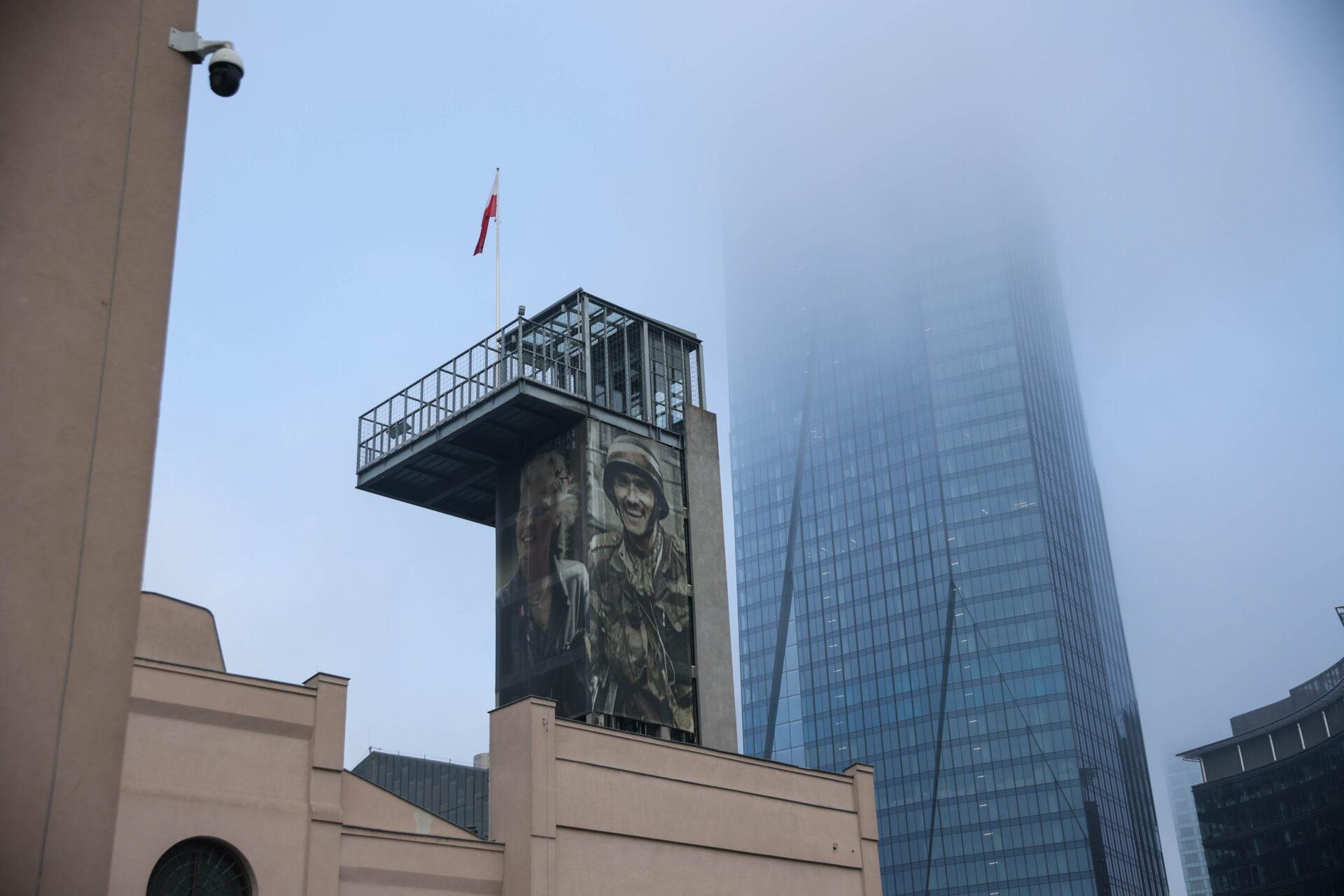
If you are in Warsaw before 1 August, the Warsaw Uprising Museum is a strong stop, especially for readers who want to understand the city beyond its postcard image. Set in a former power station, the museum tells the story of the 1944 uprising through documents, photographs, recordings, and immersive installations that make the experience feel immediate rather than distant. It is moving, thoughtful, and one of the clearest ways to grasp how deeply this chapter still shapes Warsaw.
It is also a reminder that Warsaw’s history is not just preserved in monuments, but lived through in everyday culture. The museum is detailed and emotionally heavy, so it is best seen with time and attention rather than rushed.
Tip: go before 1 August, and it will give extra resonance to a city that is still very much in conversation with its past.
More info: https://www.1944.pl/en

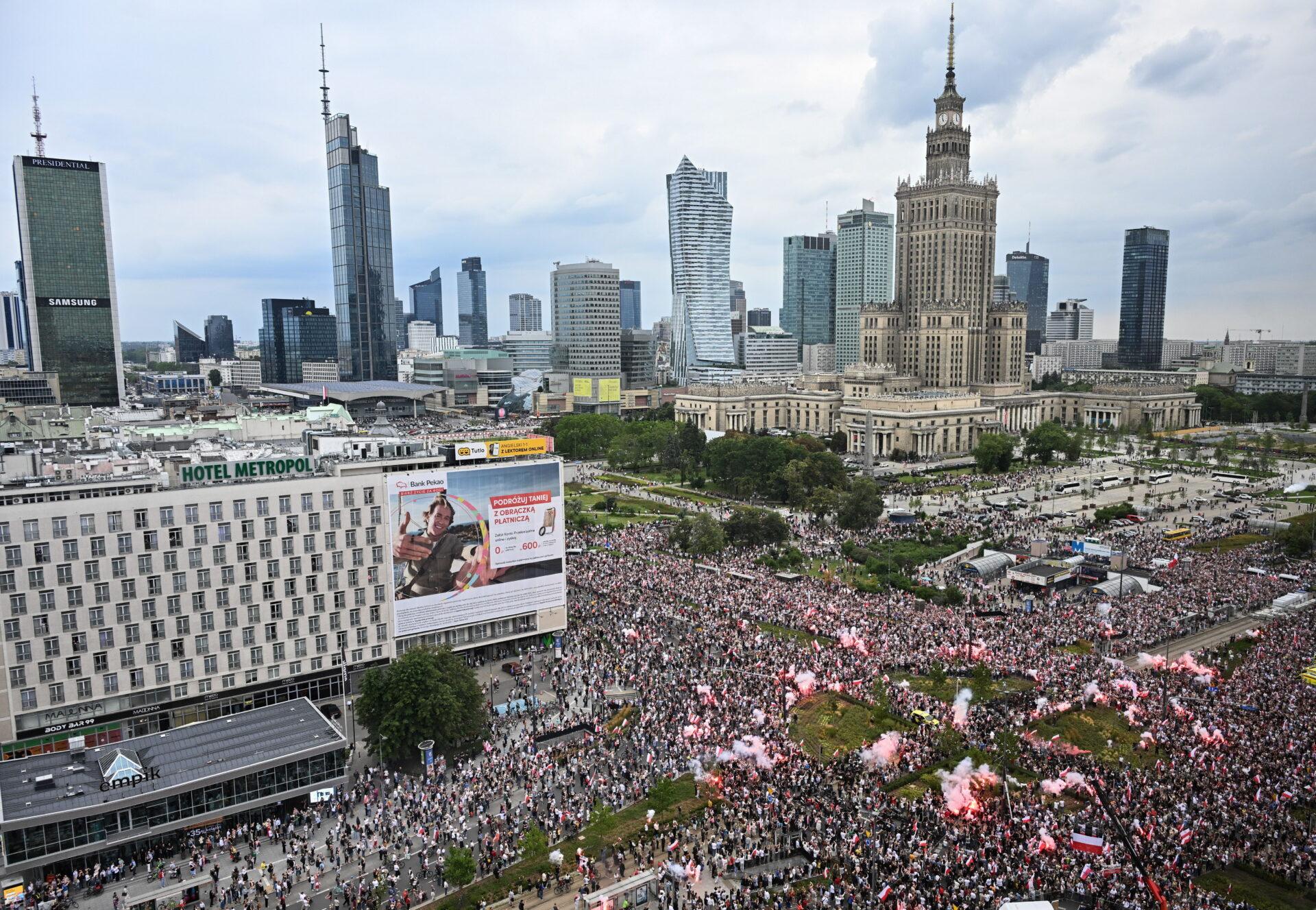
This week it's not exactly fun, but a major fact to know. Every year on 1 August at exactly 5 pm — known as the “W hour” (godzina W) — Warsaw literally pauses. Sirens sound across the city, traffic stops, pedestrians freeze mid-step, and for one minute the capital stands still.
It is a collective act of remembrance for the Warsaw Uprising of 1944, when Polish resistance fighters from the Home Army (Armia Krajowa) launched a desperate bid to liberate the city from German occupation. The uprising lasted 63 days and ended in defeat, with the city largely destroyed and tens of thousands of civilians killed. Yet in Warsaw’s memory, it is not only a story of tragedy, but also of courage, defiance, and a longing for freedom.