

This article is a part of Poland Unpacked. Weekly intelligence for decision-makers
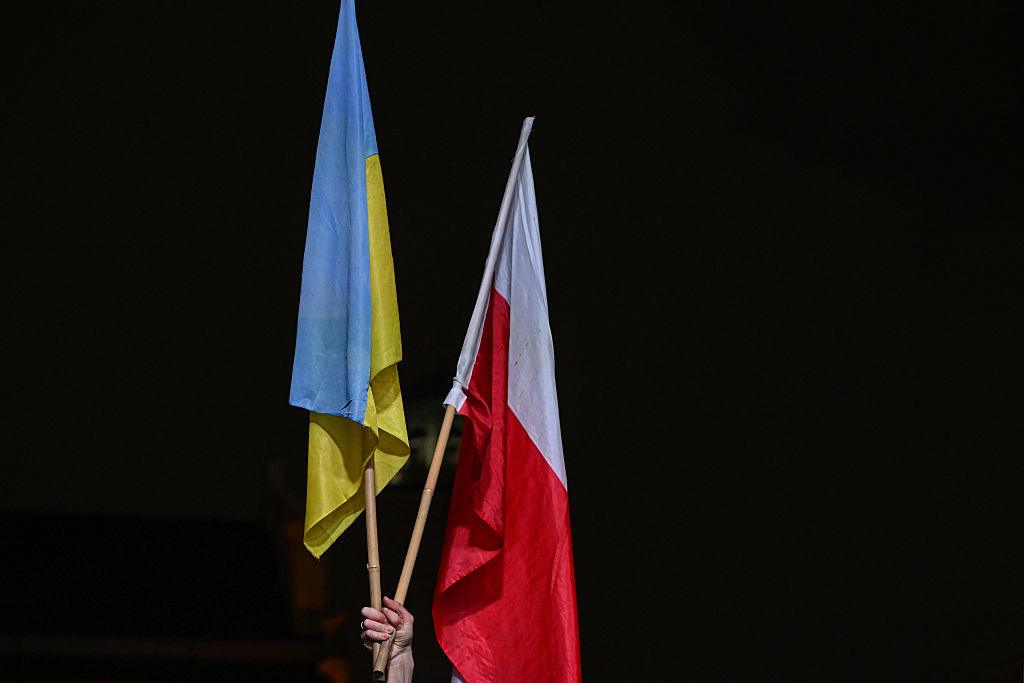
Political turmoil surrounding the decision to name a Ukrainian military unit after the “Heroes of the Ukrainian Insurgent Army (UPA)” overshadowed other political developments at the turn of May and June.
Nearly the entire Polish political class criticized the President of Ukraine for this decision. The reaction was different in the case of President Karol Nawrocki’s announcement that he would move to revoke the Order of the White Eagle from Volodymyr Zelenskyy. That statement divided politicians in Poland, although no actual revocation of the order has taken place so far.
Expert: today’s situation is not new
The Polish president’s decision has reopened unhealed wounds from the difficult Polish-Ukrainian history of the 1940s. The killing of tens of thousands of Poles in Eastern Lesser Poland by the Ukrainian Insurgent Army (UPA) has once again become the most serious fault line in mutual relations.
However, this is not the first such rupture. The friendly Polish-Ukrainian relations that emerged immediately after Russia’s invasion of Ukraine in February 2022 had long since become only a faint memory.
“Most of us view Polish-Ukrainian relations through the prism of the past four-plus years, because the full-scale war in Ukraine has, in practice, affected every resident of Poland. For those who have followed this topic for years, however, it has been a sequence of ups and downs, and what is happening today is nothing new. One only needs to recall disputes over the Lviv Eaglets Cemetery or the decision to grant the title of Hero of Ukraine to Stepan Bandera,” said Dr. Mateusz Kamionka of the Faculty of International and Political Studies at the Jagiellonian University, a political scientist specializing in Polish-Ukrainian relations.
He also points to the brighter moments in the shared recent history.
“On the other hand, we had the Orange Revolution, solidarity with Georgia after it was attacked, and finally the joint hosting of Euro 2012. Polish-Ukrainian relations have long been subject to similar fluctuations. That is why I would not point to a single event that led to a decline in Poles’ trust toward Ukrainians. The Przewodów incident, tensions around Ukrainian grain exports, or critical statements by President Zelenskyy toward Poland were important moments, because they made many Poles realize that even close partners can have divergent interests. For part of public opinion, they were also a source of disappointment,” the political scientist notes.
Explainer
The Przewodów incident
In November 2022, a missile struck the village of Przewodów in eastern Poland near the Ukrainian border, killing two people. Initial reports suggested Russian involvement, sparking fears of NATO Article 4/5 escalation, but investigations concluded the projectile was a Ukrainian air-defense missile fired during a barrage against Russian strikes on Ukraine's energy grid.
The incident underscored the risks of stray munitions from the ongoing war spilling into NATO territory and prompted Poland to bolster its eastern air defenses and border monitoring.
Deterioration? Rather normalization
According to the UJ expert, even such significant events did not, in themselves, constitute turning points in bilateral relations.
“Rather, they accelerated a process of normalization in relations that, after February 24, 2022, were assessed mainly through the lens of wartime solidarity. The only fundamental change compared with previous decades is the scale of the war and the presence of millions of Ukrainian citizens in Poland. This time, they are directly participating in the shifts taking place in relations between our countries. Unfortunately, they often become their main victims,” said Dr. Kamionka.
Ukraine as an instrument of political messaging
Sławomir Mentzen, during his presidential campaign, claimed that “Ukrainians are clogging up doctor appointment queues.” He was echoed by the then PiS-backed candidate Karol Nawrocki.
“I believe Ukrainians should not live better in Poland than Poles. I am Polish, I have Polish responsibilities, and I will carry out my presidency on behalf of Poles,” Nawrocki said at one of his rallies.
Anti-Ukrainian narratives were not only electoral fuel for right-wing candidates. Even the liberal Rafał Trzaskowski proposed limiting eligibility for Poland’s “800+” child benefit program to working Ukrainian citizens.
Explainer
What is the '500+/800+' benefit?
Poland’s most famous social program goes by two names because it changed. Originally launched in April 2016 as Rodzina 500+ (Family 500+), it is a state child benefit program that provides monthly payments for each child in the family.
From 1 January 2024, the benefit was raised from PLN 500 to PLN 800 per child per month – hence the new nickname 800+. Most Poles still use both names interchangeably.
It covers every child under 18, regardless of family income or birth order.
After the presidential campaign, the governing coalition also tapped into the growing anti-Ukrainian sentiment – among other things by deporting Ukrainian nationals who committed offenses that, if committed by Polish citizens, would typically result only in a fine.
A convenient tool for electoral mobilization…
According to the political scientist from the Jagiellonian University, this is no coincidence.
“During election campaigns, issues related to migration or relations with Ukraine become a convenient tool for mobilizing the electorate. Isolated incidents, in turn, are often presented as widespread phenomena. As a result, part of the negative sentiment does not stem solely from direct experience, but also from how these events are interpreted in public discourse,” the political scientist notes.
He also points to the reverse dynamic.
“The presence of a large Ukrainian community in Poland – estimated at more than two million people – also carries potential political and social significance, including in the context of future elections in Ukraine. Examples from other countries show that diasporas can influence political processes, although this influence is neither automatic nor one-dimensional,” says Dr. Kamionka.
…but political rhetoric is not the whole story
In his view, the growing anti-Ukrainian sentiment in society is driven not only by politicians’ rhetoric. Everyday experiences of Polish citizens also play a significant role.
“It cannot be reduced solely to the influence of politicians or the media, because millions of Poles now have direct contact with Ukrainian citizens at work, in schools, or in their neighborhoods. Such a large and rapid scale of migration always generates both positive experiences and tensions arising from competition for housing, jobs, or access to public services. It is worth remembering that until 2014, and especially before 2022, Poland was a country with relatively low levels of immigration. The outbreak of full-scale war in Ukraine abruptly changed this situation. For part of society, it was a shock that not everyone has fully come to terms with to this day. This is particularly visible in smaller towns and so-called provincial Poland, which is often invisible from the perspective of large cities,” Dr. Kamionka points out.
A shifting order does not favor mutual relations
As he adds, the source of this shock is not the attitudes of Ukrainians themselves, but a broader sense of change and nostalgia for the earlier social order.
“At the same time, from the very beginning Poland lacked a coherent, long-term integration strategy toward people who stayed and are likely to remain for the longer term. It was often assumed that the war would end quickly and that refugees would return to their country. This scenario has not materialized, which today forces a gradual adjustment of public policies and a shift from a model of ad hoc assistance to a model of gradual integration – often introduced with delay,” summarizes Dr. Kamionka.
The political scientist’s conclusions align with annual research conducted by the Mieroszewski Centre. For several years, the institution has carried out a series of studies measuring mutual sentiment between Poles and Ukrainians. Its extensive reports describe changing emotions as well as the motivations of both Poles and Ukrainians.
From friendship through neutrality…
Regular surveys make it possible to trace the evolution of Polish attitudes. Poles assessed Ukrainians most positively primarily before February 24, 2022. At that time, 43 percent of respondents declared a positive attitude toward their eastern neighbors. A further 21 percent expressed a neutral attitude, and 21 percent a negative one. Fifteen percent of respondents had no opinion. It should be noted, however, that this was a retrospective study, measuring sentiments Poles associated with earlier years.
Subsequent surveys show that sentiment changed over time. Two years after the outbreak of the war, in February 2024, attitudes looked markedly different. Only one in four Poles held a positive opinion of Ukrainians: 5 percent described it as very good, and 20 percent as good. However, the dominant assessment was neutral—41 percent. In 2024, 27 percent of respondents expressed a negative opinion of Ukrainian citizens (19 percent bad, 8 percent very bad).
 Interactive chart
 A few months later, in December 2024, similar results were recorded. A clearer shift, however, became visible in a survey conducted at the end of 2025.
…toward polarization
In a study on Poles’ attitudes toward Ukrainians living in Poland, a clear polarization of sentiment is evident. Following the presidential campaign, both positive and negative opinions increased, while neutral assessments declined.
Thirty-nine percent of respondents expressed a positive attitude toward Ukrainians in Poland. It is worth noting that this is four percentage points lower than in reference to pre-war declarations. A similar share of respondents expressed a negative opinion – 35 percent. Importantly, this is as much as 19 percentage points more than in the retrospective study referring to 2022. Only 15 percent of respondents maintained a neutral stance, while one in ten had no opinion.
The reports also identify reasons why Poles have become less sympathetic toward Ukrainians. Researchers note that respondents most frequently cited perceived entitlement, a sense of preferential treatment and unequal treatment, as well as economic competition. Added to this are perceptions of weak integration with Polish society and historical disputes surrounding the Ukrainian Insurgent Army (UPA), which have intensified current tensions to a boiling point.
Prof. Bachmann: xenophobia is also rising in Europe
Could such an accumulation of negative emotions have been avoided? According to Prof. Klaus Bachmann of SWPS University, it was not possible.
“But our politicians did not have to enter a race over who is more anti-Ukrainian, thereby fueling such sentiments,” adds Prof. Klaus Bachmann.
In his view, such trends were inevitable given the occurrence of multiple crises at the same time.
“First the pandemic, then Russia’s war against Ukraine. This always triggers fears and anxieties, and with them xenophobia increases. It does not rise only in relation to Ukrainians, but also Germans, Americans, and many other nations and ethnic groups (with very few exceptions). This is not only the case in Poland, but also in Germany and other European countries. It has nothing to do with the ethnic structure of a given society. The same happened in Poland in the late 1990s, when it was practically mono-ethnic,” says Prof. Bachmann.
In his view, xenophobic attitudes can emerge even when minorities are not visibly present.
“Xenophobia does not need ‘others’ in order to develop hostility toward them. It can imagine them, invent them. There were surveys in the 1990s in which Poles believed that several million Jews lived in Poland and disliked them – despite the fact that they were not there. I would caution against assuming that the current wave of hostility toward Ukrainians has anything to do with Ukrainians themselves. Just as hostility toward Jews and Muslims in Germany has nothing to do with ‘what they are like’. It has to do with what Germans are like,” says Klaus Bachmann.
The SWPS political scientist also points to short-term political interests behind narratives directed against other ethnic groups.
“Politicians do not decide what we think, but they largely decide what’s on our minds and what we discuss. They can amplify certain topics and downplay others. Sometimes it is worth lifting one’s eyes from polling tables and asking whether this will still matter in a few days. Not to be swayed by momentary moods. When such moods are followed, decisions are made such as shutting down all nuclear power plants in Germany because of an earthquake in Japan,” concludes Prof. Bachmann.
What comes next?
Finally, it is worth asking: what next? The answer is far from straightforward, as Dr. Mateusz Kamionka reminds us.
“The issue of commemorating the UPA is highly complex. Since 1991, Ukraine has not developed a coherent historical policy and has often balanced between competing, including more radical, narratives. For that reason, a serious debate should already have taken place in the 1990s about how Ukraine wanted to commemorate the UPA: whether as a single, unified phenomenon, or in a more differentiated way, taking into account the responsibility of particular individuals and formations, including in the context of crimes committed against civilians. That discussion never happened,” the political scientist notes.
The result is a dispute that continues to this day.
“The question is how Ukraine now intends to shape its politics of memory. If it moves toward a strongly heroic narrative of the UPA and an ‘alone against everyone’ mindset, it will be difficult to find a place within that narrative for Poland or the West. If, however, it grounds its memory policy in the experience of the modern Ukrainian state – including the defensive war and cooperation with the West – the effect could be the opposite. It could become a force that unites rather than divides,” Dr. Kamionka argues.
Dr. Kamionka: We are not making use of our soft power
And what role should Poland play in all this? And what should Ukraine take into account?
“We should not interfere directly. What we can do is consistently present our own position – for example through soft power, which we are currently making virtually no use of.
There is another issue. Ukraine must recognize that the support of Poland and the West is not guaranteed forever. It will depend on politics, tangible interests, and the ability to build lasting relationships with partners.
In the longer term, Ukraine will have to answer a fundamental question: how to reconcile historical memory with the challenges of the present day. Every state has the right to pursue its own politics of memory, but at the same time it must consider how that policy is perceived by its closest neighbors and allies.
That is why the key challenge will be to find a narrative that allows Ukraine to preserve its own history without closing the door to cooperation with those who today support the country politically, militarily, and economically,” the political scientist concludes.


Key Takeaways
- The decision to name a Ukrainian military unit after the “Heroes of the UPA” has reignited tensions between Poland and Ukraine. As experts point out, however, strains in bilateral relations had been building for years. Politicians have played a role in this process, often capitalizing on growing public resentment toward the country’s newest residents.
- The shift in Polish attitudes stems from everyday social tensions and the state’s failure to develop an effective integration policy. Research by the Mieroszewski Centre confirms a sharp decline in sympathy and an increasing polarization of public sentiment. For many citizens, the initial spirit of solidarity has given way to disappointment as it collided with competition for housing, jobs, and public services at the local level.
- According to Dr. Kamionka, the future of Polish-Ukrainian relations will depend heavily on the direction of Ukraine’s historical policy. Building national identity solely around an uncritical glorification of the UPA risks isolating Kyiv from key allies in the region. Poland, for its part, should refrain from direct interference and instead focus on steadily strengthening its influence through the tools of soft power.