

This article is a part of Poland Unpacked. Weekly intelligence for decision-makers
Polish startup TesterArmy has closed a pre-seed round worth about USD 1.2m, or more than PLN 4.5m. The funding came from Y Combinator, three venture-capital funds and a group of angel investors with ties to the global developer-tools market.
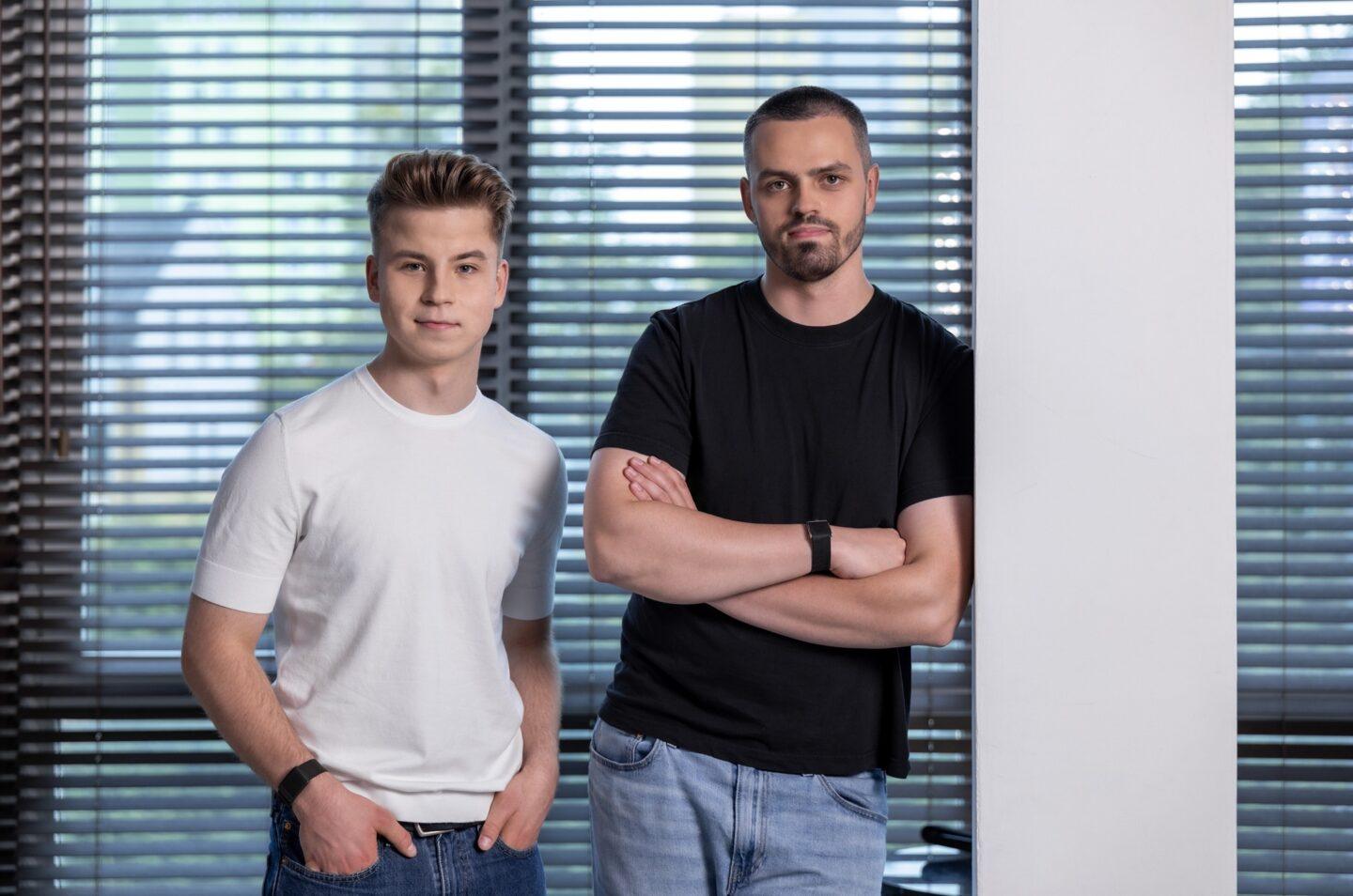
TesterArmy is one example of Polish entrepreneurial success beyond the country’s borders. The startup developed within Y Combinator, the legendary San Francisco accelerator. Its founders, however, met while working at Poland’s Callstack. Szymon Rybczak, the company’s CEO, was still a technical-school student when TesterArmy joined the accelerator. What persuaded investors? The idea – and the execution.
The startup plans to use the funding to develop AI agents that independently test web and mobile applications, as well as to expand its team. The company already has more than 50 paying customers and, according to its CEO, revenue has been growing by about 50% month on month in recent months.
“We like working closely with our customers. We often call them partners because their feedback helps shape the direction in which we develop the platform. We are also constantly working to ensure that as many users as possible use the platform regularly,” says Szymon Rybczak, CEO and co-founder of TesterArmy.
As interesting as the company itself is the roster of investors that have backed the startup. Alongside Y Combinator, the round included AIP Seed, Eight Capital and Script Capital. The list of individual investors is deeply rooted in the software world. They include Guillermo Rauch, founder and CEO of Vercel; Charlie Cheever, CEO of Expo and co-founder of Quora; Mike Grabowski, co-founder of Callstack; Fryderyk Wiatrowski, CEO and co-founder of Viktor; as well as Bartek Pucek and Piotr and Tomasz Karwatka.
TesterArmy’s investors: tech-world heavyweights
The investor roster is no accident. Vercel is one of the better-known companies building infrastructure and tools for web application development, while Expo develops a platform that makes it easier to build apps for iOS and Android, among other platforms, using React Native. Both of TesterArmy’s co-founders, Szymon Rybczak and Oskar Kwaśniewski, previously worked at Callstack.
The institutional investors also fit the profile of a young technology company. AIP Seed describes itself as a private fund investing at an early stage in companies with global potential, with a particular interest in artificial intelligence. Eight Capital focuses, among other areas, on AI, infrastructure and developer tools, as well as investments in Y Combinator companies ahead of Demo Day. Script Capital, meanwhile, is a San Francisco-based fund investing at the pre-seed and seed stages in internet and software startups.
Polish angels back TesterArmy
The group of angel investors also includes entrepreneurs well known in Poland’s technology sector. Brothers Piotr and Tomasz Karwatka built, among other businesses, Divante and now run the investment firm Catch the Tornado. Through it, they have backed dozens of startups, including ElevenLabs at an early stage. Mike Grabowski, meanwhile, is a co-founder of Callstack – the former employer of TesterArmy’s young founders.
The round is intended primarily to give TesterArmy time to develop its product and find a repeatable growth model. The company says it does not want to return to the market quickly for another round of funding.
“The funding we have raised is meant to give us a comfortable runway for further development, without the pressure to raise another round quickly. We now want to win even more customers and build a repeatable way of acquiring them. We will also continue developing our platform. But another funding round will depend on reaching the right level of maturity and proving that we can work with the world’s largest companies,” says Szymon Rybczak.
Expert's perspective
A team with experience and ambitions to build a global business
We were also persuaded by the company’s field of activity. TesterArmy uses AI agents to automate QA and software testing. The agents launch an application in a real browser or on a mobile device and use it in a way similar to a real user – clicking, entering data, moving through successive processes and checking whether the application works properly. This allows them to detect not only previously defined bugs and regressions, but also problems the team did not anticipate.
What is particularly interesting is how the solution integrates with the development process. TesterArmy can be run on every pull request: the agent analyzes the changes introduced, prepares a test plan tailored to the specific PR, then executes it in the application and reports the results directly in GitHub. This means testing can become an integral part of the software-development process rather than a stage that comes only after the product has been built.
We see considerable potential in this, particularly given the growing use of AI by software-development teams. AI now allows developers to build software much faster, but at the same time it increases the importance of automated QA – faster code creation should not mean a proportionate increase in the number of bugs. TesterArmy addresses precisely this problem by automating a significant part of the testing process and allowing teams to ship new features faster while maintaining greater confidence in product quality.


An agent instead of another test script
TesterArmy is trying to solve a problem that is growing alongside the pace of software development. Tools based on generative AI are increasingly helping developers write and modify code, allowing teams to release new product versions faster. Quality assurance, however, can become a bottleneck: every change can break a feature that previously worked properly, while manual testing and conventional automated tests are costly to maintain.
“Our customer can be any company that develops software and cares about making sure users can use its products without problems or frustration. All of us can think of plenty of situations in which an app froze, prevented us from carrying out a simple task or simply did not work. TesterArmy’s goal is to catch such bugs before the application reaches users. We are seeing the strongest interest from companies that regularly release new versions of their products and do not want quality to deteriorate as development speeds up,” explains Szymon Rybczak.
Expert's perspective
How to solve the problem
How programming will change in the age of AI
TesterArmy wants to become one of the control mechanisms for software built with AI. Users do not need to write test scripts or define technical details. Instead, they describe in natural language the outcome they want to verify. A sample instruction might be: “Log in, add a product to the cart, complete the payment.” The agent opens the website or mobile app, clicks through it, fills in forms and checks whether each stage of the user journey works properly.
According to the company, the system can also handle logins and verification codes sent by email or SMS. It does not need access to the customer’s source code: a website address or access to the app is enough. Tests can be launched manually or triggered automatically when code changes are made, allowing the system to check both a new feature and critical user journeys.
“Traditional automated tests follow a rigid scenario. Our AI agents work toward a goal and based on the user’s intent. You only need to describe in plain language what should happen, and the agents adapt to changes in the product themselves. Our mission is to make testing as simple as possible for fast-moving teams,” says Oskar Kwaśniewski, CTO and co-founder of TesterArmy.
Good to know
AI is spreading across business, but it is still early days
Artificial intelligence has already entered the business mainstream, but most companies are still not using it at scale. According to a 2025 McKinsey survey, 88% of organizations regularly use AI in at least one business function. A year earlier, the figure was 78%.
At the same time, as many as 62% of organizations using AI are still at the experimentation or pilot stage. Only 31% say they are scaling AI solutions, while 7% have fully deployed them across the organization.
In software engineering, 52% of respondents using generative AI in that function reported lower costs in the second half of 2024. That was one of the highest results among the business functions analyzed. In the months that followed, AI adoption in the sector accelerated significantly.
More than 50 customers and fast revenue growth
TesterArmy’s solution has already been tested in the real world. The company was selected for Y Combinator’s Spring 2026 batch. The accelerator has a near-legendary reputation for identifying some of the world’s most promising startups.
At the same time, more than 50 teams already use the TesterArmy platform, ranging from seed-stage startups to companies that have completed a Series C round. Its users include Resend, bolt.new, Novu, CodeCrafters, Rork and Nando’s.
TesterArmy’s business model
The sales model is designed to be as self-service as possible. Any user can sign up and start testing the platform without first speaking to a salesperson. According to the company, most customers follow this route. Even larger companies often test the tool independently first and only later schedule a sales call.
Y Combinator initially played an important role in customer acquisition.
“Y Combinator helped us enormously at the start. It gave us credibility, contacts and our first conversations with customers. Today, referrals are playing an increasingly important role. At the same time, we are investing in our own marketing so that customer acquisition does not depend solely on the YC network,” says the company’s CEO.
TesterArmy now wants to reduce its reliance on that network. Rybczak says most customers have been acquired through activity in developer communities, primarily on X, while referrals and the company’s own marketing are becoming increasingly important.
A Polish base, with America in its sights
Although TesterArmy is focused on the United States, the team’s operational base remains in Poland. The company currently employs six people and, according to Rybczak, all of them are Polish. The product is built in Poland, and this is where the startup plans to continue hiring, primarily developers and people who can help customers implement the platform.
In the longer term, however, the team is expected to become more international.
“We already have customers all over the world. Europe accounts for a significant share, but we are not limiting ourselves to a single region. The United States is also becoming increasingly important to us. Our priority is to build a presence there and win increasingly large customers. When talking to bigger international clients, you have to overcome the usual barriers – trust in a young company, their internal procurement processes and security requirements. We also need to show that the product works at greater scale and across different markets,” says the company’s CEO.
Competition is growing with the market
TesterArmy does not operate in a vacuum. As code-generation tools become more widespread, an entire category of products designed to automate software verification is expanding alongside them. One company in this segment is US-based Momentic, which said in November 2025 that it had raised USD 15m in a Series A round led by Standard Capital. The startup is also building tools to automate software testing in a world where developers, aided by AI, are shipping changes ever faster.
TesterArmy says its advantage lies in treating testing as a task performed by a user rather than as a set of rigid technical instructions. A second differentiator is support not only for web applications but also for mobile apps. The team has experience in this area from its previous work. Szymon Rybczak and Oskar Kwaśniewski worked together first at the MyMusic record label and later at Callstack, a company specializing in React Native and cross-platform technologies.
Rybczak’s story is unusual even by the standards of the young startup world. He started programming at the age of 14 and was already working with LiveKid at the time. During the accelerator program, he traveled between San Francisco and Poland in order to take part in the program and sit his high-school leaving exams. His YC profile also notes that he previously developed open-source projects related to React Native.
“For years, we built mobile applications for other companies and saw how much work it takes to check whether everything still works after each change. Teams usually know very well what needs to be tested, but they do not have enough time to do it. AI is making code production even faster, so the problem is only getting bigger. We built TesterArmy so that it would be enough to describe what is supposed to work and let the agent check it,” says Szymon Rybczak.


Key Takeaways
- TesterArmy is developing a platform in which AI agents independently test web and mobile applications from the user’s perspective. Instead of writing conventional scripts, users simply describe the expected outcome in natural language, and the system carries out the relevant actions in the application and checks whether they work correctly. The tool can also analyze changes introduced in pull requests, prepare a testing plan and report the results directly in GitHub. In this way, the company aims to address a growing problem: AI is accelerating code creation, while traditional quality-assurance processes may struggle to keep pace.
- The startup already has more than 50 paying customers, including Resend, bolt.new, Novu, CodeCrafters, Rork and Nando’s. According to CEO Szymon Rybczak, the company’s revenue has been growing by about 50% month on month in recent months, although TesterArmy does not disclose the absolute figure. Its customer-acquisition strategy relies primarily on self-service sales, referrals and activity in developer communities. Y Combinator played an important role in securing its first customers, but the company wants gradually to reduce its dependence on the accelerator’s network for acquiring new users.
- The new funding is intended to allow TesterArmy to develop its product, expand its team and build a repeatable growth model without having to raise another round quickly. Investors include Y Combinator, AIP Seed, Eight Capital, Script Capital and a group of entrepreneurs from the global and Polish technology sectors, including founders or executives associated with Vercel, Expo and Callstack. The company’s operational base remains in Poland, but the United States and increasingly large international customers are its strategic focus. TesterArmy is also operating in a growing and increasingly competitive market for AI-assisted test automation.