

This article is a part of Poland Unpacked. Weekly intelligence for decision-makers
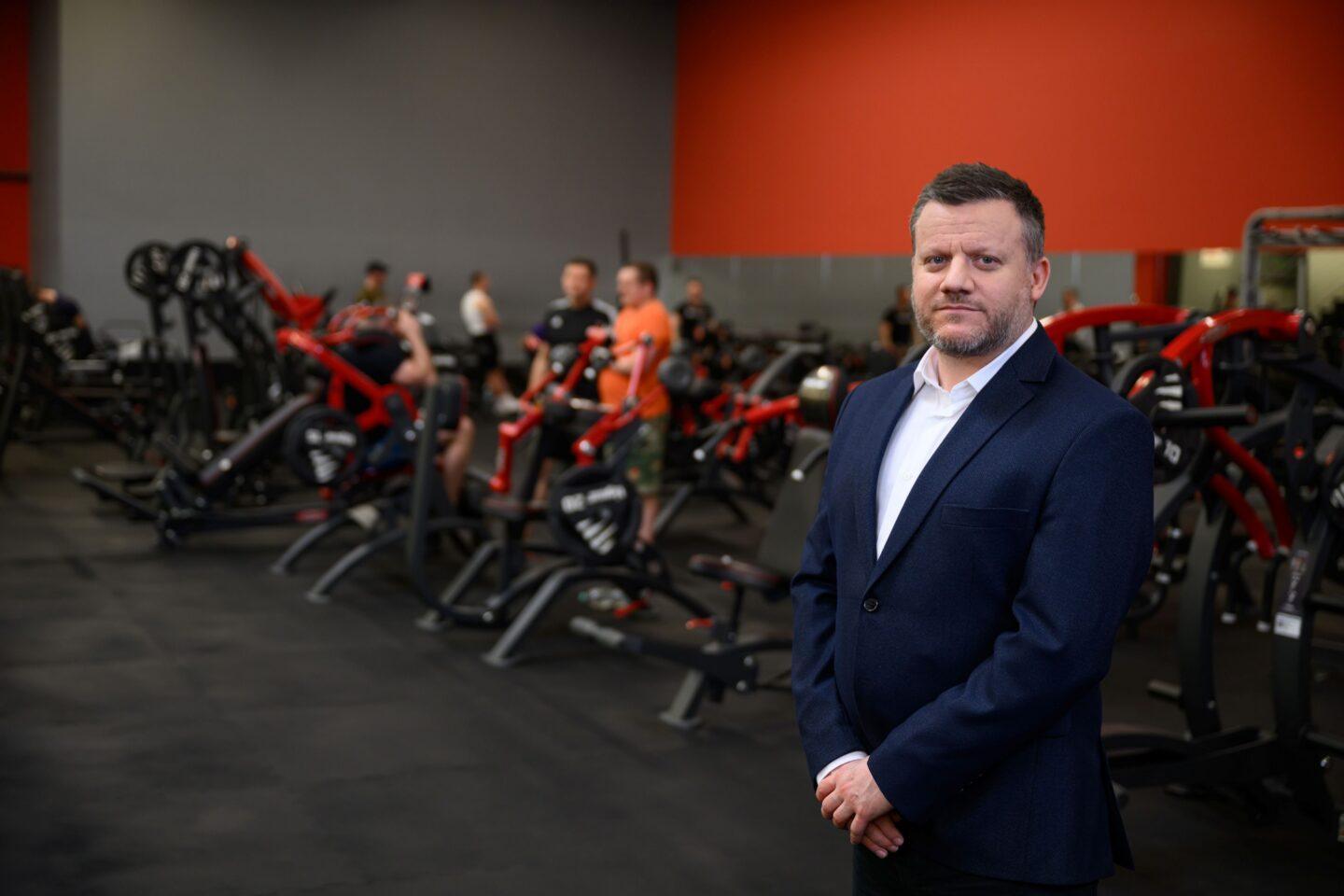
“I started from scratch—literally with a gym in a basement,” Łukasz Dojka, co-founder of Xtreme Brands, told XYZ. A little over a decade later, he is well on his way to building the largest fitness group in Central and Eastern Europe. Since 2025, the company has been backed by private equity fund bValue.
This year, Xtreme Brands will open more than 100 franchised Xtreme Fitness Gyms (XFG) and Xtreme Kids (XK) indoor play centers. That will bring its total network in Poland to nearly 300 locations. By 2030, the company aims to operate 750 sites across Central and Eastern Europe (CEE). Reaching that goal will be supported by the launch of a third business line, first announced by XYZ earlier this year.
 Interactive chart
 Poland a natural choice for the Australian giant
Xtreme Brands has become the master franchisee for premium boutique fitness brand Strong Pilates. The Australian concept combines Pilates with strength and cardio training, using its proprietary Rowformer and Bikeformer machines—Pilates reformers integrated with a rowing ergometer and a stationary bike, respectively.
If the brand delivers on its growth plans, it will operate several hundred studios across more than 20 countries worldwide in less than a decade since its launch in 2019.
“Xtreme Brands is one of the leaders in the fitness and wellness industry. It has a strong position in franchising, extensive experience, and values that closely align with ours. We are firmly convinced it is the right partner to drive our expansion across Central and Eastern Europe,” says Michael Ramsey, co-founder and chief executive of Strong Pilates.
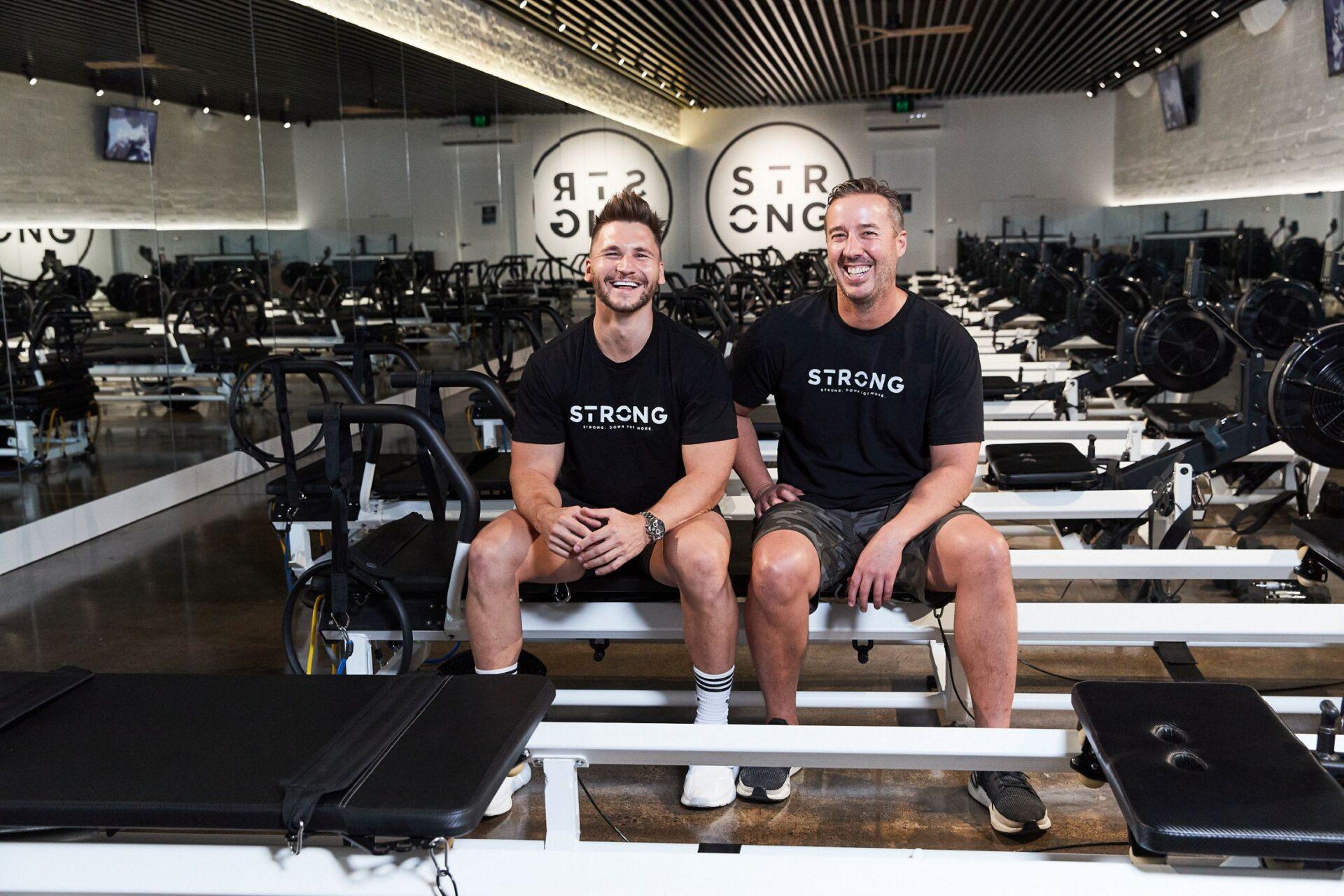
Strong Pilates already operates across several continents, with a presence in markets as diverse as the United States, the United Kingdom, Singapore, and Indonesia.
“The next step in Europe was only a matter of time—and of finding the right partner: one with experience, a robust operational platform, and a proven track record. Central and Eastern Europe is an attractive market thanks to rising consumer incomes, a rapidly growing fitness culture, and the near absence of chain competition in the premium Pilates segment. The first professional operator has an opportunity to set the benchmark,” says James Cotton, chief executive of Xtreme Fitness Gyms and Xtreme Kids.
Good to know
From Australia to the world
Sometimes a business is born out of personal need. That was the case with Strong Pilates. Michael Ramsey and Mark Armstrong had previously built a franchise network of fitness clubs based on the F45 concept, which combines strength and functional training. In 2019, Ramsey suffered an ankle injury that forced him to stop taking part in his usual workouts.
He then turned to reformer Pilates but found himself missing cardio and weight training. Together with Armstrong, he developed a workout system combining all three elements, built around specially designed machines. That became the foundation of Strong Pilates, the franchise they launched in 2019, offering workouts designed to place less strain on the body.
After opening several dozen studios in Australia, the founders began expanding internationally, with a particular focus on the United States. Today, Strong Pilates operates more than 120 studios serving over 50,000 members across more than a dozen countries. The company plans to open hundreds more locations, with around 200 already confirmed. Annual revenue has surpassed USD 75 million.
The role of Central and Eastern Europe
The Polish company has secured the rights to develop the Australian brand across ten Central and Eastern European countries. It is, however, taking a decade-long approach to expansion. The first steps will focus on proving the concept’s appeal in its home market, establishing the optimal efficiency of an individual studio, and building an instructor academy. The next market will be the Czech Republic, where Xtreme Brands is already developing its two other concepts. In subsequent countries, XFG will pave the way for Strong Pilates.
“We want Central and Eastern Europe to become one of Strong Pilates’ most important growth regions. In Australia, the brand built a network of several dozen studios within a few years, and despite the presence of many other operators, demand has yet to be fully met. The same is true in the United States, where hundreds of boutique studios of this kind are opening in a short period of time. In the largest cities, there can be more than a dozen such locations, while lasting consumer habits are also taking shape in regional centers,” says James Cotton.
He considers Central and Eastern Europe one of the world’s most attractive yet still largely untapped boutique fitness markets. Poland’s potential is underpinned by its population of 38 million, the sector’s rapid professionalization, and growing demand for premium services that is gradually expanding beyond the country’s largest metropolitan areas.
“Even with conservative assumptions about purchasing power and category maturity, Poland’s long-term potential supports the development of a network comprising many dozens of studios. I deliberately avoid setting a maximum size for the network. Every limit we initially set for XFG in its early years eventually proved too low,” says James Cotton.
A considered move into premium fitness
At the beginning of 2025, Xtreme Brands decided that its third pillar would be a boutique fitness concept. Both of its existing brands grew out of small and medium-sized cities and target a broad consumer base. Neither, however, serves the premium segment, which is expanding rapidly and attracting customers with the greatest willingness to spend more.
“By adding a boutique concept to our offering, we are covering the full spectrum of consumer spending on physical activity. Each of our networks addresses different needs, works in different settings, and sometimes attracts entirely different customers. This allows us to expand our addressable market,” explains James Cotton.
The timing of the market entry is also important. For years, Xtreme Brands helped build demand for affordable fitness services in Poland. Now, it aims to benefit from the rapid growth of a customer segment that values specialization, community, and measurable results more highly than price.
“Premium customers are more demanding, which is why the consistent standards, quality assurance systems, and training infrastructure we have developed are so valuable. In boutique concepts, success depends on the areas where our franchisees already have strong expertise: intimate spaces, a strong sense of community, and effective management of studio capacity,” argues James Cotton.
Expert's perspective
Betting on Pilates and premium fitness makes sense
The market is highly fragmented and concentrated primarily in the capital. More than 300 studios operate nationwide, with around 100 located in Warsaw. This shows that the Polish market is still in the early stages of development and is likely to undergo consolidation. The largest player, Polka Pilates, operates only a dozen or so clubs. There is, however, no shortage of excellent instructors.
Pilates in Poland is concentrated in major cities, where Xtreme Brands has so far had a limited presence. This is a challenge for the company, but also an opportunity to establish a stronger foothold in the country’s largest urban centers with a concept tailored to local consumers. Fine-tuning the model independently before launching a franchise is a rational approach that improves the chances of success.
Xtreme Brands has already demonstrated on the fitness club market that it can successfully develop a business using this model. It has also overcome a barrier in a market dominated by sports cards offered as employee benefits.
Poland already has sufficient demand for premium fitness services, while a clear supply gap remains. Filling that gap, however, is not easy. Many operators have tried, but none has so far built a strong position. The international chain Orangetheory Fitness withdrew from Poland after several years of operations and the opening of several clubs, leaving behind significant debt. The premium Pilates segment also includes Australian brand Lagree, but it currently operates on a limited scale.


Franchise model helps capture a market opportunity
Although Xtreme Brands has successfully built two brands from the ground up, it opted for a master franchise agreement for its third. The decision was driven by an understanding of how long it takes to develop a concept into a mature franchise model, as well as an appreciation for the expertise and effort required to achieve that milestone.
Strong Pilates offers a training format that is difficult to replicate, has already been validated across several continents, and is built around proprietary equipment. At the same time, the timing for expansion in the Pilates segment is particularly favorable.
“Global demand for reformer-based workouts is growing faster than in almost any other segment of the fitness industry. The supply of such services in our region remains clearly insufficient. If we had spent three or four years developing our own concept, testing formats, and designing proprietary equipment, we would have entered the market too late—after the first professional operators had already gained an advantage,” explains James Cotton.
He points out that a traditional reformer Pilates studio is relatively easy to replicate. All that is needed is to lease a space and purchase the equipment. Strong Pilates’ model is protected by equipment that is not available for retail purchase, proprietary training programs, and an established brand. For a network ultimately spanning ten countries, this barrier to entry is of fundamental importance.
“The limited number of instructors in the region remains a constraint, reflecting the market’s early stage of development. However, Strong Pilates has a proven certification program operating across multiple countries, and we train hundreds of fitness professionals each year. Building a local instructor academy will be one of our first and most important investments as a master franchisee. Solving the challenge of access to qualified trainers will give us a strong position across the entire category,” says James Cotton.
Pilates is not a fad, but a lasting trend
Before choosing Pilates, the company evaluated several potential directions. These included boutique concepts focused on strength training, as well as ventures related to nutrition, recovery, and broader wellness. The decision was driven in part by the segment’s exceptional growth rate and the durability of consumer demand.
“Reformer Pilates is not a short-lived trend. It has been growing rapidly for several years in the United States, Australia, and Western Europe. Its growth is fueled by a fundamental shift in consumer preferences, with more people seeking forms of exercise that place less strain on the body while supporting fitness, health, and longevity. Industry reports regularly identify Pilates as one of the fastest-growing categories of booked fitness classes worldwide,” explains James Cotton.
In his view, Pilates also attracts people whom traditional fitness clubs have struggled to reach and retain. The Strong Pilates concept, enhanced with elements of strength and endurance training, appeals to an even broader audience, including men. The fragmented nature of the regional market was another important factor.
“The market is dominated by independent studios operating under different standards. The structure is similar to what the fitness industry looked like years ago. We leveraged this opportunity when developing Xtreme Fitness Gyms. When you recognize the same pattern for a second time, you have to move quickly,” says the executive.
Expert's perspective
A rational move into Pilates
Starting exercise early enough can reduce the risk of injuries later in life and, in turn, lower the likelihood of needing complex rehabilitation to restore mobility. The growing importance of Pilates is therefore driven not only by the broader fitness trend. In developed markets, another significant factor is population ageing and the resulting increase in demand for preventive forms of physical activity.
I congratulate Xtreme Brands on its strategic thinking and careful observation of market trends. The company’s accumulated experience provides a strong foundation for the dynamic development of Strong Pilates, not only in Poland. This direction does not surprise me. Xtreme Brands has an excellent understanding of customer needs and operates effectively in the B2C segment.
Own studios first, franchise later
The first Strong Pilates studio and training center in Poland will be established in Tarnów, near Xtreme Brands’ headquarters. This year, the company will focus on building the foundations of the new business. Initially, it will operate several flagship locations itself in order to set standards, refine the economics of an individual studio, and create the infrastructure needed to support its first franchisees. In doing so, it will replicate the approach previously proven with XFG and XK.
“Next year, we will accelerate, and after that we plan to expand the network at a pace comparable to Strong Pilates’ growth in other countries. And that has been far from slow,” says James Cotton.
This year, existing Xtreme Brands franchisees will have the opportunity to sign agreements. There are more than 200 of them, and some already operate several locations. Depending on their level of interest, new partners may also gain access to the Strong Pilates concept in 2027.
“On every market, the growth engine behind Strong Pilates is the community of entrepreneurs who already operate their own Pilates studios. We expect a similar dynamic in our region. The new concept allows us to reach an entirely new group of entrepreneurs for whom a boutique studio could become their first step into franchising. A full-scale fitness club requires a significantly larger investment and is more difficult to launch,” says James Cotton.
Sports cards? Not at first
While Xtreme Brands typically looks for gym locations ranging from 600 sq m to 1,000 sq m, a Strong Pilates studio requires only around 300–400 sq m. This expands the pool of potential sites. Initially, the company plans to focus on the largest cities, ideally near existing XFG clubs or XK indoor play centers.
“In boutique fitness, convenience is crucial. With workouts taking place three, four, or even five times a week, the studio needs to be part of a customer’s daily routine rather than require a special trip. More important than the size of the space are natural light, a highly visible storefront, and easy access. We are looking for ground-floor locations on major shopping streets, in mixed-use centers, and in districts that combine residential and office developments,” says James Cotton.
The fitness market in Poland—particularly its chain segment—is dominated by sports cards offered as employee benefits: MultiSport by Benefit Systems, Medicover Sport, and PZU Sport. Access to Strong Pilates through such programs will become possible only over time and in selected cases.
“The core model will be recurring memberships and class packages. Boutique fitness works because of close customer relationships. Participants book specific classes, know their instructors, track their progress, and become part of a community. This is how the strongest boutique brands build their premium positioning, and this is how Strong Pilates operates globally,” says James Cotton.


Key takeaways
- The Australian concept is taking the world by storm. Strong Pilates was founded in Australia in 2019 by Michael Ramsey and Mark Armstrong. They developed a workout concept that combines Pilates with strength and cardio training. It uses proprietary Rowformer and Bikeformer equipment—Pilates reformers integrated with a rowing ergometer and a stationary bike, respectively. Within a few years, the founders built a franchise network of several dozen studios in Australia and successfully began expanding into the United States. Today, more than 120 clubs operate under the brand, serving over 50,000 people across more than a dozen countries. The company plans to open hundreds of additional locations, with around 200 already confirmed.
- Poland is only the beginning. Xtreme Brands has become the master franchisee of Strong Pilates, with the rights to develop the brand across ten Central and Eastern European countries. Later this year, it will open its first company-owned locations to refine the concept in the local market, as well as an instructor training center. Further expansion will be carried out through the franchise model. In Poland alone, the company sees room for many dozens of Strong Pilates studios. The regional growth plan is spread over a decade, with the Czech Republic set to become the first international market.
- A major achievement and an even more ambitious goal. Over the past several years, Xtreme Brands has become one of the largest fitness groups in Central and Eastern Europe. This year, it will open more than 100 franchised Xtreme Fitness Gyms and Xtreme Kids indoor play centers. That will bring its total network in Poland to nearly 300 locations. The company’s target for 2030 is 750 sites across the region. Strong Pilates, its third business line, is expected to help achieve this goal. The premium boutique concept expands the company’s offering, which until now has primarily targeted a broad customer base.