

This article is a part of Poland Unpacked. Weekly intelligence for decision-makers
A little over a decade ago, Poland was, for many foreign tourists, little more than a transit country. Today, it is increasingly becoming a destination in its own right. “We have enormous, still underappreciated tourism potential,” says Grzegorz Gacek, owner of luxury hotels. At the end of May, he is set to open another property.
Poland is strengthening its position on Europe’s tourism map, and the premium hotel market is beginning to compete effectively with Western resorts. A telling example is the story of Grzegorz Gacek, a former Coca-Cola executive who now develops luxury properties in the Pieniny mountains and in Lower Silesia.
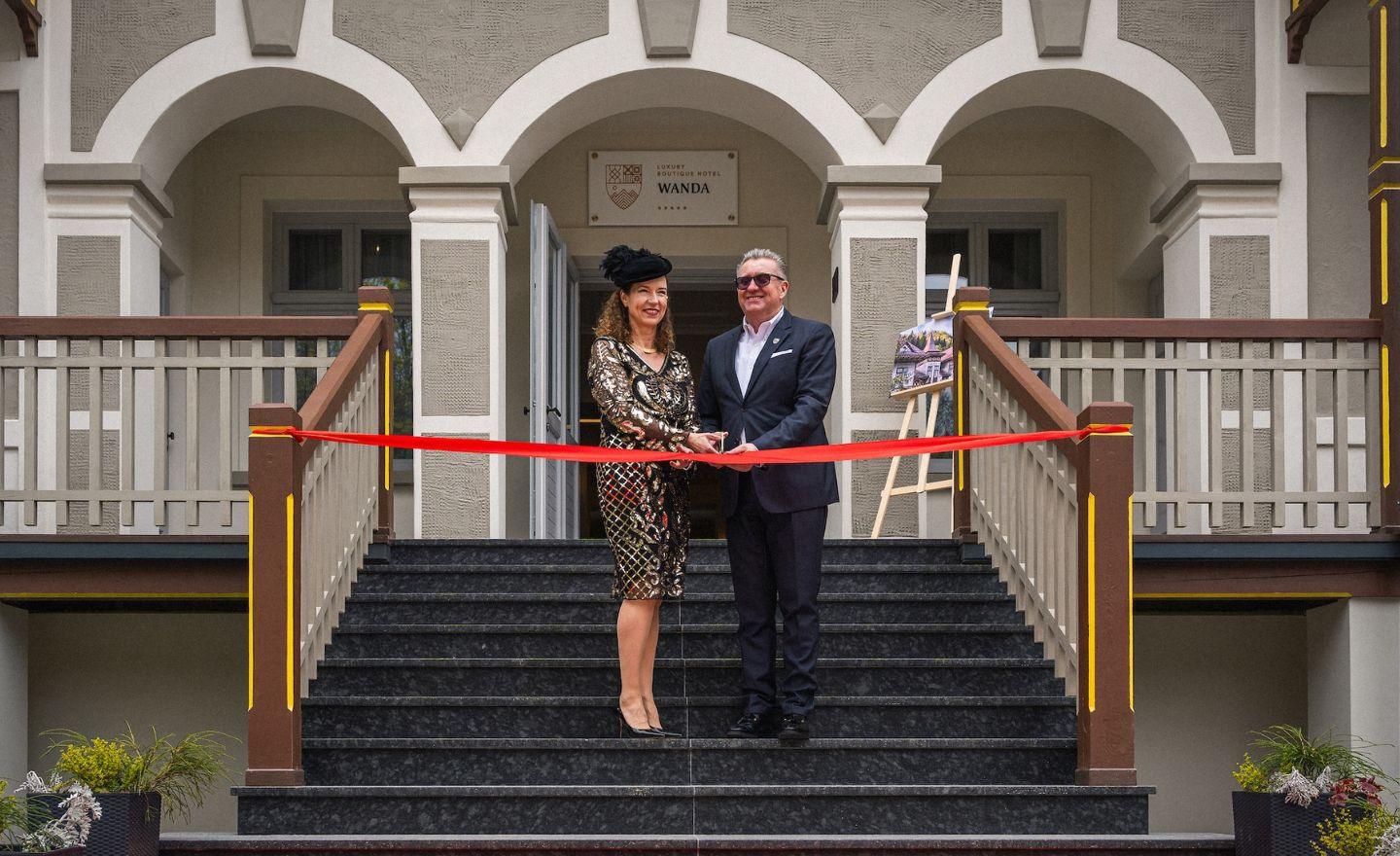
On May 29, he will open another property – the Wanda Luxury Boutique Hotel in Szczawnica. The intimate hotel has been created in a carefully revitalized building that once housed the historic Villa Wanda. It combines a boutique character with a high standard of hospitality and the local history of the region.
A story that began far from hospitality
For years, Grzegorz Gacek managed Coca-Cola’s European operations and moved within the world of global corporations. Today, he is developing one of Poland’s most distinctive premium hotel groups. He does not, however, see his trajectory as a matter of luck.
“Did I succeed? ‘It happened’ is a passive way of putting it. I built it. Over 25 years, I changed employers only three times. Today, that would be almost unthinkable. Everything was the result of decisions, risk-taking, and very hard work,” says the CEO of HSP Management.
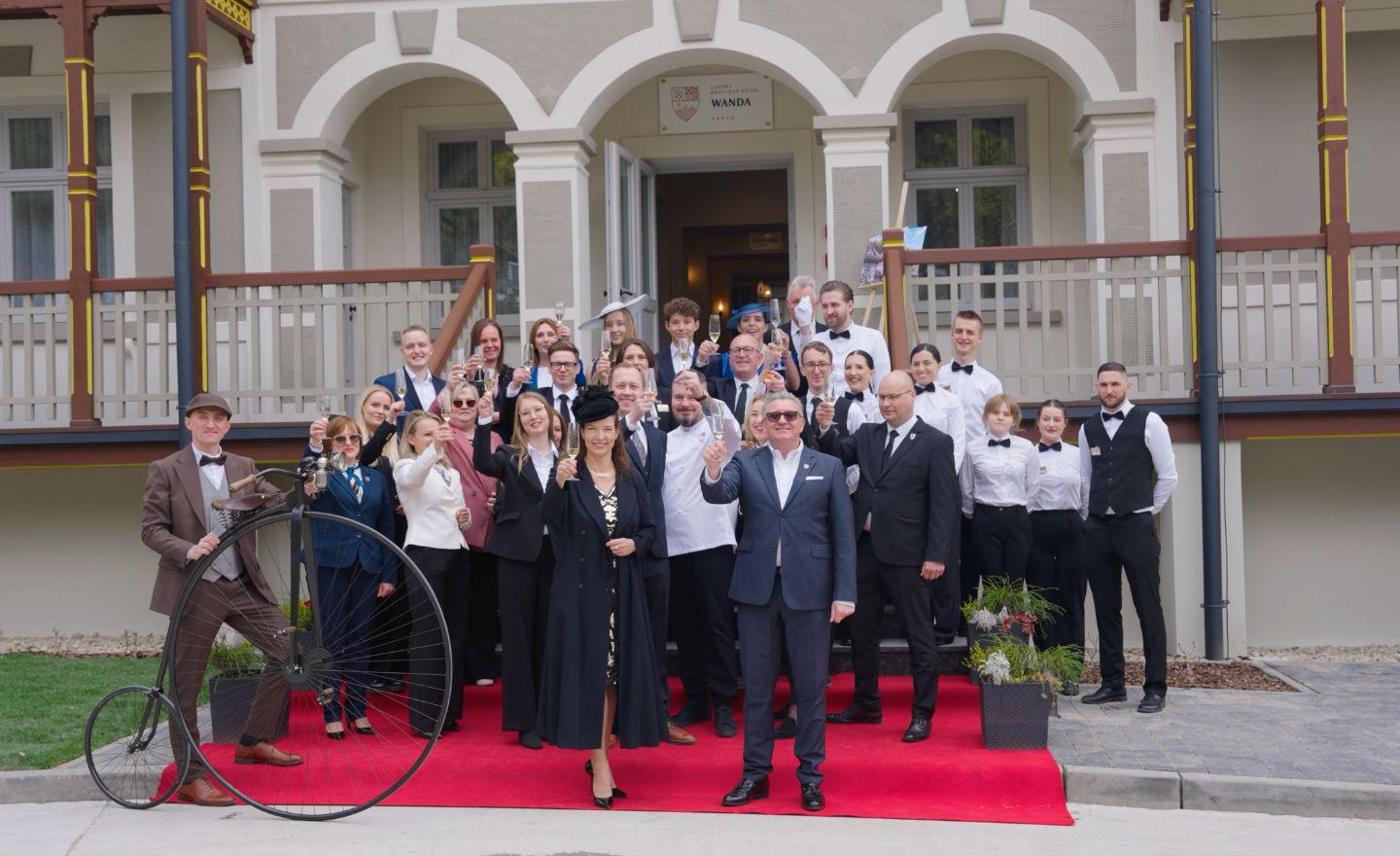
Today, the group operates under several brands, including Hotel Batory, Willa Tęcza, Eko Apartments, Szczawnica Park Resort & Spa, and the soon-to-open Wanda Luxury Boutique Hotel, launching on May 29. All properties share a common philosophy: a high standard of hospitality rooted in local culture, yet free from ostentatious displays of luxury.
From a small town to managing Europe
Grzegorz Gacek’s path into international business began far from the world’s major financial centers.
“When I received an offer to move to Switzerland, I had young children, my wife was working at the embassy, and we had to make a very serious decision. In the West, we were still seen as people from something like the ‘Third World.’ And I was supposed to go and manage eleven countries. A graduate of the Krakow University of Economics was telling British and Italian executives how to run their businesses. That required courage. Today, it may be hard for younger people to imagine, but back then Poland was perceived very differently than it is now,” says Grzegorz Gacek.
Experience gained in multinational corporations meant operating in a global environment of senior managers, where standards are high and competition is intense.
“At Coca-Cola HBC Europe board meetings, my colleagues would introduce themselves as Harvard or Stanford graduates. And I would say: high school in Krościenko nad Dunajcem and the Krakow University of Economics. I would hear: ‘We don’t know those schools, but they must be phenomenal.’ That captured the reality of the time well, and the position from which we, as Poles, were starting,” recalls Grzegorz Gacek.
Big business taught him discipline
Working in multinational corporations provides not only managerial experience, but also teaches long-term thinking, people management, and how to operate in a diverse business environment.
“There is no single factor that leads to success. It is always a combination of many elements. For me, the key was selecting the right people. One person may be perfect for one task and completely unsuited for another. Different markets simply require different competencies,” says Grzegorz Gacek.
At the same time, he admits that the life of an expatriate and corporate manager can be all-consuming.
“The company did everything it could to ensure I devoted 100 percent of my energy to it. And it truly brought immense satisfaction. In those days, Coca-Cola was generating enormous revenues. It was a business of huge scale and responsibility,” notes the former Europe-level executive at Coca-Cola Hellenic.
Poland has made a giant leap forward
Years spent working abroad, however, allow for a very different perspective on Poland.
“I came back, after years, to a completely different place. The easiest way to see it is in everyday things. Twenty-odd years ago, it took me six, sometimes eight hours to drive from Warsaw to Szczawnica in the south of the country. Today, I can cover the same distance within four hours, while staying within the speed limits,” says Grzegorz Gacek.
At the same time, Poland still does not fully leverage its educational and cultural potential.
“In many areas, we are now very modern. In the United States, you still see people using checkbooks. Meanwhile, BLIK is something completely natural for us. Unfortunately, we have not made the same level of progress in education. We have excellent students, but as a country we are not among the global academic leaders,” notes the CEO of HSP Management.
Hospitality was meant to be just an add-on
The hotel business was not originally the goal in itself.
“The first hotel was essentially built so that we would have a place for family and friends. We did not plan to become hoteliers. Very quickly, however, it turned out that the concept was performing financially far better than we had expected. That was when we started building additional properties,” recalls Grzegorz Gacek.
Business considerations were soon joined by far more important factors.
“At some point, I realized there was more potential in hotels than in my corporate salary. We began developing larger projects, and a moment of decision arrived. Family matters also played a role in returning to Poland,” says the CEO of HSP Management.
Today, the philosophy behind the properties created by Grzegorz Gacek diverges significantly from the traditional understanding of luxury.
“Our hotels are somewhat ahead of the market and ahead of the expectations of the typical Polish guest. I do not want to create places filled with pretension and artificial luxury. People no longer like that. We aim to build luxury properties that are natural, authentic, and free from pomp,” says the entrepreneur.
The new luxury is people, locality, and experience
Local culture and cuisine have become the foundation of modern tourism.
“Tourists expect novelty. For them, local culture, design, flavors, and attractions are what they seek when traveling. In the age of technology and AI, guests of premium hotels also expect human presence,” says Marlena Kosiura, analyst at InwestycjewKurortach.pl.
This applies to every stage of a holiday, with the exception of the booking process.
“However, once they arrive, guests expect to be noticed. It starts with proper service at check-in and the availability of staff, and extends to restaurant service, spa areas, and concierge support,” she adds.
According to Tomasz Wiśniewski, partner and head of valuation for Central and Eastern Europe at KPMG in Poland, the entire premium segment is moving in this direction.
“Luxury no longer means only lavish interiors and rigid standards. Today that is merely the starting point. Comfort, privacy, and unique experiences have become key. Guests want to feel the authentic, local character of a place – reflected in architecture, regional cuisine, or tailored offerings. In practice, emotions and a coherent concept matter more than the number of stars,” says Tomasz Wiśniewski of KPMG.
Guests also place great emphasis on privacy and expect local cuisine focused on high-quality, organic products.
“They often appreciate properties with soul, with a story of their own. Opulence, gold, and marble are no longer the measure of luxury in a hotel,” notes Aneta Klepacka-Kołbuk, General Director at MCC Mazurkas Conference Centre & Hotel in Ożarów Mazowiecki.
A hotel is not a warehouse
One of the more interesting – and relatively rarely discussed – aspects of hotel development is the behind-the-scenes complexity of investment processes. In the case of large-scale properties, execution often proves significantly more complicated than anticipated.
“When I joined the project in Lower Silesia, the general contractor had already been selected. It was Atlas Ward – a large company with extensive experience and ambition. But a five-star hotel is a completely different specialization from building warehouses,” recalls Grzegorz Gacek.
In premium hospitality, detail is critical, and there is no room for compromise.
As he admits, the execution phase ultimately required numerous changes and the reassignment of several scopes of work.
“It very quickly became clear that many elements of the project were far more difficult than initially assumed. We had to take back certain work packages from the general contractor and execute them with our own teams and with companies we have been cooperating with for years on our hotels. In premium hospitality, detail matters enormously, and there is no room for compromise,” says the CEO of HSP Management.
Similar challenges are also highlighted by Tomasz Wiśniewski, an expert at KPMG.
“The luxury segment does not forgive compromise. Meanwhile, the market lacks specialized contractors and skilled craftsmen. Demanding hotel projects require immense investor discipline and very high execution quality,” the KPMG expert emphasizes.
Expert's perspective
Premium hotels are driving the growth of Poland’s hospitality sector
A key factor remains the limited supply of top-tier properties, which translates into relatively lower competition in this segment, room for rate growth, and opportunities for expansion by international hotel brands.
Recent years have seen the entry of global operators and the repositioning of existing assets, confirming growing confidence in the market. Examples include projects such as Mövenpick in Karpacz, the lifestyle Tribe brand in Krakow, and the planned opening of Canopy by Hilton in Warsaw in February next year.
At the same time, global chains are developing more specialized concepts, including the extended-stay segment (Element by Westin) as well as modern lifestyle formats such as Moxy.


Untapped potential across multiple segments
A country that just a few decades ago was still catching up on civilizational development is today increasingly perceived as modern, safe, and offering a high quality of life.
“Poland has enormous, still underappreciated tourism potential. My foreign friends come here and are genuinely impressed by what they see. They often simply cannot hide their admiration,” says Grzegorz Gacek.
The quality of Poland’s accommodation base is not an evolution, but a revolution of the past 15 years.
“I would not be exaggerating if we summed it up by saying that Poland today has the most modern accommodation base in Europe. The luxury segment continues to grow and has very strong prospects ahead. This is clearly visible in locations that attract a high number of international guests: Warsaw, Krakow, Gdansk, and Zakopane,” emphasizes Marlena Kosiura.
Tomasz Wiśniewski of KPMG shares a similar view.
“Poland’s strength lies primarily in its young and highly modern hotel base. An additional advantage is the still excellent price-to-quality ratio and a naturally high level of hospitality,” the expert notes.
The greatest growth potential is currently visible in two areas.
“The first is premium resorts outside cities, driven by rising demand for luxury leisure close to nature, privacy, and advanced wellness offerings. The second is the lifestyle hotel segment in major urban areas,” adds the head of the valuation team for Central and Eastern Europe at KPMG in Poland.
According to Aneta Klepacka-Kołbuk, however, the greatest growth potential lies in the MICE segment (Meetings, Incentives, Conferences, Exhibitions).
“There is still increasing demand for facilities with extensive conference infrastructure. Another growth area is properties with well-developed spa facilities, as well as intimate premium hotels,” emphasizes Aneta Klepacka-Kołbuk.
All the cards are in our hands
Poland’s greatest strength remains, above all, the authenticity of its regions and local cultures.
“Every region has its own culture, cuisine, history, and traditions. These cannot be copied or artificially created. We have an immense richness of regional cultures across virtually the entire country,” emphasizes the CEO of HSP Management.
It is precisely for this reason that – despite international experience and opportunities to develop abroad – he chose Poland.
“Today, Poland is one of the greatest tourism opportunities in Europe for me. More and more people will want to travel, experience, and spend money precisely on such experiences,” says Grzegorz Gacek.


Key Takeaways
- Over the past decade and a half, Poland’s premium hotel market has undergone a profound transformation and is increasingly competing with Western resorts in terms of infrastructure quality, design, and service standards.
- Contemporary hospitality luxury is becoming less about ostentation and more about the authenticity of place, local culture, service quality, and the overall guest experience.
- Poland has substantial, still underutilized tourism potential, particularly in the premium resort segment and in lifestyle properties developed close to nature and rooted in regional traditions.