

This article is a part of Poland Unpacked. Weekly intelligence for decision-makers
This was a stronger result than in May, when growth stood at 4.4% year on year. Due to a favorable calendar effect, output before seasonal adjustment increased even more, reaching 7.6% year on year.
 Interactive chart
 In manufacturing, which is the largest segment of industry, production increased by 6.4% before seasonal adjustment. This represents a very strong reading. Overall, manufacturing has performed well this year, particularly given that demand in January and February was held back by a cold winter and relatively weak economic conditions in the euro area.
Production is increasing across most manufacturing sectors. However, some industries remain notably weak despite their importance in terms of scale. These include, above all, home equipment manufacturers – furniture producers as well as electrical appliance and consumer electronics (RTV/household appliances) manufacturers. Together, these sectors account for around 8% of total manufacturing output.
The chart shows that, overall, the trajectory of their output was broadly similar to the level seen at the beginning of the pandemic. A surge in demand for household appliances followed, and – to a lesser extent – for furniture. There were two main drivers behind this trend. The first was the increase in time spent at home, which translated into higher household spending on appliances and furniture. The second was the housing market boom observed between 2021 and 2023.
In subsequent years, however, demand weakened sharply. The furniture manufacturing sector is currently stagnating. In June, output was around 6% below the 2021 average. It has remained at a similar level since the end of 2022.
The electrical equipment manufacturing sector, meanwhile, is emerging from a downturn. In June, production was 7% below the 2021 average. However, the improvement compared with last year is significant – in 2025, output was as much as 15% lower.
Both sectors are facing a combination of unfavorable cyclical factors – including moderate activity in Poland’s housing market and weak demand in the euro area – as well as structural challenges, particularly competition from Chinese manufacturers.
As for the outlook for the future, it remains difficult to predict at this stage.
Construction is also a mixed picture
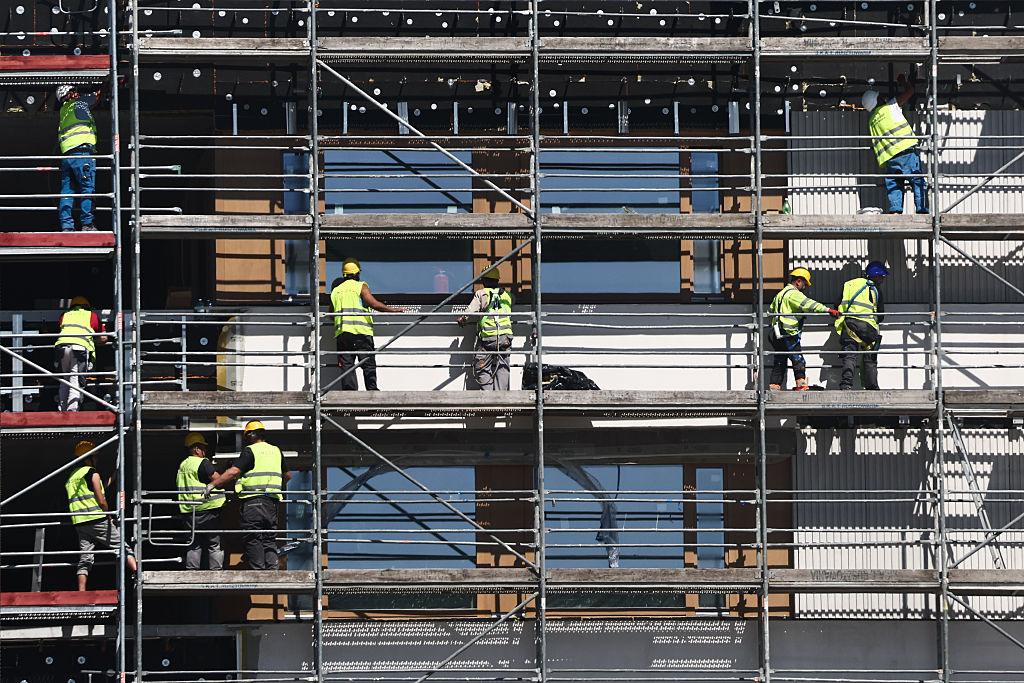
Interactive chart New data on construction and assembly output have also been released. It increased by 5.2% year on year, although after seasonal adjustment the growth was more modest, at 1.8%. As in industry, there is a clear divergence between different segments.
Activity in the construction of civil engineering structures rose sharply, by as much as 18.7% year on year. This suggests that long-awaited infrastructure projects financed with EU funds are finally getting underway.
On the other hand, growth in building construction stood at -2.9% year on year. The decline in specialized construction activities was even deeper, reaching -5.7%. Broadly speaking, both industry and construction are moving in the right direction. But neither sector is a monolith – some areas are experiencing a boom, while others remain stuck in stagnation.