

This article is a part of Poland Unpacked. Weekly intelligence for decision-makers
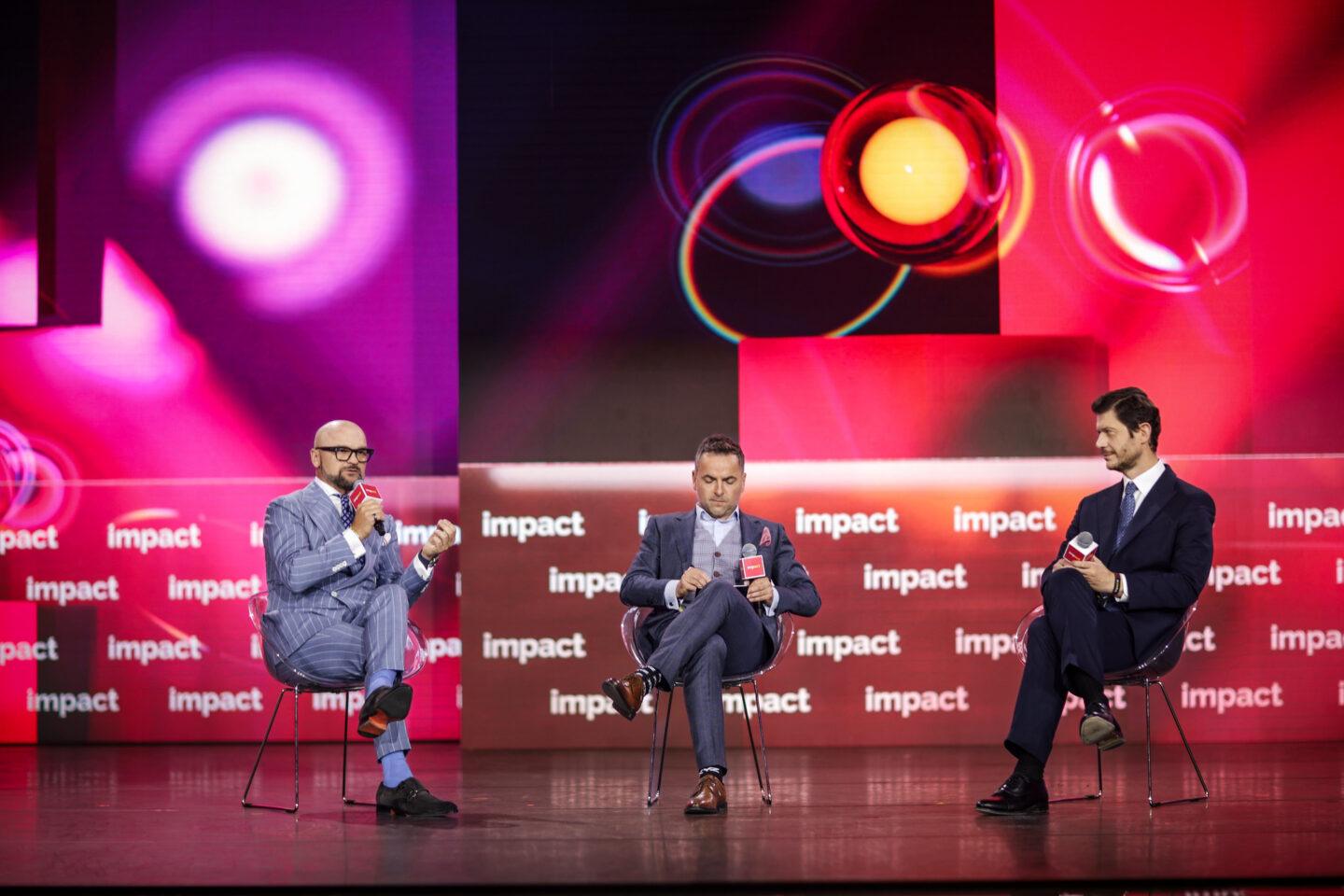
The discussion followed a format in which both leaders of Poland’s e-commerce sector were asked identical questions. The first concerned which e-commerce model has the future ahead of it. Marcin Kuśmierz, the CEO of Allegro, Poland's biggest e-commerce platform, answered first.
“If we look at e-commerce penetration relative to total retail, we are still talking about just over a dozen percentage points. It is encouraging that the market is accelerating. E-commerce is certainly no longer new — it has been with us for decades — but when you look at market conditions in different parts of the world, penetration rates can be far higher. We still have many years of steady, rapid growth ahead of us,” said the Allegro CEO.
Rafał Brzoska, the CEO of InPost logistics company famous for its parcel lockers, agreed that e-commerce still has room to grow. However, he took a different view on the direction the market is heading.
“The e-commerce model we know today is already coming to an end. Something entirely new is beginning, and it will redefine everything. I would compare it to Henry Ford’s famous line: ‘You can have any color, as long as it’s black.’ In e-commerce, the situation is somewhat similar. Platforms say: ‘We will give you everything you expect, any delivery method you want — as long as, in the end, it is delivered through Allegro OneBox.’ That era is ending,” Mr. Brzoska said.
Quick commerce and its future
Mr. Brzoska argued that artificial intelligence will fundamentally reshape e-commerce.
“AI engines will change the very paradigm of shopping. The customer will no longer be merely the final step in the checkout process. The customer will become the key decision-maker in the market. Companies will either adapt or lose. Forty-eight percent of product searches on Google have already been taken over by AI Overview. The traditional search-based model — including platforms such as Ceneo, which belongs to the Allegro group — is simply dying. And it is dying because customers want choice,” the InPost CEO added.
Asked whether InPost was opposed to quick commerce because “it simply does not work”, Mr. Brzoska rejected the suggestion.
“Why do we need to be everywhere? We stick to the core of our business. That strategy is the right one,” he said.
Mr. Kuśmierz agreed with Mr. Brzoska’s earlier remarks that “life commerce” will play a major role. He added that, within a few years, AI itself will become almost invisible.
“This is a revolution — a different way of shopping and experiencing the purchasing journey. Technology will become so pervasive that whether we are talking about marketplaces, shopping assistants or online stores, AI will be everywhere and technology itself will become highly democratized. The key point is for platforms to stay at the forefront of change and build sustainable competitive advantages,” Mr. Kuśmierz said.
He stressed that technological progress is accelerating rapidly.
“My view is that within two or three years, AI assistants will exist across every shopping environment. What happens next? We will see. Technology is developing at an extraordinary pace, and we are witnessing a remarkable race among competing platforms,” he added.
What determines success in e-commerce
Mr. Kuśmierz argued that success in e-commerce ultimately depends on understanding customers and their needs.
“Only once you understand the customer can you start adding products, services and everything else. In business, we often talk about components and technologies, but perhaps we do not talk enough about customers and what they may actually need,” said the Allegro CEO.
He noted that Allegro is expanding into new services, including healthcare and travel.
“That is what customers expect. They want to manage their lives in one place. We need to identify customer needs, even before customers themselves fully realize them. These are experiments. We try to stay innovative. Do all projects succeed? No. But they cannot all succeed,” he said.
Mr. Brzoska responded directly to Kuśmierz’s remarks.
“I am very pleased that you have changed your view, because when you were CEO of Shoper, you used to say you did not believe AI would transform e-commerce,” the InPost CEO said.
“The truth of the moment, the truth of the screen,” Mr. Kuśmierz replied invoking one of Poland's most memorable cultural references, originating from Stanisław Bareja's 1980 satirical comedy "Miś". In the film, a propagandist filmmaker uses this phrase to justify creating blatant falsehoods in state-commissioned productions during communist Poland.
Mr. Brzoska said InPost’s strategy had always been built around the principle that parcels should wait for customers — not customers for parcels.
“That is our DNA. It is our foundation. And now I am convinced that AI is the Holy Grail that will finally return freedom of choice to customers once and for all. Large platforms and big tech companies will no longer be simultaneously referee, player and playing field,” Mr. Brzoska said.
Asked whether InPost had entered the e-commerce market because it was being squeezed by rival logistics operators, he replied that the company’s goal was to support merchants.
“That is why we work with our friends at Allegro and many other companies. For us, it is about creating a level playing field for everyone. Our Von Halsky agent will be a consumer’s ally from start to finish. It will simplify transactions regardless of where the customer comes from. Marcin, if you publicly declare that your products will be available on our platform once it launches, then that will absolutely be possible. That is the essence of choice,” Mr. Brzoska declared.
International expansion in e-commerce
The conversation then turned to the international expansion of Polish companies.
“My team and I learned a painful lesson. Back in 2015, InPost operated in more than 20 markets. It was a difficult but necessary experience. Today, in the markets where we operate, we are no longer tourists. We feel at home. We are number one in the UK, number one in France, number two in Italy — though soon number one there as well. None of this happened by itself. It comes from a distinctly Polish mindset that allows us to succeed despite the odds — even when other companies, including DHL, do not pay taxes yet are still promoted by platforms, including Marcin’s platforms,” Mr. Brzoska said.
Allegro is also pursuing international growth.
“It is part of our development strategy. Rafał was right to say that sometimes you need to try again before you succeed. We are now present in three markets. We have learned many lessons — lessons for which we have paid dearly,” the Allegro CEO said.
He added that Poland remains a relatively young economy, and that what companies such as InPost, Allegro and many others are doing represents an important cultural shift.
“We are conquering markets that, until recently, we could barely dream about,” Kuśmierz said.
Asked about the consequences of Chinese platforms increasingly encroaching on Allegro’s position, he argued that such platforms primarily undermine the Polish state budget.
“We support European business. We are the only platform offering delivery services from virtually every courier operator,” Mr. Kuśmierz said.
The marketplace of the future
“The marketplace of the future is one that follows the customer and stays close to them,” Kuśmierz said.
He stressed that companies must remain deeply connected to customers, understand their needs and closely track their daily habits.
“We need to stay extremely close to our customers. We must understand their needs thoroughly, identify them correctly and follow their daily journeys. If we apply the right effort and the right energy, I am convinced marketplaces will remain a permanent feature of the e-commerce landscape and will continue to be the winning model,” he said.
Mr. Brzoska thanked Mr. Kuśmierz for what he described as a strategic shift toward greater openness to customers.
“Marketplaces focused on controlling the customer — deciding what appeared on the first, second and third page. They told merchants that if they offered lower prices elsewhere, there would be consequences. The model in which the marketplace decides everything either has already collapsed or is about to collapse. Merchants themselves must own both the marketplace and the sales decisions,” Mr. Brzoska said.
At the end of the discussion, moderator Grzegorz Nawacki asked the audience to raise their hands for whichever vision of the future they believed in: Brzoska’s, Kuśmierz’s — or both.
“It was evenly split. Smells like a merger to me,” Grzegorz Nawacki, editor-in-chief of XYZ and moderator of the debate, joked.


Key takeaways
- The debate highlighted two distinct visions for the future of e-commerce in Poland and Europe. Marcin Kuśmierz emphasized the continued, steady growth of online retail, which still accounts for a relatively modest share of the overall retail market. The Allegro CEO argued that marketplaces will remain a dominant model, provided they stay close to customers, their habits and their real needs. Rafał Brzoska, meanwhile, argued that the current e-commerce model is approaching its end. In his view, customers will increasingly demand greater freedom of choice, while platforms will no longer be able to act simultaneously as intermediary, referee and owner of the customer relationship.
- Artificial intelligence emerged as the central force shaping the future of online commerce. Brzoska described AI as a tool that will return control to consumers while weakening the importance of traditional product search engines and closed platform ecosystems. Kuśmierz agreed that AI will become a universal part of the shopping process, though he emphasized its democratization and integration across all sales channels. Both executives ultimately agreed on one point: within a few years, AI assistants could become standard across e-commerce, and the companies that integrate the technology into customer service the fastest are likely to gain the greatest competitive advantage.
- The conversation also strongly highlighted the issue of international expansion by Polish companies and competition with global players. InPost described its earlier experience across multiple markets as a painful but valuable lesson that has enabled the company to build a much stronger position today in the UK, France and Italy. Allegro likewise sees international growth as a core part of its strategy, although it acknowledged that the process has involved costly lessons. Both executives emphasized the growing importance of Polish companies on international markets, but they differed in their assessment of the role of marketplaces, relationships with merchants and the impact of foreign — particularly Chinese — platforms on European commerce.