Poland Unpacked week 21 (11 - 17 May 2026)

Welcome to this week’s edition of our Poland Unpacked, where we deliver key insights and trends shaping the economic, corporate and political landscape. Catch the most important insights from Poland in this week’s briefing.

Loading the Elevenlabs Text to Speech AudioNative Player...
Business
E-commerce, AI and shorter workweeks
Małgorzata Grzegorczyk

The most important business event of the week was Impact’26 in Poznań. The conference brought together entrepreneurs, politicians and international guests, including Daron Acemoglu, winner of the Nobel Prize in economics, human rights lawyer Amal Clooney – along with, unexpectedly, her husband George Clooney – as well as Justin Trudeau.

One of the conference’s most talked-about moments was the debate between two Polish e-commerce heavyweights: Rafał Brzoska, head of logistics and e-commerce infrastructure group InPost, whose parcel lockers are expanding across Europe, and Marcin Kuśmierz, chief executive of Allegro, Poland’s largest online marketplace. The two executives are known for trading public barbs – but did they manage to agree on even a single point? Here's the full recap of their talk.

One of XYZ’s standout stories this week was an interview with Jarosław Królewski, founder and owner of IT company Synerise and also the main shareholder and president of Wisła Kraków, the football club recently promoted back to Poland’s top division. The entrepreneur wants to build a technology-and-sports hub around the club, generating revenue from scouting systems and AI tools, among other services. Meanwhile, for Synerise – which is developing an AI and big data platform – he is targeting a future listing on NASDAQ. Read the interview here.

Another technology company drawing attention is Open Mercato, the new venture launched by brothers Piotr Karwatka and Tomasz Karwatka, who have previously sold businesses worth a combined PLN 1 billion (around EUR 235 million). Open Mercato uses artificial intelligence to build systems for businesses. It operates on an open-source model and is free to use. Here's how the founders plan to make money. They are not giving themselves much time to find out. The company was established in 2025, and the founders aim to validate the business model within a year.

Meanwhile, around 80 organizations – mainly public-sector institutions – have been testing shorter working hours for the past six months. The pilot program, run by Poland’s Ministry of Family, Labor and Social Policy, began on January 1, 2026 and will continue until the end of the year. The ministry has allocated PLN 50 million (around EUR 11.7 million) to the project. What are the companies and institutions receiving subsidies saying about the experience of working fewer hours? Learn it here.

Economy & Markets
Poland’s economy continues to grow rapidly
Michał Kulbacki

Poland’s economy expanded by 3.4% year on year in Q1 2026, according to data published by Statistics Poland (GUS) last week. Compared with the fourth quarter of 2025, GDP grew by 0.5% in real terms. This marked the slowest pace of growth in six quarters. Much of the slowdown stemmed from an unusually cold winter, which curtailed activity in construction as well as parts of industry. Even so, Poland recorded the fastest year-on-year growth among the 17 EU countries that have published data so far. By comparison, the EU economy as a whole grew by 1% year on year in the first quarter of 2026. Growth in Poland is expected to remain strong in the coming quarters.

The outbreak of war in Iran triggered a sharp rise in yields on Polish Treasury bonds. From the start of Israeli and American strikes on Iran through to the end of April, yields rose by 0.81 percentage points. This was the second-largest increase in the EU, after Romania. Why has this happened? In part, it reflects higher interest rates in Poland than in other EU countries. But there is another factor as well: Poland’s very large budget deficit, which tends to unsettle investors more during periods of heightened global uncertainty.

Poland’s public debate increasingly features calls to raise spending on research and development (R&D) to 3% of GDP by 2030. We analyzed how such spending has evolved so far and whether the target is realistic. Our analysis shows that expenditure amounting to 1.41% of GDP in 2024 was broadly in line with the average for countries at Poland’s income level. At the same time, it was slightly above the regional average. A substantial increase would require a change in the country’s development model.

We also examined the relationship between Poland’s perceived competitiveness and its economic growth. For many years, Poland has ranked poorly in international competitiveness indices despite its strong economic performance. In the 2025 World Competitiveness Ranking, Poland placed only 52nd, behind countries such as Indonesia and the Philippines. Yet these rankings suffer from one fundamental problem: over the long term, they show virtually no correlation with economic growth.

Politics & Policy
Crypto chaos and political fractures shake Law & Justice (PiS)
Krzysztof Figlarz

Rarely do Civic Coalition (KO) and Law and Justice (PiS) have anything in common in day-to-day politics. Yet the start of last week brought both camps a considerable headache – albeit for different reasons. The flight of former justice minister Zbigniew Ziobro from Law and Justice to the United States triggered a political storm and the aforementioned headache for Poland’s largest parties. Although Civic Coalition has unequivocally and forcefully condemned Mr. Ziobro for what it calls cowardice – while ritually criticizing his parent party along the way – it must also confront the fact that, once again, it failed to prevent Mr. Ziobro from evading the Polish justice system.

For PiS, meanwhile, the Ziobro affair is plainly a problem. Party politicians would rather avoid the subject altogether, but for obvious reasons they continue to face questions about their colleague. Unofficially, we hear that party chairman Jarosław Kaczyński has banned criticism of Mr. Ziobro, even though many PiS politicians would prefer to distance themselves from the former justice minister.

The Ziobro issue is also the latest fault line polarizing the PiS party. Over the past week, reports resurfaced of internal tensions between the more centrist faction of former prime minister Mateusz Morawiecki and supporters of the more right-wing Przemysław Czarnek. The atmosphere within the party is once again nearing breaking point. Yet any attempt to predict when that moment will come remains futile.

PiS must also contend with its surprising about-face on cryptocurrencies. Jarosław Kaczyński’s party has shifted from supporting the crypto market to proposing legislation that would effectively ban cryptocurrency exchanges from operating in Poland altogether. The reversal is all the more striking given that it happened within the space of just a few weeks. You can read more about PiS’s radical U-turn in Rafał Mrowicki’s article here.

The political rationale behind Law and Justice’s reversal appears fairly clear. Jarosław Kaczyński’s party does not want to be associated with cryptocurrencies in the wake of the high-profile collapse of the Zondacrypto exchange, whose CEO fled to Israel and whose operations, according to media reports, may have been infiltrated by hostile Russian actors. Prosecutors are investigating, though few details are publicly known.

Confederation Liberty and Independence party has seized on PiS’s change of course, even though the Zonda affair had itself been somewhat awkward for the party. Still, Sławomir Mentzen’s party has turned PiS’s proposal for a total ban on cryptocurrency trading to its own political advantage. Beyond defending cryptocurrencies, Confederation politicians spent the past week touring the country to discuss deregulation proposals that are meant to form the backbone of the party’s 2027 election platform. We attended one such meeting.

Finally, some good news for the LGBTQ+ community. Only a few weeks ago, Prime Minister Donald Tusk was unwilling to implement a ruling by the Court of Justice of the European Union obliging Poland to recognize same-sex marriages contracted abroad. Under the ruling, Poland would have been required to register such marriages in civil registry offices. Until recently, the government had resisted implementing the judgment. LGBTQ+ activists staged a protest outside the Prime Minister’s Chancellery in Warsaw, voicing their frustration with the government’s stance. As it turns out, the protests were effective. Whether the prime minister experienced a change of conscience – or simply feared slipping poll numbers – we do not know. What is certain, however, is that another step toward equality has been taken on the banks of the Vistula.

Startups / VC / Tech
Poland’s AI law meets EU simplification drive - and raises concerns of gold plating
Anna Bełcik

In recent days, the European Commission announced a political agreement between the European Parliament and the Council of the EU on simplifying the implementation of the Artificial Intelligence Act (AI Act) under the Digital Omnibus package. After previously adopting stringent AI regulations, the Commission now aims to ease part of the administrative burden.

The new measures include, among other things, extended deadlines for compliance with rules for high-risk systems, simplified conformity assessment procedures, and better alignment of the AI Act with other EU regulations. The scope of so-called regulatory sandboxes - controlled environments for testing AI solutions - will also be expanded. The easing of rules will also cover mid-sized technology companies, which until now have been unable to benefit from certain preferences reserved for SMEs.

Experts caution, however, that despite this softening of approach, Europe may still struggle to compete technologically with the United States and China. In their view, the proposed simplifications are a step in the right direction, but may prove insufficient to fully stimulate innovation across Europe.

Work on the EU’s Digital Omnibus coincides with the legislative process for Poland’s draft law on artificial intelligence systems. The delayed bill has already been submitted to the Sejm, but according to experts it may impose additional burdens on businesses. Alongside the EU AI Act, companies would face another extensive national regulatory framework, bearing the hallmarks of so-called “gold plating” - the excessive expansion of EU rules at national level. Here's our take on the matter.

In Poland, private investors still relatively rarely decide to finance high-risk startups. In recent years, however, the profile of the business angel has changed. Increasingly, they are experienced entrepreneurs, managers, and professionals from the technology sector, rather than exclusively very wealthy individuals. In addition to capital, they also provide startups with mentoring, business contacts, and strategic support. Typical investments range from PLN 100,000–150,000 (approximately EUR 23,300–34,900), although deals worth millions of złoty also appear on the market.

Despite slowly growing interest in startups, investing in the sector remains highly risky. Many Polish investors still prefer more predictable forms of capital allocation, such as real estate or equities. At the same time, the success of Polish tech companies, including ElevenLabs, is increasing confidence in the startup market and demonstrating that globally scalable businesses can be built. As a result, startups are increasingly entering the mainstream, becoming a far more accessible asset class. Poland’s investment ecosystem is developing significantly faster than it did just a few years ago. Read more about the Polisg business angels here.

The commercialization of scientific research in Poland remains marginal. The median revenue from this source in 2019–2024 amounted to just PLN 68,000 (approximately EUR 15,800) at universities and PLN 307,000 (approximately EUR 71,400) at research institutes. More than 80–90 percent of income from science–business cooperation comes from commissioned research services, rather than the implementation of innovative solutions.

A panel of experts appointed by the Ministry of Science has presented a set of recommendations aimed at improving technology transfer from universities to the wider economy. The proposals include simplifying commercialization procedures, reducing the cost of intellectual property protection, incentivizing real-world implementation rather than patent filings alone, and providing greater support for spin-off companies created by researchers. We have summarized the 9 recommendations here.

The recommendations also include incentives for academics, such as entrepreneurial sabbaticals for researchers founding their own companies and the expansion of academic entrepreneurship programs. Experts note that the current system for evaluating researchers continues to reward academic publications above the practical application of research results, which limits cooperation with business. The report’s authors stress, however, that effective implementation of the proposed changes will require cooperation across multiple ministries and institutions. Without engagement from public administration, universities, and state-owned companies, even the best-prepared recommendations risk remaining just another report with no tangible impact on the economy.

After hours
When private becomes public
Michał Szcześniewski

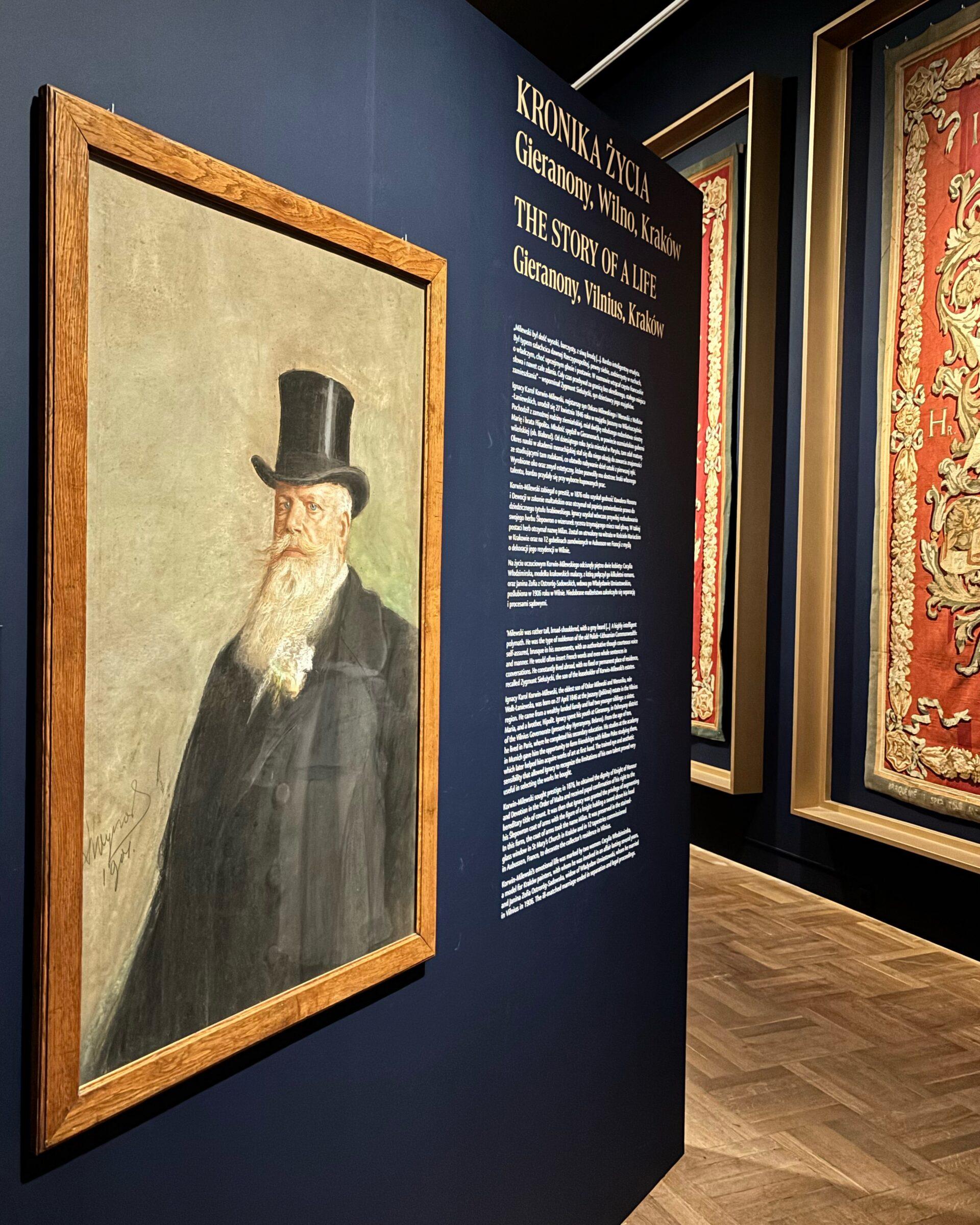
In Warsaw, the National Museum is putting together an exhibition devoted to Count Ignacy Korwin-Milewski, a collector who seems to have had the enviable habit of buying art before it became obvious that it was art. The show is meant to reconstruct a gallery that was originally dispersed after his death. It offers a neat way into a very Polish story: one man’s taste, money and persistence helped shape what later generations would come to treat as the canon.

Korwin-Milewski spent some three decades assembling roughly 250 paintings, often commissioning Polish artists he had known from his Munich years. The resulting collection includes major names such as Jan Matejko, Józef Chełmoński and Aleksander Gierymski, though the real attraction may be the collector’s eye rather than any single canvas. There is something faintly reassuring about the idea that a private obsession, once scattered, can be reassembled into public culture. It is also a reminder that in Poland, as elsewhere, the line between patronage and connoisseurship can be deliciously blurred.

Plus you get to know the interesting life he had (spoiler alert: many royal friends and a knack for photography).

Where: Warsaw (https://www.mnw.art.pl/en/temporary-exhibitions/the-collector-ignacy-korwin-milewski-18461926,76.html)
When: 17 April – 13 September 2026

Korwin-Milewski spent some three decades assembling roughly 250 paintings, often commissioning Polish artists he had known from his Munich years. Photo: Michał Szcześniewski
fun fact about poland
The middle of Europe: Terms and Conditions apply
Michał Szcześniewski

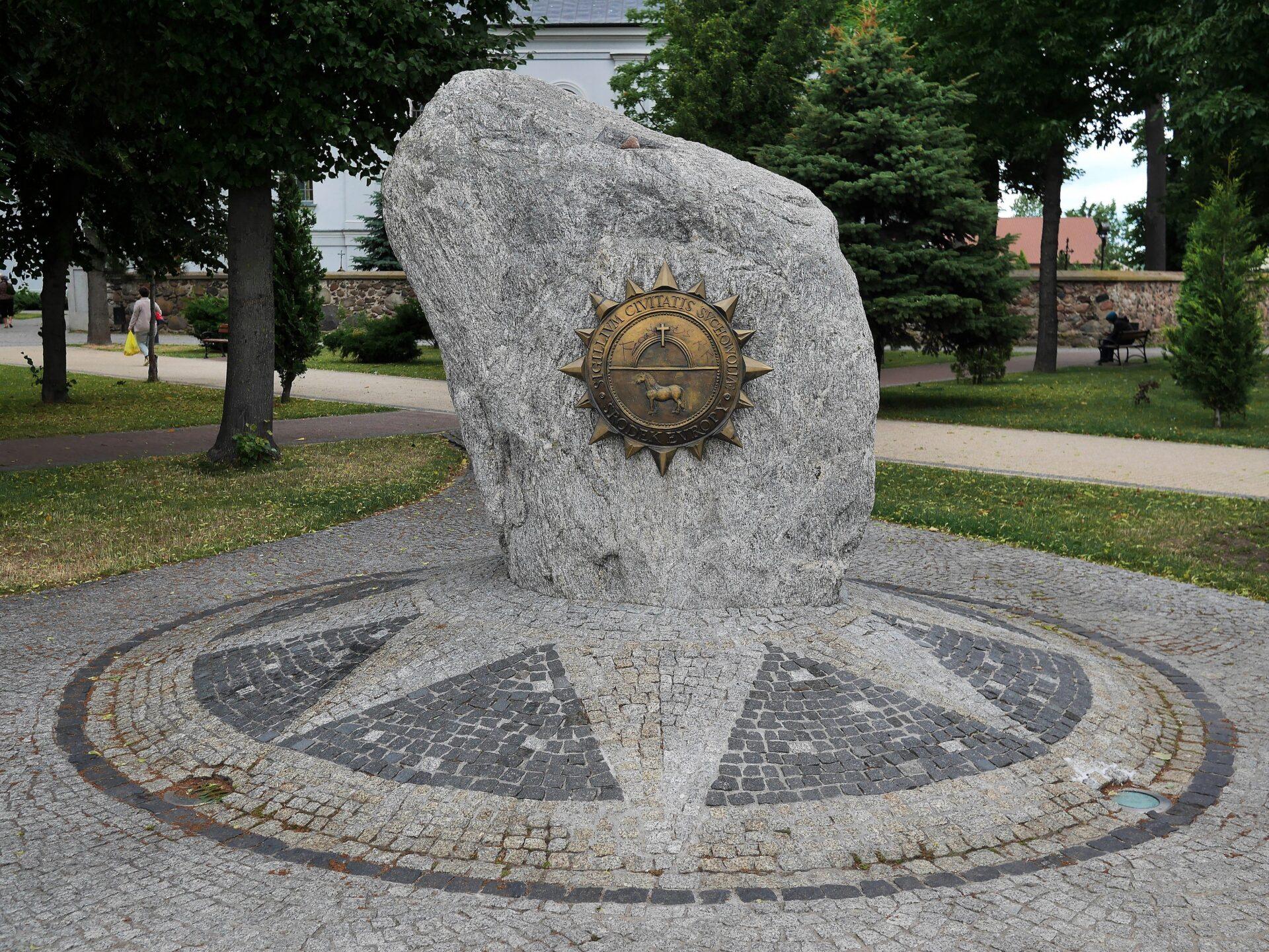
Europe has several competing “centres”. The Lithuanians, the Ukrainians and the Slovaks all lay claim, armed with varying geometrical methods and patriotic enthusiasm. Yet one of the more quietly confident contenders sits in Poland, near the small town of Suchowola in north-eastern part of the country. Calculated in the 18th century by royal cartographer Szymon Antoni Sobiekrajski, this point has the advantage of both mathematical pedigree and a certain geographic plausibility - nestled between east and west, neither fully one nor the other. Much like Poland itself.

Positioned at the crossroads of empires, trade routes and ideas, the country has long embodied the tensions and exchanges that define the continent. If Europe has a beating heart, it may not be where the maps say it is - but Poland makes a persuasive case that it feels like the middle of things.

Today, the spot is marked not by grand monuments but by a modest stone, reflecting perhaps a deeper truth: Europe’s “centre” is less a fixed coordinate than a moving argument. Still, Poland’s claim carries symbolic weight. Photo: PAP/Jerzy Ochoński