

This article is a part of Poland Unpacked. Weekly intelligence for decision-makers
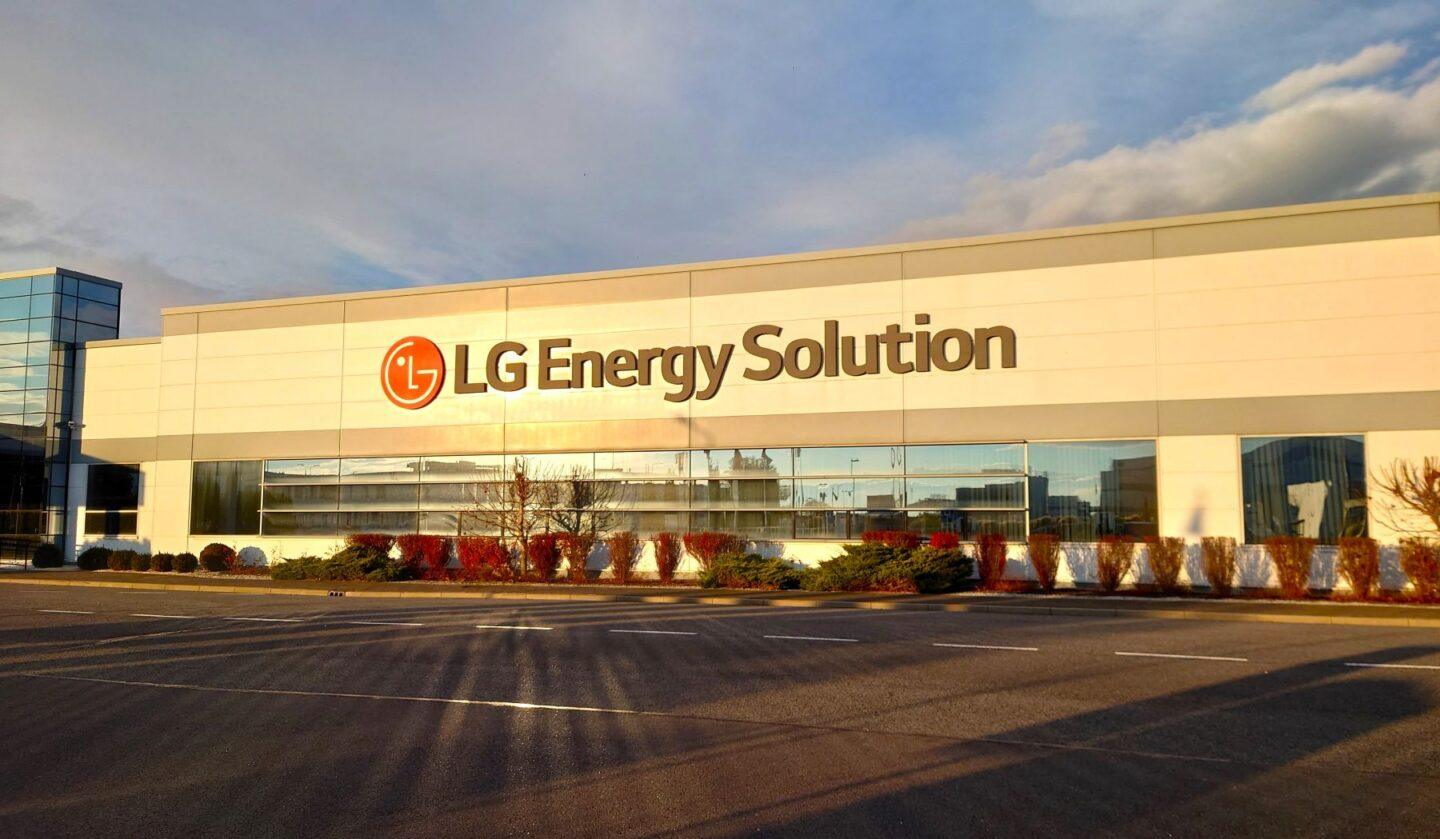
With support from Brussels, LG Energy Solution is building a production line for next-generation batteries near Wrocław. At the same time, it is developing a second business line: energy storage systems.
The South Koreans are set to invest again in Biskupice Podgórne, in the Kobierzyce municipality near Wrocław. LG Energy Solution Wrocław (LGENSOL) was one of five European companies that signed grant agreements under the IF24 Battery Call last November. The fund is designed to support battery production for electric vehicles. In total, the five companies received EUR 643 million (approximately PLN 2.7 billion). LGENSOL received a grant of EUR 90.833 million (approximately PLN 386 million).
“We are now moving ahead with the 46inEU project. We want to achieve a breakthrough in electric-vehicle battery technology by introducing a new generation of 46-series cylindrical lithium-ion cells. Our plant in Biskupice Podgórne will play a key role. It will expand its production lines to enable the mass production of 46-series cylindrical batteries. Annual capacity will reach 12 GWh, or around 90 million cells. This will allow us to enter the premium electric-vehicle market quickly. The new batteries offer higher energy density, fast charging and enhanced safety,” says Yong Girl Lee, director of external relations at LGENSOL.
LGENSOL counts the cost
The company has not disclosed how much it will invest in the new technology.
“The total investment value is currently being updated,” says Yong Girl Lee.
The project will create more than 750 jobs. Production is scheduled to begin in the second half of 2028.
Starting battery production comes with enormous costs.
“Although the technology is familiar to us, implementing it on an industrial scale remains complex. The first months of operating a factory, before the product is stabilized and standardized, require enormous amounts of energy and time,” the LGENSOL director says.
Batteries for SUVs
LG highlights the main advantages of the 46-series over the 21-series it currently produces: higher energy density, charging times of less than 15 minutes, and greater safety.
“The new 46-series will be based on NCMA technology [nickel-cobalt-manganese-aluminum, an advanced type of cathode used in lithium-ion batteries – ed.]. It is expected to offer higher energy density, better suitability for ultra-fast charging, enhanced safety and longer service life. NCMA technology can potentially be described as ‘better’ for specific applications. This may be the case for electric vehicles with sufficiently high performance specifications, such as large SUVs. That does not mean, however, that NCMA technology is universally ‘better’ than other solutions. LFP technology [lithium iron phosphate batteries – ed.], for example, has an advantage in terms of cost. The battery world is highly complex—there is no single technology that is right for every application. The use of NCMA cells is already part of the strategies of carmakers such as Porsche, Toyota and General Motors,” says Jan Wiśniewski, director of the Research and Analysis Center at the Polish New Mobility Association.
He stresses, however, that LG Energy Solution Wrocław’s project should be viewed as an important step toward developing an even more advanced battery-sector value chain in Poland and Europe.
“The planned 12 GWh is a specialized production line at industrial scale. Given LG Energy Solution’s current production capacity, this may seem relatively small. But in the context of the new cell format, it is a large commercial line, not a demonstration project. What is new is the deployment of this solution in Europe on an industrial scale. The 46inEU project is set to be the first line in Poland and Europe for this type of cell,” says Jan Wiśniewski.
LGENSOL’s current production capacity is 80 GWh.
LGENSOL’s second business line
Last year, the South Korean group launched Poland’s first production line for energy storage systems. Earlier, it won a PLN 1.56 billion gross (approximately EUR 367 million) contract to supply PGE with a facility rated at 262 MW and with a capacity of around 981 MWh. The storage facility is scheduled to begin operations in September 2027. Once fully charged, it will be able to supply electricity for four hours to 45,000 households.
“Our production line is built entirely locally – from electrodes and cells to complete storage units. The line has been fully commissioned and has begun regular operations. Deliveries of DC-Link units to the construction site in Żarnowiec began on April 13, 2026. In line with the schedule, the entire delivery process was completed around the turn of June and July. A total of 204 containerized DC-Link units will be installed at the site, each weighing approximately 45 tons,” says the LGENSOL director of external relations.
The Żarnowiec Energy Storage Facility is not LGENSOL’s only project in Europe.
“Another undertaking is the Zirgu BESS project in Tsirguliina, Estonia. It involves the construction of a battery power plant with a capacity of 100 MW/200 MWh. If market demand and price volatility persist, the facility could be expanded within 6–9 months to 200 MW and 800 MWh. That would make it the largest battery power plant in the Baltic states. Under the agreement, our company will supply the batteries for the plant,” says Yong Girl Lee.
A way through the crisis
LGENSOL began producing energy storage systems because demand for electric-vehicle batteries turned out to be lower than previously expected.
“After several years of very rapid growth, the market is now consolidating. Poland remains one of Europe’s key battery hubs, primarily thanks to our operations. LG Energy Solution Wrocław continues to be the largest producer of lithium-ion cells in the region. At the same time, we recognize that the entire industry is currently facing enormous challenges. These stem from slowing sales of electric vehicles produced in Europe, pricing pressure from Asian manufacturers and high energy costs. As a result, many projects in Europe are struggling to survive or are collapsing. At the same time, the energy storage segment is growing very rapidly and is becoming a new engine of growth both in Poland and across the European Union,” says the LGENSOL director.
He acknowledges that the sector needs support, including instruments such as the Innovation Fund (IF) and initiatives under the Industrial Accelerator Act (IAA).
“Europe’s battery industry has made significant progress, but it has now reached a critical juncture. This is the time to help companies achieve commercial success. For companies like ours, such support is not merely a source of financing for innovative projects. Above all, it is a confirmation of the strategic role of Europe’s battery industry in the energy transition,” says the LGENSOL representative.
How to help companies
He is calling, however, for the IAA to be adapted to the realities of the global market.
“LG Energy Solution Wrocław has been consistently investing in the development of Europe’s battery ecosystem for many years. We work with vehicle manufacturers, component suppliers, universities and research institutions. We contribute to strengthening Poland’s and Europe’s position as a global hub for advanced energy technologies. I am convinced that the Industrial Accelerator Act can become an important catalyst for the further development of Europe’s battery industry. This will happen provided that the final legislative framework supports battery manufacturers operating across the entire value chain in Europe. It should guarantee additional support mechanisms for the operations of existing manufacturing plants – the so-called production incentives. The legislation should also include provisions that prioritize, or award additional bonus points to, battery manufacturers operating across the production chain, from cells through modules to battery packs,” says Yong Girl Lee.
In his view, Europe should move away from a model based solely on administratively driven demand through regulatory obligations and eligibility criteria.
“It should be supplemented with genuine market and financial incentives. These should include tax incentives for using components manufactured in the EU. It would also be worth introducing contracts for difference for projects using European-made batteries, such as BESS projects. Without rapid support from the EU, Europe risks losing control of one of the most important sectors underpinning the energy transition and electric mobility,” says the LGENSOL director.
More funding for companies
In addition to the Innovation Fund, battery-sector projects in the EU will gain access to a new support instrument.
“On June 9 this year, the European Commission decided to establish the Battery Booster Facility. It will support manufacturers with funding from the Innovation Fund in the form of interest-free loans. The European Commission is preparing a call for applications,” says Ana Crespo Parrondo, European Commission spokesperson for climate action.
It is the first such instrument providing direct support to the sector. The Innovation Fund has allocated EUR 1.5 billion (approximately PLN 6.4 billion) to it. By comparison, the IF24 Battery call had EUR 1 billion (approximately PLN 4.3 billion) at its disposal. To qualify for a loan under the Battery Booster Facility, companies must manufacture within the European Economic Area and have production capacity of at least 10 GWh. The maximum loan per project is EUR 500 million (approximately PLN 2.1 billion). The program’s first payments are expected to be made later this year.
LGENSOL did not apply for funding for its latest investment in Poland.
“At this stage, we have not considered applying for additional support under national programs. The project was planned and is being implemented using our own funds and a grant obtained through the EU’s Innovation Fund program. We are focused on successfully implementing the investment in line with the objectives of the EU program. Consequently, we have not so far conducted any analysis of participation in national support instruments,” LGENSOL’s press office says.
Poland’s gold-plated rules
And that is probably just as well, because the company would not have qualified for a grant in Poland anyway – at least not under the STEP program. Calls for R&D and investment grants in critical technologies such as biotechnology, clean tech and deep tech, announced in 2025 by the Polish Agency for Enterprise Development (PARP) and the National Centre for Research and Development (NCBR), exclude companies with controlling ownership from outside the EU or European Economic Area.
“In theory, the STEP Seal, or sovereignty seal, which the European Commission awarded to the LGENSOL project, allows the company to apply for support under the national program of the same name. In practice, however, because of Poland’s restrictions on the origin of capital, a project recognized by the EU as critical has no chance of obtaining additional national support,” notes Magdalena Zawadzka, a partner at advisory firm Crido.
A prestigious competition
The Innovation Fund is currently the EU’s largest funding program for the climate transition, with a budget of around EUR 40 billion through 2030. It is also one of the most competitive support instruments. Projects are assessed not only for their innovativeness, but also for technological and financial maturity, emissions-reduction potential, security of supply and their contribution to building Europe’s industrial advantage.
Under the IF24 Battery call, six investments were selected from 14 applications submitted by projects in eight countries – France, Germany, Sweden and Poland. Ultimately, five projects signed grant agreements. In addition to the Polish project, two are being developed in France: ACCEPT (Automotive Cells Company) and AGATHE (Verkor). In Sweden, the selected project is NOVO One (NOVO Energy), while Germany is represented by WGF2G (Leclanché).
“This is an elite group and one of the most competitive selection processes in European low-carbon industrial funding. At the same time, it is worth looking at this result in a broader context. Since the program was launched, Polish companies have submitted 69 projects, of which 10 are currently being implemented. By comparison, 44 projects are being implemented in Spain and 38 in France over the same period. This shows that although Polish companies are becoming more active, the potential of the domestic industry remains largely untapped. That is why a presence in Brussels is so important – not for image-building, but to participate in consultations, build relationships and prepare early enough for new funding instruments,” says Marta Kolimaga, director of EU funds and European affairs at Crido.
That is precisely why Crido opened an office in Brussels.
“We are stepping up our activities and presence in Brussels to monitor the evolution of EU funding mechanisms on an ongoing basis. This allows us to support Polish clients more effectively and better respond to their needs. We hope to help a large number of companies secure funding from the Innovation Fund and other programs. For one of our clients, for whom we secured an Innovation Fund grant, we also obtained additional funding under the STEP Seal program. It was the first such procedure in Poland, which we carried out in cooperation with PARP and the Ministry of Development Funds and Regional Policy,” adds Magdalena Zawadzka.


Key Takeaways
- LG Energy Solution Wrocław is expanding production of next-generation batteries. The company received a EUR 90.8 million (approximately PLN 386 million) grant from the EU’s Innovation Fund. It will use the funding to implement the 46inEU project, aimed at launching production of 46-series cylindrical lithium-ion cells. The new line in Biskupice Podgórne will have annual capacity of 12 GWh (around 90 million cells) and create more than 750 jobs. Production is scheduled to begin in the second half of 2028.
- LG Energy Solution Wrocław is expanding production of next-generation batteries. The company received a EUR 90.8 million (approximately PLN 386 million) grant from the EU’s Innovation Fund. It will use the funding to implement the 46inEU project, aimed at launching production of 46-series cylindrical lithium-ion cells. The new line in Biskupice Podgórne will have annual capacity of 12 GWh (around 90 million cells) and create more than 750 jobs. Production is scheduled to begin in the second half of 2028.
- The company is diversifying its business and calling for greater support for the sector. In response to the slowdown in the electric-vehicle market, LGENSOL is expanding into energy storage systems. At the same time, company representatives argue that Europe’s battery industry needs stronger financial and regulatory support. Poland’s current rules for awarding grants limit access to national support programs for companies with capital originating outside the EU.