

This article is a part of Poland Unpacked. Weekly intelligence for decision-makers
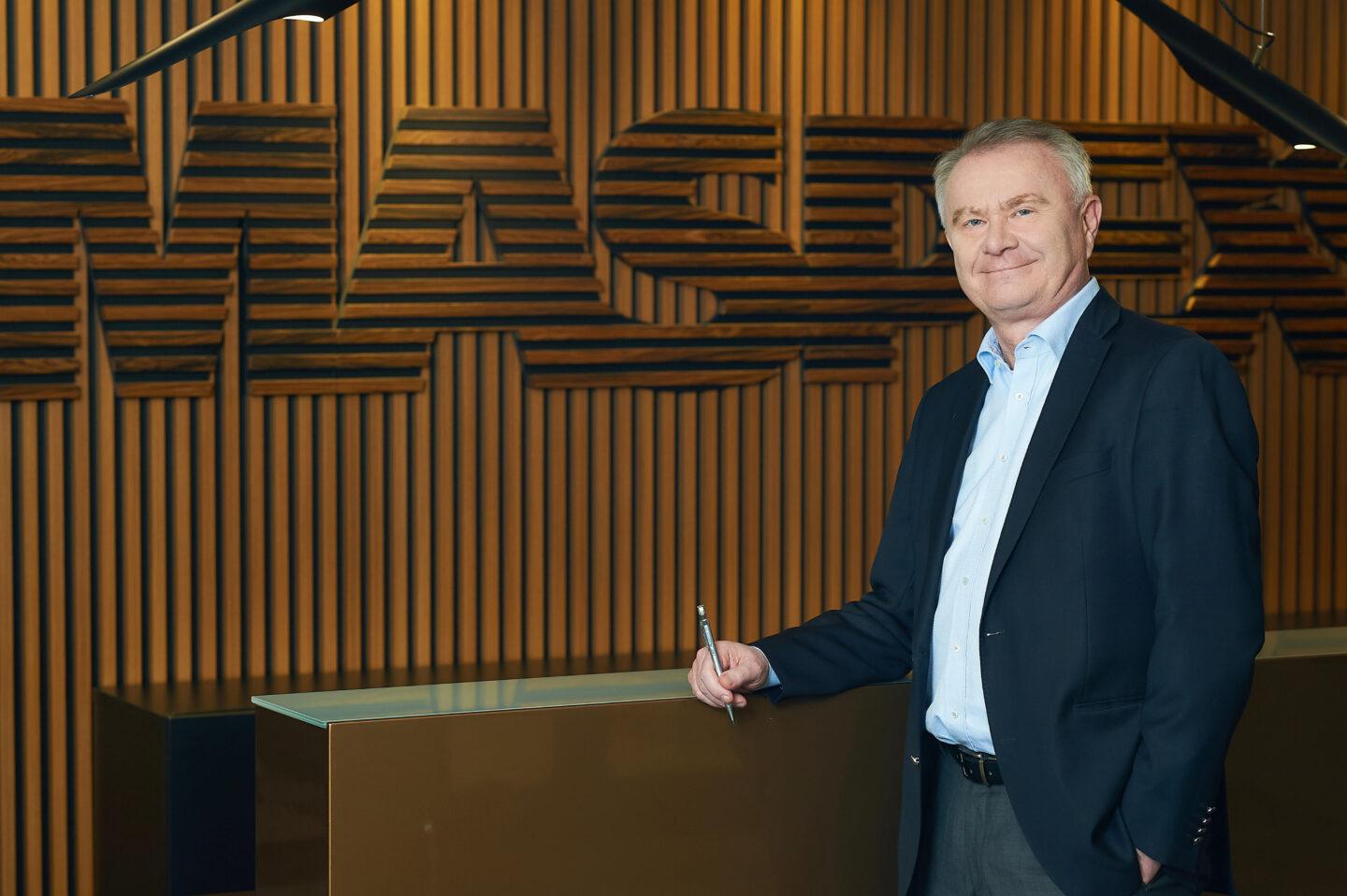
“The two largest parts of our business – the beverage and alcohol segments – are currently facing volume declines. It will be very difficult to replicate last year’s results, even taking into account the effect of our acquisition of the Romanian company Purcari Wineries. However, my long-term goal is for the Maspex Group to achieve sustainable growth. At our scale, even modest growth from PLN 16 billion (EUR 3.8bn) in revenue represents huge sums, comparable to the size of an average independent company,” says Krzysztof Pawiński, CEO of the Maspex Group.
Magdalena Brzózka, XYZ: For years we’ve talked about what you called a “legislative diarrhea” – the constant flood of new regulations that make it extremely difficult for food and beverage producers to grow their business. How do you reflect on this issue as 2025 comes to a close?
Krzysztof Pawiński, CEO of Maspex Group: In recent years, and especially in 2025, there has been a dramatic accumulation of levies, fees, and taxes in the beverage segment. The food industry is experiencing far too many legislative changes. And this isn’t just about Poland. Looking more broadly, the problems start with plastics, and I’m frankly alarmed by the short-sightedness of Europe’s approach to plastic circulation and recycling. We are implementing solutions that are “enlightened” in theory but poorly thought out in practice. It is clear that there is no coherent plan for managing the lifecycle of plastics.
No one doubts the underlying idea. The problem arises during implementation. Plastic has a completely different lifecycle than steel, because each remelting degrades the quality of the material. To maintain its properties, virgin PET – the primary raw material – must constantly be added.
It really takes tremendous short-sightedness to consider this a beneficial solution. This requirement shows a fundamental misunderstanding of the entire processing chain. It is highly bureaucratic, inconsistent, and illogical – turning something that was functional completely upside down.
Until now, the system worked naturally. The food industry purchased virgin PET and produced bottles that, after use, went on to further recycling and were used in products without high-quality requirements, such as food packaging, plant pots, garden items, or thicker plastic forms. It made sense, and more importantly, it worked.
Now, however, the legislation requires the food industry to include 25% recycled PET (rPET) in packaging from 2025, rising to 30% by 2030. This is intended to reduce the use of virgin plastics and support the circular economy. In practice, this means that beverage packaging producers must buy rPET. Since we purchase it from the market, other sectors that rely on plastics further down the recycling chain face shortages of recycled material and have to buy virgin PET. For the beverage industry, this translates into higher costs, lower material quality, increased microbiological risks, and virtually no environmental benefit. Again, it takes remarkable short-sightedness to see this as a positive solution.
A similar issue arises with the mandatory bottle cap attached to the container. We had to redesign all molds and recalibrate machines, resulting in a heavier cap due to the attachment mechanism. Across Europe, this adds up to 150,000 tons of extra plastic annually – just so the cap can dangle from the bottle. The entire bottling industry had to spend EUR 8 billion to comply with this – in my view, an absurd requirement, even from the standpoint of later plastic-circulation decisions.
How do you assess the sensibility of these projects?
These are projects created administratively, from the perspective of a central planner. Here in Central Europe, we already know very well that this approach does not work. Yet at the level of EU bureaucrats, there is still a belief that a “bright idea” can solve any problem. If a solution were genuinely good, the business would implement it itself, because we know how to produce better and cheaper. Instead, what we are told is: “it must be better and more expensive,” while in reality it is only more expensive. Whether it will actually be better – time will tell.
The result is bureaucratic burdens that look good on paper but lead to higher costs and more complicated processes, weakening the competitiveness of European business. We even sent bottles with attached caps to colleagues in other parts of the world, and the reaction was laughter. It’s understandable, although paradoxically, the cap is probably the smallest thing to laugh at.
There is also the phenomenon of gold-plating. Every EU directive, usually just a few or a dozen pages with a sound idea, grows into additional rules, complexities, and obligations when implemented at the national level. There are many examples. Take the directive on cross-border tax schemes – the Polish MDR. The original directive was only a few pages long, but in Poland it became a 160-page law. And instead of applying solely to cross-border transactions, it also covered domestic ones.
We also have the deposit-return system and changes to the sugar tax
Since October 2025, Poland has implemented a deposit-return system, which will be an extremely complex organizational undertaking. And it’s not just about the inconvenience to consumers of paying a PLN 0.5 (EUR 0.12) deposit when purchasing beverages.
No one talks about the real cost of operating the system. In reality, over PLN 0.2 (EUR 0.05) will be added to the cost of every bottle. Experience from other countries shows that this level of cost is unavoidable. This effectively means the state has created a pro-inflationary mechanism. Beverage prices in deposit-packaging will certainly rise, and consumers will ultimately pay for it.
As if that weren’t enough, we are facing announcements of drastic changes to the sugar tax. This tax was once communicated as a public-health measure, but today it has become a rigid fiscal instrument – reformulation of ingredients is no longer part of the discussion. The sugar tax will lead to real increases ranging from several to tens of percent. The fixed component will rise from PLN 0.5 to PLN 0.7 (EUR 0.12 to EUR 0.2) per liter of beverage (a 40% increase). This applies to drinks containing up to 5 g of sugar per 100 ml or any sweeteners.
The variable component, charged for each gram of sugar above 5 g/100 ml, will be doubled – from PLN 0.05 to PLN 0.1. As a result, the maximum total sugar-tax rate will rise to PLN 1.80 (EUR 0.4) per liter (currently PLN 1.20 or EUR 0.3). Beverage prices could increase by up to PLN 0.6 (EUR 0.14) per liter.
I never thought I would live to see such times and such tax jumps.
Is that all?
To this list of challenges, we must also add the ROP – a state-managed, centrally administered “waste tax.” I would expect this from many governments, but not from a liberal one.
Another chapter in administrative torment is the PPWR (Packaging and Packaging Waste Regulation). Its stringent system requirements, comparable to the deposit-return scheme, will also apply to all packaging and include, for example, mandatory recycled-content quotas. This affects both food-contact packaging and items such as stretch film used for transport. Once again, this changes parameters and forces the industry to recalibrate all machines, which are highly tuned to the quality of the existing packaging material.
We have just gone through a difficult year in which our beverage business has not grown; in volume terms, it has actually declined. We are fighting to maintain market value, which is challenging given a weak summer, a cool spring, and low consumer confidence.
All these taxes and regulatory burdens hit the beverage and juice segments of the food industry hardest. On top of that, there has been a sharp increase in the price of orange concentrate, which has further negatively affected the business.
We are coming off a tough year in which our beverage business has not grown and, in terms of volume, has declined. We are struggling to maintain market value amid a weak summer, a cool spring, and a lack of consumer optimism.
What is your idea, as a major business leader, for stopping this “legislative diarrhea”?
As the CEO of the country’s largest food company, I observe this reality from the inside, because we help shape the entire food-production and distribution ecosystem. For years, we’ve talked about the excessive number of regulations – and yet, every year, there are more.
In public statements, every government talks tough. We’ve even heard that “deregulation is the only thing that has really worked.” Rafał Brzoska’s team has done tremendous and solid work; now we’ll see whether it translates into real legislative change. The government-side process is moving slowly, but it seems to be progressing.
You ask about my idea? If the president were to announce that he would not sign any law imposing new obligations unless it simultaneously eliminates two existing ones, legislative creativity would cool after a few such decisions. I don’t see any other realistic mechanism. Parliament has no incentive to limit the number of laws it creates. On the contrary, many MPs and officials see their purpose precisely in making law and multiplying the obligations that come with it.
In practice, working on removing unnecessary regulations is enormous work: you have to find them, evaluate them, justify them. Why do that when you can simply produce new regulations? And then proudly announce a “progressive” new rule.
Perhaps we should change the criteria for evaluating parliament: the fewer laws passed, the higher the score. That would be new – but I don’t believe it’s realistic.
From the perspective of the separation of powers, the president should act as a balancing body, blocking regulations that multiply, rather than eliminate, existing absurdities. This won’t solve everything, because often it takes time to see what is actually a flawed law. Although… in many cases, we know it from the start.
Remember, the burden is not only fiscal. There are countless non-tax obligations. Take construction law, for example – a huge misunderstanding and a major barrier to economic development, and by extension, to the growth of our country. Of course, it’s easy to blame the EU, but the truth is that the EU is responsible for maybe 10% of our problems. The rest comes from domestic regulations.
I recently met with our investment team about a new plant, and I realized firsthand how different project preparation is now compared with 20 years ago, when I last dealt with such projects in detail. Back then, there were clear rules regarding the site – you couldn’t generate noise or discharge wastewater beyond the plot, and other limits were clearly defined. The design process was simple: I checked legal compliance, designed, obtained permits, and could start construction.
Today, to do anything, we must start with an environmental impact assessment or prepare what is called a project information file. It’s not a “file” in the common sense – it’s a book, a very extensive document explaining all intentions and obligations, covering dozens of analyses. Importantly, it doesn’t directly reduce noise or other burdens outside the plot; it only generates enormous administrative work.
With a professional team, preparing environmental pre-documentation for a medium-sized plant took us 16.5 months before we could begin actual design and investment activities. Then another 12 months were needed to design and obtain a building permit – around 28 months in total.
This extended timeline is the result of legal changes that introduced complex administrative burdens over the past 20 years. I am appalled by the scale of formalities now required to start building a plant. We did this to ourselves – and the EU has very little to do with it.
Who will pay for the taxes and the deposit-return system?
How much has all this cost, and who will bear the burden?
Regarding bottle caps attached to the containers, every manufacturer had to retrofit all their machines to adapt to the new forms. This represented a huge cost for each producer, measured in millions of zlotys.
Deloitte’s report, “Deposit-Return System in Poland – Costs, Perspectives, Opportunities,” estimated total expenditures for launching and operating the system at over PLN 37 billion (EUR 8.7bn).
One thing is certain: everything will become more expensive. Anyone who thinks these costs will not be reflected in retail prices is mistaken – they will, albeit with some delay.
It’s also worth examining how the system is structured. In theory, under the law, the entities introducing packaging to the market – i.e. producers like us – were supposed to organize the system in its entirety. So we formed a single organization, obtained all necessary antitrust approvals, licenses, and formal permits.
Yet it turns out that there are only three operators actually running the deposit-return system backed by real market participants. In total, there are seven operators.
This raises the question: what are the remaining operators doing, given that they have no statutory obligation to participate? In my view, these are entities trying to build a business model on the costs of companies that are actually required to organize the system. Although the law stipulates non-profit operation, it is curious – why the sudden interest of some firms in conducting “charitable” activities? Time will tell, but I suspect those expecting profits may be disappointed. This is yet another example of low-quality regulation.
The alcoholic beverages market is shrinking
What is the state of your alcohol business? Consumers have eagerly embraced the “zero” trend, and data indicate that alcohol consumption in Poland – a country once flowing with vodka – is declining.
That’s correct – alcohol is a declining category. Of course, from a social perspective, this isn’t necessarily negative. From a business standpoint, however, it is clearly a contracting market. Added to this is the excise tax map, which undeniably acts as a strong brake on this sector of the economy.
We are operating under a regime in which excise rose by 10% in the first year and then by 5% annually for several years, a mechanism initially planned through 2027. Suddenly, however, we learned that rates would increase by 15% and 10%. This raises questions about the seriousness and predictability of state action. Why enact laws aimed at long-term stability if annual adjustments are introduced anyway? From an entrepreneur’s perspective, this is more frightening than amusing.
The two largest segments of our business – the beverage and alcohol categories – are experiencing volume declines. As a major player and market leader, we cannot behave differently from the market as a whole, since we account for roughly half of its size – this is true for both juices and beverages, as well as vodka.
Of course, within these categories there are subsegments showing some growth, but overall, the two largest product groups are in decline, reflecting broader market trends.
How will this affect Maspex Group’s financial results?
We have a very large and diversified business in Poland, operating across multiple food categories. Over the years, we have experienced both declining and growing markets, so we don’t view the current situation as catastrophic over the next two years. Market fluctuations are a natural part of business.
However, it is a fact that external challenges are not easing – they are, on the contrary, accumulating and intensifying. This leaves a certain aftertaste: we are doing our work, developing categories, yet the regulatory environment increasingly hampers our operations.
Ultimately, all of this will impact our results this year. In terms of revenue and profit, it will be very difficult to replicate last year’s performance, even taking into account the effect of acquisitions, as we are finalizing the takeover of Romanian Purcari Wineries, one of the largest producers of premium wine and brandy in Central and Eastern Europe.
Year-on-year, the challenge will be to match the results from 2024, when Maspex Group recorded over PLN 16 billion (EUR 3.8bn) in sales revenue.
Volume declines are partially offset by higher sales value. Even so, this year is very difficult, and the wave of regulatory changes only exacerbates the situation. Food product categories remain significantly more stable.
What are Maspex Group’s growth prospects?
I would like Maspex Group to achieve sustainable growth, targeting a reasonable – i.e. single-digit percentage – increase each year. At our scale, such growth on PLN 16 billion (EUR 3.8bn) in revenue represents enormous sums, comparable to the size of a medium-sized independent company. Doubling the business without a significant acquisition project is practically impossible, but systematic, single-digit growth in a stable inflationary environment is a realistic goal.
Geographically, we feel comfortable in Central Europe – it is a stable region for business development. At the same time, we are observing Western European markets, where Polish companies are increasingly present. Ambitious dreams of Far Eastern markets – China, India – or the U.S. exist, but the chances of success are inversely proportional to distance and require enormous resources.
Should companies like Maspex still plan strategies for 5–10 years ahead, as they did until recently? Or is that already unrealistic and unnecessary?
Looking back at our actions, we see that the plans themselves are less valuable than the process of creating them – which is extremely important. It is through this process that we run a thoughtful business, remodel selected areas, and influence costs and operational structure. The process itself sets aspirational goals, allowing us to look deeper into each product line or market.
Entry into the alcohol segment was the right move
From today’s perspective – do you regret entering the alcohol category in 2022, when Maspex Group acquired CEDC? The market was already shrinking, consumer trends were shifting toward 0% alcohol, and now the government is raising excise duties… Was it worth it?
Alcohol is a regulated business – we knew from the start what we were getting into. It would be silly to claim surprise that the government could raise excise taxes. What does surprise us more is the pace and scale of these changes, not the fact that they happen – we accept that.
Looking back, entering the alcohol segment was the right decision, even though at the time the market trajectory was different from today. The acquisition doubled our business and gave us opportunities for geographic expansion, which we have strongly leveraged.
Alcohol is a major category in the food industry, significantly increasing the scale of our business (before the acquisition, Maspex Group’s revenue in 2021 was PLN 6 billion). Since then, we have made substantial business progress in neighboring markets. We are number one in alcohol distribution in Hungary, and in 2023 we acquired the iconic Czech brand Becherovka, strengthening our position in the Czech Republic and Slovakia. Currently, we are finalizing the acquisition of Romanian Purcari Wineries, which will improve our distribution footprint in Romania, Moldova, and Bulgaria. From both a business and management perspective, this was not lost time – we executed our strategy effectively.
Demographic challenges
What are the barriers and growth prospects for the food market in Poland?
A fundamental barrier for the consumer market is demography – the number of consumers. We can compete for market share, shifting it here and there, but the total number of consumers is limited. Poland reached its peak in 2022, largely due to the immigration wave following the war in Ukraine. This population change was significant, but since then, the number of consumers is no longer growing.
In the early 1990s, when we created the Kubuś juice brand, the annual number of births in Poland was around 500,000; today it is about half that, roughly 250,000. This declining demographic trend strongly influences strategy and product portfolios.
The Kubuś brand illustrates how we respond to negative demographic trends. Initially a simple carrot juice for children, the brand has expanded its portfolio almost tenfold in response to declining birth rates. Today, Kubuś includes juices, drinks, purees, water, and a baby line tailored to young consumers. Kubuś products are present in 30 countries, with local equivalents in Romania, Bulgaria, Hungary, Czechia, and Slovakia. This multi-product and cross-border approach allowed the brand to scale the business despite a shrinking children’s market.
The juice and beverage category overall is currently declining. Only energy drinks and functional products are growing. Change is inevitable, and participation in these shifts is essential to maintain profitable operations despite shrinking segments, because demographics cannot be changed. Programs like 500+ or 800+ (universal child benefits paid for each child, without income-related criteria) do not, in practice, boost birth rates – they are redistribution tools.
A smaller population does not mean we should produce and consume less. While consumption of some basic products like bread, milk, or juices may decline, new consumption areas are emerging and should be recognized. There will be fewer people, but they will be more productive and consume a greater variety of products. Drawing on Elon Musk’s vision, automation and robotics could create a world where work becomes a privilege and basic income is guaranteed – but personally, I am not that optimistic.
Is Maspex already a global company?
It is still difficult to call Polish companies truly global—this remains more of an aspiration than a reality. Maspex is a leader in many categories both in Poland and Central Europe – that is its core identity.
We have a portfolio of brands that consumers love. We own over 70 strong regional and local brands across countries such as Poland, Romania, Hungary, Czechia, Slovakia, Bulgaria, and Moldova. Our portfolio is built on local brands, very differently from global companies, as only in the past two years have we had a truly global brand — Żubrówka. Food is a special case – people are proud of their culinary habits, their cuisine, and their local traditions. We have strengthened this local pride. Therefore, where a strong local brand exists, we do not aim to create something new from scratch.
Poland, given our scale, is starting to feel constrained, which is why our growth strategy includes international expansion. Since the mid-1990s, we have been systematically active in foreign markets, mainly Hungary and Romania. Our presence there is long-term and involves acquiring local brands, which is extremely important in the food sector.
Romania: key market after Poland
Maspex has been operating in the Romanian market for nearly 30 years. The company runs four production facilities there and employs around 1,800 people. To date, it has completed three acquisitions in Romania: in 2007, it took over the Arnos brand; in 2013, Sallatini and Capollini; and in 2016, RioBucovina, owner of the Bucovina brand. The company is now finalizing another acquisition in this market. How important is Romania for the Maspex Group?
It is one of our key markets—the second most important after Poland and the second largest in terms of consumers.
One could say that the breadth of our portfolio in Romania today is comparable to that in Poland, and even exceeds it by one category. We are a significant player in the mineral water market there, whereas in Poland we are almost absent in this segment – apart from a small niche in specialized alkaline water, Alcalia.
Romania has long awaited its ‘moment in the sun’ – and it has finally arrived. The Polish market remains far more advanced, as some processes simply take time. The same developments are occurring in Romania, albeit with a slight delay. What we successfully roll out in Poland generally works in Romania too – but a little later.
The market challenges in both countries are similar. Poland faces overregulation, and Romania does as well – though in a different form. At the same time, Romania is a country where we have made substantial investments, building highly modern facilities that deliver strong results.
Poland, as a market twice the size, has a natural advantage of scale. A larger market means greater efficiency and higher operational productivity.
How trade agreements with the EU, Ukraine, the U.S., and Mercosur are shaping the food market
We are beneficiaries of the open EU market and should actively protect it, to prevent a return of protectionist tendencies. On smaller markets, such ideas appear regularly. Recently, we saw an initiative requiring a large share of products in promotional leaflets to be local. Fortunately, the European Union systematically blocks such measures -although often with delays.
This is where I see a role for the Polish state: to consistently support an open internal EU market. Non-tariff barriers still exist – they are not formal duties or quotas but effectively restrict trade. A thoughtful promotional policy is needed, along with work on Poland’s image, showcasing our achievements, and consistently combating protectionism in the food sector across the Union. This is in our interest.
Trade agreements with Ukraine are complex and multifaceted. As advocates of open trade, we understand the arguments of farmers and suppliers, who point to differing standards – for example, regulations on pesticides or other agricultural inputs. This creates uneven competition, as restrictions applied to only one side distort the market. Combined with differences in agricultural structures, it requires special attention.
At the same time, our exports to Ukraine are growing. Stable trade relations must be reciprocal – one side cannot simply buy while the other only sells. Gradually introducing equal standards in agricultural production will be key. The EU can assist in this process, and Poland’s pre-accession experience shows that integration works best in stages.
In the case of Mercosur, the situation is even more complex. Hormones and other substances allowed in meat production there would not be acceptable to European consumers. This makes leveling the playing field essential. At the same time, Poland has a deficit in plant-based protein and imports it, including from this region, often for feed purposes. Opening these markets to our products could benefit both sides.
For our company, the impact depends on the direction of trade. We export to Ukraine, while our imports come from Mercosur – mainly fruit concentrates. Where we export, we expect fair competition; where we import, we require stable market access.
Investment plan
The Maspex Group has an ambitious investment plan totaling PLN 1 billion (EUR 215 million). How will this capital be deployed, and is now the right time for such investments?
Investment processes, by their nature, are hard to stop. Over the past three years, we have allocated more than PLN 1 billion to upgrading our facilities, building new production halls, logistics centers, and warehouses, automating processes, and reorganizing logistics – allowing us to produce the same or greater output at lower costs while responding flexibly to customer needs.
When acquiring an alcoholic beverages business, we took over two facilities that fell short of the investment standards required within our Group. The issue was not the products but logistics and infrastructure. This is why we decided to make substantial investments in this segment. We are also expanding the Becherovka facility in Karlovy Vary, where production lines have been upgraded.
In 2025, our investment expenditure is PLN 550 million (EUR 118 million). We have completed three aseptic production lines in Tymbark, Tychy, and Romania. Three photovoltaic farms with a total capacity of 5.8 MWh have been installed. We launched warehouse centers in Oborniki, Tymbark, and Bulgaria. At the beginning of 2026, we plan to open new production lines in Oborniki and Białystok, followed shortly by a high-bay warehouse in Tychy.


Key Takeaways
- A key barrier to the development of the food market in Poland is demographics -the number of consumers is limited. However, according to Krzysztof Pawiński, fewer people does not necessarily mean lower production or consumption. New areas of consumption are emerging, which the market should identify and develop.
- The two largest parts of the Maspex Group’s business – the beverages and alcoholic beverages segments – are experiencing volume declines. This will ultimately affect the Group’s results this year. Looking at revenue and profit, it will be very difficult to replicate last year’s performance, even taking into account the acquisition effect, as we are in the process of finalizing the purchase of Romanian Purcari Wineries. The decline in volumes is partially offset by higher sales value, but the year remains very challenging, and extensive regulatory changes only exacerbate the situation.
- The Maspex Group’s CEO aims for the company to achieve sustainable growth, targeting a reasonable – i.e. single-digit – annual increase. At the current scale of operations, such growth from PLN 16 billion in revenues translates into amounts comparable to the value of a typical independent company.