

This article is a part of Poland Unpacked. Weekly intelligence for decision-makers
“We may be facing an even worse situation,” warns constitutional law expert Professor Piotr Uziębło.
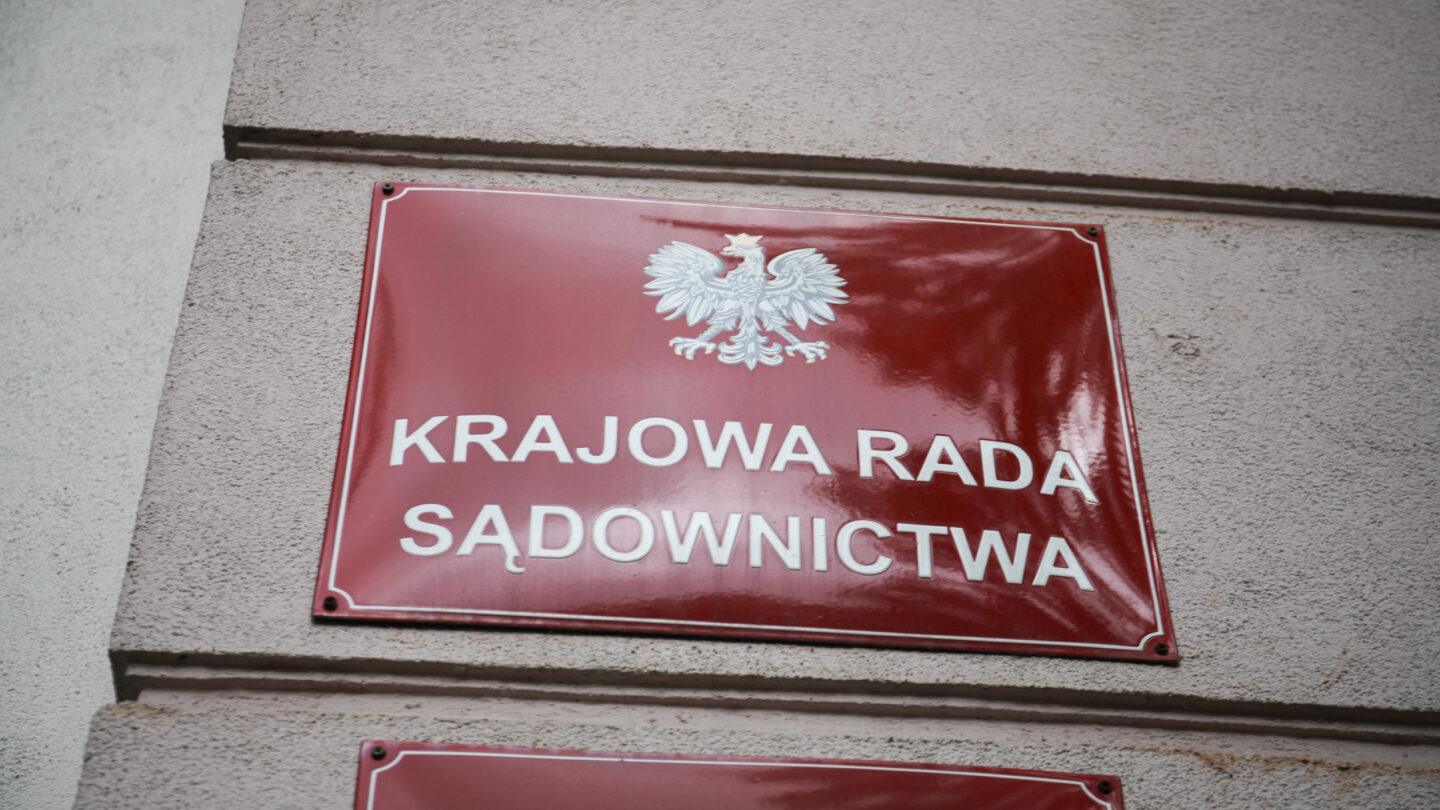
Since the Sejm adopted a new law on the National Council of the Judiciary (KRS) in December 2017, the status of the body has been the subject of significant doubt. Under the legislation introduced at the time, the judicial members of the Council are elected by the Sejm. In the view of many Polish constitutional scholars, as well as European courts, this grants the legislature excessive influence over the judiciary.
The changes triggered a crisis in which the KRS began to be referred to as the “neo-KRS,” while judges nominated by it for appointment or promotion were labeled “neo-judges.”
The government was expected to resolve the problem with a draft law prepared by the current governing coalition. It provided for judicial members of the KRS to be elected in universal and secret ballots by the entire judiciary. However, this solution was rejected by President Karol Nawrocki, who vetoed the bill in February. He argued that it would lead to the segregation of judges.
“Primary elections”
The new judicial members of the KRS were once again elected by the Sejm. This time, however, so-called “primary elections” were held to ensure that candidates would enter the parliamentary vote with the strongest possible mandate from the judiciary. The governing coalition recommended 15 candidates who had received the highest levels of support from judges.
Professor Piotr Uziębło, a constitutional law scholar and vice-dean of the Faculty of Law and Administration at the University of Gdańsk, argues that the current legal framework governing the KRS remains problematic.
“Let us not kid ourselves – the law on the KRS raises constitutional concerns. Attempts were made to address them through so-called primaries, that is, by having candidates assessed by a broad group of representatives of the judiciary. Thirteen new members of the KRS are individuals who received very strong endorsements. There are also candidates whose support was low. Turnout was significant, and that is an important factor,” says Professor Uziębło.
Indeed, turnout reached around 60%. The highest number of votes went to Judge Dariusz Zawistowski from the Civil Chamber of the Supreme Court, who was supported by 4,201 judges. The remaining 14 judges among the top 15 candidates each received more than 3,000 votes.
The entire group of 15 was endorsed by the Association of Polish Judges Iustitia, the Themis Association of Judges, the Association of Family Judges in Poland, and the Nationwide Association of Administrative Court Judges.
“Balancing values”
Judge Bartłomiej Przymusiński, president of the Association of Polish Judges Iustitia, argues that the renewed KRS will meet minimum European standards. He stresses that after President Karol Nawrocki vetoed the bill, it was no longer possible to change the statutory rules governing the election of judicial members of the Council.
“Even on the basis of flawed provisions, a kind of bypass was possible: a good-practice approach that led to a state compliant with the Constitution and European standards. Thirteen new members of the Council are representatives of the judiciary – there is no doubt about that, because court-based voting selected those who enjoyed the strongest support among judges, often exceeding 3,000 votes. Council of Europe standards state that at least half of such a body must consist of judges elected by judges themselves. The Council has 25 members, and 13 meet this criterion. This is still not an ideal situation, because it would be best if all 15 judicial members were elected by judges without the involvement of the Sejm. But in law one sometimes has to balance values. This method of selection, although still far from perfect, has corrected the defects of the body,” says Judge Bartłomiej Przymusiński.
Former deputy to Mr. Ziobro joins the KRS
Two judges from the list of candidates with the highest support in the primaries replaced two judges nominated by opposition parliamentary groups. Under the current law, parliamentary clubs are entitled to put forward their own candidates.
The Confederation party nominated Judge Łukasz Zawadzki, while Law and Justice (PiS) put forward Judge Łukasz Piebiak. Between 2015 and 2019, Mr. Piebiak served as deputy justice minister in the ministry headed by Zbigniew Ziobro. He lost his post after revelations linking him to the so-called “hate campaign” scandal, involving the organization of online harassment campaigns against judges.
Explainer
Zbigniew Ziobro
Zbigniew Ziobro is a hard-right Polish politician who served as Minister of Justice under the Law and Justice (PiS) government where his administration stacked higher courts with friendly judges and punished judicial critics with disciplinary action – moves the EU condemned as undermining the rule of law.
After PiS lost power, prosecutors hit him with 26 criminal charges, including misusing public funds for political purposes, leading an organized criminal group within the Ministry of Justice, and illegally ordering the purchase of Pegasus spyware.
Rather than face trial, he fled abroad – Hungary granted him asylum – and the controversy escalated further in May 2026 when Prime Minister Tusk called it “outrageous” that the Trump administration reportedly granted Ziobro a US visa, describing him as “a fugitive from the Polish state.”
In the Sejm, MPs voted on all 15 candidates as a single slate. This meant that parliamentarians supporting judges with a broad mandate from the judiciary also voted in favor of Łukasz Piebiak. Paweł Śliz, MP for Poland 2050, lawyer and chair of the Sejm Committee on Justice and Human Rights, wrote on social media that it was the most difficult decision of his life.
“The current law on the KRS, drafted by PiS, explicitly requires that at least one representative nominated by each parliamentary group be included on the final list. If I had followed my conscience and blocked this candidacy, I would have violated the law. I would have handed President Nawrocki a perfect pretext to completely obstruct the work of the new KRS. The President would not have recognized the Council, arguing that the selection was illegal, and we would again face paralysis. The governing coalition acted in a state-oriented manner. We chose the lesser evil to save the institution and ensure public stability,” wrote MP Paweł Śliz.
Judge Bartłomiej Przymusiński, when asked about these two members of the KRS, says he does not fear their influence on the judiciary, as he “trusts in the integrity of the thirteen judges appointed to the Council.” In his view, a greater problem is that Łukasz Piebiak remains a judge, and that disciplinary mechanisms in his case have failed.
“Two politically nominated members are the result of a still-flawed law. The fact that Łukasz Piebiak remains a judge demonstrates the failure of the current system of criminal and disciplinary accountability for judges. At present, it is not possible to lift his immunity or initiate disciplinary proceedings against him. These decisions lie with the Chamber of Professional Responsibility of the Supreme Court, dominated by neo-judges. Individuals like Łukasz Piebiak are symbolically shielded by immunity, but in reality they are protected by the Presidential Palace. Passing legislation to fix the Supreme Court system would require the president’s consent,” says the president of the Association of Polish Judges Iustitia.
The future of the KRS
In a recent interview with XYZ, Justice Minister Waldemar Żurek declared that he would join the reconstituted KRS, provided that the procedures are properly carried out. He said this would represent a step toward repairing the situation within the Council.
What is the fundamental challenge facing the renewed KRS? Professor Piotr Uziębło points to the need to ensure that only individuals without a political footprint are appointed to the judiciary.
“These cannot be people who have been active politicians or who have supported politicians. A judge, beyond being independent in adjudication, should also be independent and apolitical. Of course, judges have their own views and should have them, but they should not publicly display them,” the constitutional scholar argues.
No end to the problems
According to the vice-dean of the Faculty of Law and Administration at the University of Gdańsk, the election of new judicial members of the KRS – backed by broad support from the legal community – does not mean the end of the turmoil surrounding the Council.
“The problem is what was done by the former head of the KRS, who has since resigned and is seeking to keep the Council operating in its old composition, based on a highly questionable ruling by the Constitutional Tribunal,” comments Professor Piotr Uziębło.
Dagmara Pawełczyk-Woicka resigned on Friday from her position as chair of the KRS. Her term was in any case coming to an end. She nevertheless asked the First President of the Supreme Court, Małgorzata Manowska, to convene a sitting of the Council in its current composition. In doing so, she aims to block the convening of the reconstituted Council and the election of its new chair.
A few days before the Sejm elected the new members of the KRS, the Constitutional Tribunal issued an interim order instructing MPs to refrain from selecting new members of the Council until a separate application filed by PiS lawmakers is examined. They have requested a review of the constitutionality of the relevant provisions, despite the fact that it was PiS politicians who introduced the current law. A “substitute judge” participated in issuing the ruling.
In April, meanwhile, the Tribunal – under the leadership of former PiS MP Stanisław Piotrowicz – found that the procedure for selecting judges to the KRS was flawed. It ruled that provisions governing the appeals procedure against the Sejm Marshal’s decisions refusing to accept a candidate nomination were unconstitutional. It also found unconstitutional the provisions granting the Minister of Justice exclusive authority to confirm the status of judges endorsing a candidate for the KRS.
“Threats have not disappeared”
For the political camp of Law and Justice (PiS) – which also includes President Karol Nawrocki – these developments may provide significant arguments. Even with judges holding a broad mandate from the judiciary now sitting on the KRS, it is unlikely that tensions surrounding the Council will subside or that its legitimacy will cease to be challenged.
“On the contrary. I am convinced that the status of the KRS will continue to be questioned, not least in the context of the Constitutional Tribunal’s actions. We may face an even worse scenario in which all judicial nominations proposed by the KRS remain on the President’s desk and are not implemented. This is something we must also take into account. It would deepen the paralysis of the judiciary and lead to far-reaching consequences,” says Professor Piotr Uziębło.
On 20 May, a group of 13 judges elected to the KRS last week held a press conference, announcing their readiness to begin work. They were accompanied by Justice Minister Waldemar Żurek.
“We are aware that there are statutory deadlines, and in the circumstances in which we operate, we do not expect that this deadline will be met within 30 days,” said Judge Dariusz Zawistowski.


Key Takeaways
- The former chair of the KRS, Dagmara Pawełczyk-Woicka, as well as the Constitutional Tribunal – dominated by figures associated with PiS – are seeking to block the changes to the Council. According to constitutional law expert Professor Piotr Uziębło, continued challenges to the KRS’s status could result in the Presidential Palace withholding judicial appointments.
- Under the Law and Justice (PiS) government, the rules governing the National Council of the Judiciary (KRS) were amended so that its judicial members are elected by the Sejm. In the view of many constitutional scholars, this led to excessive influence by the legislative branch over the judiciary. The current governing coalition sought to allow judges to elect KRS members from among themselves. However, President Karol Nawrocki vetoed the government’s bill.
- To meet constitutional standards, a consultation process within the judiciary was conducted in the form of “primary elections” for candidates. The Sejm was presented with a list of 15 judges who enjoyed the strongest institutional mandate. Opposition parliamentary clubs were also able to put forward their own candidates. The PiS parliamentary group nominated Judge Łukasz Piebiak, former deputy to Zbigniew Ziobro and a figure implicated in the so-called “hate campaign” scandal. The Confederation also put forward its own candidate. In a single vote, the Sejm elected 15 new members of the KRS: 13 with strong support from the judiciary and two nominated by PiS and Confederation.