Poland Unpacked week 22 (18 - 24 May 2026)
Welcome to this week’s edition of our Poland Unpacked, where we deliver key insights and trends shaping the economic, corporate and political landscape. Catch the most important insights from Poland in this week’s briefing.
This article is a part of Poland Unpacked. Weekly intelligence for decision-makers
Dariusz Miłek is the most recognizable Polish entrepreneur in the apparel sector. In the 1990s, he founded the shoe retail chain CCC – an acronym for “Cena Czyni Cuda” (“Price Creates Miracles”), reflecting the low-price strategy with which he conquered the market. In recent years, also through acquisitions, he built the Modivo footwear and apparel group, which now operates nearly 1,300 brick-and-mortar stores, a fast-growing e-commerce business, and generates over PLN 10 billion (approx. EUR 2.3 billion) in revenue.
In recent years, the company has pushed into the premium segment. But this week, Dariusz Miłek announced: “I want to be the king of off-price,” signaling a new brand strategy and a slowdown in other initiatives. Here is what the plan looks like.
Business services centers have long been a key engine of the Polish economy. By the end of 2025, there were 2,081 such centers in Poland, employing nearly 490,000 people and accounting for 5.7% of GDP. Kraków is among the cities most successful at attracting them. Yet this year, business service centers in Kraków have begun to cut jobs. At Shell’s office alone, headcount has fallen by 300 over the past two years. In the first quarter of this year, 14 companies notified the local Labor Office of planned collective redundancies, affecting nearly 1,300 employees, mostly in the services sector. We examined what is going on.
Ascend Elements’ planned PLN 6.7 billion investment in Opole – one of Poland’s flagship battery-sector projects – has come under pressure after the U.S. company filed for Chapter 11 bankruptcy protection in April. Poland had pledged PLN 1.2 billion in state support for the pCAM plant, but the company argues the restructuring is meant to secure financing, not halt expansion. While talks with investors continue in the U.S., Polish institutions say they are monitoring the situation and waiting for decisions that will determine the project’s future. Here's the full story.
In 2025, banks operating in Poland posted record results, generating PLN 48.7 billion (approx. EUR 11.2 billion) in net profit. However, in the first quarter, conditions became less favorable: they were hit hard by the introduction of a 30% corporate income tax, higher contributions to the Bank Guarantee Fund, and narrowing interest margins. In the new market reality, some banks reported profit declines of as much as 50%, although there were also winners. Our analysis assesses the condition of the banking sector after the first quarter and asks whether this marks the end of the boom – or merely a temporary slowdown.
The past week’s most significant event was the publication of the European Commission’s (EC) latest macroeconomic forecasts as part of its spring round of projections. The outlook points to Poland’s exceptional economic resilience. In 2026, in terms of real GDP growth (3.5%), Poland is expected to trail only tiny Malta (3.7%). Yet given the very different population dynamics - Poland’s population is projected to shrink by 0.2%, while Malta’s is expected to grow by 2.4% - the Polish economy is set to lead the EU in per-capita GDP growth. Not only this year, but in 2027 as well.
The global economy is grappling with the shock caused by a drop in oil supply following the closure of the Strait of Hormuz. The EU’s real GDP growth forecast for this year has been revised down from 1.4% to 1.1%. Poland is among the small group of countries - alongside Cyprus and Spain - for which the EC did not downgrade its forecast compared with autumn 2025. This does not mean, however, that events in the Middle East are having no impact on the Polish economy. Rather, incoming economic data since the previous forecast have been strong enough to offset the negative effects of weaker consumption and tighter monetary policy resulting from the US attack on Iran.
In its baseline scenario, the EC raised its 2026 inflation forecast for the EU from 2.1% to 3.1%. In Poland, inflation is expected to reach 3.6% (HICP). That remains relatively high by European standards, though only 0.7 percentage points above the level forecast by the EC last autumn. Once again, stronger disinflationary pressures in Poland in the final quarter of 2025 and the first two months of 2026 played an important role. It is also worth noting that, according to the EC - in line with earlier expectations - Poland is projected to post the EU’s highest fiscal deficit in both 2026 and 2027.
This week also brought a fresh batch of data from the Polish economy. In April, industrial production rose by 2.5% year on year after seasonal adjustment. Construction and assembly output increased by 4.5% year on year, compared with 0.6% in March. The sector is therefore recovering from losses caused by the cold winter, although the data still show no signs of large-scale infrastructure investment getting under way. The most interesting figures, however, concerned producer-price inflation, which reached 1.9% year on year across industry as a whole. This reflects the average increase in prices of goods leaving factories. The result came as a major surprise, given that market expectations had pointed to a 0.1% decline. Producer-price inflation typically feeds through into consumer inflation with a lag of several months. It is therefore reasonable to expect that this latest price spike will eventually be reflected in shop prices as well.
In a separate analysis, we examined the key trends in Poland’s foreign trade based on data for the first quarter of 2026. Interestingly, imports from China slowed. In the first quarter of this year, imports rose by 5.7% year on year, compared with growth of as much as 21.5% a year earlier.
Last but not least, our economists joined the lively debate sparked by a recent article in the Financial Times, which argued that smartphone adoption has had a large and negative impact on fertility rates worldwide. Our analysis showed that the FT’s study contained a number of methodological flaws - including extrapolating from a short-term trend and cherry-picking data - that undermine the conclusions reached by the prestigious newspaper. We are not claiming that smartphones have no effect. But the impact is certainly smaller than the FT article suggests.
Donald Trump has announced that an additional 5,000 U.S. troops will be deployed to Poland.
The announcement came only after several days of tension surrounding the Pentagon’s decision to cancel a planned rotational deployment of 4,000 American troops to Poland. CNN reported that this formed part of a broader drawdown of U.S. forces in Europe, including the early-May announcement of the withdrawal of 5,000 troops from Germany. Despite efforts by the Polish authorities, there were no clear signals until a brief statement from Donald Trump, who cited his strong relationship with President Karol Nawrocki.
Before this decision, we analyzed in XYZ what the redeployment of American forces across the continent would mean for Poland and Europe - read our piece here.
Poland was the first country visited by Hungary’s new prime minister, Péter Magyar. On Tuesday and Wednesday, he traveled to Kraków, Warsaw and Gdańsk, where he met with Prime Minister Donald Tusk, President Karol Nawrocki, and former president Lech Wałęsa. Magyar places considerable hopes on Poland and on Prime Minister Tusk in the context of European policy and securing EU funding. Learn more from our article here.
Protests against the Green Deal were held in Warsaw on Wednesday by Solidarity, the country’s largest trade union, founded after the 1980 strikes and originally led by Lech Wałęsa. The union was backed by politicians from Law and Justice, although when in power the party’s leaders had accepted the EU Green Deal. A referendum on EU climate policy, proposed by President Karol Nawrocki, was also intended to address the issue; the Senate rejected the motion to hold it.
The Sejm has elected new members of the National Council of the Judiciary. Under the rule of Law and Justice (in power from 2015 to 2023 and now in opposition), judges to the Council began to be elected by parliament rather than by the judiciary. The body’s status has been repeatedly challenged, including by European courts. The current government attempted to change the law, but President Karol Nawrocki vetoed the legislation. This time, most judges were selected following primaries within the judicial community.
Constitutional law expert Prof. Piotr Uziębło warns in an interview with XYZ that appointing new judges will not end the political turmoil surrounding the Council. Its legitimacy is likely to continue being contested by the opposing side of the political divide. Get to the bottom of the dispute here.
Interior Minister Marcin Kierwiński has signed a regulation requiring civil registry offices to prepare transcriptions of same-sex marriages concluded in other European Union countries. The move follows a November ruling by the Court of Justice of the European Union.
The Polish government has imposed a five-year entry ban on Itamar Ben-Gvir, citing the inhumane treatment of activists from the Global Sumud Flotilla, among whom are Polish citizens.
In XYZ, we examined the state of the Civic Coalition. One year before the election, the list of unfulfilled campaign promises is longer than the list of those delivered. The governing party led by Prime Minister Tusk also faces a strategic challenge in drafting an electoral program that takes into account a president capable of vetoing key legislation. Here's our article on the matter.
The next battleground for Polish voters isn't the TV screen — it's the chatbot. One in five Britons already uses AI to research politics, and studies show AI arguments are four times more persuasive than traditional campaign videos, with Poland among the most susceptible countries. With 2027 elections approaching and almost no regulation in sight, the race for algorithmic dominance is already underway - and described by us here.
HelloFresh is doubling down on Poland, opening a new technology hub in Warsaw aimed at developing the company’s global products. The German food-tech giant is not in search of the cheapest specialists, but of experienced IT experts capable of working with AI tools. By the end of the year, it plans to hire around 100 people in the capital, with hundreds more envisioned in the longer term.
The decision to invest is part of a broader transformation in Poland’s business services market. Advanced technology projects, R&D centers and artificial intelligence capabilities are becoming increasingly important, while traditional outsourcing is losing ground. Experts note that Warsaw is increasingly able to compete with Europe’s largest tech hubs for investment.
HelloFresh argues that the rise of AI is also reshaping the IT labor market. Companies are placing growing value on the ability to effectively use generative AI tools – regardless of years of experience. According to the company’s representatives, it is precisely “AI-native” skills that will be decisive for the future of the technology sector. Here's the full story.
Poland’s RedStone has become a central player in the international Tempo project, developed on the initiative of Stripe and the Paradigm. The aim of the initiative is to build a next-generation payment infrastructure based on blockchain technology – covering, among other things, instant cross-border transfers, settlement in local currencies, and solutions for AI agents. The ecosystem involves some of the world’s largest technology and financial firms, including OpenAI, Anthropic, Visa, Mastercard, Revolut and Deutsche Bank.
RedStone’s role is pivotal: the Polish firm provides reliable market data used by smart contracts and blockchain systems. The security and accuracy of transactions depend directly on the quality of this data. For the company, participation in the project marks an entry into the global technology elite and another step toward building a position beyond the crypto market. Here's all you need to know.
PFR Ventures is refreshing its programs supporting the venture capital market in Poland. The changes will cover three EU-funded vehicles – PFR Biznest, Otwarte Innowacje, and CVC – and are designed to better reflect the new realities of the startup ecosystem. The public institution argues that the goal is not only to increase program flexibility, but also to attract new investors and fresh venture capital management teams.
This reflects the maturation of Poland’s venture capital ecosystem, in which foreign funds, the global ambitions of founders, and companies incorporated outside Poland play an increasingly important role. See what exactly changes here.
Poland’s space sector has found itself at the center of an escalating dispute involving the Polish Space Agency. Allegations concerning management practices, workplace culture and relations with the industry are becoming increasingly vocal. Complaints from employees and signals of organizational dysfunction are reaching ministries and the media, and – according to parts of the sector – may negatively affect the development of Poland’s space industry and cooperation with the European Space Agency.
A public statement was issued by Polish astronaut Sławosz Uznański-Wiśniewski. He accused POLSA’s leadership of attempting “censorship and silencing critical voices” following actions allegedly aimed at limiting his public comments about the agency. Broader questions are being raised about spending transparency, the execution of strategic space projects, and the future of Poland’s ambitions in the space-tech sector. Increasingly, the industry is speaking not only about the sector’s potential in Poland, but also about the risk of eroding trust and weakening the country’s position within the international ecosystem.
The results of the referendum in Kraków will be announced. The local opposition had called for the recall of Mayor Aleksander Miszalski, who is affiliated with the Civic Coalition (KO - the party of Prime Minister Donald Tusk). The allegations against Mayor Miszalski include the appointment of politically connected individuals, rising municipal debt, and the introduction of a Clean Transport Zone.
At the end of the week, Poland will host an informal meeting of the foreign ministers of Poland, Estonia, and Iceland within the framework of the Council of the Baltic Sea States.
Kraków’s Museum of Photography has opened a new permanent exhibition that does more than display images. It tells the story of photography as a force that has shaped how we see the world. Spanning nearly two centuries, the show moves fluidly between past and present, combining early techniques (glass plates, albums, analogue prints) with contemporary practices. Along the way, it introduces key Polish photographers - from 19th-century pioneer Walery Rzewuski to post-war figures like Zofia Rydet and Jerzy Lewczyński, and on to today’s artists - making it a rare, coherent overview of Poland’s photographic tradition.
What makes this exhibition stand out is its breadth. It treats photography not just as art, but as documentation, persuasion, and everyday companion: from family albums to landscapes and even clouds. The final section looks ahead, asking how new technologies are reshaping both images and reality itself. With around 1,000 objects on display, it’s an accessible but thoughtful way to understand why photography still matters - and how it continues to influence how we interpret the world.
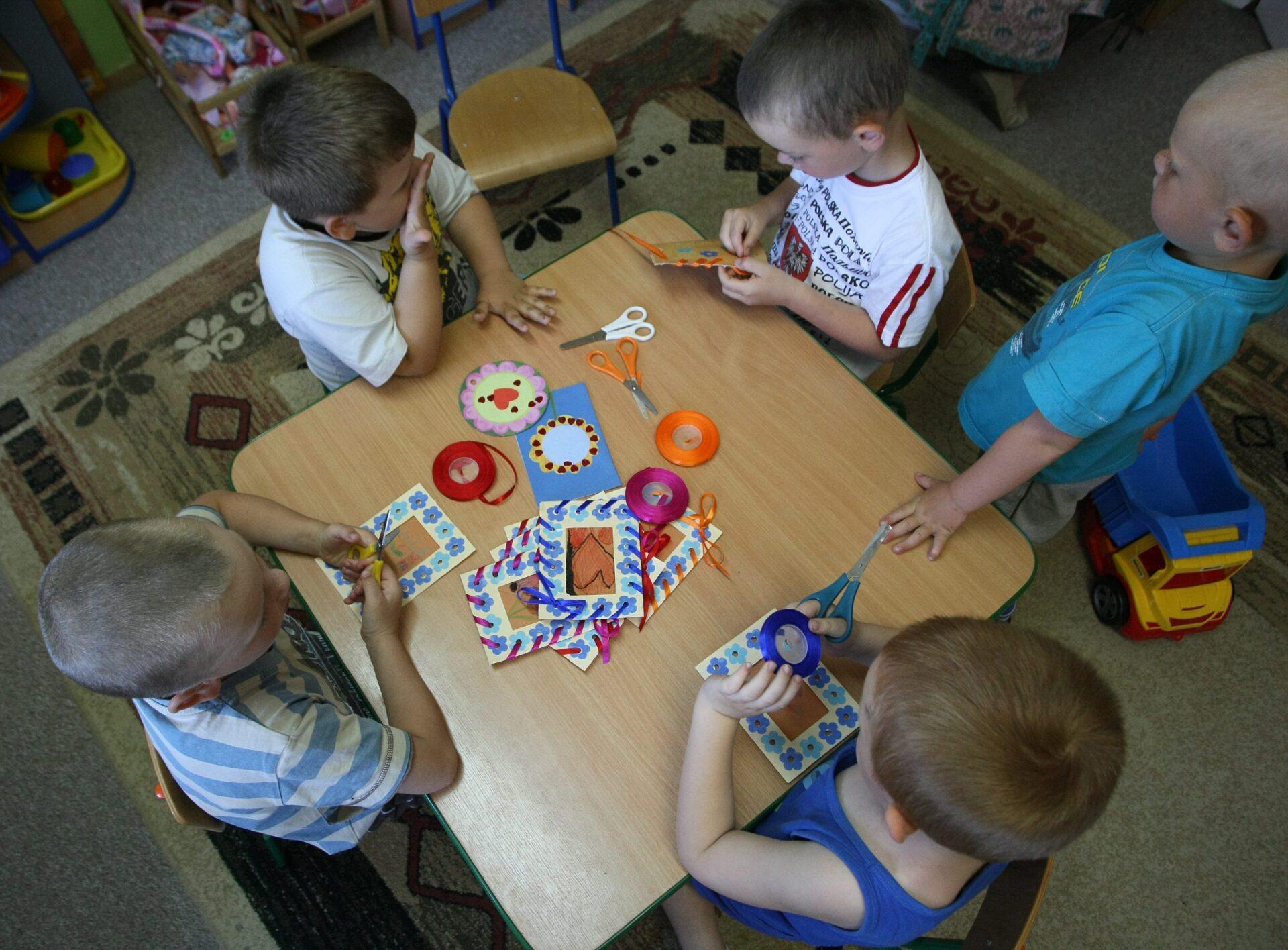
While most countries tie Mother’s Day to a moveable “second Sunday,” Poland locked its celebration to 26 May. It all started in 1914 when a group of idealists in Kraków decided maternal gratitude couldn’t wait for a convenient weekend. The tradition was carried forward by the Polish Red Cross, who championed the handmade laurka (greeting card) as the correct vehicle for honoring a mother's labor. In fairness, a more heartfelt item than the suspiciously awkward bouquet photo that dominates Instagram today.
Over a century later, the formula hasn’t changed much: breakfast in bed, flowers, a roaring family lunch, and a wave of social-media tributes from children who otherwise make contact roughly four times a year. Poland is now the only country that celebrates on this exact date. So, Polish mothers get something even better than a bouquet: the quiet, stubborn certainty that the whole country agreed, by force of habit and a reasonable amount of guilt, that 26 May belongs entirely to them.