

This article is a part of Poland Unpacked. Weekly intelligence for decision-makers
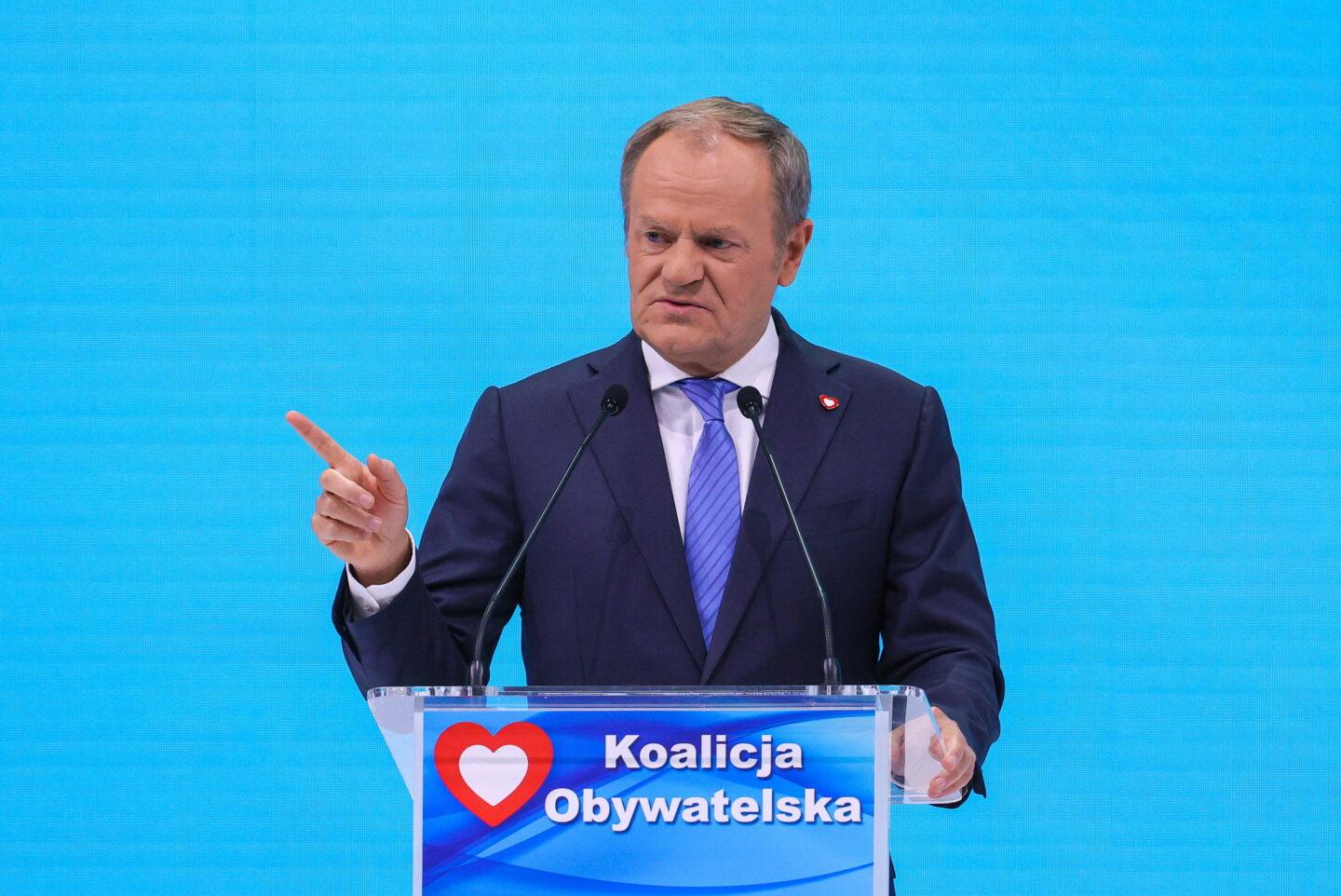
The lack of major reforms, unfulfilled promises, and presidential vetoes may become an increasingly heavy burden for the government. Ahead of the 2027 elections, the Civic Coalition (KO) will have to answer not only what it has achieved, but also why it has failed to deliver on some of its own pledges.
This time next year, political parties will already be in the starting blocks for the parliamentary elections. There is ever less time left to fulfill the pledges made in 2023. A recent remark by Katarzyna Pełczyńska-Nałęcz, Minister for Development Funds and Regional Policy and leader of Poland 2050, drew considerable attention. In an interview on Radio Zet, she asked the host, Bogdan Rymanowski, whether he could name a major reform of the current government. She took his silence as confirmation of her thesis: that Donald Tusk’s government has no major reform to its name that would affect society at large.
Poland 2050 on reforms
In a similar tone, in an interview with Wirtualna Polska portal, Szymon Hołownia – former leader of Poland 2050 – made similar remarks shortly afterward. He said that “small, medium and large reforms – there have been quite a few.” He added, however, that there had been no major reform “with the characteristics of a narrative that engages people in the state.” In the next sentence, he acknowledged that the government is investing in security, while also asking: “Is this a narrative, or Excel data?”
While the comments by Poland 2050’s leaders can be interpreted as coalition disloyalty or as dissatisfaction with the party’s current position within the coalition and in opinion polls, it is difficult to deny them a point on one issue. Donald Tusk’s government has not carried out a society-wide reform comparable in scale to the “500+” program introduced in the first year of Law and Justice’s rule.
Major reforms are no longer on the horizon
According to Professor Danuta Plecka, head of the Department of Political Systems at the University of Gdańsk, the situation is more complex. In her view, Poland 2050 will not benefit from such statements.
– A major problem for the Civic Coalition (KO) is its smaller coalition partners, who are playing their own political game within the alliance. Criticism of the largest party from within the coalition is, to put it mildly, inappropriate. Poland 2050 is trying to strengthen its position at the expense of its coalition partner, but it will not succeed, because its train has already left the station. As for promises, the flagship unfulfilled pledge concerns women’s rights and the liberalization of abortion laws, which is opposed by both Poland 2050 and the Polish People’s Party (PSL). According to polls, these parties have no chance of entering the Sejm in the next term. Too little emphasis is placed on the importance of already implemented projects. The opportunity for the Civic Coalition now lies in SAFE and the need to spend this money as quickly as possible. These funds will go to regions that traditionally vote for Law and Justice (PiS) – said Prof. Danuta Plecka in an interview with XYZ.
An example is the city of Stalowa Wola, where Law and Justice enjoys strong support and where the city is governed by a mayor from that party. The local steelworks is set to receive nearly PLN 20 million (approx. EUR 4.6 million) to develop production. Through programs such as SAFE and a prioritization of security policy, the Civic Coalition is attempting to narratively reclaim an area that previously belonged to Law and Justice.
Dr. Paweł Maranowski, a sociologist at Civitas University, believes that the window for major reforms has already closed.
– There are objective constraints linked to cohabitation. A president from a different political camp can serve as an argument for the government in front of voters – although not always. The president would probably support raising the tax-free allowance, but there is little chance of this given the budget deficit – said Dr. Paweł Maranowski.
Raising the tax-free allowance to PLN 60,000 (approx. EUR 13,950) was one of the Civic Coalition’s flagship promises. However, government officials responsible for the budget have been avoiding firm commitments on its implementation. Instead, they more often say that there is currently no fiscal space to cut taxes.
Unfulfilled promises
At the beginning of the current government’s term, several high-profile changes were introduced. These include the restoration of state budget funding for in vitro fertilization. The bill was a civic initiative, although it received strong backing from politicians of the current governing coalition. Another measure implemented was the “Active Parent” program, popularly known as the “grandparent allowance”, which provides PLN 1,500 (approx. EUR 350) per month to parents returning to work with children aged between one and three.
Many promises, however, remain unfulfilled. In future elections, this is likely to have the greatest impact on the Civic Coalition. It is the party of Prime Minister Donald Tusk that continues to lead in opinion polls and is the only component of the current coalition that consistently clears the electoral threshold. The New Left is sometimes below the threshold, while Poland 2050 and the Polish People’s Party have been failing to surpass it for months.
Although the list of 100 pledges presented by the Civic Coalition did not always align with the electoral commitments of its coalition partners, Prime Minister Donald Tusk insisted they remained valid. In his policy address (exposé) in December 2023, he said the entire country was familiar with them and would hold him accountable. He also declared that he feared none of these promises and that they would be fulfilled. The prime minister and his party therefore bear the greatest responsibility for government policy.
Less than two years later, after presidential elections lost by candidates of the governing camp, the prime minister shifted tone. He stated that since 31% of voters had supported his party, he one third of what had been promised.
On the party’s website listing the 100 pledges, fulfilled promises are marked in green. Alongside the aforementioned in vitro program and “grandparent allowance” are, among others, pay rises for teachers, the introduction of cash-basis PIT legislation, access to emergency contraception without a prescription, access to prenatal testing, and an increase in funeral benefits.
Promises “in progress,” or political limbo
Some promises are labeled as “in progress.” However, their classification can create a misleading impression that some pledges are closer to fulfilment than the actual state of play would suggest. This category includes proposals that are under analysis, have a draft bill submitted, or remain stuck in political limbo.
Examples? One is pledge no. 25: the abolition of the National Council of the Judiciary (KRS) and its replacement with a Constitutional Council of the Judiciary. Its implementation is described as the submission to the president for signature of a government bill on the KRS, which was then referred to the “pseudo-Constitutional Tribunal.” The president indeed referred the bill drafted by the justice minister to the Constitutional Tribunal. Elections were held under contested rules, albeit after consultation with the judicial community. As a result, this proposal will not be implemented in this parliamentary term.
Pledge no. 66 concerns recovering public funds lost due to waste. Its implementation is described as audits conducted by the Ministry of Justice and the establishment of three parliamentary inquiry commissions. However, as a result of their work, no one has been brought before a court.
A similar tone applies to pledge no. 22, which calls for the prosecution of senior Law and Justice politicians for violations of the constitution and the rule of law. The list includes Andrzej Duda, Mateusz Morawiecki, Jacek Sasin, Adam Glapiński, and Zbigniew Ziobro. To date, none of them has stood trial. Adam Glapiński remains President of the National Bank of Poland. Zbigniew Ziobro, after spending half a year in Hungary, has once again evaded the Polish justice system – this time by traveling to the United States.
The spectre of demobilisation
Among the list, there is also a pledge marked as fulfilled, even though it is difficult in practice to speak of full completion. Pledge no. 86 concerns the submission of a draft bill to unlock onshore wind energy development. The bill was indeed submitted. However, it was also the first piece of legislation vetoed by President Karol Nawrocki. The mere submission of the draft law was therefore treated as fulfilment of the pledge.
The failure to deliver on many promises may have a demobilizing effect on voters who secured the current coalition’s victory in 2023. Dr Paweł Maranowski does not believe, however, that their support will shift en masse to other parties.
– In the last elections, women’s votes played a significant role, and issues such as abortion have not been brought to a conclusion. Some voters may be dissatisfied with accountability efforts, which are not being pursued effectively, while the main figures in the Justice Fund case are successfully evading the Polish justice system. In my view, this does more harm to the governing camp than good. It may have a demobilizing effect – the sociologist argues.
A different president, a different political landscape
The president’s identity will influence what the Civic Coalition seeks to use as its message to voters in 2027. Three years ago, the party drafted its program with the expectation that a president sympathetic to its agenda would take office at the Presidential Palace in 2025. Karol Nawrocki is in a more openly confrontational dispute with Donald Tusk’s government than his predecessor, Andrzej Duda. He does not hide his aversion to the prime minister, and it is no secret that he aims to play a significant role in bringing the political right back to power.
The Civic Coalition will enter next year’s elections aware that, if it remains in government, it faces further years of difficult cohabitation. It will also have to design its electoral program with that reality in mind.
According to experts, Donald Tusk’s party may attempt to turn this conflict to its advantage.
– The number of presidential vetoes is starting to hurt President Nawrocki. He may be provoked by the parliamentary majority through bills he cannot sign. This could provide a basis for an effective electoral campaign – argues Prof. Danuta Plecka.
– A potential opportunity for the Civic Coalition lies in explaining that many things could not be implemented due to presidential vetoes, and in playing on emotions. We will likely see not just PiS itself, but a coalition of PiS with Sławomir Mentzen’s Confederation and Grzegorz Braun’s Confederation, although Jarosław Kaczyński insists there will be no coalition with Braun – adds Dr Paweł Maranowski.
Shifts and testing the waters
What course will the main governing party take ahead of the next elections? A political scientist from the University of Gdańsk argues that its campaign activity in the coming months will be largely reactive. In her view, the Civic Coalition may try to capitalize on the fact that it has shifted somewhat to the right, leaving space on the left for the New Left.
– This shift may encourage rationally conservative voters to consider voting for the Civic Coalition. The party should learn the language of young people. However, all parties contesting next year’s elections should do so. They should also rethink their offer to younger voters and focus on security not only in military terms but also in social terms, as there may already be too little money left for social policy – argues Prof. Danuta Plecka.
In recent days, Prime Minister Donald Tusk has attempted a return to a more progressive political track. He declared support for efforts by same-sex couples to have marriage certificates issued in other EU countries transcribed into Polish civil records. The legalization of civil partnerships had already been promised during his previous term as prime minister. The recognition of same-sex marriages concluded in EU member states has been mandated by the Court of Justice of the European Union.
According to Dr Paweł Maranowski, the Civic Coalition is testing the waters in the aftermath of last year’s campaign overtures to conservative voters.
– In recent years, the political scene has shifted significantly to the right. In the general perception of many voters, the Civic Coalition has become a left-wing party, which is not true. There are many conservative MPs within the Civic Coalition. The party cannot move too far to the left, although there are not many strong parties on that side of the political spectrum. Attempts by Rafał Trzaskowski to win over right-wing voters were unsuccessful. On the contrary, some of his statements alienated part of the left-wing electorate that had previously supported him. The Civic Coalition is still perceived as a progressive and pro-EU party, but with a conservative current within it – he said.


Key Takeaways
- According to experts, the current governing camp may soon be testing the ground for the next campaign. Last year’s attempts to speak the language of the right in the presidential campaign did not produce the expected results. However, the Civic Coalition is not without chances of attracting not only progressive voters. Its ranks include a significant number of conservative MPs.
- A key problem for the entire government, as Poland 2050 points out, is the absence of large-scale, far-reaching reforms. The failure to deliver on many electoral promises, including flagship pledges, could lead to voter demobilization in 2027. The programs of the governing parties may also become more cautious due to the presence of an unsympathetic president and the risk of vetoes.
- The current government has introduced several socially and reputationally significant reforms, such as the reinstatement of reimbursement for in vitro fertilization procedures and support for young parents returning to work. However, it has failed to deliver on many flagship promises, including raising the tax-free allowance and effectively holding the former Law and Justice government to account.