

This article is a part of Poland Unpacked. Weekly intelligence for decision-makers
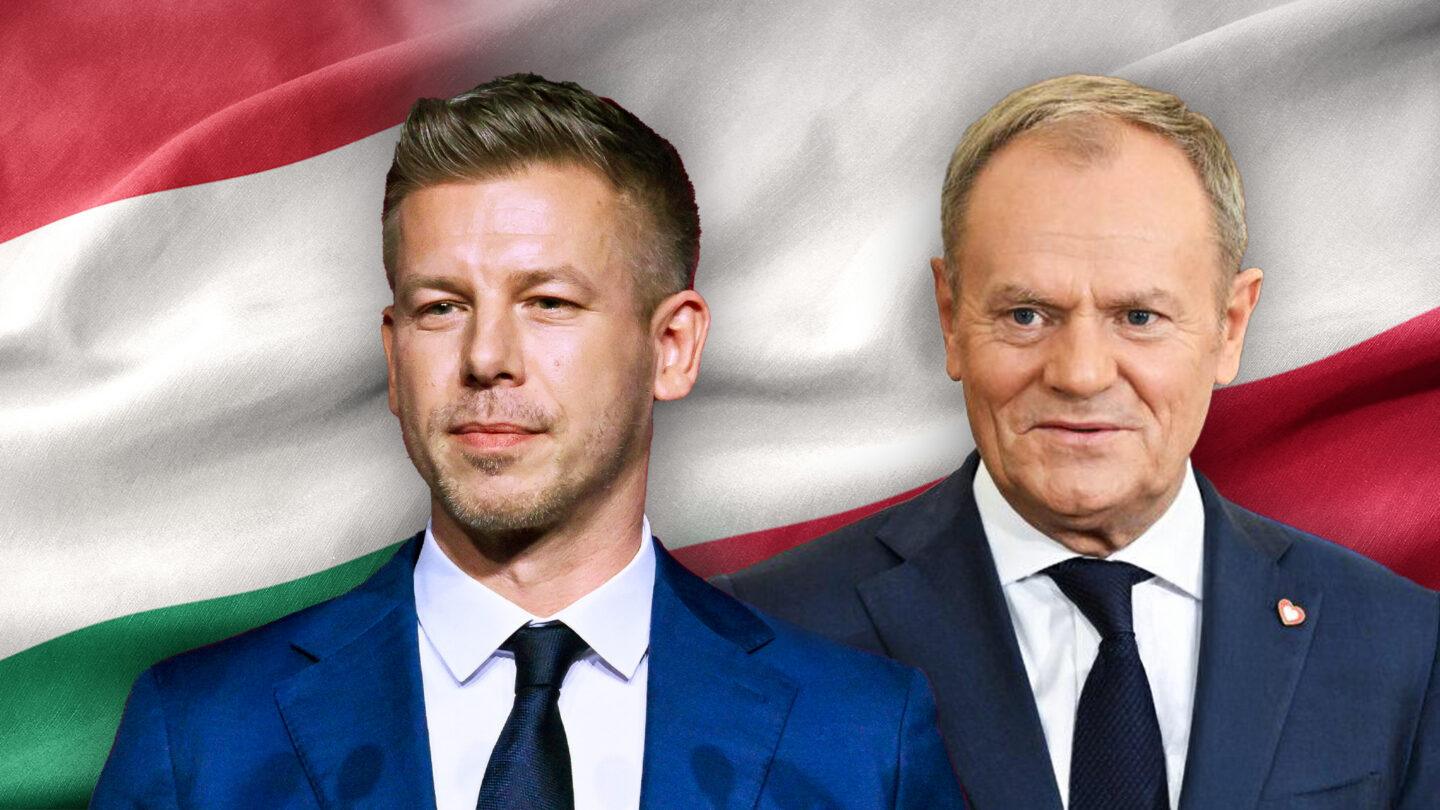
Poland is the first stop on the itinerary of Péter Magyar’s foreign trips since he assumed office on May 9 as Hungary’s prime minister. He had already announced this during his election campaign, in which he ran against Viktor Orbán, who stepped down as head of the Hungarian government after 16 years in office. In Poland, Péter Magyar is scheduled to visit Kraków, Warsaw, and Gdańsk, with meetings planned with President Karol Nawrocki, Prime Minister Donald Tusk, and former president Lech Wałęsa. Magyar will then travel on to Vienna.
In recent years, Polish-Hungarian relations have not been in good shape. Viktor Orbán’s successor aims to improve them.
Hungarian Prime Minister’s visit to Poland
As Ferenc Németh, a Hungarian expert on international politics and analyst at the American Center for European Policy Analysis, notes, Magyar did not by chance make Poland – and a commitment to visit it early in his term – one of his first destinations after his meeting with Donald Tusk.
“Magyar seeks to rebuild Polish-Hungarian friendship, which is important to him both symbolically and politically, especially after the deterioration in bilateral relations since 2022. Second, the new Hungarian government aims to deepen Central European cooperation across multiple fields, including building a strong, unified voice within the European Union. In recent years, Poland has become a significant player in Europe, particularly thanks to its stronger-than-ever cooperation with Germany and France. Hungary can also expect positive political and economic benefits from closer cooperation with Poland,” Mr. Németh assesses.
“Hungary’s economy is on its knees”
Prof. Bogdan Góralczyk, an international affairs analyst at XYZ, lecturer at the Centre for Europe at the University of Warsaw, and former diplomat, identifies three reasons behind Poland being chosen as the first destination of Magyar’s foreign visits.
“Poland has experience – albeit a negative one – of exiting a non-liberal system. Second, Hungary’s economy is on its knees. The new government has no choice but to unfreeze EU funds. Poland has extensive experience here, as it found itself in a similar situation after the autumn 2023 elections. Third, Donald Tusk, as a former President of the European Council, knows whom to approach and through which channels in these matters. Péter Magyar has very little time. Hungary was the only country that did not receive funds from the Recovery and Resilience Facility. Applications must be submitted by the end of August, and the funds must be disbursed by the end of this year. The situation is absolutely critical, and this is what brings Péter Magyar to Poland as a first priority,” Prof. Góralczyk argues.
Poland’s ninth-largest trading partner in the EU
According to data from Statistics Poland (GUS), Hungary was Poland’s ninth-largest trading partner within the European Union in 2024. It accounted for 3.4 percent of Polish exports and 2.9 percent of imports within the bloc. As with most EU countries (23 out of 27), Poland recorded a trade surplus with Hungary. Its evolution in recent years is shown in the chart below.
 Interactive chart
 In 2024, Polish exports to Hungary reached USD 9.1 billion, while imports amounted to USD 7.6 billion. This resulted in a surplus of USD 1.5 billion. Throughout the period under review, a similar pattern prevailed. The surplus widened only temporarily in 2021–2022, reaching USD 2–2.4 billion.
Data from the Polish-Hungarian Chamber of Commerce indicate that annual bilateral trade in goods between Poland and Hungary amounts to approximately EUR 14.5 billion. In 2025, imports from Hungary to Poland reached USD 8.13 billion.
The main categories of products exported from Poland to Hungary are presented in the table below. The export structure is typical of an industrial economy deeply integrated into European supply chains. It is dominated by the automotive sector, machinery, electronics, and pharmaceuticals. Key products include motor vehicles, engines and their parts, and electric batteries. The top ten product categories accounted for around 30 percent of total exports.
Interactive chart Imports from Hungary to Poland often mirror the same categories that Poland exports. This points to intensive intra-industry trade and participation in European supply chains. The most important sectors include pharmaceuticals, automotive goods (cars and motor vehicles), and electronics (video displays, phones, dashboards). Hungarian exports to Poland are more concentrated: the top ten product categories accounted for around 40 percent of the total.
Interactive chart Over 600 Companies
Dr. Anna Wiśniewski, Director General of the Polish-Hungarian Chamber of Commerce, notes that around 660 companies with Hungarian capital are already operating in Poland, according to data from the business intelligence agency COIG.
As she points out, Polish-Hungarian trade is significant and continues to grow, although its pace depends on the broader EU economic cycle.
Based on official data provided by the Polish Investment and Trade Agency (PAIH), Poland was the second-largest exporter of food products to the Hungarian market in 2024, while total Polish exports accounted for 85 percent of Hungary’s GDP.
“By the end of 2024, Hungarian investments in Poland had reached a total of EUR 1.447 billion, while Polish investments in Hungary amounted to EUR 1.318 billion. These investments span a wide range of sectors, including distribution, logistics, financial services, retail, and technology. In 2024, total FDI stock between Poland and Hungary stood at approximately EUR 1.6–1.7 billion in both directions. Polish investments are concentrated in sectors such as food, IT, and manufacturing. The largest Polish investors in Hungary include Orlen, Maspex, TZMO, LPP, CCC, Medort, and Mokate. Hungarian investments in Poland include companies such as Richter Gedeon, MOL, DunaPack, Cordia, and TriGranit,” says Dr. Wiśniewski.
According to the head of the Polish-Hungarian Chamber of Commerce, there is strong interest from Polish investors in the Hungarian market. The reverse is also true—Hungarian companies are keen to establish and expand operations in Poland.
“Investors see numerous opportunities for cooperation across multiple sectors, with particular emphasis on new technologies, green energy, energy efficiency, and infrastructure development,” she adds.
“Magyar held Poland up as a model of development”
Prof. Bogdan Góralczyk believes that cooperation with Poland could play an important role for the Hungarian economy – and may also prove beneficial for Poland.
“I was recently in Hungary, and I have known the country from personal experience for more than half a century. Never before has there been such a presence of Polish companies and Polish goods on the Hungarian market as today. During the election campaign, Péter Magyar held Poland up as a model of development. We enjoy a very strong reputation there, and we can achieve significant economic gains. That would be the most important thing at this stage,” Prof. Góralczyk assesses.
Good relations not only with Mr. Tusk
Ferenc Németh argues that the political shift in Budapest carries positive implications for Poland’s cooperation within the European Union, particularly on Russia and the war in Ukraine.
He also draws attention to the previous Hungarian government’s stance toward Polish politicians who, while evading the Polish justice system, were granted political asylum. This concerns not only Zbigniew Ziobro and Marcin Romanowski, but also Nikola Gruevski, the former prime minister of North Macedonia.
“What is significant is that Mr. Magyar has repeatedly stressed that foreign former politicians will no longer be granted political asylum in Budapest. In early May, before the new government was sworn in, both former Polish politicians fled Hungary for the United States, allegedly with the assistance of Hungarian authorities. If the new Hungarian leadership shows willingness to disclose details of these actions, it could serve as a valuable example of building trust between Hungary and Poland,” says the Hungarian analyst.
In his view, Péter Magyar aims to maintain good relations both with Prime Minister Donald Tusk and with President Karol Nawrocki, who before the election supported his main rival. Magyar seeks broad and comprehensive political backing from across Poland’s political class.
A laboratory for Central Europe
Artur Lorek, a political scientist at Adam Mickiewicz University in Poznań, highlights two sets of key experiences. The new Hungarian authorities are seeking to vigorously hold their predecessors accountable. In Poland, such accountability efforts have been largely ineffective.
“What is happening in Budapest right now is an important laboratory for Central Europe. We are seeing how difficult it is to build mechanisms of political accountability after a period of excessive concentration of power. I am referring to accountability processes that are now beginning in Hungary with considerable momentum. From the Hungarian perspective, it may be important to observe Polish practices and draw conclusions from what has not worked in Poland,” says Mr. Lorek.
“We are seeing how difficult it is to build mechanisms of political accountability after a period of excessive concentration of power.”
In his view, the meeting between the Polish and Hungarian prime ministers could contribute to the renewal of cooperation within the Visegrad Group, which may be of key importance from Poland’s perspective.
“Péter Magyar has already signaled this. I expect that during his meeting with Prime Minister Donald Tusk, issues related to renewing this cooperation – or setting a new direction for it – will arise, so that the Visegrad Group can move somewhat beyond its current format of annual ministerial meetings and its science grant fund,” Mr. Lorek comments.
Hungary and support for Ukraine
From Poland’s perspective, the issue of support for Ukraine is also of key importance. The Slovak government and Hungary’s previous administration blocked an EU loan for Ukraine worth EUR 90 million. The impasse lasted nearly six months. Unanimity was reached only at the April European Council summit, which Viktor Orbán did not attend. After losing the election, he chose not to participate.
“The new Hungarian government maintains – albeit in a moderate form – a degree of skepticism toward involvement in the conflict in Ukraine and support for its fight against the Russian Federation. I do not expect Hungary to act as a brake or to torpedo European Union initiatives. This is important from Poland’s perspective, as we are the main hub for delivering aid to Ukraine and one of its key advocates within the EU. From our standpoint, two directions are most important: global engagement and an anti-war stance,” says Artur Lorek.
Prof. Bogdan Góralczyk also believes that the Ukraine issue will be part of the Polish-Hungarian agenda.
“A Magyar–Zelensky meeting is expected in June, so cooperation with Ukraine will certainly be discussed,” says Prof. Góralczyk.
Tusk–Magyar cooperation
Experts agree that the change of government in Hungary creates an opportunity for a fresh start in cooperation within the European Union.
“Mutual advocacy within the European Union will be important. Péter Magyar is going to Donald Tusk as a man who has spent years operating within EU structures. He wants to draw on his experience and contacts. Hungary is in a very difficult economic situation. Unfreezing EU funds will be an extremely important task. I assume Mr. Magyar will seek Mr. Tusk’s support here,” says Artur Lorek.
Will this mark the beginning of close Tusk–Magyar cooperation within a shared political front? Prof. Bogdan Góralczyk is cautious about such suggestions. In his view, Mr. Magyar’s cabinet appears to be a team of professionals, but it remains unclear how it will function in practice.
Ferenc Németh, however, points out that Mr. Tusk and Mr. Magyar are aligned on strategic issues. Since their first meeting at the Munich Security Conference, the foreign ministers of both countries have also maintained contact, signaling friendly relations.
Shared goals despite differences
One of the remaining differences between Poland and Hungary concerns their stance on Ukraine. The Hungarian authorities reject a fast-track accession process and avoid commitments regarding military assistance. They also tie accession negotiations with Ukraine to the issue of the rights of the Hungarian minority in Ukraine.
“The new government appears more pragmatic and cooperation-oriented than the Orbán administration – for example, by explicitly stating that Russia is the aggressor and by refraining from blocking EU sanctions packages. Such an approach – taking small steps and avoiding a destructive role – may be sufficient for Poland at this stage. Both Poland and Hungary are pro-European, believe in a strong NATO and strong transatlantic cooperation, and these shared principles of foreign policy may help bring the two countries closer again,” assesses Ferenc Németh.
The analyst also points to common ground in areas such as illegal migration, the Multiannual Financial Framework (MFF), and equality policy. On these issues, the positions of Visegrad Group countries may converge, even if the leaders of Czechia and Slovakia previously expressed sympathy toward Orbán.


Key Takeaways
- Hungary is Poland’s ninth-largest trading partner in the EU. In 2024, Polish exports to Hungary were worth USD 9.1 billion, while imports amounted to USD 7.6 billion. Poland exports to Hungary primarily products from the automotive, machinery, electronics, and pharmaceutical sectors.
- Péter Magyar is looking to Poland – and specifically to Prime Minister Donald Tusk – as an ally in restoring Hungary’s position within the European Union. The Hungarian economy is in a difficult situation, and EU funds remain frozen.
- With Polish political leaders, Hungary’s new prime minister is expected to discuss not only cooperation within the European Union, but also within the Visegrad Group and on Ukraine-related policy. This includes the context of a planned meeting between Magyar and Ukrainian President Volodymyr Zelensky.