

This article is a part of Poland Unpacked. Weekly intelligence for decision-makers
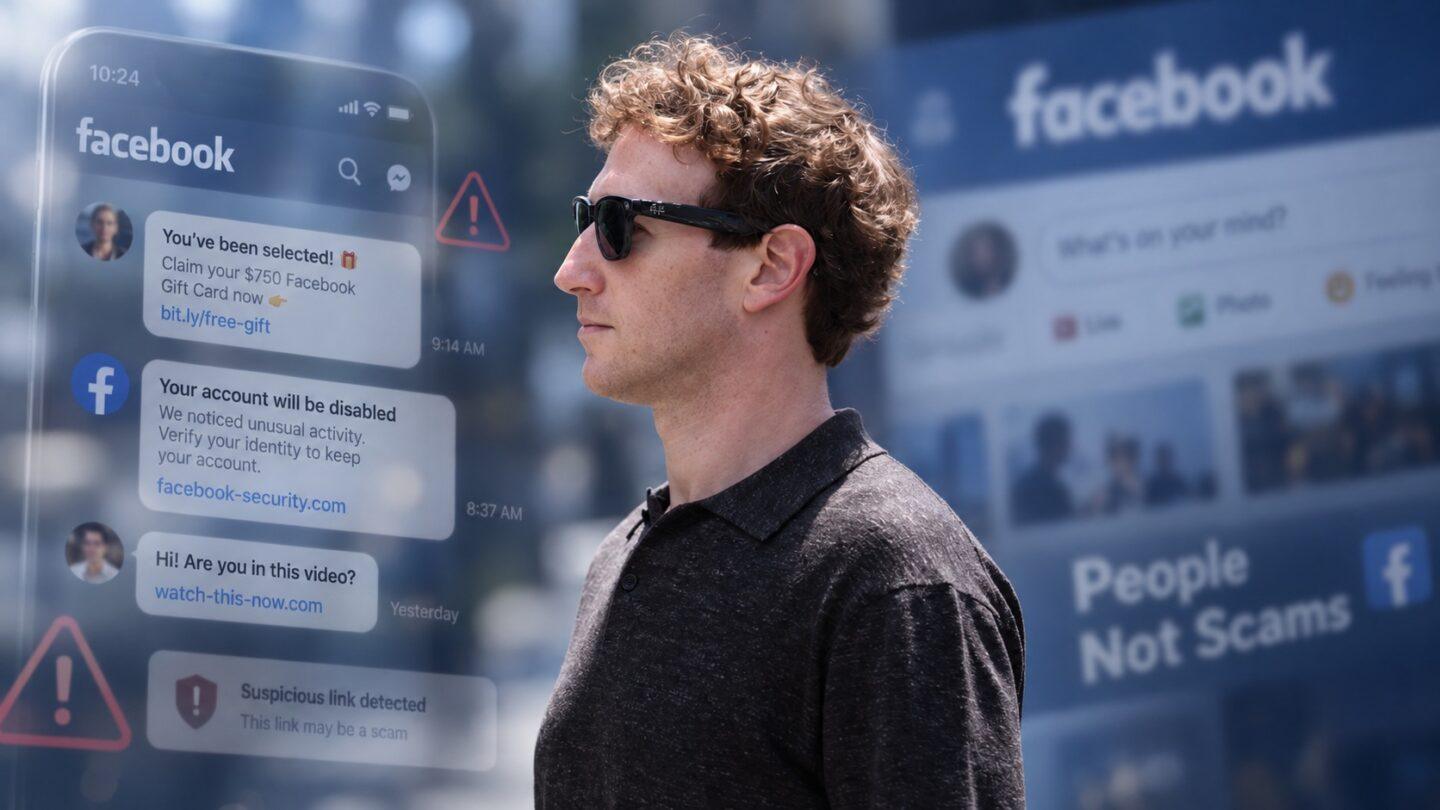
Meta may be taking in as much as PLN 760 million a year in Poland from fraudulent advertising, according to a report by Instrat. This would mean that around one-third of the Facebook and Instagram owner’s revenue in Poland comes from scams. “This is deliberate,” said Michał Hetmański, head of Instrat.
The problem of fraudulent ads on Meta’s platforms has been known for years. Criminals use the advertising tools of the company, which owns Facebook and Instagram, to promote websites that are then used to steal users’ money or personal data. The likenesses of well-known public figures, including businesspeople and journalists, are very often used in such schemes.
“The scale of the problem is three times greater than previously reported. According to our calculations, as much as one-third of Meta’s revenue in Poland may come from scams,” said Michał Hetmański, head of Instrat, which published a report on the scale of fraud on the platform.
He noted that the estimated loss suffered by the average fraud victim in Poland is USD 1,000.
“We decided to examine how much Meta earns from fraudulent advertisements that use the likenesses of journalists, politicians and businesspeople. The victims are not only ordinary Poles, but also public figures such as Karol Nawrocki, Rafał Brzoska and Donald Tusk. This cuts across political lines; everyone is affected by these scams,” Michał Hetmański added.
‘This is an organized operation by Meta’
According to Michał Hetmański, Meta’s actions are systematic in nature.
“We estimate that Meta’s revenue from fraudulent advertising may be as high as PLN 2 million a day. On an annual basis, that would amount to as much as PLN 760 million. If we compare that with the revenue reported by Facebook Poland, the company’s Polish subsidiary, of around PLN 2 billion a year, scams could account for as much as 37% of revenue,” said Dr. Jarosław Kopeć, the report’s author.
In addition, according to the analysts, 41% of fraudulent ads do not appear in Meta’s Ad Library.
“Fraudsters use technical tricks to avoid losing access to their accounts. They use techniques that allow them to conceal the true, fraudulent content behind what appears to be an ordinary advertisement,” Dr. Jarosław Kopeć added.
As an example, he cited an ad using the likeness of Michał Sołowow. According to the report, it directs users to a fake Ministry of Finance website and forms part of a financial scam. In the Ad Library, however, it appears to be an advertisement for a Furminator pet-grooming tool.
Who's who
Michał Sołowow
Michał Sołowow is one of Poland’s wealthiest and most successful businessmen. He is consistently ranked among Poland’s richest individuals, with a fortune estimated in the billions of złoty. He made his wealth primarily through industrial investments, construction materials, and energy sectors – less flashy than tech or finance, but foundational to Poland’s economic transformation.
“This is a gray area that is difficult to investigate. The 41% figure is a very conservative estimate. The share could rise to as much as 70%,” Dr. Jarosław Kopeć said.
Meta makes the case harder to investigate
Experts pointed to the Digital Services Act, under which Meta is required to ensure transparency in access to advertising data.
“Under the law, this tool is supposed to be ‘reliable’. It is difficult to argue that it is. First, Meta limits data downloads to 50,000 records a day. In Poland, around 300,000 ads are run every day,” said Dr. Jarosław Kopeć.
He said the restriction was not due to technical constraints.
“Meta is capable of serving ads to millions of users, but apparently cannot provide data to researchers. Second, the interface is unreliable. We began encountering unknown errors. It was impossible to resume a suspended download of tens of thousands of records, which in some cases meant losing several days of work,” the report’s author said.
There are further problems. One example is the delay in registering ads in the Ad Library, which can last as long as 24 hours. Why does that matter? A scammer can launch a fraudulent ad and then, a few hours later, replace it with a legitimate one. Meta will see only the latest version, even though millions of users may have been exposed to the fraudulent ad in the meantime.
“Meta does not allow researchers to inspect the exact content of ads that have been removed. Today, an independent researcher cannot verify whether an ad that may have violated provisions of the Criminal Code was there or not,” Jarosław Kopeć added.
He said the biggest problem was the scale of the phenomenon. This relates to the previously cited figure of 41% of ads operating in what the researchers describe as a “gray area.”
“All the more so because the scale is enormous. If all the scammers paid Meta PLN 760 million, how much could they have made from Polish victims? I imagine considerably more than that. We are talking about losses to people in Poland running into the billions of złoty,” the report’s author said.
Advertising remains the backbone of Meta’s business
Meta’s business model is built primarily on selling advertising across Facebook, Instagram and the company’s other platforms. In 2024, the group generated USD 164.5 billion in revenue, of which USD 160.6 billion came from advertising. In other words, advertising accounted for nearly 98% of total revenue. In 2025, revenue rose to just over $200 billion, with as much as USD 196 billion coming from ads.
Advertisers buy access to users through an automated auction system. Meta also provides tools that allow them to define target audiences, optimize campaigns and direct ads toward people whom its algorithms deem most likely to respond.
The same system is used by those running fraudulent campaigns. These include fake investment platforms, online stores, ads featuring the likenesses of public figures, illegal casinos and offers for products whose promotion is prohibited under Meta’s own rules.
Reuters: Meta estimated scam-related revenue in the billions of dollars
Reuters reported on the scale of the problem in November 2025 after reviewing internal Meta documents produced since 2021 by teams responsible for areas including finance, safety, engineering and public policy.
One of the documents showed that, by late 2024, Meta estimated that around 10.1% of its annual revenue could come from fraudulent advertising and other ads that violated the company’s rules. That would amount to roughly USD 16 billion.
The company disputed the accuracy of that estimate. Meta spokesperson Andy Stone told Reuters that the calculation was flawed and covered too broad a category of advertising. According to the company, it also included legitimate campaigns. Meta did not, however, provide Reuters with a corrected figure.
Another internal document from December 2024, cited by Reuters, said that users of Meta’s platforms were shown around 15 billion ads every day that were classified as “higher risk,” meaning they displayed clear indicators commonly associated with fraud. According to another document, this category of advertising generated around USD 7 billion in annual revenue.
Reuters also found that, in a presentation prepared by Meta’s safety team in May 2025, the company estimated that its platforms were linked to around one-third of successful scams in the United States.
Suspected advertisers were not always blocked
The documents reviewed by Reuters also shed light on how Meta’s advertiser-control system works. Meta’s automated systems assess the likelihood that a given advertiser is engaged in fraudulent activity. According to Reuters, an advertiser was automatically blocked when the system put the probability of fraud at 95% or more.
If an advertiser was classified as suspicious but fell below that threshold, it could continue taking part in advertising auctions. For some of these advertisers, Meta applied a mechanism described in the documents as “penalty bids.” A suspected advertiser had to bid more money to win an auction and have its ad displayed.
According to the company, the mechanism was designed to raise the cost of operating for fraudsters and reduce the number of their ads. At the same time, documents cited by Reuters indicated that although the system did reduce the number of such ads, Meta received a higher price for those that still won auctions. As a result, the higher prices partly offset the decline in the number of ads sold.
Reuters also reported that, according to a 2024 document, a small advertiser could be flagged at least eight times for promoting financial scams before its account was blocked. For some large advertisers, described as “High Value Accounts,” the number of violations could exceed 500.
Four campaigns removed by Meta in 2025 had previously generated a combined USD 67 million in monthly advertising revenue, according to one of the documents reviewed by Reuters.
Meta planned to crack down on fraudulent ads
The analysis of the documents also showed that Meta planned to gradually reduce the share of revenue generated by ads that violated its rules. Company materials projected a decline from an estimated 10.1% in 2024 to 7.3% by the end of 2025, 6% in 2026 and 5.8% in 2027.
One internal document also anticipated that Meta could face regulatory fines of up to around USD 1 billion in connection with scam advertising. Another document, from November 2024, indicated that every six months the company generated around USD 3.5 billion in revenue from a subset of scam ads regarded as carrying particularly high legal risk, including ads that misused other companies’ brands or impersonated public figures.
Meta disputed Reuters’ interpretation of the documents. The company says it fights fraud in order to protect users and the interests of legitimate advertisers.
The problem of scam advertising in Poland
The problem is particularly visible in Poland. Data provided to XYZ by NASK show that in 2025 its Disinformation Analysis Center sent Meta 9,094 reports concerning content published on Facebook and Instagram.
Meta upheld 4,369 of those reports, or 48% of the total. As a result, 3,607 pieces of content were removed and 762 were moderated.
NASK classified the remaining 4,725 reports as rejected. This category included both cases in which Meta issued a negative decision and those in which the platform did not respond to the report.
Meta disputed the suggestion that it ignores most reports. At the time, the company told our newsroom that content reported by public institutions is reviewed in accordance with its procedures and Community Standards.
In December 2025 alone, CERT Polska added more than 16,000 domains advertising fake investment platforms to its Warning List. According to NASK, a large proportion of these websites were promoted through social-media platforms.
Similar findings have emerged outside Poland. The UK’s Payment Systems Regulator analyzed information provided by 14 of the country’s largest banking groups. In 2023, Facebook, Instagram and WhatsApp were cited in 54% of reported authorized push payment, or APP, fraud cases, in which victims themselves authorize transfers to fraudsters. That amounted to 119,338 cases. Fraud linked to Meta’s platforms accounted for GBP 62.7 million in losses, or 18% of the total losses covered by the study.
Rafał Brzoska and Omenaa Mensah take on Meta
One of the most high-profile disputes in Poland over scam advertising involves Rafał Brzoska and Omenaa Mensah. Since 2024, fraudulent ads using their names and likenesses have appeared on Facebook and Instagram. The materials primarily promoted fictitious investments. Some of the campaigns also used deepfake technology.
Who's who
Rafał Brzoska
Rafał Brzoska is the founder and CEO of InPost, the company behind those ubiquitous yellow and white parcel lockers (Paczkomaty) you see everywhere in Poland (and not only!). If you've ever picked up an online order from one of those automated lockers instead of waiting for a delivery person, you've used his invention.
In Omenaa Mensah’s case, the president of Poland’s Personal Data Protection Office, UODO, said in August 2024 that the complainant had identified 263 ads using her personal data and likeness. Some appeared in several versions.
The head of UODO ordered Meta Platforms Ireland Limited to temporarily suspend the display in Poland of specified fraudulent ads using Mensah’s data. The decision was issued under Article 66 of the GDPR.
At the same time, Mensah and Brzoska launched civil proceedings. In 2024, a Warsaw court granted interim relief and banned the publication of specified content for the duration of the proceedings. Meta appealed the ruling.
On March 27th 2026, the Warsaw Court of Appeal partly upheld the interim measure concerning Omenaa Mensah, while overturning the part relating to Rafał Brzoska. The court found that, in his case, the ban had been formulated too broadly.
This was not a final judgment in the main proceedings. The ultimate scope of Meta’s liability is to be determined later in the case.
Court weighs Meta’s role in paid advertising
A significant part of the Warsaw Court of Appeal’s ruling addressed Meta’s role in the distribution of sponsored content. According to the reasoning obtained by XYZ, the court noted that Meta decides whether an ad may run, receives payment from the advertiser and provides tools and algorithms that can increase a campaign’s reach and target specific groups of users.
The court also pointed out that Meta has access to an advertisement’s content before publication and reviews it for compliance with its own rules.
At this stage of the proceedings, the Court of Appeal therefore found that Meta’s role in the distribution of paid advertising should not be regarded as entirely passive. At the same time, it made clear that the interim measure could not impose a general obligation on the company to monitor all future content, nor could it prejudge the outcome of the main proceedings.
The “150%” initiative and ScamWatch
In August 2026, Rafał Brzoska launched the “150%” initiative. Its aim is to introduce a level of financial liability for platforms under which the cost of running a fraudulent ad would exceed the revenue the platform earned from publishing it.
The campaign proposes liability equal to 150% of the revenue generated by the ad. For now, this is a policy proposal put forward by the initiative, not a binding regulation.
Another element of the effort is ScamWatch, launched in late August. The tool, developed by a team led by Sebastian Kondracki, head of the Bielik project, is designed to automatically detect suspicious ads, document campaigns and link advertisements to domains and other elements of infrastructure used by fraudsters.
The project is also intended to document how platforms respond after receiving a report.
The “150%” initiative and ScamWatch
In August 2026, Rafał Brzoska launched the “150%” initiative. Its aim is to introduce a level of financial liability for platforms under which the cost of running a fraudulent ad would exceed the revenue the platform earned from publishing it.
The campaign proposes liability equal to 150% of the revenue generated by the ad. For now, this is a policy proposal put forward by the initiative, not a binding regulation.
Another element of the effort is ScamWatch, launched in late August. The tool, developed by a team led by Sebastian Kondracki, head of the Bielik project, is designed to automatically detect suspicious ads, document campaigns and link advertisements to domains and other elements of infrastructure used by fraudsters.
The project is also intended to document how platforms respond after receiving a report.
Meta presents its own data for Poland
At the end of August 2026, Meta also presented data for the Polish market.
Jakub Turowski, Meta’s public-policy director for Central and Eastern Europe, said that between July 2024 and June 2026 the rate of reports concerning scam ads in Poland had fallen by 83%.
The company also said that between July 2025 and June 2026 it removed 137,000 fraudulent ads in Poland. According to Meta, more than 88% of them were detected and removed before users reported them.
Meta denies that its actions against fraud are driven by a desire to protect advertising revenue. The company argues that portraying its policy in this way distorts the picture of the measures it takes to combat scams.


Key Takeaways
- According to Instrat’s report, the scale of fraudulent advertising on Meta’s platforms in Poland may be significantly greater than previously estimated. The authors calculate that Meta could be earning as much as PLN 2 million a day from such ads, or around PLN 760 million a year. Compared with Facebook Poland’s revenue, that would imply a share of as much as 37%.
- Limited transparency in the advertising system remains a major problem. According to the report’s authors, as many as 41% of scam ads may not be properly visible in the Ad Library, and the actual share could be higher still. Researchers also point to data-download limits, technical errors and delays in registering ads, all of which make it harder to independently assess the scale of the problem. Similar concerns emerge from documents described by Reuters, according to which Meta itself analyzed billions of dollars in revenue linked to ads suspected of fraud or of violating its rules.
- The issue also has a regulatory and legal dimension. In Poland, NASK, CERT Polska, UODO and public figures have taken action over fraudulent ads using the likenesses of well-known people. Rafał Brzoska and Omenaa Mensah’s dispute with Meta has reached the courts, while Poland’s minister of digital affairs has asked the European Commission to impose a EUR 250 million fine on the company. Meta, for its part, cites its own data, according to which reports of fraudulent ads in Poland have fallen sharply and most such ads that it removes are detected before users report them.
We wrote about this because we considered it important and interesting. In the interest of full transparency, we note that RiO, a fund owned by Omenaa Mensah and Rafał Brzoska, InPost’s CEO and shareholder, is an investor in XYZ.