

This article is a part of Poland Unpacked. Weekly intelligence for decision-makers
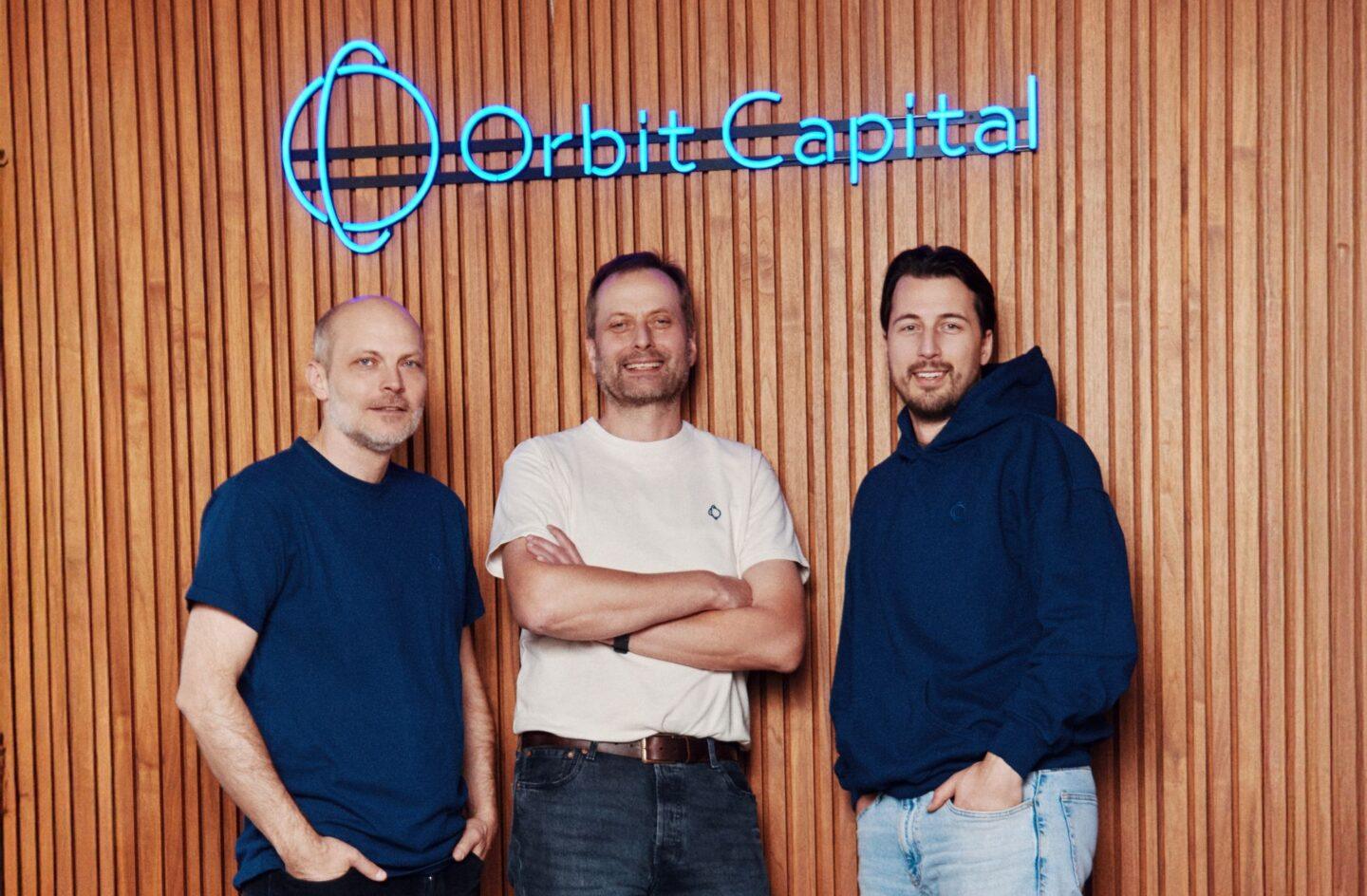
Orbit Capital has completed the second closing of its latest fund, reaching a capitalization of EUR 107 million (approx. PLN 460 million). And this is not the end of the road: the fund’s hard cap stands at EUR 120 million (approx. PLN 515 million), as revealed to XYZ by Wiktor Namysł, a partner at the fund.
Plans to launch the fund were first reported a year ago. The initial targets have now been achieved. The fund has raised €107 million, thanks in part to the first-ever allocation of public capital from PFR Ventures into a fund investing under a venture debt strategy.
“The presence of PFR in the fund is an important milestone for the Polish ecosystem, as it represents institutional recognition of venture debt as a fully-fledged asset class,” explains Wiktor Namysł, Orbit Capital’s representative.
The fund is already up and running. According to Namysł, part of the capital has already been deployed across five startups. These include Poland’s Talkin’Things, Czech HR-tech startup Sloneek, as well as IAG and another company from the fintech and AI-powered calling software space. Investors were also drawn to supporting a team expected to return the entire capital invested by partners in the first fund this year.
EUR 107m for investment – but this may not be the end
Orbit Capital has now reached its target capitalization of approximately EUR 107 million.
“We are seeing strong demand from investors, both new and returning. We have institutions that have placed their trust in both our first and second fund,” says Wiktor Namysł.
The fund’s hard cap stands at EUR 120 million (approx. PLN 515 million). At the same time, the fund’s representative signals that, at this stage, maximizing fund size is not the primary objective.
“We should remember that developing this type of financing in the region still requires market education. Many startup founders, when thinking about funding rounds, focus primarily on venture capital money. Meanwhile, different types of financing offer significant opportunities – especially instruments like ours, namely venture debt,” adds Namysł.
Who is behind the fund: five institutions and private capital
The fund brings together five institutional investors, of which only two are public. These are PFR Ventures and European Investment Fund (EIF). The remaining three are private investors from the region: pension fund Rentea, Erste (more precisely, Česká spořitelna from the Erste Group), and Conseq, a private wealth management firm.
“We are observing a clear rise in interest in debt financing. At later stages of company development, startups increasingly turn to solutions such as venture debt, which allow them to scale without excessive dilution,” says Radovan Nesrsta, general partner at Orbit Capital.
The investor base is further complemented by several dozen family offices and private investors. However, private capital remains dominant in the fund’s structure.
PFR Ventures contributed EUR 10 million (approx. PLN 43 million). The capital comes from the PFR VC vehicle, which has also supported investments in funds such as bValue, Cogito, and Movens.
Orbit Capital also emphasizes the regional nature of the vehicle. Investors come from Poland, the Czech Republic, Slovakia, and Slovenia. Wiktor Namysł notes, however, that the relatively limited participation of Polish institutional investors is not accidental – particularly pension funds, which play a major role in Western economies.
What the fund offers to companies
Orbit Capital has built its fund to target the growth segment. The size of individual tickets is higher than in its first vehicle. The fund is prepared to invest between EUR 3 million and EUR 15 million (approx. PLN 13–65 million) in a single company.
“These are true growth tickets. We want to support companies that are fighting for scale,” says Namysł.
The capital is not intended for rescue financing or bridge loans for companies facing liquidity stress.
In practice, venture debt provided by players such as Orbit Capital means providing financing without taking equity in the startup. This allows founders to preserve their ownership structure while securing capital for growth – at a price. Venture debt is typically more expensive than bank financing. At the same time, startups, given their specific nature (short operating history, limited assets, and fast-changing, hard-to-predict markets), are usually unable to access standard bank loans or other traditional financial instruments. In this gap, venture debt plays a key role.
Orbit’s model is typically based on a three-year loan with a grace period for principal repayment. In addition to interest and ongoing fees, the fund’s compensation includes warrants – financial instruments linked to the company’s future valuation.
“We take a small participation in the startup’s success through warrants, but we do not enter the shareholder structure upfront. We do not require board seats and we do not interfere in day-to-day management,” explains Wiktor Namysł.
Investor's perspective
Venture debt and the growth potential of startups


Which companies can expect financing from Orbit Capital
Orbit Capital targets mature technology companies with recurring revenues and growth rates high enough to comfortably service debt. The minimum entry requirements include at least EUR 3 million (approx. PLN 13 million) in recurring revenue, year-on-year revenue growth of at least 30%, and verified efficiency metrics – such as LTV-to-CAC ratios – or other indicators of business performance.
“Technology companies at the intensive growth stage need capital, but also flexible solutions that protect their ownership structure,” notes Radovan Nesrsta, partner at Orbit Capital.
“We provide them with strategic support and the financial runway needed to scale effectively. Our investment experience shows that founders value a partner who understands the nuances of fast-growing tech companies,” adds Lukas Macko, partner at Orbit Capital.
Orbit Capital also requires a clear use case for the funds. These may include international expansion, product development, acquisitions, or roll-up strategies. More “corporate” uses are also acceptable, such as buyouts of minority shareholders. The core principle, however, remains financing growth.
Geographically, the fund is active across Central and Eastern Europe and beyond. The involvement of PFR Ventures comes with certain requirements regarding exposure to Poland, but according to Wiktor Namysł, these do not constitute a constraint for Orbit Capital.
Collateral sits at company level, not founders’ personal assets
A sensitive issue in debt financing is collateral. Wiktor Namysł stresses that the fund does not use structures that transfer risk onto entrepreneurs’ private wealth.
“We do not secure financing against founders’ personal assets. We do not take pledges, promissory notes, or guarantees from startup founders or their families,” says Wiktor Namysł.
Orbit Capital operates as “senior secured,” meaning it holds priority in the creditor hierarchy, while collateral is placed on the company itself. This is intended to distinguish venture debt from more aggressive lending structures seen in the market – particularly those that emerge when a company urgently needs capital and accepts terms that can ultimately be harmful to its founders.
16 completed investments, capital already partially returned to investors
Orbit Capital is also building credibility for its new fund through the performance of its first vehicle. The inaugural fund completed 16 investments, with ticket sizes ranging from EUR 3 million to EUR 5 million.
“No company has failed. What’s more, we estimate that we have already returned nearly 80% of the capital invested by our investors. This comes from proceeds from loan repayments, interest, fees, and partially from warrant exits. We expect the full capital to be returned in 2026, although we will certainly continue to generate additional upside,” says Wiktor Namysł.
Orbit Capital plans to execute around six to eight investments annually. At the same time, the fund emphasizes that it is not under pressure to deploy capital quickly.
“Debt, unlike equity, has to be repaid. We are much more conservative than VC funds,” says Namysł.
Investor's perspective
Experience is key
How venture debt connects with equity investments
According to representatives of Orbit Capital, the fund is designed to be complementary to traditional equity funds. One common startup growth path involves securing debt financing to complete a key development milestone. Only afterwards – once stronger financial results are in place – the company may raise equity capital, but on better terms. This approach is particularly relevant in markets where valuations are not high and companies are reluctant to give up large equity stakes too early.
The goal is also to increase the number of so-called “successful” investments. One example is Jutro Medical, where venture debt formed part of a broader financing package provided alongside venture capital funds. This structure enabled the company to raise more capital for acquisitions while strengthening its negotiating position.
In Wiktor Namysł’s view, such cases, along with the entry of PFR Ventures as an investor, may signal that venture debt is no longer a niche curiosity in Poland. More importantly, it could materially improve the region’s startup financing ecosystem.
“This is another stage in the development of the capital offering available to founders. First, the market was dominated by equity financing, then instruments such as SAFE and convertible notes became more widespread, and now it is time for venture debt – long established in the West and the United States, but still relatively new in the region,” concludes Wiktor Namysł.


Key Takeaways
- Orbit Capital has closed a new venture debt fund with approximately EUR 107 million in capital, with a hard cap that could increase to EUR 120 million. This marks a significant milestone for the Central and Eastern European market, as it is the first time PFR Ventures has participated in such a fund under a venture debt strategy. According to Orbit Capital representatives, this signals institutional recognition of venture debt as a fully-fledged asset class. The capital comes from both public and private investors, with private capital dominating the structure.
- The fund targets mature, growth-stage technology companies with recurring revenues and the ability to service debt. Orbit Capital plans to invest between EUR 3 million and EUR 15 million per company. The funds are intended to support international expansion, acquisitions, business development, or minority shareholder buyouts. The fund stresses that it does not provide rescue financing for companies in distress, but rather growth capital for businesses with proven operational performance.
- The venture debt model is positioned as an alternative or complement to equity financing. It allows startups to raise capital without immediate equity dilution for founders, although it is typically more expensive than bank financing. Orbit Capital secures its financing against the company rather than the founders’ personal assets. The fund also points to the strong performance of its first vehicle, which completed 16 investments and returned a significant portion of capital to investors, strengthening the credibility of its new strategy.