Poland Unpacked week 43 (12-18 October 2026)
Welcome to this week’s edition of our Poland Unpacked, where we deliver key insights and trends shaping the economic, corporate and political landscape. Catch the most important insights from Poland in this week’s briefing.
This article is a part of Poland Unpacked. Weekly intelligence for decision-makers
The trend came to Poland from Slovakia. In 2020, the Slovak Share Cooperative ROD (SPDR) was founded in Bratislava with the aim of freeing Slovaks from debt. Now SPDR wants to do the same for Czechs, Hungarians, Poles and others. All it takes is registration to receive a lifelong monthly payment. More and more Poles are joining the cooperative. Initially, members were promised EUR 1,500, but the payout is now 50,000 ROD crowns. This is an internal “currency” that members of the SPDR community can use to buy goods and services. Experts warn that SPDR's National Bank is not a bank and the ROD crown is not a currency.
SPDR is monitored by Slovakia's Financial Administration (FR SD). As early as November 2022, the National Bank of Slovakia pointed out that SPDR's National Bank was using the name without authorization. The central bank issued warnings about the cooperative's activities in 2022 and 2025. Poland's Financial Supervision Authority (KNF) says it has so far received no reports of potential irregularities concerning SPDR's operations in Poland. It will, however, examine the company. Read our full story here.
What lies ahead for Poland's flagship investment? The Centralny Port Komunikacyjny (CPK), a planned transport hub combining an airport with rail links across Poland, was conceived by the previous government. The current administration initially criticized the project before deciding to continue with it. The hub is scheduled to open in 2032. The company's chief executive was recently dismissed, and recruitment for a successor is under way. Tender schedules are running late, and one company has withdrawn from the competition to build the terminal. The project is also short of PLN 20 billion in EU funding for high-speed rail, a key component of CPK.
Jerzy Mirgos, founder and chief executive of Mirbud, one of Poland's largest construction companies, which participates in most CPK procurement proceedings, believes the 2032 airport opening date is unrealistic. He would consider even a 2035 opening a major achievement. Here's our interview with him.
Poland was supposed to be moving away from coal. Yet state-owned Węglokoks has just ordered two shiploads of Colombian coal. The company had not imported coal since 2022. Polska Grupa Energetyczna, another state-owned company, is also importing the fuel, which is being supplied to coal-fired power plants and district heating companies. The government, meanwhile, insists there will be enough coal. Could the imports also be a way of helping yet another state-owned company? The company in question is loss-making Jastrzębska Spółka Węglowa (JSW). Its coal is blended with imported supplies so that power plants can burn it. Full story here.
Poland ranks 39th in the latest Global Innovation Index – exactly where it stood a decade ago, despite a substantial increase in income over that period. The country now ranks 35th globally in terms of GDP per capita, meaning its innovation performance is lagging behind its level of economic development.
What is holding Poland back? The report points to several weaknesses, including the business environment and policy stability, access to financing – both debt and equity – and insufficient cooperation between universities and businesses.
Where does the opportunity lie? Defense spending. Poland's substantial military expenditure could provide the impetus needed to make its economy more innovative, provided a significant share of the money flows to domestic companies. Here's our analysis.
Yet Poland's innovation shortcomings have hardly prevented its economy from growing rapidly. Quite the opposite. According to the IMF's latest forecasts, Poland is set to be among the EU's three fastest-growing economies this year and among the top five next year, with GDP growth of 3.4% and 2.5%, respectively. The rapid rise in public debt relative to GDP, however, remains a concern.
And speaking of forecasts, we recently examined how accurately economists have predicted Poland's macroeconomic performance over the past decade or so. The findings? Forecasters have generally underestimated economic growth, although roughly half of their predictions were reasonably accurate. Predicting inflation, however, has proved considerably more difficult. Here's our article.
What is culture worth to Poland? That is the question addressed by XYZ's report, Cultural GDP and in our article here. According to XYZ's estimates, culture generated PLN 70 billion in value added in 2022. Between 2017 and 2020, the sector accounted for an average of 2.87 percent of total value added – roughly the same as energy (2.86 percent) and agriculture (2.84 percent). Its contribution was greater than that of mining or accommodation and food services.
According to Eurostat, Poles spent 2.1 percent of their expenditure on cultural goods and services, compared with an EU average of 2.7 percent. The shares were considerably higher in Denmark (3.9 percent), Germany (3.7 percent) and the Czech Republic (3.4 percent). Culture can support the economy through so-called soft power: a country's ability to build its appeal and influence through culture, values and reputation. South Korea has done so through music, films and television series; the Nordic countries through design; and Italy through its luxury brands. Investing in culture is therefore worthwhile, concludes XYZ's Cultural GDP report.
A fresh dispute has erupted in Poland over the Constitutional Tribunal. Maciej Berek, elected as a judge in September and until recently the minister responsible for coordinating the work of Prime Minister Donald Tusk's government, has taken his oath of office. But he did not do so before the president, who had failed to invite him for 40 days. Instead, he took the oath before the speakers of the Sejm and Senate, Poland's two parliamentary chambers, using a formula that included the words "in the presence of the president."
The dispute over the Constitutional Tribunal dates back 11 years. In 2015, shortly before losing power, the coalition of Civic Platform (now part of Civic Coalition) and the Polish People's Party appointed more judges to the Tribunal than there were vacancies to fill. After taking office, Law and Justice (PiS) appointed new judges, including to seats that had been filled by those additional appointments. PiS subsequently appointed its own politicians as judges and brought the Tribunal under its political control.
The current governing coalition has begun filling vacancies on the Tribunal, but President Karol Nawrocki has refused to administer the oath to some of the newly elected judges. Berek was among them. The dispute has led to confrontations at the Tribunal, with new judges being prevented from taking up their duties. The president even canceled a foreign trip to support the Tribunal's leadership.
A parliamentary inquiry into the use of Pegasus spyware has presented a report finding that data obtained through surveillance could be accessed by Israel's NSO Group, which supplied and controlled the system. Between 2017 and 2022, under the PiS government, Pegasus was used to monitor nearly 600 people, including prominent opposition politicians. The committee has referred suspected offenses involving 11 individuals, including former government ministers, to prosecutors.
On Friday, Deputy Prime Minister and Digital Affairs Minister Krzysztof Gawkowski met representatives of digital platforms operating in Poland. He presented evidence of what he described as their failure to respond to threats linked to recent attacks in Polish schools. He also announced measures to improve children's online safety.
Following last week's school attacks, the number of police inspections at schools has reached 211,000, with nearly 200 people detained. We have examined the working conditions faced by Polish teachers, which do little to encourage people to enter or remain in the profession.
Thursday marked three years since Poland's last parliamentary election, with the next one just a year away. If an election were held today, the composition of parliament would look very different. The current governing coalition would struggle to retain power, although that does not mean the right-wing opposition has a clear path to forming the next government.
President Karol Nawrocki has vetoed legislation intended to bring regional representation in parliament more closely into line with demographic changes. Poland's electoral districts have not been adjusted for population shifts and internal migration in 15 years. The president argued that the changes would amount to electoral boundary manipulation, although experts maintained that they would better reflect changes in the population.
This week the Sejm will consider changes to Poland's abortion laws. Liberalizing abortion legislation was one of the main pledges made by parties in the current governing coalition ahead of the previous election.
And the dispute over the Constitutional Tribunal is certain to remain a major political flashpoint.
USD 320m – that is the size of Endeavor Catalyst's fifth fund, the largest in the organization's 15-year investment history. The fund, which backs startups around the world, has an interesting Polish connection. As XYZ has learned, around 40 Poles are among its investors. They include Rafał Modrzewski, co-founder of ICEYE; Konrad Howard, co-founder of Booksy; Maksymilian Braniecki, the longtime head of Lidl Poland; and Łukasz Dwulit, a former senior executive at Alibaba who now works at Klarna. The list also includes leading figures from Poland's major consulting firms.
And according to the fund's representatives, Polish startups could also benefit from its capital. Here's our story.
In recent days, we have reported on two substantial funding rounds for foreign startups involving Polish venture capital funds. Market One Capital has invested in Lithuania's Holo, an AI-powered platform that helps small businesses plan and manage their marketing without hiring specialists or agencies. The startup raised a total of EUR 5m. Read our article here.
Meanwhile, Polish fund Montis VC has backed Finnish startup Ambio, whose AI-powered platform helps European manufacturers work with recycled plastics. Although Ambio operates in the raw materials market, its investors believe it can scale like a software company. The startup has secured EUR 5.1m in funding. Here's their idea.
Major changes are also on the horizon for Giganci Programowania, a well-known Polish coding education startup with a strong international presence, particularly in South and Central America. The company is preparing acquisitions, expanding its curriculum into new subjects and doubling down on Latin America. To finance these plans, it could receive up to EUR 6m from Orbit Capital, executives from both the company and the fund told XYZ. A rebranding is also on the cards. Full article here.
Looking ahead, Poland's innovation ecosystem could benefit from an expanded presence of the NATO Innovation Fund (NIF). The fund has just opened a permanent office in Warsaw. It also intends to support the development of Poland's domestic venture capital ecosystem and help bring in technologies that strengthen national security.
And finally, an interesting development from Poland's largest bank. PKO Bank Polski has developed two generative AI models, Mała Genia ("Little Genia") and Duża Genia ("Big Genia"). The project was co-financed by Poland's National Centre for Research and Development (NCBR). The tools are designed to support work with banking and financial content, with particular attention to the nuances of the Polish language.
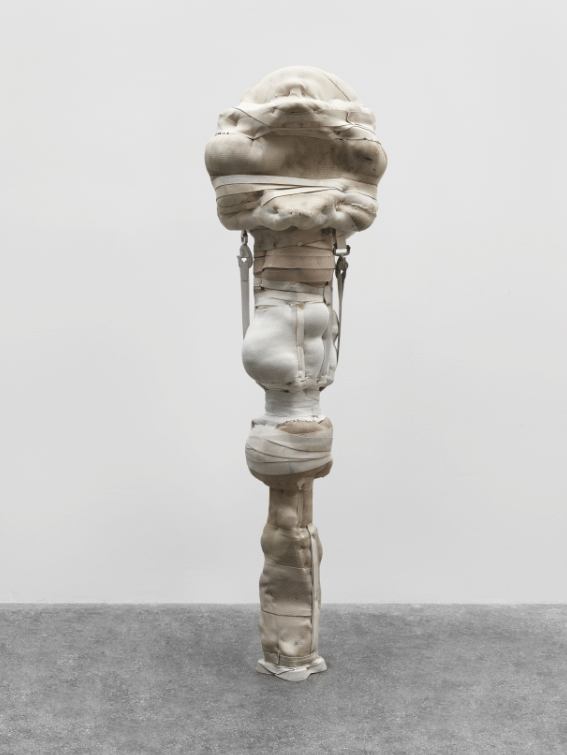
Sculpture is supposed to be solid, permanent and preferably capable of standing on its own. But what happens when artists abandon those expectations? A new exhibition at Warsaw's Museum of Modern Art, Sculpture After Stability (Rzeźba po stabilności), challenges the idea that a work of art must be a finished, unchanging object. Bringing together 31 international artists, including Polish creators, the exhibition explores sculpture as something fragile, unpredictable and constantly evolving. Organic forms meet industrial materials, while objects appear to bend, stretch and resist the boundaries traditionally imposed on them.
The exhibition also refuses to stay neatly within the museum's galleries. Sculptures spill into corridors, staircases and communal spaces, interacting with the building’s architecture, light and visitors. So the show offers an intriguing way to experience Warsaw’s Museum of Modern Art while contemplating a rather timely question: what does stability mean in a world where almost nothing seems permanent? Fortunately, unlike much of the world, this exhibition has a predictable schedule and it runs from October 16, 2026, to February 28, 2027.
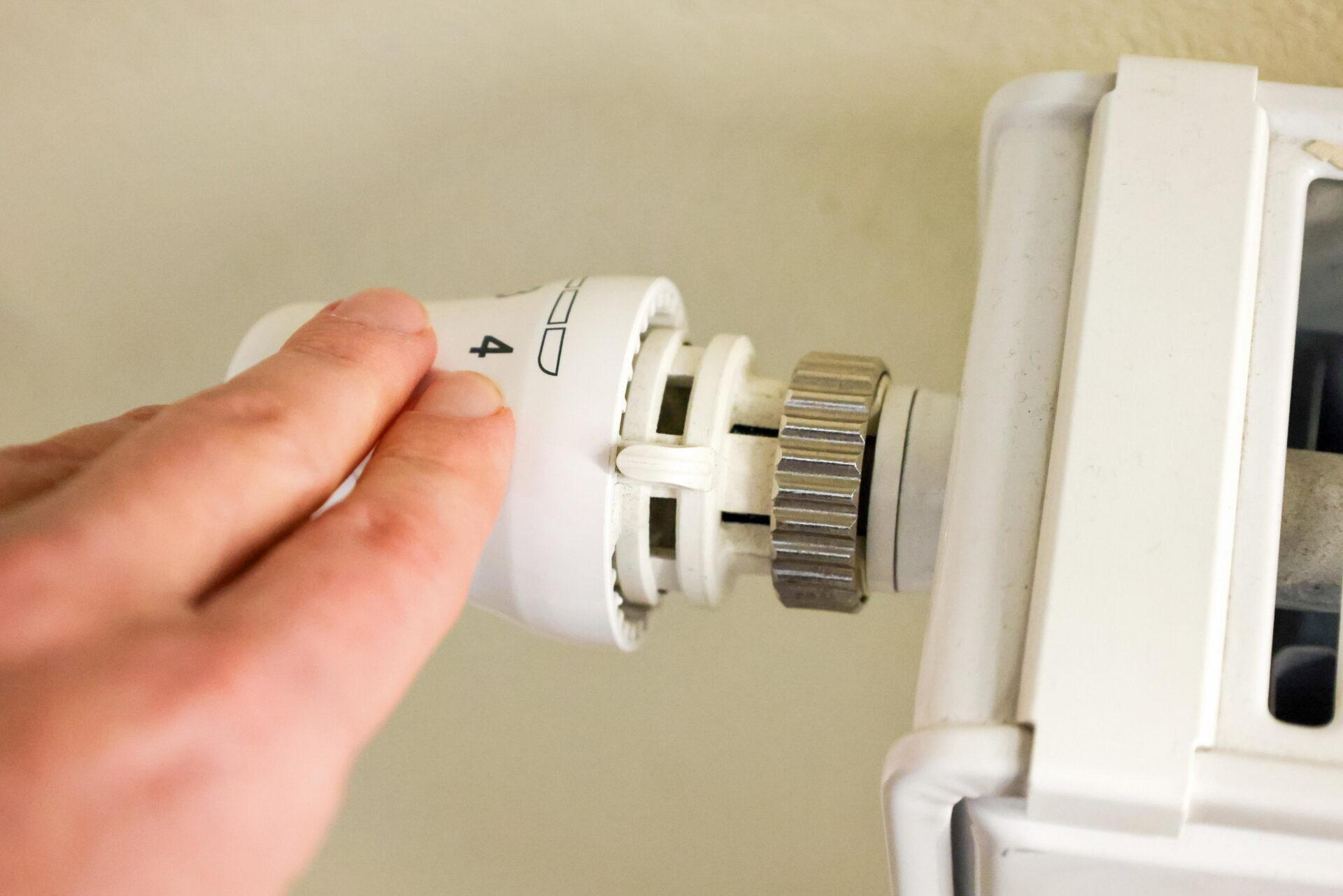
Every autumn, as temperatures drop and the days grow shorter, a familiar domestic conflict erupts across Poland. At stake is a seemingly simple question: when is it acceptable to turn on the heating? For some, the first chilly September morning is justification enough. For others, switching on a radiator before November amounts to financial irresponsibility. The resulting negotiations involve thick socks, extra blankets, increasingly elaborate arguments about energy bills and the timeless Polish advice to put on a jumper.
In many households, fiddling with the thermostat is a more sensitive issue than national politics. The stakes are particularly high in apartment blocks, where central heating can make the question of when warmth arrives a collective rather than individual decision. In older buildings, residents may find themselves alternating between freezing rooms and radiators so hot that opening a window becomes the only practical solution. The arrival of the sezon grzewczy, or heating season, is therefore more than a change in the weather. It is an annual test of Polish thrift, domestic diplomacy and the nation’s remarkable ability to turn a few degrees Celsius into a matter of principle.