

This article is a part of Poland Unpacked. Weekly intelligence for decision-makers
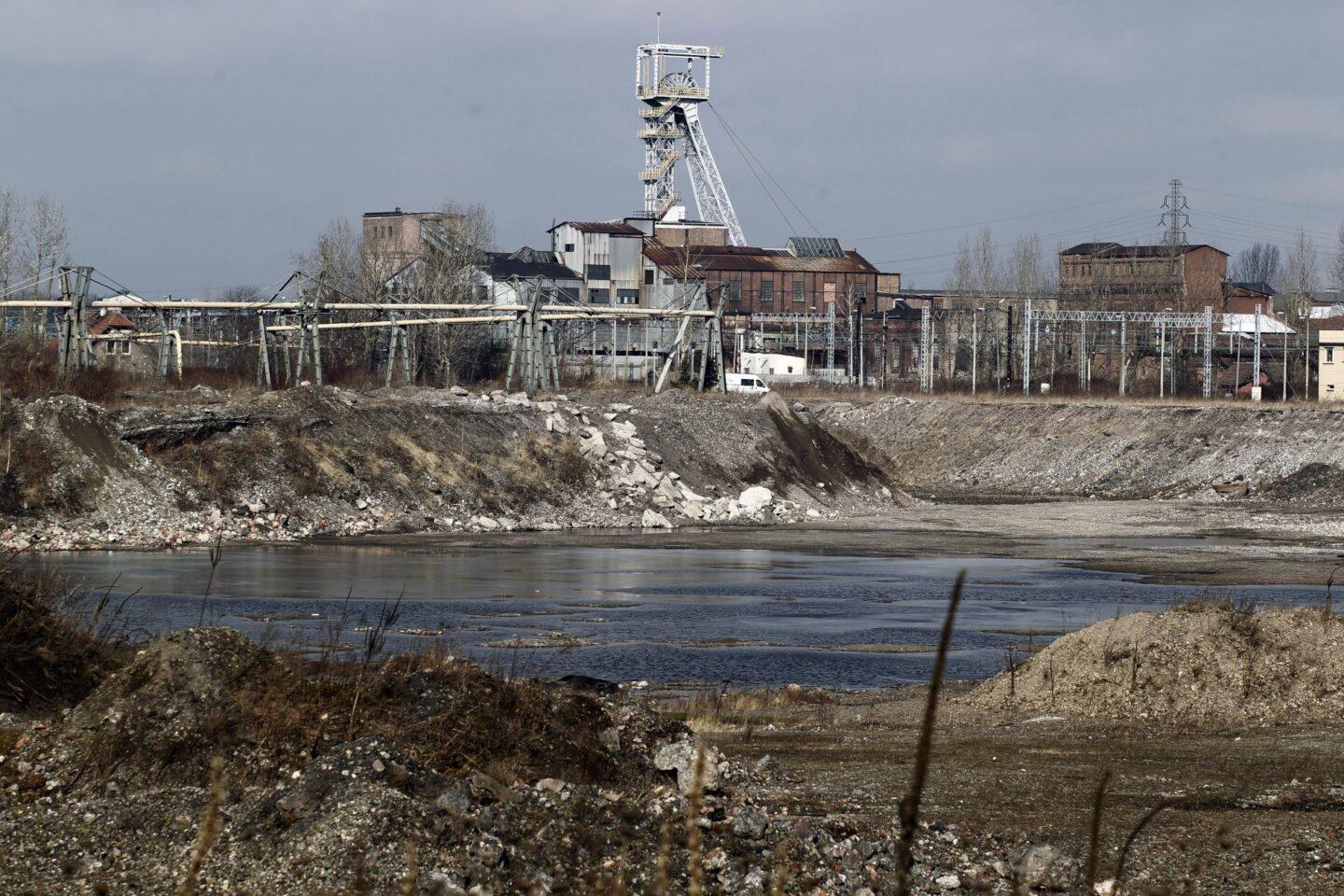
Virtus Group is launching a project to recover critical raw materials from industrial waste and e-waste, in line with the EU’s strategy for raw-materials security. The company plans to work Silesian spoil heaps, using technologies developed in collaboration with Professor Przemysław Łoś and his team.
Virtus Group (formerly Raen) has announced a project focused on critical raw materials and strategic materials, in line with the strategy it adopted in February 2026. The initiative envisages the recovery, processing and production of materials containing metals and elements classified as critical and strategic for the defense industry and dual-use sectors. According to the company, the project is based on cooperation with Professor Przemysław Łoś and his team, as well as on the use of proprietary, market-available technologies for recovering metals and critical raw materials from secondary sources – particularly industrial waste, post-mining spoil heaps, metallurgical waste, ash, dust and other materials containing elements of strategic importance.
“This is the first project delivered within Virtus Group. It rests on solid technological foundations and offers attractive business prospects. A swift launch is within our current financial capacity, so we are ready to proceed. We have identified two landfill sites in Lower and Upper Silesia that have previously been surveyed for the presence of raw materials and rare metals. The results are promising. Initial capital expenditure for working each heap will be around PLN 3m (approximately EUR 0.7m),” says Rafał Rachalewski, CEO of Virtus Group.
Europe’s critical-raw-materials problem
The project aligns with the European Union’s strategy set out in the Critical Raw Materials Act (CRMA), which governs access to critical inputs such as rare-earth metals, lithium and cobalt. The aim is to reduce Europe’s dependence on imports, notably from China.
“The strategy assumes that by 2030 at least 10% of the European Union’s annual demand for critical elements will be met by extraction within the EU, and a minimum of 25% by recycling. Our project fits squarely within these targets,” says Norbert Komar, the project director.
In its initial phase, the company will focus on metallurgical waste and e-waste.
“The knowledge that Poland has significant potential to recover raw materials and rare metals has been present in scientific and industrial circles for years. What has been missing, until now, is both a coherent concept and the willingness to make effective use of existing – often legacy – stockpiles. Virtus Group intends to break new ground in this area,” Mr. Komar adds.
As he notes, domestic smelters produce hundreds of thousands of tons of waste each year, while e-waste provides an additional source of raw materials.
“The two post-industrial spoil heaps we plan to work – and for which we are negotiating agreements with their owners – will each yield around 150 tons of base material. This material contains a range of valuable elements that can be recovered,” says Rafał Rachalewski.
Virtus Group bets on metals recovery
Professor Przemysław Łoś, the originator of the rare-earth extraction technology and a partner in the project with Virtus Group, notes that Poland hosts numerous legacy heaps of post-industrial waste. At the same time, EU regulations significantly restrict the creation of new landfills, requiring plants to manage waste on an ongoing basis and feed it back into a circular economy.
“These sites are a source of many elements valuable to European industry, including Poland’s. Their recovery demands considerable technological flexibility – we will draw on both proprietary solutions and technologies available on the market. Our aim is comprehensive recycling and the extraction of the widest possible range of economically viable elements. While my team and I bring scientific and technological expertise, we lack business capabilities, which is why we are counting on Virtus Group’s support. We want to develop a project that will achieve profitability in the near future,” says Professor Łoś.
“The initial spoil heaps and e-waste clusters we have identified are effectively a ‘mine’ of metals and elements such as bismuth, copper, zinc, magnesium, gold and silver. Their presence has been confirmed in laboratory tests. We are able to recover them and produce semi-finished or finished products for which there is market demand,” says Norbert Komar.
Good to know
Critical raw materials in the European Union
Critical raw materials – such as lithium, cobalt, nickel, graphite and rare-earth elements – are the backbone of modern technologies, energy systems and defense. According to EY, Europe faces growing dependence on imports and export constraints, particularly from China, which controls roughly 70% of extraction and 90% of processing of these materials. In 2025 Beijing introduced additional export restrictions, heightening concerns about supply stability across the EU.
The European Union is responding with measures to strengthen raw-materials security. The RESourceEU program envisages the development of joint purchasing, stockpiling and processing, alongside supply diversification and the expansion of the circular economy. In parallel, the CRMA regulation is being implemented to support strategic projects in extraction, processing, recycling and substitution.
In Poland, work is under way to align national regulations with the CRMA. This includes a project-coordination system, supply-chain monitoring, a raw-materials exploration program and enforcement mechanisms. An update of the State Raw Materials Policy is also planned, alongside the development of domestic resources to support, among other things, electromobility, renewables and industry.
Virtus Group project set to launch shortly
Virtus Group says it is in talks to launch the production of specialist equipment and process installations designed to recover metals and critical raw materials from secondary inputs. Over time, this is intended to enable the construction of industrial-scale facilities for processing materials containing strategically important metals and elements.
“The machine we are ordering will, in the initial phase, process around 50 tons of post-industrial waste per day. Ultimately, capacity is expected to increase to 300 tons. We should be able to begin work as early as September or October 2026,” says Rafał Rachalewski.


Key Takeaways
- The planned activities extend beyond metals recovery to include the development of technologies and the construction of processing installations at industrial scale. From the outset, the project envisages the processing of meaningful volumes of waste, with scope to ramp up capacity further. The objective is to achieve profitability through the production of materials containing valuable elements for which there is demonstrable market demand.
- Virtus Group is embarking on the first project under its new strategy, focused on the recovery and processing of critical raw materials from industrial waste. The initiative is built on collaboration with a scientific team and draws on both proprietary and off-the-shelf technologies. Its launch is underpinned by available financing and encouraging results from surveys of selected spoil heaps.
- The initiative aligns with the European Union’s strategy to increase self-sufficiency in critical raw materials, particularly through the expansion of recycling. In Poland, there is substantial, largely untapped potential to recover metals from post-industrial waste and e-waste. Virtus Group’s project could help unlock this potential while setting a benchmark for similar ventures.