

This article is a part of Poland Unpacked. Weekly intelligence for decision-makers
Negotiations over the EU’s next budget are under way. The Commission wants almost €2 trillion and new sources of revenue, but some member states are reluctant to increase their contributions. Where does Poland fit into the equation—and why will the outcome be decided largely behind closed doors?
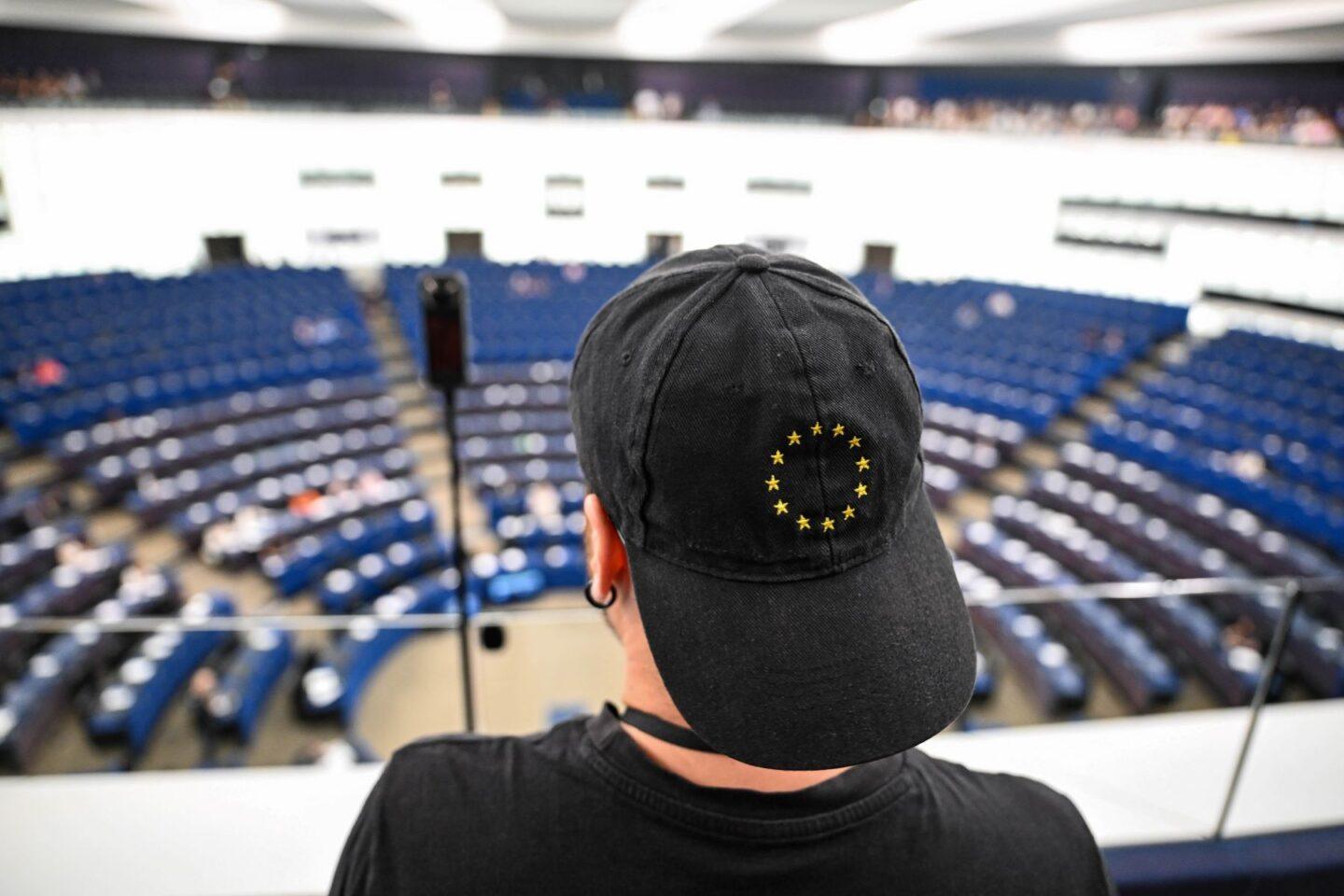
The European Parliament’s September session in Strasbourg attracted a record turnout of more than 400 journalists. European Commission President Ursula von der Leyen once again laid out the Commission’s priorities for the coming year. One of them is to secure a political agreement on the next seven-year budget cycle, the Multiannual Financial Framework for 2028-34.
The battle over the EU budget
The European Commission president plays an important role in the budget puzzle, but the final shape of the MFF will depend above all on agreement among the member states. Formally, the regulation is adopted unanimously by the Council of the EU, after obtaining the consent of the European Parliament.
That is why the EU budget will become one of the most important issues for both the Commission and the member states in the coming months.
The European Commission has proposed a budget of almost EUR 2 trillion. Some wealthier net contributors are pushing for spending to be reduced. According to our source at the Commission, Germany is particularly keen on cuts.
Germany wants cuts, the Commission defends the trillions
“Germany has not yet submitted an official proposal on reducing the size of the budget. But behind the scenes we are hearing talk of cuts of as much as one-fifth, or EUR 400 billion,” a Commission official familiar with the negotiations told us.
Negotiations under such conditions would become extremely difficult. The Commission argues that large cuts would make it harder to finance the EU’s new priorities, including defense and efforts to improve the competitiveness of the European economy.
Asked about possible scenarios, one Polish member of the European Parliament told us that he did not believe such deep cuts would be accepted.
“No one apart from the most frugal countries, such as the Netherlands, would agree to the maximum cuts being floated by the Germans. In my view, a possible compromise on cuts relative to the Commission proposal would be half that amount, around EUR 200 billion,” the Polish MEP told us.
This, however, is our source’s assessment rather than a proposal currently being formally negotiated.
Five new sources of EU revenue
At the same time, the European Commission wants to reduce pressure to increase national contributions and finance a larger share of additional spending through new EU own resources. The Commission estimates that its proposed package of changes to the revenue system could generate an average of around EUR 58.5 billion a year, in 2025 prices.
The Commission is proposing five new sources of own revenue:
- a share of revenues from the ETS1 emissions trading system;
- a share of revenues from the Carbon Border Adjustment Mechanism, or CBAM;
- a new resource based on the volume of uncollected electronic waste;
- a resource linked to excise duties on tobacco and related products;
- CORE, a flat-rate contribution from large companies operating in the EU single market with annual net revenues of at least EUR 100 million.
Fees on e-commerce shipments entering the EU from outside the bloc are a separate part of customs reform and are not among the five new own resources included in this package.
These proposals are controversial among member states for different reasons. As a Commission official points out, the package does not include an EU digital levy. The European Parliament, however, favors considering one as an additional source of revenue, alongside measures such as levies on online gambling or crypto-asset transactions.
The elephant in the room: a digital tax and pressure from Washington
Transatlantic relations are one of the arguments that come up in discussions over a digital tax. A Commission representative acknowledges that Brussels does not want to aggravate relations with the White House further.
“Pressure from Washington is constant and relentless. It has intensified since Donald Trump’s second term. This is no secret, because President Trump has openly criticized a number of EU laws, including the DSA,” the Commission official says.
Another obstacle to introducing an EU digital tax is the lack of unanimity among member states. A decision on the own-resources system must be adopted unanimously by the Council of the EU and then approved by every member state in accordance with its constitutional requirements.
Ireland is a particularly interesting case. It holds the rotating presidency of the Council of the EU in the second half of 2026 while also serving as the European headquarters of many American technology companies.
“For certain reasons, the Irish do not want to bring this subject into the discussion,” our source adds with an undisguised laugh.
The Commission’s other proposals have a better chance of securing support from at least some member states.
“Let’s be serious”
Among representatives of some of Europe’s largest companies, the Commission’s proposal for CORE has attracted particular attention. The Commission is defending the idea.
CORE would apply to companies with annual net revenues above EUR 100 million. The contribution would be a flat-rate charge that increases with a company’s revenues. In the lowest bracket—above EUR 100 million but below EUR 250 million—it would amount to EUR 100,000 a year.
“We are talking about EUR 100,000 for companies reporting more than EUR 100 million in annual turnover. Is that really an excessive burden on such businesses? Let’s be serious,” the Commission representative replied.
Crucially, CORE would not apply only to European companies. It would also cover permanent establishments in the EU belonging to entities from third countries, provided they met the revenue threshold.
“The logic behind CORE is that it is effectively an admission fee to a large market of 450 million consumers who are affluent by global standards. It would apply equally to Europe’s Volkswagen, China’s BYD and American corporations,” the official explained.
Access to the EU market is also to be protected by new rules governing e-commerce from outside the bloc.
In 2025, almost 5.9 billion low-value goods entered the EU through e-commerce shipments. Not all of them were parcels from China. From July 1st 2026, the customs exemption for consignments worth up to EUR 150 was abolished and a temporary EYR 3 tariff introduced. VAT on such purchases had already applied.
The customs reform also provides for an EU handling fee on small e-commerce consignments. In September, the Council of the EU gave the measure its final green light, and member states are to begin applying it no later than November 1st 2026.
A dispute over the size of the EU administration
The European Commission also wants to increase staffing, particularly to support work on defense projects. At the same time, it rejects accusations that the EU bureaucracy is becoming bloated.
“That is simply untrue. Employment at the Commission in 2025 was 3% lower than in 2014. The directorates-general are subject to an annual 1% reduction in posts. The planned increase of 2,500 positions over seven years under the new budget is intended merely to restore staffing to the level of a decade ago,” we are told at the Commission.
The budget and the French question
The details of the budget will certainly remain a major topic for months to come. EU institutions want to reach a political agreement among member states by the end of 2026. That would allow the necessary legislation to be adopted in 2027 and the new financial framework to begin without disruption at the start of 2028.
The electoral calendar in EU member states also matters. France is particularly important, with a presidential election due in spring 2027.
Marine Le Pen has announced that she will run. The National Rally is currently one of the major forces in French politics, making the prospect of political change in Paris one of the factors being taken into account in Europe’s budget calculations.
Commission official: Without a budget, there are no EU programs
In the Commission’s view, securing a political agreement this year is important if the next financial framework is to be launched smoothly.
That does not mean that failure to adopt a new MFF by the end of 2027 would automatically leave the EU without a budget. The treaties provide a fallback mechanism: if new financial ceilings cannot be agreed on time, the relevant ceilings and rules from the final year of the current MFF are extended until an agreement is reached.
A delay could, however, complicate the adoption and launch of new sectoral programs.
“We want to complete the political negotiations by the end of this year so that the necessary legislation can be adopted in 2027 and the new programs can be launched smoothly from 2028,” we are told at the Commission.
Poland remains a major beneficiary
Poland is expected to remain one of the largest beneficiaries of the EU budget. Under the current assumptions, it is set to be the biggest beneficiary of the next MFF, receiving more than €123 billion.
The new budget is to be structured differently from previous ones. A substantial share of support is to be concentrated in National and Regional Partnership Plans, covering areas including cohesion policy, social policy, the Common Agricultural Policy, fisheries, migration and border management.
This would mark a shift away from the existing, more fragmented system of numerous separate funds.
“Such integration should give Poland greater certainty over the stability of its funding. In the EU, the agricultural lobby is stronger than the cohesion-policy lobby, which from Poland’s perspective is advantageous,” the Commission representative said.
The political calendar is driving the budget talks
There is another element in the budget puzzle beyond reconciling the often conflicting interests of member states. Once countries reach a political compromise, the European Parliament must also give its consent.
Formally, the MFF regulation is adopted unanimously by the Council of the EU, but only after obtaining Parliament’s consent. Parliament can approve or reject the Council’s position, but at that stage it cannot amend it.
“An absolute majority of all MEPs is required in a budget vote. That means 361 of the 720 members must vote in favor,” a European Parliament official points out.
Parliament is not merely a passive participant in the negotiations. In April 2026 it adopted its own negotiating position, calling for a more ambitious budget than the Commission had proposed and demanding that the costs of servicing NextGenerationEU debt be excluded from the MFF ceilings.
The parliamentary majority has shifted from issue to issue in recent months. Some proposals have been backed by members of the European Conservatives and Reformists group, which includes PiS MEPs and is not formally part of the parliamentary majority. On other occasions, the majority has depended on more liberal or left-wing lawmakers.
That matters when it comes to adopting the budget.
“Bear in mind that the budget cannot be pushed through Parliament solely with MEPs from parties that govern in the member states. There are considerably fewer than 300 of them. It is therefore not enough for a prime minister or chancellor simply to instruct their MEPs to support the EU budget. Agreements between political groups in Parliament itself are also necessary. That strengthens Parliament’s role in the final stage of the negotiations,” the EP official notes.
All of this means that politicians from the member states, the Commission and Parliament face lengthy and difficult negotiations. Although the new financial framework does not formally begin until 2028, the goal is to secure a political agreement before the end of 2026, leaving 2027 to complete the legislation.
“The next seven-year cycle will be exceptionally difficult. But the strength of the EU’s bureaucratic machinery is that, ultimately, it always reaches some form of compromise - for better or worse, but a compromise nonetheless. I believe it will be the same this time,” one of our sources concludes.


Key Takeaways
- The European Commission has proposed a budget of almost EUR 2 trillion for 2028-34. Some net contributors are pushing for spending cuts. According to XYZ’s source at the Commission, a reduction of around EUR 400 billion is being discussed behind the scenes, while one Polish MEP believes a possible compromise could involve cuts of around EUR 200 billion. Neither figure is currently an official negotiating proposal.
- The Commission is proposing five new own resources linked to ETS1, CBAM, uncollected electronic waste, tobacco excise duties and the CORE contribution from large companies. Charges on e-commerce shipments are a separate part of the customs system. The European Parliament, meanwhile, wants options including a digital levy to be considered if necessary.
- Adoption of the MFF requires unanimity in the Council of the EU and the consent of an absolute majority of all MEPs—at least 361 out of 720. EU institutions want member states to reach a political agreement by the end of 2026 so that the necessary legislation can be adopted in 2027. Poland is expected to remain one of the largest beneficiaries and, under the current assumptions, receive more than EUR 123 billion.