

This article is a part of Poland Unpacked. Weekly intelligence for decision-makers
ArcelorMittal is preparing to restart blast furnace No. 3 in Dąbrowa Górnicza – a clear signal that the industry believes Poland’s steelmaking capacity can recover. Yet some of the sector’s problems remain unresolved, and the situation is further complicated by the war in the Middle East.
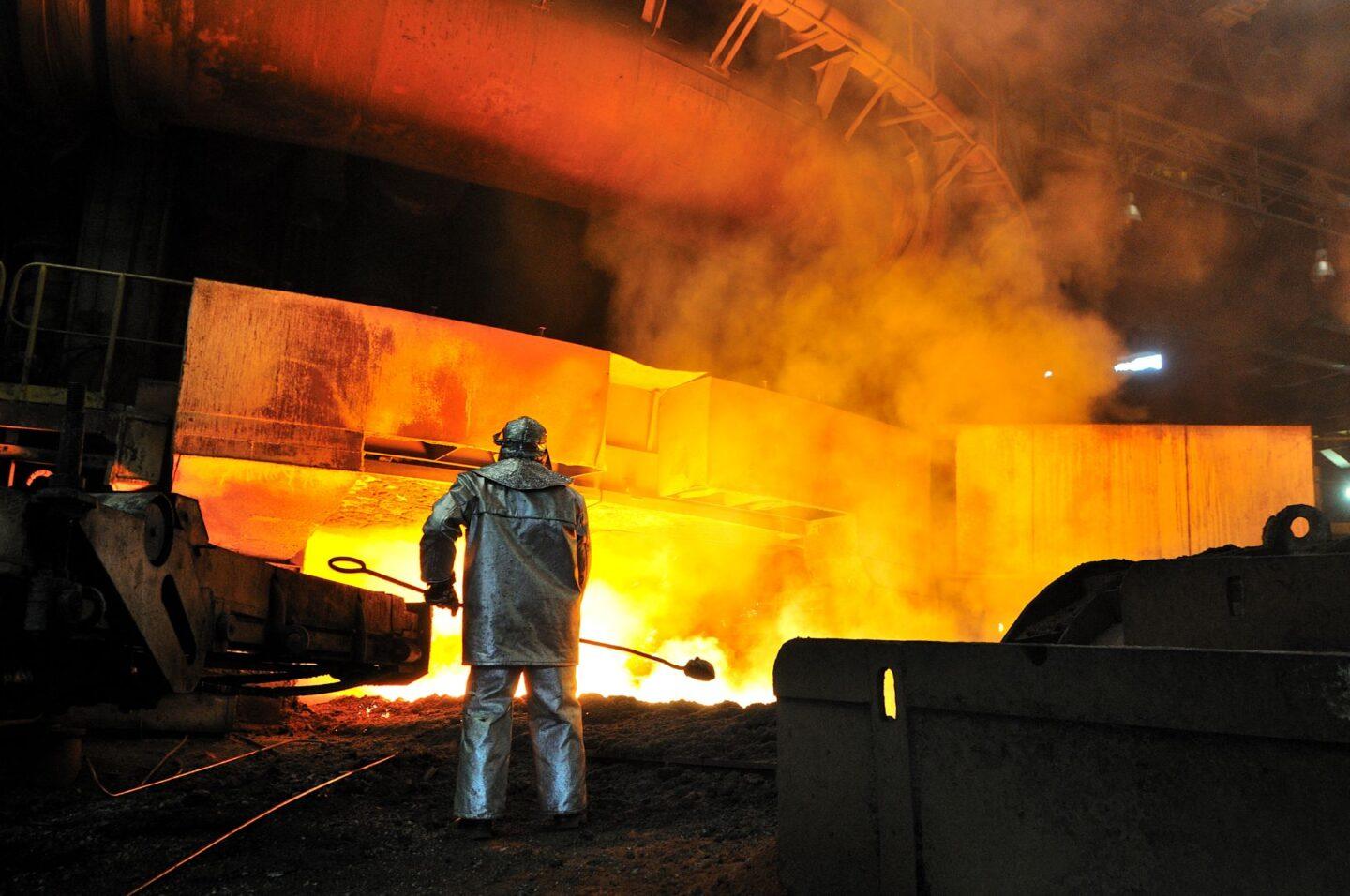
Steel production at the Dąbrowa plant’s blast furnace No. 3 could resume as early as this spring. ArcelorMittal idled the unit in September 2025, citing very high energy prices and insufficient protection of the EU market against an influx of cheap steel products from third countries. New mechanisms introduced in 2026 to shield local production have prompted the steel giant to begin preparations to bring the mothballed facility back online.
The industry hopes for an improvement in steel market conditions. At the same time, it points to gaps in the system designed to protect the local market – loopholes that risk pushing production out of Europe.
A glimmer of hope
At ArcelorMittal Poland’s plant in Dąbrowa Górnicza, blast furnace No. 2 has been operating continuously. The site’s production capacity, however, was significantly reduced after furnace No. 3 was idled. After several months of downtime, there is now a chance it will be brought back online.
Preparations are already under way. Overhauls of key components of the installation are in progress, involving a total of 20 companies. The work required to restart the facility will cost nearly PLN 60 million (around EUR 14 million).
No official restart date has been disclosed, but the working assumption is that production will resume in the spring. The final timing will depend on conditions in the steel market, which – despite the introduction of protective measures – remains highly challenging.
A turning point came with the introduction of the carbon border adjustment mechanism (CBAM), designed to level CO₂ costs between EU-based steelmakers and importers from outside the bloc. Further measures to curb the inflow of cheap steel products are also in the pipeline. The European Commission has proposed that, from July 1st 2026, new tariff-rate quotas be introduced – reducing the volume of duty-free imports and raising tariffs on volumes exceeding those quotas from 25% to 50%.
“At the start of the year, the CBAM mechanism came into force, and tariff-rate quotas are also planned. We therefore believe these measures will translate into better protection of the EU steel market and allow us to increase capacity utilization, and thus rebuild production volumes,” says Marzena Rogozik from the press office of ArcelorMittal Poland.
She cautions, however, that some of the industry’s problems remain unresolved.
“High energy prices continue to be a challenge for the European steel sector. In Europe, they are significantly higher than in other parts of the world, and in Poland electricity prices are among the highest in the EU. We are closely monitoring developments in the steel market to make optimal and responsible decisions,” Ms. Rogozik adds.
A difficult year for steelmakers
European Steel Association says Europe’s steel market is showing signs of recovery after a difficult 2025. Weak demand last year forced local producers to scale back output and idle parts of their operations. As a result, EU steel production fell to a record low of around 125.8 million tons.
 Interactive chart
 At the same time, steel imports into the EU rose by 8%, reaching 28.5 million tons compared with 2024.
Interactive chart In Poland, steel production in 2025 totaled 7.2 million tons – broadly in line with 2024 levels.
Interactive chart European Steel Association estimates that demand for steel in 2026–27 should increase, driven mainly by a rebound in the construction sector – the largest consumer of the material. At the same time, the geopolitical outlook remains highly uncertain, particularly following the outbreak of war in the Middle East.
“Steel production in Europe is declining, while the share of imports in the EU market is rising. EU policymakers must quickly agree on new steel trade rules – without weakening them. Otherwise, Europe risks losing further production capacity. The Iran crisis also shows how exposed European industry remains to global energy shocks. If the EU wants to sustain steel production and green investment, it must ensure both effective trade protection and affordable electricity,” says Axel Eggert.
The association is calling for changes to the CBAM instrument to more effectively counter competition from outside the EU.
“If properly designed, CBAM can support both climate action and European industry. However, there are still loopholes that risk shifting emissions away from Europe rather than reducing them. Global overcapacity in steelmaking has reached record levels, and energy prices are rising again due to geopolitical tensions. In this situation, the EU must urgently ensure that CBAM delivers on its objectives,” argues Adolfo Aiello.
Expert's perspective
Head of Polish Steel Association (HIPH): EU safeguards must be watertight
As for the new instrument, the priority is to close the legislative process so that it can enter into force no later than July 2026, seamlessly replacing the current safeguard measures on steel products, which expire at the end of June 2026. From the industry’s perspective, it is crucial that the tool be watertight, cover all third countries, and shield the EU market from distortions.
The logic of CBAM is sound. Yet in its current form, the rules and implementation work still do not guarantee several elements that will determine the mechanism’s effectiveness. These include an adequate extension of product scope to downstream goods, effective measures against “resource shuffling,” and a credible export rebate. These are precisely the issues the industry has consistently flagged as decisive in determining whether CBAM will genuinely level the playing field.
It is also impossible to ignore the problem of energy prices. Steelmaking is among the most energy-intensive sectors of the economy. In Europe, electricity prices are among the highest in the world, and in Poland they are among the highest in the EU. Differences in energy costs between countries can reach EUR 20–30 per MWh, translating into significant disparities in unit production costs. In practice, producers in countries with lower energy prices can offer cheaper products – even with comparable technological efficiency.


Global turbulence
The war in the Middle East – triggered by attacks by Israel and the United States on Iran – is weighing on the global steel market. The Polish Economic Institute (PIE) notes that Iran produced nearly 32 million tons of steel in 2025, ranking 10th among the world’s largest producers. The country is also a significant exporter, with its steel shipped mainly to Turkey, China and Armenia.
“Although EU markets accounted for only 8.5% of the total value of Iran’s steel exports in 2024, Italy was the fourth-largest importer of Iranian semi-finished steel products that year. The potential scale of damage to Iran’s extraction and industrial infrastructure remains uncertain, which could affect the supply of fossil fuels and steel from that direction,” PIE experts note.
PIE’s analysis also shows that disruptions to maritime transport caused by the blockade of the Strait of Hormuz are another source of uncertainty for steel producers and consumers. This route is used not only for transporting oil and gas, but also steel.
The blockade has driven up energy commodity prices, feeding through into higher electricity prices. Steel plants using scrap-based electric arc furnaces are feeling the impact most acutely. According to the Polish Economic Institute, such installations account for 44% of steel production in the EU.
Improving the outlook for Poland’s industry could hinge on changes to the CO₂ emissions trading system and lower electricity prices. Work on these solutions is currently under way at the EU level.


Key Takeaways
- The European Steel Association expects that, after a difficult 2025, 2026 will bring a rebound in steel demand in Europe. The outlook for the sector, however, could be complicated by the war in Iran. Iran is a significant producer of steel products and an important supplier to Asian markets, as well as to Italy. Above all, the conflict in the Middle East has driven up energy commodity prices, which will feed through into electricity costs and weigh on European industry. Steel plants using electric furnaces are likely to be hit the hardest.
- The introduction in January of a carbon levy on imported steel (the so-called CBAM) has prompted steel giant ArcelorMittal to move ahead with plans to restart blast furnace No. 3 in Dąbrowa Górnicza. The exact date remains unknown, but preparations are already under way. The condition of Poland’s steel industry remains very challenging. The group is nonetheless placing considerable hope in CBAM and in planned mechanisms to protect the local market from excessive imports of cheap steel from abroad. “We believe these measures will translate into better protection of the EU steel market and allow us to increase capacity utilization, and thus rebuild production volumes,” stresses Marzena Rogozik of ArcelorMittal Poland.
- ArcelorMittal also notes that high energy prices remain a core challenge for Europe’s steel sector. “In Europe, they are significantly higher than in other parts of the world, and in Poland electricity prices are among the highest in the EU. We are closely monitoring developments in the steel market to make optimal and responsible decisions,” Ms. Rogozik adds. The European Steel Association is likewise calling for CBAM to be urgently tightened to prevent industry from relocating from Europe.