

This article is a part of Poland Unpacked. Weekly intelligence for decision-makers
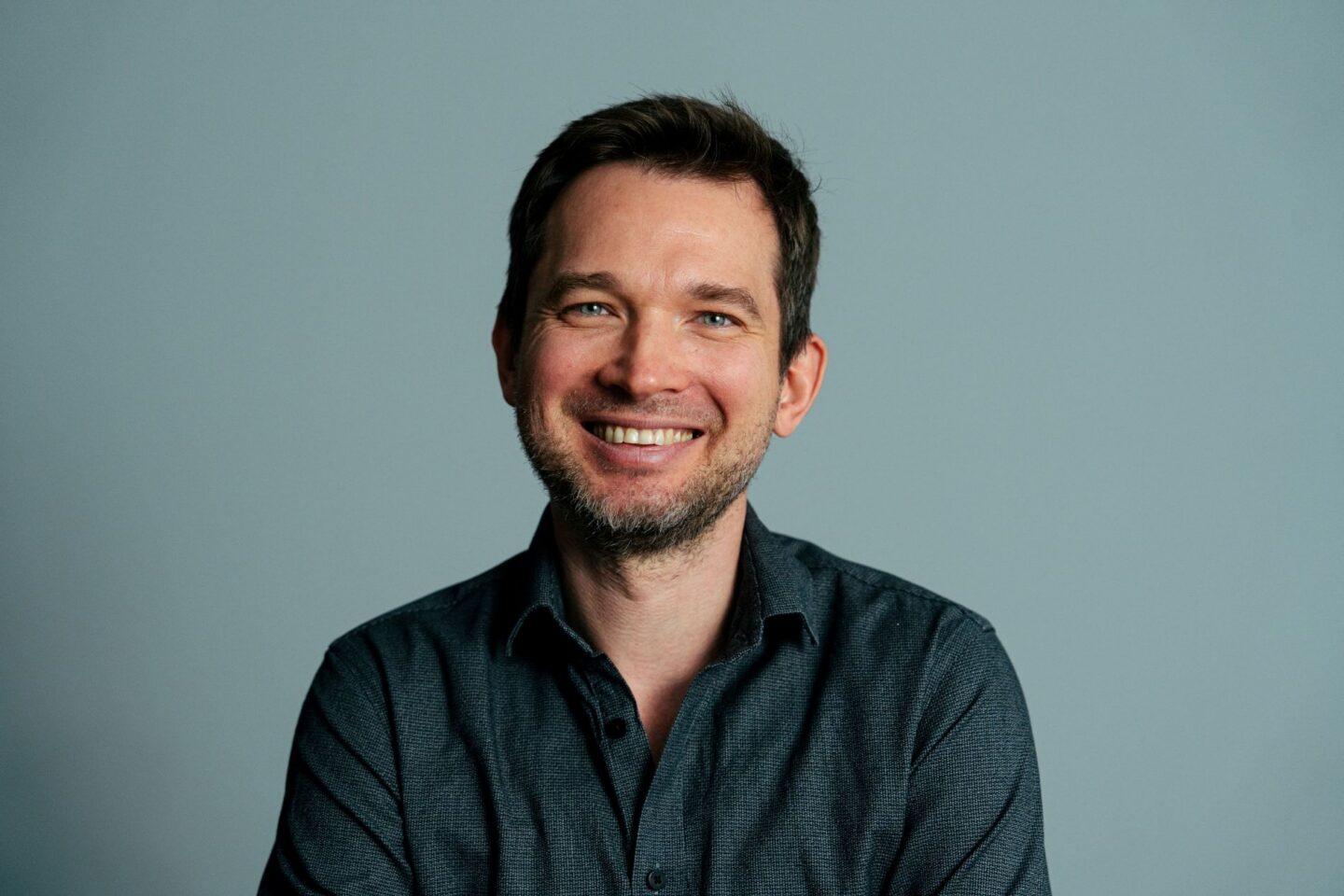
“Deciding to give up funding from big tech and move towards self-sufficiency may have been the right decision ideologically, but… it appears that our startup ecosystem is not ready to support an organisation that represents its interests [...]” — Borys Musielak, co-founder of the Startup Poland Foundation, recently wrote on his LinkedIn profile.
The coming months will determine the organisation’s future—whether it continues operating or shuts down. After more than a decade of activity, the foundation, which has served as the voice of Poland’s startup sector throughout that time, has reached a turning point. It must not only find a new, sustainable funding model but also redefine its role and operating model in a rapidly changing environment.
Is this merely a period of transformation for the foundation, or—as Borys Musielak describes it—its “last dance”? The coming months will provide the answer.
Startup Poland seeks a new operating model
In February 2026, the foundation announced a change in its leadership, appointing Anna Mazurek as president. She had previously been associated with Startup Poland. The organisation announced a “return to its roots” and “independence from big tech companies.”
It argued that building a modern startup ecosystem in Poland requires greater involvement from domestic entrepreneurs, innovators, and investors. This also includes financial commitment. At the same time, the foundation concluded that, after years of development, the Polish market had become mature enough for Startup Poland to operate independently of the largest global and domestic companies, focusing instead on representing the interests of Polish technology entrepreneurs.
“We appreciate the support of companies such as Google during the initial phase of building the foundation. However, we believe that Poland’s innovation ecosystem is strong enough in 2026 for Startup Poland to—and should—operate independently of big tech companies and focus on genuine representation of the interests of Polish technology entrepreneurs,” Zbigniew Woźnowski, a member of the foundation’s board and CEO of Reality Games, explained at the time.
Borys Musielak says that under a limited operating model, Startup Poland needs around PLN 200,000 (approximately EUR 47,000) per year to maintain the organisation’s basic operations. However, to carry out its own projects, remain active, and maintain a fully engaged team, the foundation would require an annual budget of approximately PLN 1 million (approximately EUR 235,000).
Funding came with a price
Startup Poland was initially financed through support from Google. In later years, its funders also included PKO Bank Polski, ORLEN, and PFR Ventures.
“Google funded the foundation’s activities for many years. This was extremely important because a fixed annual contribution allowed us to maintain the team and plan our work. We did not have to operate from report to report or from project to project. We had a stable financial foundation for our statutory activities. Over time, however, we began taking on more and more projects funded by other corporations. The money was often allocated to specific reports or initiatives rather than to the foundation’s overall operations,” explains Borys Musielak.
He acknowledges that, year after year, an increasing share of the team’s work became focused on delivering projects commissioned by partners, leaving less room for the foundation’s own initiatives.
“The model based on funding from big tech companies and corporations was not our choice, but rather a way to maintain the team and finance our statutory activities. We did not find another solution that would allow us to fulfil the foundation’s core mission. Over time, however, we concluded that we did not want to depend on external entities. At one point, Startup Poland began to be perceived as an extension of Google within the startup community—which was never what we wanted to become as a foundation,” the co-founder stresses.
He acknowledges that while corporations did not dictate the organisation’s positions or pressure it to support specific legislative solutions, there were certain expectations that could be felt.
Why did the membership model fail?
Borys Musielak says that other operating models for the foundation were also considered. One option was to transform Startup Poland into an organisation operating more like a business chamber. Startup membership could have given it a formal mandate to represent their interests, but the model proved difficult to finance.
“The idea was for startups to be genuinely represented not only by an organisation with a formal mandate derived from company membership. The problem is that startups, particularly at an early stage of development, have limited financial resources. A model based on small membership fees would therefore require a very large number of members,” says Borys Musielak.
With the benefit of hindsight, corporate funding may be viewed by some members of the ecosystem as a weakness of the foundation. However, people from the startup community point out that without Google’s support a decade ago, Startup Poland would probably never have been created. At the same time, some acknowledge that in recent years the foundation’s commercial activities had become increasingly visible, while its engagement in issues affecting the broader ecosystem was seen as insufficient.
Expert's perspective
The foundation must redefine its role
In my view, the foundation should continue operating, and there is a place for it in the ecosystem. Everything depends on its plan for changing the funding model—such transitions are usually carried out through evolution rather than revolution. What matters is the value proposition the organisation offers to the stakeholders it is meant to represent. For many years, however, there was a lack of a clear offer, a concrete proposal, or a clearly defined role.
Anna Mazurek is an excellent foundation president. Her new role creates an opportunity for positive change. She knows the ecosystem, has a reputation for being effective, and is skilled at building relationships and alliances. She is certainly someone with a strong chance of breaking the foundation’s current impasse, redefining its role, and rebuilding trust.


Who should fund Startup Poland?
Startup Poland is currently assessing possible sources of future funding. For now, however, the foundation’s operations are formally financed only by SMOK Ventures, the venture capital fund managed by Borys Musielak. Support has also been provided by members of the foundation’s board, and the funds raised are expected to cover operations until the end of the year.
“We are in talks with venture capital funds. They should have an interest in making it easier to invest in startups in Poland, although I have to admit that these discussions have not been particularly effective so far. We are also counting on support from founders, who in mature ecosystems often give back to the community by investing in young companies or supporting organisations that work for the benefit of the entire market,” says Borys Musielak.
The foundation is also considering a model based on regular community contributions.
“If several thousand people connected with the ecosystem contributed small amounts every month, this could provide a significant share of the budget. We are analysing all three directions,” explains Borys Musielak.
Expert's perspective
Good startups are not enough. The world needs to hear about them
Do you want to invest in Israeli startups? Startup Nation Central has a database covering virtually the entire ecosystem. Looking for companies in a specific sector? It publishes reports and analyses. Want to visit Israel and understand how the local VC market works? It helps identify the right partners and arrange meetings.
Looking at the global landscape, Poland is now one of the world’s largest economies. This makes it even more important to have an organisation whose full-time mission is to promote the Polish startup ecosystem. We will not attract the best investors simply because we have good companies. We need to make sure the world hears about them.
This means not only publishing reports, but also being present at the most important international conferences, organising foreign missions, building relationships with global VC funds, arranging meetings with leading technology media outlets, and consistently promoting Polish success stories.
Startup Poland once did tremendous work by bringing startups out of a garage niche and into the mainstream. Today, it is time for the next stage: building a recognisable brand for the Polish startup ecosystem in Europe and around the world.
At the same time, such an organisation should be built on a stable and diversified funding model.
The foundation’s track record and untapped potential
“Over the years, we have achieved a great deal. The foundation has become a place that governments, local authorities, other organisations and corporations turn to. It is also a source of knowledge about the Polish startup ecosystem—not only through its reports, but also through its continuous engagement with members of the community,” says Borys Musielak.
At the same time, he acknowledges that during the foundation’s decade of activity, it has not managed to develop a funding model that would allow it to consistently pursue its statutory objectives. Due to limited resources, some planned initiatives were never developed, including educational projects focused on entrepreneurship and startups.
Startup Poland searches for a new role
The search for a new funding model is intended to mark the beginning of broader changes. Startup Poland is reviewing its strategy, future role and operating model. Borys Musielak compares the process to building and scaling a startup.
“Like a startup, the foundation has to test different models. If we cannot convince the community that we are needed, perhaps we really are not. It is also possible that someone else will achieve similar goals more effectively,” he says.
Despite limited resources, the foundation continues to participate in industry groups and advisory bodies, representing the perspective of the startup community. It is currently focusing on developing a Polish version of the SAFE mechanism [a financing agreement standard modelled on the Estonian SAFE, or Simple Agreement for Future Equity — ed.] and efforts to introduce tax incentives for investors.
Everything suggests that if the foundation fails to secure funding sources or does not receive a mandate from the startup ecosystem to continue operating in a renewed form, steps will be taken to wind down Startup Poland.


Key takeaways
- Startup Poland has reached a turning point. After more than a decade of activity, the foundation must not only find a new, sustainable funding model but also define its future role within the startup ecosystem. Its continued existence will depend on whether it can build support among stakeholders for a renewed operating model.
- Independence from corporate funding requires engagement from the entire ecosystem.
Previous support from big tech companies and corporations enabled the foundation to operate, but over time it also raised questions about its independence and the space available for its own initiatives. Startup Poland is now analysing several potential funding sources—from VC funds and founders to regular community contributions. - The foundation’s future also depends on redefining its role.
Those interviewed point out that Startup Poland has played an important role in developing Poland’s startup ecosystem, but it needs to clearly define its offering and the way it represents the community. The new strategy is intended to build an organisation that responds to the market’s current needs.