

This article is a part of Poland Unpacked. Weekly intelligence for decision-makers
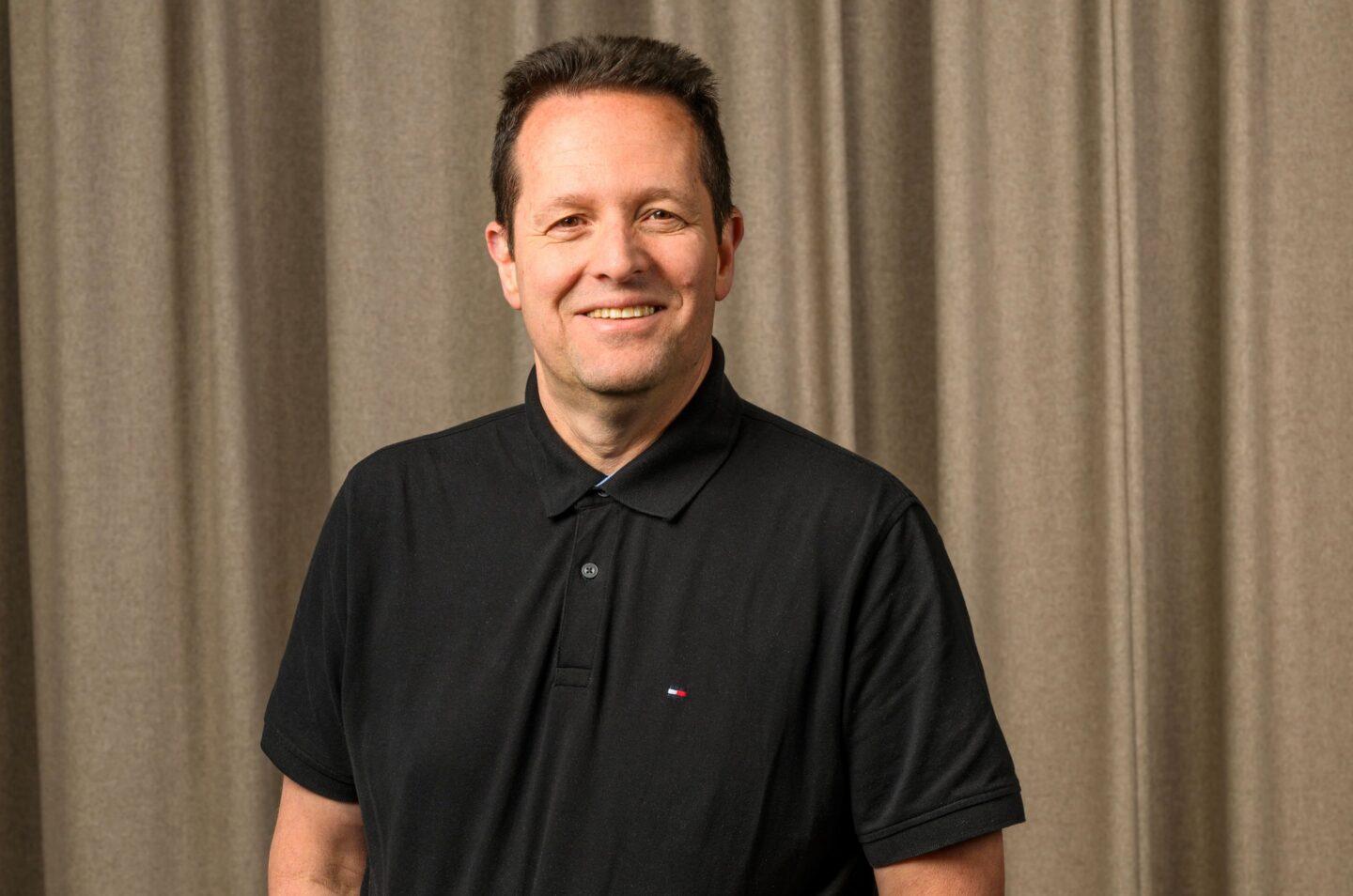
Assaf Ronen has previously built technology centers for Microsoft and Amazon. Today, he is seeking AI-savvy experts for a global foodtech company. Warsaw was an obvious choice for him, and he is ready to commit to a multi-million investment. Hiring 100 highly experienced specialists by the end of the year is only the beginning.
Business services centers are no longer being established in Poland at the pace seen in previous years, and employment growth has also slowed. Increasingly, what matters is the quality of local teams and delivered projects, rather than low-cost outsourcing of simple processes. Poland remains among the top 20 largest exporters of advanced business services and is recording the fastest growth within this group.
The country’s potential is being recognized by both existing and new global investors. Cisco announced in January that it would expand its R&D center in Kraków, with investment exceeding PLN 200 million (approx. EUR 46 million). Meanwhile, the German foodtech company HelloFresh has chosen Warsaw. It is a global leader in meal kit delivery services, generating revenues in the billions of euros.
100 specialists by year-end, potentially hundreds in the coming years
HelloFresh registered a company in Poland – in Wrocław – in 2025. At the end of December, it employed just four people in the country. More recently, however, it has stepped up its efforts and is now recruiting for more than 30 open positions.
“The company began seriously considering hiring in Poland several years ago. It first opened an office in Wrocław and built a more administrative team there. When I joined in April 2025 and reviewed the project, I considered it strategic. If we want to build a hub in Poland, we need to develop proprietary technologies within it. And despite my affection for Wrocław, the best place for that is Warsaw,” says Assaf Ronen, a member of the HelloFresh Group management board with global responsibility for technology.
He has worked in the tech sector since the 1990s. Among other roles, he served as a general manager at Microsoft and a vice president at Amazon – both companies operate technology centers in Poland. Today, he is coordinating a similar investment for HelloFresh, which he says will be significant – larger than several million euros.
“In the coming weeks, we will have an increasing number of job openings in Warsaw. In the foreseeable future, we plan to hire more technology specialists in this city than anywhere else. At present, we have fewer than 20, as we only began intensive recruitment almost two months ago, but by year-end we are targeting 100. And we intend to keep growing. I do not want to give exact figures, but I aim to build a significant technology hub with hundreds of people responsible for products that ensure our global success,” says Assaf Ronen.
Good to know
Tech giant took off after the pandemic
Founded in 2011, HelloFresh has grown into a global leader in the delivery of meal kits and ready-to-eat food products. Just a year after its launch, it expanded internationally. Today, it operates in 16 markets across different regions under eight brands, fulfilling roughly 100 million orders annually, covering nearly 1 billion meals.
The company went public on the Frankfurt Stock Exchange in 2017, raising approximately EUR 300 million at a valuation of EUR 1.7 billion. Its growth was turbocharged by the COVID-19 pandemic, when consumers sharply reduced in-person grocery shopping and restaurant visits. At its peak in 2021, HelloFresh’s market capitalization reached the high tens of billions of euros. Today, it stands at around EUR 640 million (approximately PLN 2.7 billion at current exchange rates).
In 2020, the number of active customers in the group surged from 2.97 million to 5.29 million. This translated into a doubling of revenue to EUR 3.7 billion and an elevenfold increase in adjusted EBITDA, to EUR 505.2 million. In terms of sales, 2024 was its strongest year to date, at EUR 7.7 billion. In 2026, the company expects revenues of around EUR 6.5 billion and adjusted EBITDA of EUR 375–425 million.
So far, HelloFresh has not entered the Polish market. While it does not link the launch of its technology hub with the start of operational activity, it does not rule out such a step in the future. No company has yet achieved sustained success in this segment in Poland. One attempt was made by Yesha, but it shut down operations at the end of 2025.
Meanwhile, the diet catering market has expanded rapidly. PMR Market Experts estimate its value at around PLN 4 billion, with growth in the double-digit range. This year, the sector may see its first billion-złoty player: Kuchnia Vikinga, which is planning major investments.
Another technology hub as a consequence of transformation
The launch of the new technology hub is a result of the transformation currently underway at HelloFresh. The company is shifting the center of gravity in its business from food delivery to the use of technology – from a physical product to digital tools.
“Our goal is to permanently change the way people eat. Over the past 20–30 years, very few things have remained unchanged despite technological progress. One of them is that I prepare dinner much the same way my mother did. It is time to change that. We are therefore moving from being a ‘foodtech’ company to a ‘techfood’ company. Much like Amazon was never truly a retailer powered by technology. It has always been, in its mindset, a technology business that, unfortunately for traditional retail chains, decided to carve out a share of their market,” explains Assaf Ronen.
As a result, the company needs top technology talent located close enough to its two headquarters in Berlin and New York.
“When we looked at the map, Warsaw was an obvious choice – not only because of access to outstanding specialists, but also due to its culture of innovation, hard work, and so on. Poland in general, and Warsaw in particular, is an ideal location for our largest technology hub,” says the HelloFresh board member.
In 2019, HelloFresh employed 4,500 people. Five years later, that number had risen to 21,800. Recently, however, the company has been reducing headcount in some countries, most notably in the United States. Globally, employment fell to 19,000 in 2025 and to just over 18,000 currently. The technology division, however, remains central to its operations. Across three hubs – in Berlin, Toronto, and New York – it employs around 1,100 people.
Expert's perspective
The importance of Poland in high-value services is growing
As the sector becomes more specialized, the profile of investments is also changing. Large centers employing over a thousand people performing routine processes – typical of the previous decade – are being replaced by smaller, highly specialized units. As a result of this transformation, companies already present in Poland are increasingly reinvesting locally, creating more attractive roles.
From early 2024 to the first quarter of 2025, new centers accounted for around 18.8% of total employment growth in the sector. This means that more than 80% of new positions are created through reinvestment and capability expansion by companies already operating in the country.
Germany remains one of the most important partners and investors in Poland’s business services sector. German companies operate 172 centers in Poland (8.3% of all hubs), employing 35,200 specialists (7.2% of total sector employment). By the end of Q1 2025, German-capital investors ranked second in terms of newly opened centers (eight) and their share in job creation (10.6%).
A key driver accelerating the creation of the most advanced roles is the shift toward knowledge-based processes, which already account for nearly 60% of all activities carried out in service centers. In addition to growing specialization, the main engines of Poland’s sector remain nearshoring and ally-shoring (relocation of operations to geographically and politically close countries).
New investments are generating high-margin, complex roles in areas such as IT, AI, data analytics, finance, cybersecurity, and R&D. This is reflected in the job postings published by HelloFresh.
At the same time, the sector’s transformation means that Polish centers are no longer merely technology recipients. They are increasingly co-developing artificial intelligence solutions. The industry is preparing for the emergence of the “AI-native” generation, for whom generative AI will be a natural workplace tool, enhancing innovation and operational agility.


Comprehensive solutions, not cheap outsourcing
For years, Poland was associated with strong IT competencies at low cost. Over time, however, “cheap” has increasingly become a label applied to Southeast Asian countries such as India, Vietnam, or the Philippines. Domestic firms have been left to compete on quality, as developer salaries are now approaching Western European levels.
“We are not entering Poland because I can find employees here who are 5% cheaper than elsewhere. It is about finding top talent with the right mindset and readiness to implement generative artificial intelligence. A cost-based approach is a mistake. The largest technology companies win because they hire the best specialists. If you needed major surgery, would you choose a good doctor or a cheap one? In Poland it is still cheaper than in the United States, but we were not looking for the cheapest place in Europe. We were looking for a place where we can find as many talented people as we need,” explains Assaf Ronen.
HelloFresh is primarily targeting so-called senior professionals in Poland – highly experienced specialists across various fields. This means the company is looking for people capable of working on the most advanced projects, rather than optimizing simple processes.
“I do not believe in outsourcing; simple tasks can today be delegated to AI agents. We are building a technology hub responsible for end-to-end solutions. The team will consist of directors, engineers, product managers, and so on. I have built and managed technology centers for Amazon and Microsoft, so I know that the only recipe for success is comprehensiveness. Only in this way can you attract top specialists. If you provide them with great career opportunities, they will treat the workplace like a second home. We are not looking for mercenaries who come for six months and leave,” says Assaf Ronen.
Expert's perspective
Investment in a technologically advanced team
Importantly, HelloFresh today is more of a technology and logistics company than a traditional foodtech business. Its operating model is built on highly advanced data analytics and automation – from demand forecasting and food waste reduction to offer personalization, global supply-chain management, and infrastructure supporting millions of customers.
The timing of the investment is also noteworthy. In recent years, Poland has moved decisively beyond its former role as an “outsourcing” market to become a fully-fledged R&D center for global technology companies. Today, for many organizations, Warsaw and Wrocław compete more with Berlin, Amsterdam, or Barcelona than with traditional back-office locations.
Any foreign investment creating jobs for highly qualified professionals is welcome. At the same time, it is worth ensuring similarly favorable conditions for Polish companies to scale globally - particularly given the country’s outstanding talent base.
AI is leveling the playing field in the IT labor market
The executive stresses that the rapid development of artificial intelligence is fundamentally reshaping the IT labor market – particularly for so-called junior professionals, or recent graduates. Finding a job as a software developer after university has become significantly more difficult.
“My son graduated a year and a half ago from one of the world’s top five technical universities. Half of his graduating class still does not have a job. And we are talking about a group that used to receive job offers almost as soon as they started university, with companies competing fiercely for them. Now, because basic coding tasks can be handled easily with tools such as Claude, the pendulum has swung in the opposite direction,” says Assaf Ronen.
At the same time, he sees this as an opportunity for the younger generation. Today, success increasingly depends not on writing code manually, but on knowing how to use several AI agents that can complete tasks much faster. Those who master this skill early in their careers stand a strong chance of succeeding. Those who do not may struggle, even with more than a decade of experience. At HelloFresh, even project managers are already using tools such as Claude to build prototypes.
“People who are ‘AI-native’ will succeed in this profession regardless of seniority. I tell employees that even the world’s best marathon runner would stand no chance in a race if the rules suddenly changed and scooters were allowed. I am 50 years old and not a great runner, but I would win because I know how to use the available tool. Programming is becoming similar. We primarily need experienced engineers capable of coordinating the work of AI agents, but there is also room for young, sharp employees. For everyone – regardless of seniority or location – the key requirement will be the ability to use AI-based tools,” says Assaf Ronen.
Warsaw’s importance on the global technology map is growing
The HelloFresh board member also expects Warsaw’s role on the global technology map to increase. He points out that when investors search for locations for new technology hubs, they typically look first to San Francisco or Seattle, then perhaps London or Tel Aviv. Even Berlin, he notes, is not among the top five. For Poland, the fact that some of the world’s largest technology companies are building teams in the country is both a mark of quality and a positive signal for the future.
“Polish specialists have adapted exceptionally well to the use of generative artificial intelligence. I cannot yet say the same about every other hub in Europe. Beyond that, I see in Warsaw a strong resemblance to the work culture I observed for years in Seattle and the San Francisco Bay Area: enormous drive, a high level of innovation, and a strong focus on success,” says Assaf Ronen.
He admits that his decision to establish a technology hub in Poland was not driven by the long-standing presence of German companies in the country. Instead, he contacted acquaintances at Google and other major technology firms expanding their operations in Poland to ask about their motivations. The answers he received reinforced his conviction that he was making the right choice.


Key Takeaways
- The choice of location for the technology hub was no accident. Assaf Ronen has previously built technology centers for Microsoft and Amazon, and is now doing the same at HelloFresh. For him, choosing Warsaw as the location for the new hub was an obvious decision. He does not believe in outsourcing, so the move was not driven by the possibility of hiring staff a few percentage points more cheaply. What matters to him is access to a sufficient number of world-class specialists. He believes Warsaw’s importance on the global technology map will continue to grow. He also argues that the rise of artificial intelligence is leveling the playing field in the IT labor market. While it may temporarily be harder for entry-level professionals to find jobs, those who can use AI tools effectively will succeed regardless of seniority.
- A German tech giant with global reach. Founded in 2011, HelloFresh has grown into the world’s leading provider of meal kits and ready-to-eat products – an alternative to the diet catering model popular in Poland. The company debuted on the Frankfurt Stock Exchange in 2017 at a valuation of EUR 1.7 billion, while the COVID-19 pandemic proved to be a major accelerator of both growth and profitability. In 2026, HelloFresh expects revenues of around EUR 6.5 billion and adjusted EBITDA of EUR 375–425 million. The company employs more than 18,000 people globally, with an increasing share focused on technology.
- Warsaw as a source of top IT talent. HelloFresh employs around 1,100 people across its three global technology centers in Berlin, Toronto, and New York. For the past several weeks, it has been building a fourth hub in Poland – specifically in Warsaw – and aims to create a team of 100 by the end of the year. The company intends only to expand further in the years ahead. Its ambition is to hire hundreds of highly qualified professionals who will develop end-to-end solutions used globally. A key requirement is hands-on experience with artificial intelligence in everyday work.