

This article is a part of Poland Unpacked. Weekly intelligence for decision-makers
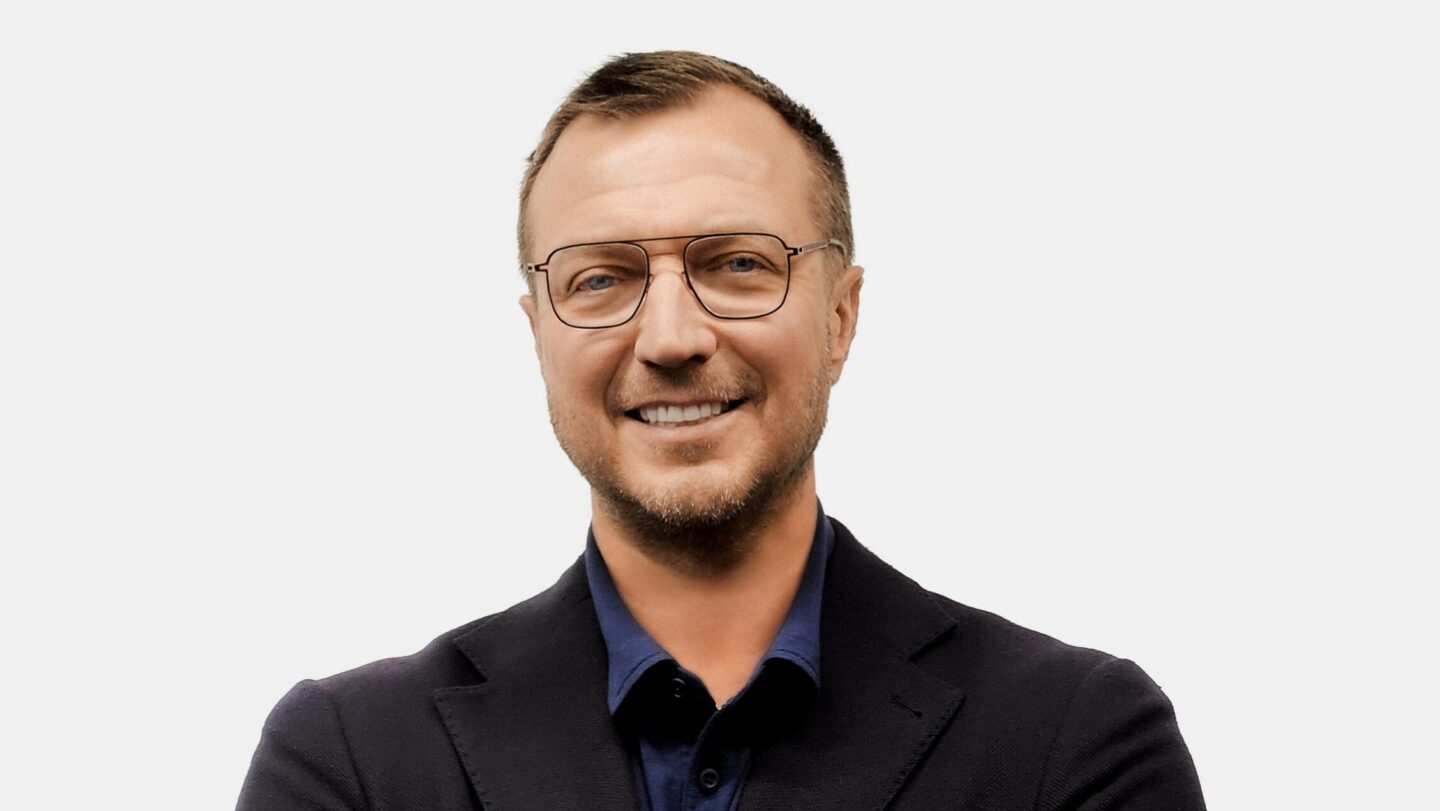
Dariusz Gałęzewski, co-founder of Oshee, points to structural barriers to the development of entrepreneurship in Poland – from regulation to the social perception of business. He speaks about the brand’s global ambitions, acquisition plans, and a strategy of building its image through brand ambassadors. He also reflects on his personal experiences – illness, sporting activity, and involvement in social initiatives.
Grzegorz Nawacki, Magda Brzózka, XYZ: Is it easy to be an entrepreneur in Poland?
Dariusz Gałęzewski, co-founder of Oshee: I could talk about the overregulation of the economy, high energy prices, less state support for growth than in the West, or the relatively limited capital we have as a country. But I’d rather point to something that is rarely discussed – the inadequate perception of entrepreneurs. A segment of society often approaches us with reluctance. Most politicians do not see us as partners for dialogue, and some even attack us.
Entrepreneurs in Poland are a large group – around 3 million. If you include our families, we form a community of many millions, larger than the number of votes needed to win an election. And yet we are an easy target in public rhetoric. We often stand out due to higher living standards and incomes, which leads to us being seen as “those who have,” and can trigger envy or frustration among some. Unfortunately, there is not always sufficient recognition that the hard work of entrepreneurs builds the economy, creates jobs, and enables the development of infrastructure – from roads to stadiums. Instead, we are easily cast as targets of populist narratives and are still portrayed by some as a source of problems. Yes, there are dishonest entrepreneurs and those who do not deserve respect – but the same is true of employees and politicians. Yet only in the case of entrepreneurs do the failings of a few shape perceptions of the many, the majority of whom are honest.
Today it is hard to imagine life without a car, a smartphone, mobile internet, or a web browser. What do they have in common? They were created by entrepreneurs who took risks and financed innovative projects with their own money. Entrepreneurs are behind the development of most breakthrough inventions. Yet we are not perceived in line with the role we play in the world – an entrepreneur is a company builder, an innovator, a risk-taker, a job creator, and a payer of wages. In Poland, around 75% of wages are paid by private entrepreneurs.
Polish entrepreneurship is our national brand
Operating internationally, you have the opportunity to observe the lives of entrepreneurs in other countries. Is it better there?
In other countries, entrepreneurs are treated differently – take the United States, for example, where they enjoy greater social respect and stronger legal support. Poland still has a great deal of catching up to do in this regard, both in terms of social attitudes and the protection of entrepreneurs’ rights.
Despite these challenges, many Polish entrepreneurs choose to stay in the country out of a sense of attachment and patriotism. And yet they could move to places where doing business is easier and success is more readily acknowledged. We need to start building a positive – and, above all, accurate – perception of entrepreneurs.
You have recently spoken a great deal about the need to build the “Poland” brand and the “Entrepreneur” brand.
For years, Poland was associated primarily with cheap labor. That is now changing. We are the only country from the former Eastern Bloc to have advanced into the G20, and we are the sixth or seventh largest economy in the European Union. Our greatest achievement is being seen as the fastest-growing economy in Europe. We have reached this point thanks, among other things, to entrepreneurship and the hard work of entrepreneurs and employees – not through cutting corners. That is why I believe the “Entrepreneur” brand must be inseparably linked to the “Poland” brand.
And what will those brands stand for?
Germany is associated with engineering; we speak of “Swiss precision.” How should we define ourselves? We do not have oil, gas, or gold. Our “resource” is our character, shaped over years of partitions and occupation. In our DNA runs resilience, a fighting spirit, and the belief that nothing is impossible. When someone tells me “it can’t be done,” my immediate reaction is that I have to prove otherwise. That is the foundation of our Polish identity: “we will prove that we have not lost.” Today, Polish entrepreneurship and security are the two pillars on which we can build the “Poland” brand.
We are not – and do not want to be – a country of cheap labor, because we want Poles to earn more and spend more. We should be known for entrepreneurship and hard work – that should be our national brand
Entrepreneurship is “cool”
Why do entrepreneurs in Poland still rarely see themselves as “ambassadors,” as is the case in Switzerland?
Switzerland understood as early as a century ago that entrepreneurs are the most effective “channel” for building a country’s brand. Companies such as Nestlé, Rolex, and Novartis have become ambassadors of Switzerland, creating strong associations with quality and stability. Together with the government, they developed and then implemented a strategy and a national brand. Today, many companies around the world pay to use that national brand, helping to finance its promotion. But this is the result of a fundamentally different approach to entrepreneurship.
What drives that difference?
In Switzerland, entrepreneurship is taught as a school subject. Children learn to respect those who create jobs. Education plays a crucial role here. In Poland, required reading includes The Chronicles of Narnia – a very enjoyable book, like many others. The question, however, is whether all of them need to be mandatory. In Japanese schools, children read the biography of Marie Skłodowska-Curie – a remarkable Pole who achieved global success through science, hard work, and creativity. Why aren’t our children learning about her? We need a shift in the narrative: entrepreneurship is “cool.”
In Poland, not only is entrepreneurship not seen as “cool,” but there is still a deeply rooted aversion to private business dating back to the communist era.
The state should support Polish entrepreneurs and promote a strong work ethic, rather than using labels such as “privateers,” “small-scale growers,” or “oligarchs.” The latter term is not only highly emotionally charged, but also originates from the context of Eastern business culture and privatization in post-Soviet Russia. Its use reflects either a lack of understanding of the Polish market or an excessive reliance on that particular business context. That is why I would caution politicians against such language – entrepreneurs should be respected so they can expand internationally in a safe and supportive environment.
What is needed are regulations that support the secure development of businesses. It is difficult to think about investment when the legal framework is unstable and administrative bodies suspend procedures in an arbitrary manner. Deregulation has addressed some of the problems, but many provisions remain unclear. That said, the outcomes of recent deregulation efforts show that cooperation between the state and business is possible and can deliver tangible results. We should go further.
For now, successive governments, when speaking about supporting business, tend to focus mainly on state-owned companies.
That is a mistake. The state should encourage private entrepreneurs to take initiative, because entrepreneurs risk their own money. When a state-owned company carries out projects such as the Ostrołęka power plant and they end up wasting billions (billions of PLN, i.e., hundreds of millions of EUR), it is the state budget – and therefore all of us – that pays the price. When an entrepreneur fails, they bear the cost themselves.
The strength of the Polish economy lies in private entrepreneurs. We need to start saying this clearly: the private sector pays wages to around 75% of employees in Poland and accounts for roughly 60% of GDP and more than 50% of investment. It is not state-owned companies that play the key role. The state derives most of its revenues from our taxes and from the consumption of our employees, including through VAT. The message from the state to Polish entrepreneurs should be: “do even more and pay people even better” – and support us, rather than attack us.
Do you have a concrete operational plan for building the “Poland” brand and the “Entrepreneur” brand?
There are genuinely people in Poland who know how to do this. We should assemble a group – say, ten entrepreneurs – who, together with marketers, would develop a strategy within three months. I am ready to lead such a group and to bring other entrepreneurs on board. Naturally, we would work on a pro bono basis. In fact, we would go further – we would be willing to contribute our own funds, because at the outset it is necessary to finance research into how Poland is perceived globally, and then to monitor the results on an ongoing basis.
The next step would be to establish a Ministry for the Promotion of Poland, dedicated exclusively to this area. It should employ specialists from different fields – marketing, PR, and business – ideally people with experience in reputable companies. Such expertise would significantly increase the chances of effectively promoting the country abroad. If institutions of this kind are staffed with qualified experts, one can expect promotional efforts to be carried out at a high level. If, on the other hand, they are run by officials who have never worked in competitive markets, we should not expect miracles. A project of this kind should be approved by the entire parliament, across party lines, to ensure continuity regardless of which political camp is in power.
This national brand, once developed, should be promoted everywhere, using tools familiar from both B2C and B2B marketing. It should also appear on the products, invoices, and websites of all Polish companies. Let LOT aircraft carry this message around the world. Of course, this is not yet a full strategy, but rather a preview of the work we are doing within a think-tank setting – where we invest both time and money, alongside individuals representing Poland’s largest companies. When I showed parts of this strategy to my daughter, it gave me goosebumps. If we present it more broadly and implement it well, it could genuinely reshape how Poland is perceived.
Entrepreneurs will engage in building a strong state
The SprawdzaMy initiative has shown that entrepreneurs are willing to devote many hours of work to the common good.
Financially as well – PLN 6 million (approximately EUR 1.4 million) of private funds, contributed by entrepreneurs, have been spent on SprawdzaMy’s activities, including the work of lawyers and experts, for the benefit of our country. Entrepreneurs are genuinely willing to engage in building a strong state. We are not asking the government for money. What we want is an understanding that a prosperous state is built on prosperous citizens and strong entrepreneurs – not on competition with those in power. I genuinely do not know a single entrepreneur who would want to trade their life for that of a career politician – it is also demanding work. We do not have those competencies, but we do have others that are worth leveraging for Poland’s benefit. That is why some politicians or cynical commentators should not be concerned that we want to replace them – we are offering a willingness to cooperate in good faith.
The best way to promote Poland abroad is to create the conditions for Polish entrepreneurs to grow. Supporting investment and implementing mechanisms that encourage companies to expand domestically and reinvest their profits are crucial. This ensures that jobs and tax revenues remain in Poland, while companies are able to build a strong presence in international markets.
Is that why you established the Think Tank The Company?
The initiative was created to share knowledge with those who shape legislation and to support the development of better conditions for business, startups, and investment in Poland. We want companies to locate their headquarters here, and for regulations to foster economic growth.
We operate as an apolitical, independent group that formulates recommendations and seeks genuine dialogue with decision-makers. We believe entrepreneurs should be treated as partners and as an advisory body, rather than as a tool in political disputes.
If the state is to effectively support economic development and increase revenues, it should draw on the experience of practitioners – people who run businesses on a daily basis and understand how to build effective systems for investment and growth.
I believe that, over time, there will be people willing to tap into the experience of entrepreneurs in shaping efficient frameworks for investment and the country’s development.
Oshee targets the global top three in functional beverages
Let’s turn to OSHEE. What does the name mean? There seem to be several theories.
It was created in rather accidental circumstances. My business partner, Dominik Doliński, came up with it while we were spending New Year’s Eve together. The idea was for the name to mean nothing in any language, to sound good, be distinctive, and work well as a logo. Initially, it had just one “e” at the end, but we ultimately added a second one. We first wrote it in the sand on a beach. Years later, it turned out that “OSHEE” means “happiness” in one of the dialects of an African language.
When you founded OSHEE in 2008, did you assume you were building a global brand that by 2026 would be present in 50 markets, generating PLN 800 million (approximately EUR 185 million) in revenue and close to PLN 100 million (around EUR 23 million) in profit?
We did not plan in 2008 where we would be in 2026, but from the very beginning we had a dream for OSHEE to become one of the largest functional brands in the world – and we have consistently pursued that goal. We are aiming for a place in the global top three, and we are giving ourselves a few years to get there.
To be candid, if we had taken a different approach to our brand, we could probably be generating twice the profit. But we spend more than PLN 100 million (over EUR 23 million) annually on research and development and marketing, and more than PLN 50 million (over EUR 11.5 million) a year on international expansion. This is an investment in the future, not a consumption of profits. We are building the business for the long term.
Who are you competing with?
Today, there are many brands worldwide that, beyond basic hydration, offer added value in the form of vitamins, minerals, energy, or protein. The global leaders include Gatorade, owned by Pepsi, the American brand Celsius, and Vitamin Water. I would add OSHEE to that list, with a dominant position in Poland – around a 65% market share and PLN 800 million (approximately EUR 185 million) in sales revenue.
You have come a long way from the time when you had an idea, ambition – and little else.
We had the idea, but we had no money, so we borrowed from wherever we could – from family and friends. We mortgaged everything we had, including our apartments, and financed the early years by operating as an advertising agency. But that money quickly ran out, so we took out loans at very high interest rates. We were never afraid that we might fail and be unable to repay them. Nor were we afraid to ask for help. Along the way, we met many good, supportive people and entrepreneurs who, seeing our determination, were willing to help – if not financially, then with their knowledge and experience. We also encountered those who were envious, but fortunately less often.
In the beginning, we worked seven days a week – from Monday through Sunday. In the evenings, we would meet at one of our homes – we lived close to each other – and often worked late into the night.
Why loans rather than a bank? Was it an “unbankable” project?
In Poland, any business you start – one that has a plan and a strategy but no profits – is effectively “unbankable.” No bank will provide financing if a company lacks a track record, collateral, and positive financial results. And in Poland, there is no real possibility of securing financing against an idea, equity, or a trademark – which, at the outset, is impossible to value because it is new. This is the biggest challenge for startups and a key difference between businesses launched in Poland and those abroad.
Of course, we do have so-called business angels and investment funds, but these tend to focus on projects that are fashionable at a given moment. This is something we should change, including through state support – otherwise, fewer and fewer businesses will be created. Scaling any idea today requires substantial upfront capital and a great deal of time. Over our 18 years of operations, we have not relied on grants to build factories or production lines – we have simply done it ourselves.
There is a clear role here for the state: to create regulations and support systems comparable to those in other markets. Without that, it is difficult to compete globally – Polish startups do not lose because of weaker ideas, but because of the level of support they can access. In my view, the balance should be shifted: public funds should be more readily invested in startups. I am not advocating support for ideas at the PowerPoint stage, but rather a degree of automatic support for entrepreneurs who have already launched, are generating revenue, and need financing to scale.
Was it worth making so many sacrifices?
Of course it was – because it is always worth pursuing your dreams and passions, regardless of the financial outcome. We have succeeded, but this is still not the end of the journey – we are roughly one-third of the way there.
Today, we hold a dominant position in Poland, we are present in 50 markets, and in several of them we are market leaders. We have established operations in Spain, the United Kingdom, Finland, and Romania. These are key markets that will serve as a base for further expansion, ultimately also into the Americas within the next three to four years.
At the same time, we are continuing to grow in Central and Eastern Europe and the Baltic states, and our products are already reaching as far as Africa. When I was in Botswana, to my surprise, I found OSHEE products in a local grocery store. To gauge the scale of availability, I stopped at five more stores – and in each of them there was either a dedicated refrigerator or a large shelf stocked with OSHEE. It is a great feeling to be able to buy your own drink from Poland in such a distant place. It shows that we have the potential to become a global, recognizable brand.
Polish brands can be global
Can Polish FMCG companies and brands today compete globally with international players without any inferiority complex?
Polish companies have every opportunity to operate successfully in global markets. We are capable of doing this, and we should not feel inferior – and this applies not only to the FMCG sector. It is already happening. Not only groups such as Maspex in FMCG, but also companies like Synthos, Barlinek, InPost, Adamed – and OSHEE – are doing it.
The state should provide intelligent support for the international expansion of Polish companies.
If I may offer one piece of advice, it would be to plan foreign investments carefully. They should be sufficiently secure so that a potential loss – if the investment fails – does not threaten the entire company. For example, if we plan to enter the Spanish market with a budget of EUR 25 million (approximately PLN 110 million), the potential loss should not exceed a level that could jeopardize the company’s stability. Companies often fear large-scale investments, but well-planned risk is necessary to grow and expand globally. Of course, risk exists and must always be taken into account.
What determines whether a brand is Polish today? Is Biedronka – conceived in Poland and created by Poles, but owned by the Portuguese – still Polish, or no longer so?
Today, a brand’s “Polishness” is determined primarily by where it was created, where it is developed and managed, where the people who design the product work, and where its operational, development, and distribution centers are located, as well as where taxes are paid – on salaries, VAT, and so on. Capital ownership is only one element.
Explainer
Biedronka
Biedronka is Poland's dominant grocery store chain. Biedronka (which means "ladybug" in Polish, hence the ladybug logo) is a discount supermarket chain owned by the Portuguese retail giant Jerónimo Martins. It has over 3,400 stores across Poland, so you'll find Biedronkas everywhere - in cities, towns, villages. Often multiple stores within walking distance of each other.
We do not forcefully emphasize “Polishness” in our brand name. In the case of functional products, there is no such need, but we are proud of our origins and highlight them in our B2B communications.
We have a solid foundation for global growth and believe that, through consistent investment in the brand, we can become a global player. In Poland, too little is still invested in marketing and brand building, and too often the focus is placed on production capacity alone.
Why doesn’t OSHEE have its own factories?
Based on our experience with our previous company, we deliberately chose a different business model. I know manufacturing inside out and understand how much time, capital, and attention it requires. Owning production lines often limits flexibility and shifts thinking toward what can be produced on those lines, rather than what the market actually needs.
We focus on speed of response and alignment with trends. Instead of investing in production, we work with partners who manufacture products according to our recipes. Yes, we give up part of the margin, but in return we can focus on what we do best – marketing and distribution – while leaving production to those who specialize in it.
We cooperate with a dozen or so production facilities, around 90% of which are located in Poland.
Speaking of your previous job – you left in quite a turbulent atmosphere. What are your relations today with Wiesław Włodarski, the founder of FoodCare?
I have none. I have not seen Wiesław Włodarski for many years, even though we live next to each other. To be honest, I have stopped following that company. I believe that any business built on revenge or on comparing oneself to someone else gradually loses its authenticity. Not in a philosophical sense, but in a practical one. We simply do our own thing. We want to build our brand based on our own vision, rather than by benchmarking ourselves against others.
Of course, we draw inspiration from many brands, not only in the food sector. There are several companies I admire and that inspire me. For example, Apple – a brand I truly value, both for its products and its approach to design. Similarly, Nike – a brand whose philosophy I respect.
And how do you cooperate today with Polish entrepreneurs?
I have a very positive view of Polish entrepreneurs. I think they have matured significantly, though they are still in the process of maturing. I do not remember the more difficult times of the early 1990s, when many businesses were being created in Poland and there were quite a few unfair practices and high-profile scandals. Back then, I was still in high school and working in Germany, where I was shearing sheep and picking grapes.
What I see today, as a more experienced entrepreneur, I assess very positively. We have learned to organize ourselves, to speak with one voice, and to openly discuss shared challenges. Moreover, relationships between competitors have also changed. One of my good acquaintances is my competitor, Krzysztof Pawiński, one of the founders of Maspex Group. We meet, we have mutual respect, and I sincerely appreciate what he has achieved.
We work together in various organizations, such as Corporation Connection and Employers of Poland, and we jointly discuss challenges without fearing that someone will use that knowledge against us. On the contrary – we help one another solve them, because we know there is room in the market for everyone. The key is to develop the economy together and to change Poland for the better.
Challenges – competitiveness, demographics, taxation
What are the biggest challenges for the development of companies such as OSHEE?
The greatest challenge today is the risk of Poland losing its competitiveness – primarily due to high energy prices (and energy shortages), which hinder new investment. Let us be clear: without energy from nuclear power plants – initially small modular reactors, and later (as this is a longer process) supplemented by large-scale plants – we will not be able to develop. We will not have effective AI, data centers, a competitive industrial base, or a secure Poland.
What is needed are stable conditions and regulations that attract capital and support the growth of the technology sector. A fast-track process for implementing investments is also essential – environmental decisions cannot take years, and for investments involving new technologies, a special legal framework enabling an ultra-fast path for implementation and construction is necessary.
The second key challenge is demographics. By 2030, 10.5 million Poles will be over the age of 65. This will affect both the labor supply and consumer potential. It implies the need for a thoughtful migration policy based on cultural proximity, as well as creating conditions in which young people are willing to start families – today, this is mainly hindered by job instability, housing challenges, and changing lifestyles.
On a day-to-day basis, we also face industry regulations. The deposit-return system operates in many countries, but in Poland it was implemented too quickly and without sufficient preparation.
As for the sugar tax in its current form, I consider it one of the biggest policy mistakes in years. It is effectively a tax on beverages – including those without sugar. The highest amounts of sugar are found in ketchup, yogurts, and cakes, yet these are not subject to the sugar tax. If the goal is truly to reduce sugar consumption, the focus should be on taxing sugar as an ingredient and incentivizing reformulation to reduce its content, rather than imposing charges on sweetened beverages that use substitutes and contain neither sugar nor calories.
Direction: hyper-food
How is the eatyx hyper-food project progressing?
This project will continue to be subsidized for the next few years. Similar to OSHEE, which waited nine years for its first profits. Each year, together with our partners, we invest our own money – earned in other businesses – pursuing the ambition of building what will one day be one of the world’s leading brands in the functional food category. Already in its third year of operation, the project generated tens of millions of PLN in revenue, so we are on the right track. I assume we will continue to invest additional funds into this project for another three years.
We see this as the future not only of beverages, but of nutrition more broadly. We are talking about concentrated, nutritionally complete meals in a lightweight and easily accessible form. This is not a separate category, but rather a combination of several segments. On the one hand, it resembles fast food – quick meals; on the other, it fits within the category of functional food, containing appropriately balanced vitamins, minerals, protein, and fats.
Until recently, such products were aimed mainly at athletes or people in recovery. Today, we are seeing a clear trend toward greater nutritional awareness, especially among younger consumers – and we are aligning ourselves with that trend.
Is OSHEE your dominant brand today – and will it remain so within your portfolio?
It will most likely remain so, although we aim to grow across all the categories in which we operate. At the same time, we want the brand to be clearly defined – we will not introduce random products under it, such as ready meals or milk, although we do consider the dairy segment to be highly promising.
At the same time, we are developing other brands, such as Kinga Pienińska [water – ed.], as well as new categories – particularly powdered products, which we intend to scale significantly. We have also just launched our new “child” – the AIR brand, which represents a new approach to energy drinks.
How much of your products is technology, and how much is marketing?
The starting point for us is always the consumer and their needs – they determine the product. In the case of functional products, we respond to a lifestyle that requires more energy, vitamins, and convenience. I believe that products addressing real needs have the greatest chance of success, rather than those that attempt to create or impose those needs.
In a sense, OSHEE was ahead of the curve – we entered a category that was small at the time but began to grow rapidly alongside the rise of active lifestyles. We started in a market dominated by global brands such as Gatorade and Powerade, and today we hold close to a 70% share.
That is why I would not separate this into technology and marketing – the key lies in combining a product that meets real needs with the ability to communicate it effectively.
Oshee and MidEuropa on the same page
Recently, the Innova fund sold its stake in Oshee to the MidEuropa fund. Did you not prefer to take the company public so the fund could exit through the stock market?
We did consider an IPO – it is not a bad option for us, but at this stage we chose a different path. We are an attractive enough company to still have time to go public. Who knows – perhaps in the future we will also consider selling to a strategic investor. We had several offers. We are constantly monitoring the market.
What did Innova Capital bring to Oshee over the past six years?
Every private equity fund primarily brings professionalization and systematization to a company, which is extremely important at a certain stage of development. The fund supports business planning, budget control, and financial management. It also provides financial backing that enables further growth and strengthens the company’s financial stability for shareholders.
Today, many funds invest without needing a majority stake, being satisfied with control or co-control. This gives the fund security while leaving decision-making power with the founders.
Why was MidEuropa chosen as the buyer?
It is worth noting that the funds in Oshee hold minority stakes, so the sale process was conducted jointly. MidEuropa was selected because we aligned on the goals for the coming years. The plan includes both organic growth and acquisitions, with a focus on expansion abroad.
How large is the company you are targeting?
At a revenue level of around PLN 800 million, it would represent a significant strengthening of our operations. So far, we have focused on organic growth. The exception was our investment in Sonko – we acquired it just a few months before the COVID-19 pandemic.
When the entire world came to a halt, our sales at OSHEE dropped by nearly 90%, while sales of products such as rice, groats, and rice cakes increased by several thousand percent during that time. As it turned out, it was a good decision.
This experience also showed us how important it is to do something you truly care about and understand well. At OSHEE, we are able to read trends and consumer needs, and we are closely aligned with functionality, speed, modernity, sport, and an active lifestyle.
However, in the end you sold Sonko…
Sonko is a great brand. We sold it because we concluded that we would gain more by focusing on our core consumer and our primary business. It was not my greatest business success, but it was an extremely valuable lesson. If we consider future acquisitions, they will primarily involve companies related to functional products and/or aligned with our DNA.
What is your selection criterion for ambassadors, since you seem to get it right every time? A good example is the young ski jumper Kacper Tomasiak, whom you started working with in 2025, when almost no one had heard of him. He later became a three-time Olympic medalist.
We have developed our own method for selecting ambassadors, and it works well, but I won’t disclose the details. Choosing ambassadors is to some extent a matter of luck, because sport itself is unpredictable, but above all it is a combination of analysis and intuition. We look at the stage of an athlete’s career, their personality traits, family background, and motivation. The key is alignment with the brand’s values and the timing of the partnership. I have a great team, and we consult and discuss all of this together.
We work not only with athletes, but also with musicians, creators, and sports organizations. We are currently also a sponsor of La Liga. We have the right to use image rights in 43 European countries, which shows that we are thinking about international expansion, not just the Polish market. We sponsor the Special Olympics and are involved in AMP Football – both at senior and youth levels. In my view, these are athletes who deserve the highest recognition.
Support for young people’s mental health is fundamental
You also support initiatives related to youth mental health. Why is this important to you?
We are one of the first FMCG brands in Poland to be genuinely involved in child and adolescent psychiatry and psychology. For years, we have co-financed support programs for young people in crisis – for example, we support the anti-violence helpline of the SEXEDPL Foundation, created by Anja Rubik, not only financially but also by placing information about the helpline directly on our packaging next to our brand.
Last year, the number 720 720 020 received 13,000 calls, with as many as 30% of them coming from people who themselves use violence and want to stop – this shows how necessary such initiatives are. In addition, in 2025 we financed therapy for over 300 young people. We also support a pediatric psychiatry ward in Kraków.
We do this because we believe that if you have the capacity – organizational, operational, or financial – you should use it to help others. It’s a matter of responsibility and sharing what you have.
We are a brand for young people, and what we do is visible and widely discussed. What we say often reaches young audiences faster than messages from parents or teachers. That is why we created a project called SpeakUp, which ultimately became a podcast. It has been very popular – amounting to 348,000 hours of listening. We do not cover trivial topics – we talk about how to deal with depression, pressure to succeed, hate, and emotional crises. It is both inspiration and support for young people.
In today’s world, brands must be authentic – it is not enough to talk only about what is pleasant and positive. The key is to address real issues that resonate with the audience’s reality. Honesty in communication is therefore becoming one of the pillars of marketing strategy. Each year, we allocate several million PLN from private and company funds to charitable causes. It is deeply satisfying to be able to direct resources toward this purpose rather than solely increasing company or personal wealth.
We are not the only ones doing this – most of the entrepreneurs I know, such as Rafał Brzoska, Omenaa Mensah, Michał Sołowow, and many others, support causes through their foundations, using private – already taxed – money. Rafał and Omenaa, for instance, have been organizing a gala for four years that raises the largest amount of donations in Europe.
If it weren’t for OSHEE…
I don’t know – I haven’t really thought about that. I have always wanted to stay active and do something meaningful in life.
In my free time, I love traveling and spending time with my daughter. I love the sea, water, the mountains, and exploring different countries. I have a group of friends with whom, several times a year, we go to unusual places – both luxurious and more extreme.
Right now, I am preparing for the New York City Marathon, which will take place on November 2. I promised myself that once I recovered, I would run it. It’s my personal goal for this year. I secured the opportunity to take part in the marathon through an auction at a charity gala organized by a private entrepreneur – Sebastian Kulczyk – and his foundation, which supports talented young people around the world who lack sporting opportunities. Now I train every day to complete it, although I won’t hide that I have significant gaps in preparation. But I will manage.
That damn will to live
A crazy goal for someone who has gone through such a serious illness.
I don’t like talking about it because I don’t want to engage in martyrdom. But since you ask, I’ll answer – perhaps my story can help someone in a similar situation.
I was diagnosed with cancer in mid-2024. I spent six months in various hospitals, undergoing successive surgeries. I experienced complications – including two cases of sepsis and a transfusion of 3.8 liters of blood—but I did not treat it as a life tragedy. When I fell ill, I approached it as just another project. I opened Excel, listed all the tasks I had to complete, and proceeded step by step. I started treatment very quickly, including surgery. Later, complications related to recovery somewhat extended the process of returning to health.
The hardest moment for me was when I was leaving for surgery and didn’t tell my daughter, because she was on a week-long camp at the time. I thought I would be back after a week, but I returned only after several months. I then had to explain everything to her. It was a lesson for me – I realized that even the youngest child should be told the truth. At the company, no one apart from my closest colleagues knew about my illness. Only after a few months, when I was returning to work, did I have to disclose it, as too many rumors had begun to circulate.
I beat the illness because I had a strong will to live and fought for it with all my strength. There were several weeks when I was taking more morphine than food – that’s how intense the pain was. What helped me were conversations about the illness with my loved ones and friends. I received tremendous support from them, even from people with whom I had previously been somewhat distant. It is very important not to go through something like this alone. For me, it was also crucial to maintain, as much as possible, my everyday routine – although this caused some health challenges, it helped preserve my mental state and mindset, which are key in any illness, especially one like this.
I was also supported by fellow entrepreneurs who, together with my partner Dominik, formed a group that at a certain stage monitored the treatment process – I wasn’t aware of it at the time, as I was not conscious of it, and they simply did it. These were Polish entrepreneurs who turned out to be true friends.


Key Takeaways
- Global ambitions of OSHEE. OSHEE aims to become one of the largest functional brands in the world, targeting entry into the global top three within a few years. Today’s global leaders include Gatorade, Celsius, and Vitamin Water. OSHEE currently holds a dominant position in Poland with around 65% market share and approximately PLN 800 million in sales revenue. The brand is present in 50 markets and is a leader in several of them. It operates structures in Spain, the United Kingdom, Finland, and Romania—key markets that are intended to serve as a base for further expansion, ultimately including entry into the Americas within the next 3–4 years.
- The role of the state and the perception of entrepreneurship. According to Dariusz Gałęzewski, co-founder of OSHEE, the state should support Polish entrepreneurs and promote a work ethic, rather than using terms such as “privateers,” “greedy profiteers,” or “oligarchs.” For years, Poland was associated mainly with cheap labor, but this is changing. Poland is the only country from the former Eastern Bloc that has joined the G20 and is now the 6th or 7th largest economy in the European Union. One of its greatest successes is being perceived as the fastest-growing economy in Europe. This success has been achieved thanks to entrepreneurship and the hard work of both business owners and employees, rather than opportunism. Therefore, the “entrepreneur” brand should be inseparably linked with the “Poland” brand.
- Key challenges for companies like OSHEE. In Mr. Gałęzewski’s view, the biggest challenge today is the risk of losing Poland’s competitiveness – primarily due to high energy prices (and shortages), which hinder new investments. Another major challenge is demographics: by 2030, 10.5 million Poles will be over the age of 65, affecting both the labor supply and consumer potential. In addition, the company must deal with ongoing industry regulations on a daily basis.
We wrote about this because we considered it important and interesting. For full transparency, we would like to inform that the RiO fund, owned by Omenaa Mensah and Rafał Brzoska, is an investor in XYZ.