

This article is a part of Poland Unpacked. Weekly intelligence for decision-makers
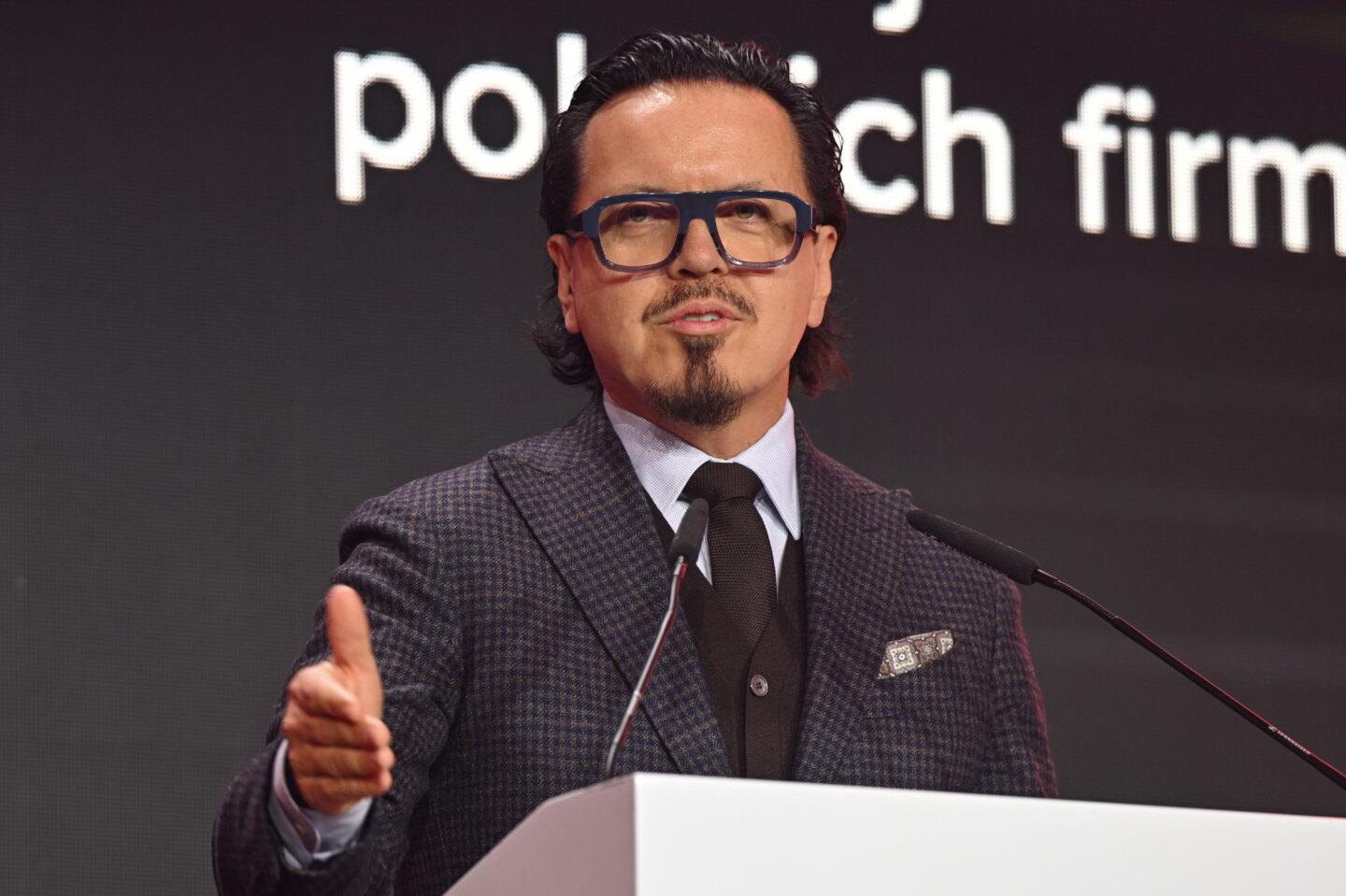
“We are building a management philosophy for the ministry as if we were the supervisory ‘super board’ of a large state holding,” stresses Wojciech Balczun, Minister of State Assets. In an interview with XYZ, he discusses changes in the management boards of state-owned companies, the difficulties facing Polish Post (Poczta Polska), PKP Cargo (a railway company), Grupa Azoty (a chemical giant) and JSW (a mining giant), as well as a potential merger between PZU and Pekao. He also addresses the situation at Orlen and the future of Poland’s electric car project.
Grzegorz Nawacki, Barbara Oksińska: It has been eight months since you became Minister of State Assets. How many times in that period have you thought: “Why did I take this on?”
Wojciech Balczun, Minister of State Assets: Not once. Of course, I am fully aware of how difficult this mission is, especially in the current environment, but it is also an incredibly engaging professional experience. I feel that I am doing something for the Polish state and, in a way, repaying a debt to fate for having been quite kind to me. It may sound a bit lofty, but that is genuinely how I see it.
“I have never been a politician”
Who's who
An experienced manager
Wojciech Balczun has headed the Ministry of State Assets (MAP) since July 24, 2025. He has long specialized in corporate restructuring and transformation. From 2008 to 2013, he served as CEO of the rail freight operator PKP Cargo. He later led Ukrainian Railways from 2016 to 2017. Immediately before taking up his ministerial post, he headed the Industrial Development Agency (ARP).
He is a graduate of political science at the University of Silesia in Katowice and also holds an MBA validated by the Rotterdam School of Management at Erasmus University.
Has the world of politics absorbed you?
I have never been a career politician, and I still am not. Of course, big politics is happening all around me, but I have my own managerial style of operating – and not everyone likes it. I have always built my professional standing on my own, and I simply try to do my job as well as possible. In the end, it is the prime minister who will hold me accountable for what I do.
How are your relations with the prime minister at the moment?
The prime minister is kept up to date on what is happening at the Ministry of State Assets (MAP), the decisions we are making, and the direction we are taking. He seems to feel that we have a strong team here. We are building a management philosophy for the ministry as if we were the supervisory “super board” of a large state holding. It is within MAP that ideas are developed – for example, on financing the defense industry or increasing the share of Polish companies in investment projects. Where possible, we want to reduce the direct influence of politics on state assets.
What about the recruitment process at PZU?
Meanwhile, there is an ongoing reshuffle of management boards at companies with State Treasury participation. We are currently witnessing a rather absurd recruitment process for the CEO of PZU. The Financial Supervision Authority has only just approved Bogdan Benczak for the role, and already a new selection process has been launched for the CEO and management board of the next term. Does the idea of open recruitment still make sense?
I would like to see the moment come when we can have a discussion – in good faith – about the fact that not everything has to become the subject and fuel of political dispute. In December 2025, the current CEO received approval from the Financial Supervision Authority (KNF), and now we already have another recruitment process for the same position. We discussed this and concluded that abandoning the process could be interpreted as a lack of transparency or a breach of proper standards. We did not want to become part of a political narrative, especially given that we are effectively in an election campaign. Moreover, such processes are a good opportunity to assess the situation in individual companies.
That said, I would like us to be able to identify the best managers on the market and invite them to talks. We are currently in discussions with an individual who has extensive international managerial experience and wants to return to Poland. Formally, however, they cannot take part in the recruitment process due to clauses in their contract with their current employer. In such cases, what is needed is a targeted hire rather than an open competition.
An intense turnover in company management boards
Will you come forward with an initiative for such systemic change?
Politics has become ruthless and increasingly confrontational. I am not speaking only about Poland – we see this trend worldwide. That is why the best moment for such a discussion is always after parliamentary elections. Once emotions have subsided, it becomes possible to look for systemic solutions to attract the best talent to state-owned companies.
In France, for example, there is a government agency that exercises shareholder rights in major companies in sectors such as energy, rail, fuels and defense. It is able to build a top-tier team of professionals. In Poland, we face constraints stemming from public-sector pay scales.
The current pace of executive turnover in state-owned companies is so intense that it is hard to speak of management continuity.
I am firmly in favor of continuity in leadership, and the changes taking place in companies are purely merit-based. It is unrealistic to expect a new management board to deliver results after just two months. On the other hand, I am obliged to act when I see that such results are not forthcoming over a longer period.
Competence is key, but so is matching people to the specific stage a company is in. Some managers are excellent at running companies with stable, well-structured operations; others prefer restructuring. I belong to the latter group – I perform best in crisis management. I have taken over companies that no one else wanted to lead. When I was selected as CEO of PKP Cargo in 2008, no one else applied. The company was widely seen as bankrupt at the time. I stayed for five years and turned it around.
History has come full circle.
Unfortunately, yes.
How can PKP Cargo be rescued this time?
It can be done, although the situation is far more difficult than in 2008. There are ideas that can be implemented quickly and that would allow us to tap into synergies. For now, I cannot say more.
State-owned companies in crisis
Do you still see mismatches in the management boards of State Treasury companies? Where should we expect further changes?
As an active owner, the Ministry of State Assets continuously monitors the situation in companies. We are in constant contact with supervisory boards, management boards and employee representatives. If we see that time is passing and a management board has not made progress in delivering its plans, we have to react.
That said, the market’s overall assessment of State Treasury companies is positive. This is reflected, for instance, in their share prices on the stock exchange, as well as in the development of the local content concept. In most cases, we have reasons to be satisfied, and investors have regained confidence in companies with State Treasury participation. We no longer see the kinds of situations that were common during the previous government’s eight years in office. In some companies, turnover was so high that it seemed people were appointed simply to earn money, collect severance packages and leave – only to make room for the next round of politically appointed successors.
However, we also have companies in deep crisis: PKP Cargo, Polish Post (Poczta Polska), Grupa Azoty, Jastrzębska Spółka Węglowa (coal mining). What went wrong?
There is a persistent belief that anyone can run such a company and that things will somehow work out. In practice, that is not the case. The people who come into these companies are supposed to set the tone and direction. If they lack the necessary competence, they are unable to create anything of value – and, in many cases, they can do real harm. Instead of developing, the company shifts into survival mode.
At Grupa Azoty, we are dealing with a case where someone tried to force diversification and launched the construction of a polymer plant in Police. The cost of that investment rose to PLN 7.5bn (approximately EUR 1.7bn). Azoty, which until then had no liquidity problems, took on billions in debt, and creditors – mainly banks – are now lining up to be repaid. That said, we still believe the group can regain its footing. The coming days will be crucial in terms of key business decisions affecting the company.
Explainer
Grupa Azoty
Grupa Azoty is Poland’s leading chemical powerhouse and a major European force in fertilizers and chemicals, uniting key producers like Zakłady Azotowe Puławy, Police, and Kędzierzyn under one roof. It’s the go-to name behind nitrogen and compound fertilizers (second-largest in the EU), melamine, polyamides, oxo alcohols, plasticisers, and titanium white – products fueling farms, factories, and exports to over 100 countries via its 50-company network and 15,000-strong workforce. With a spot on Warsaw’s WIG30 index, it embodies Poland’s blend of state strategy, green ambition, and CEE economic grit.
As for Polish Post (Poczta Polska), for years it was treated as political spoils. Strategic decisions were not taken, despite clear market trends and structural changes. In recent days, the supervisory board decided to dismiss the CEO, as a different approach is needed to implement the restructuring program, strengthen the company’s resilience and prepare it for future market challenges. We all know that traditional postal services are becoming obsolete, and Poczta Polska must redefine itself.
Billions of zlotys for mining
Grupa Azoty is to be recapitalized by the state. What about JSW? Can it also expect a cash injection?
JSW’s situation is the result of several overlapping problems. For years, the company failed to undergo restructuring, while at the same time setting aside funds in a stabilization fund for a potential downturn. The downturn came – and, unfortunately, it has lasted longer than expected. The funds were quickly depleted, leaving the company without reserves and with a cost structure that generates enormous expenses.
Extraordinary profits were saved, but at the same time, there was a blind eye turned to what was happening inside the company, and additional cost commitments were taken on – for example, ten-year employment guarantees. I now expect the management board of JSW to take active steps toward genuine restructuring.
We can all see the state of the Polish mining sector and its efficiency levels. And I think we can all agree that, in its current model, it will never be competitive. The idea that the state can always step in with additional funding or block imports of raw materials does not solve anything. The company must demonstrate that it is doing everything possible to improve efficiency, increase profitability, reduce costs and optimize its processes.
Explainer
Explainer
JSW
JSW (Jastrzębska Spółka Węglowa) is Poland's largest coking coal producer and one of the biggest in Europe, headquartered in Jastrzębie-Zdrój in the Silesia region. The company mines hard coking coal – a raw material essential for steel production – making it a critical supplier to European steelmakers at a time when the continent is grappling with energy security and industrial decarbonization.
JSW is listed on the Warsaw Stock Exchange and majority state-owned, which means its fortunes are closely tied to Polish industrial policy and the politically sensitive question of the country's coal-dependent mining communities. The company has faced mounting pressure in recent years from volatile global coking coal prices, rising operational costs, and labor disputes with powerful trade unions, while also being pushed to chart a long-term transformation path as green steel technologies – which require less traditional coking coal – gradually gain ground.
Who will save JSW?
There had previously been talk of JSW securing PLN 2.9bn (approximately EUR 660m) in external financing, for example from the Industrial Development Agency (ARP). Is that still the plan?
ARP has committed to purchasing Przedsiębiorstwo Budowy Szybów and Jastrzębskie Zakłady Remontowe from JSW for around PLN 1bn (approximately EUR 230m). As for the remaining amount, we are still working on a solution. We cannot provide a loan on market terms because JSW does not meet the necessary requirements. We are discussing a systemic solution with the minister of energy and the minister of finance and economy. For now, I cannot disclose the details, as the matter is sensitive, but there is a plan.
Other Silesian coal companies, including Polska Grupa Górnicza, also require support. The state budget for this year provides PLN 5.5bn (approximately EUR 1.25bn) for the sector. Will that be enough, given that nearly PLN 9bn (around EUR 2.05bn) was needed last year?
Coal mining is covered by state aid, but restructuring processes are also under way, including efforts to streamline the companies. Voluntary redundancy programs have been launched, with employees taking mining leave or receiving one-off severance payments. Funding has been secured for these measures.
What remains an open question is how much additional support will be needed to finance reductions in output. Together with the minister of energy and the minister of finance and economy, we are working almost daily to find optimal solutions.
The future of PZU and Pekao
Has the idea of a merger between PZU and Pekao been definitively abandoned?
At this stage, we are considering various scenarios. From the Ministry of State Assets’ perspective, the key issue is to safeguard the State Treasury’s position in such an operation. We have a base-case scenario involving a merger between PZU and Pekao, and it remains on the table. However, it would require amendments to four separate acts of parliament, which in turn require the president’s signature.
We can see, however, that vetoing government legislation has become a political tool in the hands of the president – a means of confronting the government. This makes it difficult, or even impossible, to implement certain plans. We have to take this into account in our strategy. That is why we have recommended conducting parallel analyses of alternative solutions.
Does it make sense to pursue this project and commit resources, given the likelihood that the president will not sign the necessary legislation?
PZU and Pekao maintain that they are not currently incurring any extraordinary costs related to legal or advisory services as a result. The objective is to create a powerful financial and insurance structure – one that would matter not only in Poland – and to unlock as much capital as possible. With such a plan and such a pool of state-owned assets, we can generate at least several compelling options.
Poczta Polska should build partnerships
Sebastian Mikosz, who was dismissed a few days ago as CEO of Poczta Polska, said in an interview with XYZ that the time had come for the state to invest in the company. He made this remark in the context of financing the acquisition of the courier company Orlen Paczka from Orlen. Why did Poczta Polska not receive funding for this purpose?
We do not have unlimited access to funds. We rely exclusively on resources flowing from dividends paid by state-owned companies into the Capital Investment Fund. A significant portion of these funds is allocated to defense, as this is a key issue from the perspective of national security. We will also channel funds from this fund toward increasing the capital of Grupa Azoty.
Poczta Polska, however, is a separate matter that is currently the subject of analysis and discussion. In my view, we have reached a point where Poczta Polska should not merely present the state with a bill and expect funding to implement its plans. It should also effectively pursue optimization and restructuring measures within its operations.
I am aware that managing such a large and long-established organization is an enormous managerial challenge, but there is room to act. Poczta can cooperate with Orlen Paczka, as well as with other courier companies. There is significant scope for commercial cooperation in this project, and that lies in the hands of Poczta - not the state.
“We are not pursuing a policy of pressure on Orlen”
Orlen, for its part, responded to the government’s expectations and, during the fuel crisis triggered by the war in the Middle East, reduced margins at its stations to nearly zero and introduced weekend fuel promotions. Is this the result of government pressure?
Let’s start with the fact that, following the merger of Orlen and Lotos, the balance of power on the Polish fuel market has changed significantly. Orlen’s market share has declined, while competing wholesalers have strengthened their position. Today, Polish companies can no longer fully rely on access to the resources of the Gdańsk refinery. As a result of the merger, the key shareholder in the refinery is now Saudi Aramco, which can sell its products to whomever it chooses.
Regardless of how the former Orlen CEO Daniel Obajtek may try to “spin reality” through posts on the X platform, in practice the full set of decisions taken during his tenure has had a negative impact on the company’s situation and on the domestic fuel market. And we now have to deal with these challenges.
We are not pursuing a policy of pressure on Orlen. The company cannot act against its own interests. At the same time, it is implementing a range of measures to stabilize the market, and it is doing so in its own interest and in the interest of its customers.
This is not the same
When Orlen reduced fuel prices under CEO Daniel Obajtek, there was an outcry that it was a political move. Is that no longer the case now?
It is not the same as under Mr. Obajtek as CEO, when in an election year fuel prices at stations were so low that drivers came from abroad, and in western Poland fuel was effectively drained from filling stations. We experienced widespread pump failures, and in practice, fuel simply ran out. That was the pursuit of political objectives.
The company also ceded part of its business to competitors, which has its own implications. One example is the fuel depot in Dębogórze – one of the best and largest fuel storage facilities – which is not as accessible today as it once was. In the current situation, it could help significantly increase our fuel reserves.
It is not accessible to Orlen, but private companies do use it. The Dębogórze depot is operational, is being expanded, and still represents an important element of fuel supply security.
Of course, I am not an opponent of the free market. I have always believed that competition is the healthiest and most effective form of market operation, as it forces companies to make an effort. Monopoly, on the other hand, leads to complacency and can sometimes even be corrupting. However, here we are talking about the state’s strategic reserves. Access to these reserves by Orlen is part of building fuel security. Private companies will always act in their own interest. Orlen, beyond safeguarding its own interests, also takes into account the interests of the state.
In a highly volatile geopolitical environment, with an unpredictable future and extremely difficult and unexpected decisions being made by market participants worldwide – at such times, the state steps in and should have the ability to draw on all available resources that can help stabilize the system.
Intervention in the fuel market
The state has just stepped into the fuel market, introducing a package of measures aimed at lowering prices at filling stations. This package includes reductions in VAT and excise duty, the introduction of maximum price caps at stations, as well as an excess profits tax imposed on oil companies. How many companies will this additional tax affect, and what scale of revenues are we talking about?
First and foremost, the government’s decision to reduce VAT and excise duty rates stems from concern for citizens, as well as support for businesses and the broader Polish economy. We took this decision after a thorough analysis – responsibly and prudently, assessing its potential impact on the economy. This decision will benefit not only Polish citizens but the economy as a whole.
The tax cuts will, of course, reduce budget revenues, but not companies’ revenues. Meanwhile, the cap on margins is intended to protect consumers from unjustified price increases – this practice occurred when the previous PiS government reduced taxes, the budget lost revenue, and consumers did not see any significant change in prices.
As for the excess profits tax, at this stage I can only say that we want it to apply to all companies that may benefit from the current crisis.
Small nuclear reactors
How do you assess Orlen’s decision to continue cooperation with Synthos Green Energy on the development of small modular reactors? This is also a project initiated during Daniel Obajtek’s tenure as CEO.
In energy projects of this scale, what matters most is a substantive approach, not who initiated them. Small modular reactors are a technology currently being analyzed by many countries and energy companies. It is therefore natural that Orlen is continuing conceptual and analytical work in this area.
Our role as the owner is to ensure that every decision is preceded by a thorough assessment of risk, costs and the realistic prospects for implementation. Cooperation with Synthos Green Energy is one of the promising options. Nuclear projects require a long-term perspective and stable analysis, not abrupt changes in direction. That is why we will evaluate them based on facts and the national interest, rather than personal history.
Will we see a Polish electric car?
The state wanted to build a Polish electric car. Ten years have passed, and all that remains is a cleared forest and an empty plot in Jaworzno designated for a factory. Is there any point in continuing this project at all?
This is a project that, from the outset, was designed to serve political needs, far removed from pragmatism and business practice. If we consider the scale of financial outlays required by automotive groups to launch car production, it becomes clear that the Polish concept was not viable from the beginning and could not have resulted in the construction of a domestic car. There will come a time when we disclose all the details of this project, including how much was spent on advisory services.
From the outset, ElectroMobility Poland was oriented toward a single scenario. In practice, this did not involve building a Polish car, but rather establishing a licensed assembly plant for a foreign vehicle. More and more experts are becoming aware of this.
At present, we have secured a loan from the National Recovery Plan (KPO) amounting to PLN 4.5bn (approximately EUR 1bn), and we are working on solutions that would make the implementation of this project meaningful from the perspective of the Polish economy.
Several options for Jaworzno
But if you are taking a loan from the National Recovery Plan (KPO), you must know exactly what it will be used for. Will it be a car factory, a parts plant, or a vehicle assembly facility?
We are currently receiving inquiries from potential foreign partners regarding the development of an electromobility hub. The idea is to concentrate in one location, for example, battery production and data center-related solutions. We are looking for the best possible solution. We are determined to see this project in Jaworzno through, albeit perhaps in a somewhat revised form. Ideally, however, the culmination of these many years of work would be the construction of a car factory – even if it ultimately functions more as a licensed assembly plant.
So first you suggest that the idea of building a car factory was unrealistic, and now you are considering it after all – just not with Chinese partners, but perhaps with Korean ones?
We are keeping our feet firmly on the ground. Negotiations are ongoing, and the company is in talks with various potential partners. Some foreign firms are also approaching us with proposals for attractive investment financing. We have several different options to choose from.
Companies with stock market potential
Would you like to privatize any company?
We cannot speak of selling any major State Treasury company. Most of them are listed on the stock exchange, but the state retains control over them. However, within the portfolio of the Industrial Development Agency (ARP), we have a group of smaller companies, typically burdened by legacy issues and challenges. Among these assets, there are some that could be subject to divestment processes. In my view, ARP has far greater capacity to carry out such processes in a market-based and optimal manner from the perspective of the State Treasury’s interests.
As for the Ministry of State Assets’ actions, instead of privatization, I prefer to speak about bringing certain companies to the public market via the stock exchange. I currently see several companies with stock market potential. However, they must be properly prepared, and the interests of the State Treasury must be safeguarded. I would like to see at least one such stock exchange debut take place during my term in office.


Key Takeaways
- The head of the Ministry of State Assets confirms that the idea of a merger between PZU and Pekao remains on the table. However, analyses of alternative scenarios for these companies are ongoing. The minister also stresses that recent decisions by Orlen, including reductions in fuel station margins, were not the result of top-down pressure. The fuel company may be subject to an excess profits tax currently being developed by the government. At the same time, the future of the Polish electric car project remains uncertain. One of the options under consideration is the construction of a facility producing automotive batteries. “We are looking for the best solution. We are determined to see the project in Jaworzno through, albeit perhaps in a somewhat revised form,” Wojciech Balczun emphasizes.
- The Minister of State Assets, Wojciech Balczun, says he has built a strong, substantively solid team within the ministry. “We are building a philosophy of managing the ministry as if we were the supervisory ‘super board’ of a large state-owned holding,” he stresses. He argues that changes in the leadership of state-owned companies are made when, over a longer period, no positive results from their work are observed. He would prefer to recruit the best managers from the market rather than necessarily selecting them through formal competitions. However, the discussion about potentially abolishing such competitions has been pushed into the background. “A better time for such a discussion is always after parliamentary elections. Once emotions subside, it will be possible to look for systemic solutions to attract the best talent to state-owned companies,” says Wojciech Balczun.
- The state will recapitalize the struggling Grupa Azoty. The head of the Ministry of State Assets expects the fertilizer company to recover and announces that important business decisions concerning the company will be made in the coming days. The ministry is also looking for ways to provide further financial support to Jastrzębska Spółka Węglowa (JSW). For now, no details are being disclosed. “The belief that the state can simply inject funds at any time or block imports of raw materials does not solve anything. JSW must demonstrate that it is doing everything possible to improve efficiency, increase profitability, reduce costs and optimize its processes,” Wojciech Balczun emphasizes. The ministry already has a plan to support PKP Cargo and Poczta Polska, with the latter expected to build partnerships with courier companies.