
Poland Unpacked week 17 (13 - 19 April 2026)
Welcome to this week’s edition of our Poland Unpacked, where we deliver key insights and trends shaping the economic, corporate and political landscape. Catch the most important insights from Poland in this week’s briefing.
This article is a part of Poland Unpacked. Weekly intelligence for decision-makers
Michał Dżoga is a manager who, after 16 years with Intel – including the past few as head of its Polish operations – has parted ways with the company. He is neither moving to another corporation nor launching a startup from scratch. Instead, he has opted to integrate profitable technology companies built by Polish entrepreneurs. Together, they offer support to businesses and public administration in areas such as AI, energy and cybersecurity. BearLake also plans to connect global investors with local businesses. Within three years, the holding aims to generate revenues of PLN 1bn (approx. EUR 230m). Here's their plan.
Mateusz Borowiecki is a Polish entrepreneur who founded and sold the technology firm OptiBuy to a global holding. As the majority shareholder, he oversaw a transaction valued at more than EUR 30m. After stepping away in 2025, he turned to investing. He is now betting on a fundamental shift in the telecommunications market, currently dominated by a handful of operators – and has invested in a company with ambitions to conquer Europe. Read the full story here.
A Finnish startup, Flovi, is driving a revolution in the vehicle relocation industry using algorithms. It has been present in Poland for six months and aims to acquire 100 clients and complete 20,000 trips by the end of the year. “If we achieve this, Poland will become the fastest-growing market in our industry worldwide,” says Michał Borek, Managing Director of Flovi in Poland.
Decathlon, the French sporting goods giant, is celebrating its 50th anniversary globally and 25 years in Poland this year. Poland has become a key market, with the company increasing both sales and production locally – while still seeing significant room for growth. Investments of PLN 75m (approx. EUR 17m) in recent years are only a prelude to further expansion. Competition is not making things easier; if anything, it is benefiting from Decathlon’s growth. We also take a closer look at how Poles’ approach to sport is evolving. Dive into our long read here.
The International Monetary Fund has raised its growth forecasts for Poland. Real GDP is now expected to expand by 3.3% in 2026, up from 3.1% projected in October, despite the war in Iran. Poland is thus set to remain the fastest-growing large economy in the EU. At the same time, the IMF expects inflation to be higher as well.
Recent macroeconomic data suggest that the services sector remains the main engine of growth. In January (the data are published with a considerable lag), services output rose by 4.6% year on year, seasonally adjusted. This is weaker than the average growth of 6% recorded in 2025, but still significantly stronger than industrial production.
The victory of the TISZA Party in Hungary’s elections resonated widely in Poland. Against this backdrop, we examined Polish–Hungarian economic relations. Hungary is an important trading partner, with Poland running a substantial surplus. In 2025, exports reached EUR 9.3bn (approx. PLN 40bn), nearly tripling since 2010. Imports from Hungary were markedly lower, at EUR 5.5bn (approx. PLN 24bn), having merely doubled over the same period. Hungary is also among the top ten destinations for Polish outward investment. Following the elections, cooperation may strengthen further.
Last week we also looked at structural trends, with broadly positive conclusions. First, Poland’s inflation target is working. Since 2004, it has been set at 2.5% over the medium term, with a tolerance band of ±1 percentage point – implying a range of 1.5% to 3.5%. Between 2004 and 2025, average annual inflation stood at 3.4%, despite the surge in prices in 2021–23. Notably, inflation has been broadly in line with that in Czechia and Slovakia, even though Poland’s economic growth has been significantly faster.
Second, as Poland converges with the EU in income levels, it is also catching up in life expectancy. Since 1990, life expectancy has increased by 7.8 years to 78.5 years. This still falls slightly short of the EU average. However, data show that younger cohorts report better health than the EU average. Life expectancy can therefore be expected to continue rising in the years ahead.
Europe’s top political story – the defeat of Viktor Orbán in Hungary’s parliamentary elections – has also reverberated strongly in Poland. That is hardly accidental.
According to recent media reports, the Hungarian vote was the most closely watched foreign election since the battle for the White House in 2024. Some commentators even cast the contest in Budapest as a “proxy” election on Polish soil. That comparison may be overstated, but both dominant camps in Polish politics clearly had their favorites. Shortly before the vote, former prime minister Mateusz Morawiecki of Law and Justice (PiS) appeared at the right-wing international CPAC conference in Budapest. Meanwhile, President Karol Nawrocki met Mr. Orbán himself and offered his backing.
Four years ago, Poland’s then opposition leader, Donald Tusk, traveled to Hungary to support the country’s united opposition. The 2022 election ended in defeat for Hungarian democrats, and Mr. Orbán openly invited Tusk to Budapest again this year, arguing that Mr. Tusk’s endorsement of TISZA would once more prove a “kiss of death” for the opposition. Mr. Tusk did not visit Budapest this time, though he supported Péter Magyar’s candidacy. Once again, Poland’s prime minister backed the winning horse. Magyar, for his part, met Mr. Tusk in February on the sidelines of the Munich Security Conference and announced that his first foreign visit as prime minister would be to Warsaw to meet him. Shortly after his victory, Mr. Magyar added that he would also meet President Nawrocki during that visit.
Poland’s governing coalition celebrated Magyar’s win, while within Law and Justice some politicians distanced themselves from their earlier support for the pro-Russian Mr. Orbán. That is unsurprising: Orbán’s close ties with Russia had become a liability for the party and, as it turned out, yielded no political dividends for Law and Justice. This intellectual contortion proved a genuine problem for the right. The election on the Danube also offers several key lessons for Poland’s political scene, as outlined by Rafał Mrowicki in his post-election analysis here.
Further turbulence may lie ahead for Law and Justice in the coming week. The aforementioned former prime minister, Mateusz Morawiecki, has announced plans to establish a new centrist-right association. He denies that the initiative is intended to counter an increasingly radicalized Law and Justice, yet the party leadership – under Jarosław Kaczyński – has been issuing ever sharper warnings. Although midsummer is still some way off, a political reckoning on Poland’s right may be just around the corner. What will come of it? We will be sure to tell you next week.
In the first quarter of 2026, Poland recorded 85 M&A transactions - around 10% more than a year earlier, though 4% fewer than in late 2025. Despite macroeconomic volatility, the market is showing signs of a moderate recovery. The decline in deal volume appears to reflect a shift in investor strategy rather than weakening fundamentals, with a growing focus on more deliberate, strategic consolidation. The largest transaction was the ownership restructuring of InPost—the acquisition of shares by FedEx and Advent International for PLN 33bn (approx. EUR 7.7bn), surpassing the 2025 record (the sale of Santander Bank Polska for PLN 29.5bn, approx. EUR 6.9bn). Another notable development was Apple’s acquisition of MotionVFX.
The highest number of transactions occurred in media, IT, and telecommunications (22%), followed by biotechnology and healthcare (13%) and FMCG (11%). Significant activity was also recorded in services (7%), industry (6%), and construction, transport, agriculture, and energy (5% each). On the buy-side, companies from media, IT, and telecommunications also led the way (15%).
A modest uptick is also visible in the venture capital market, although full data for Q1 2026 will only be released next week by PFR Ventures. Even now, however, the number of announced transactions is on the rise.
The Hard2beat fund, together with Digital Ocean Ventures, Heartfelt Capital, and private investors, invested PLN 9m (approx. EUR 2.1m) in Graftcode. Balnord and Forward.one allocated EUR 2m to Denmark-based Sapient Perception. Warsaw-based startup Replenit raised USD 2.5m to develop AI solutions for retail, while AIP Seed invested USD 100,000 in Regunaut.
According to PFR Ventures, funds within its portfolio have the capacity to support more than 550 companies, of which roughly 40% of capital has been deployed to date. This implies the potential for over 300 additional investments in the coming years, with that figure likely to grow as new allocations are made and investment teams scale up their operations.
Cogito Fund II has recently secured EUR 30m from the Future Tech Poland (FTP) program, bringing its total pool of capital to EUR 140m. Fundraising is ongoing, meaning the fund may yet expand further. This translates into greater capacity to finance the growth of Polish technology companies at the growth stage and support their international expansion.
The FTP program partially addresses the capital gap in Poland’s growth capital segment and strengthens the ability of local funds to participate in Series B–D rounds.
Analysis by Cogito Capital shows that between 2020 and 2024, most large growth capital rounds in Europe (above EUR 200m) were led by U.S. funds. Their activity, however, has been highly cyclical - following a surge of capital inflows in 2020–2021, there was an equally rapid withdrawal in 2022–2023.
Last week also saw renewed attention on 13 technological and scientific experiments conducted in space as part of the IGNIS mission (within Axiom Mission 4), involving a Polish astronaut.
Research teams - both companies and universities - have pointed to limited support from public administration. As a result, they presented the current status and findings of their work through a bottom-up initiative. Some of the projects are already entering the commercialization phase or will continue to be developed further. In the future, they may find applications not only in the space sector, but also in defense and healthcare.
Experts note that space technologies in Poland are no longer a niche - they are becoming a practical tool supporting the functioning of the state and the broader economy.
If you’re in Warsaw this weekend and want something that fits the city’s memory calendar without slipping into cliché, POLIN has a strong option: The Power of Words. About Jewish Languages, on view until June 8.
The exhibition starts with Hebrew — not just as an ancient language, but as a carrier of faith, ritual, scholarship and identity across two millennia. It shows how a language can survive even when it is no longer spoken every day, staying alive in prayer, sacred texts, inscriptions and tradition. It also traces Hebrew’s modern revival, from the language of liturgy to literature, journalism and eventually everyday life.
That makes it an especially meaningful visit around April 19, the anniversary of the Warsaw Ghetto Uprising. POLIN’s exhibition is not directly about the uprising itself, but it offers something just as valuable: a way to think about Jewish life through language, memory and continuity, rather than only through catastrophe. In a city where absence is part of the landscape, that feels worth pausing for.
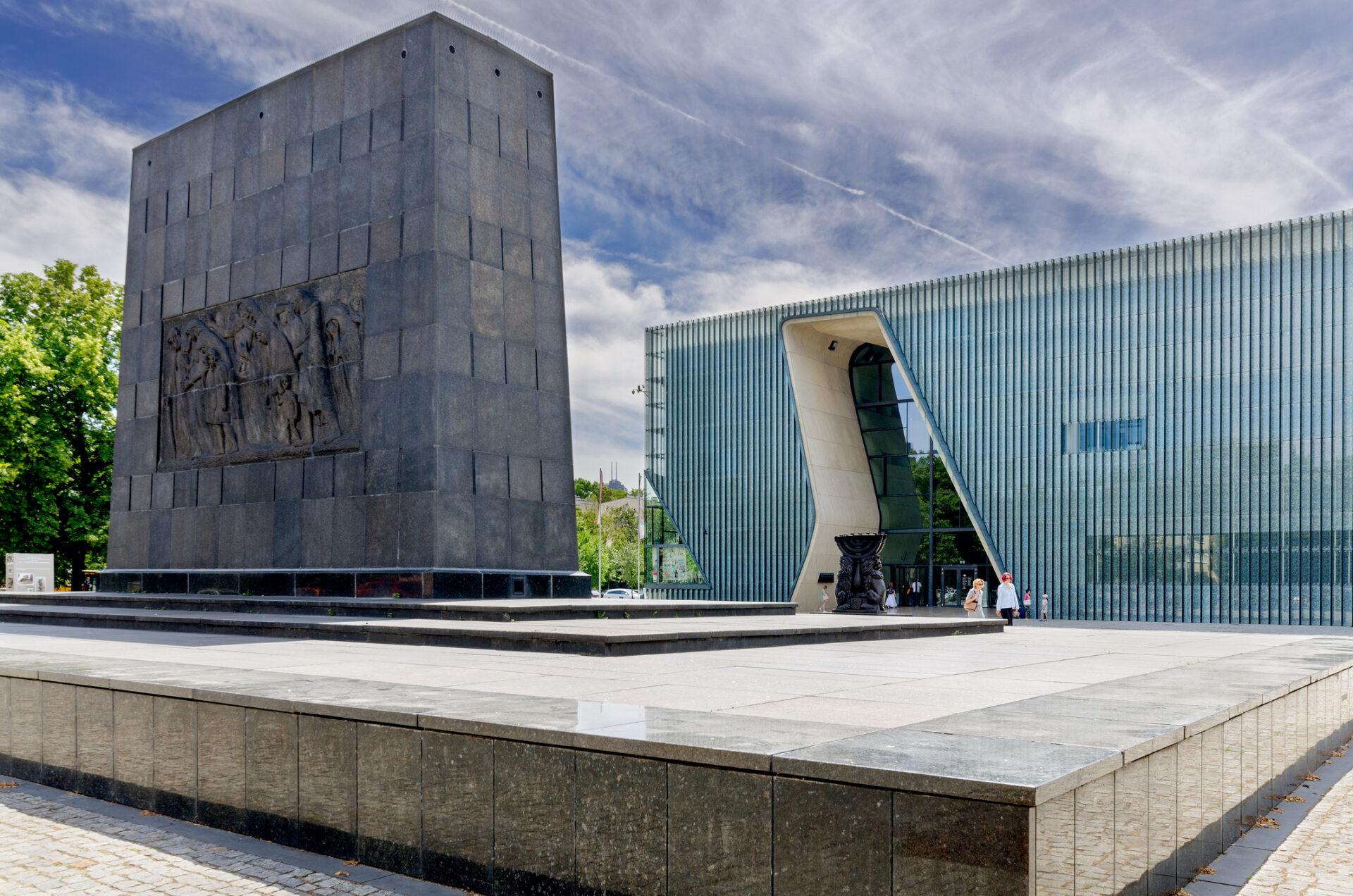
On 18 April, the world marked the International Day for Monuments and Sites. Have you noticed those often overlooked heritage symbols: the blue-and-white plaque reading “Zabytek chroniony prawem” (“Monument protected by law”)? In Poland and elsewhere?
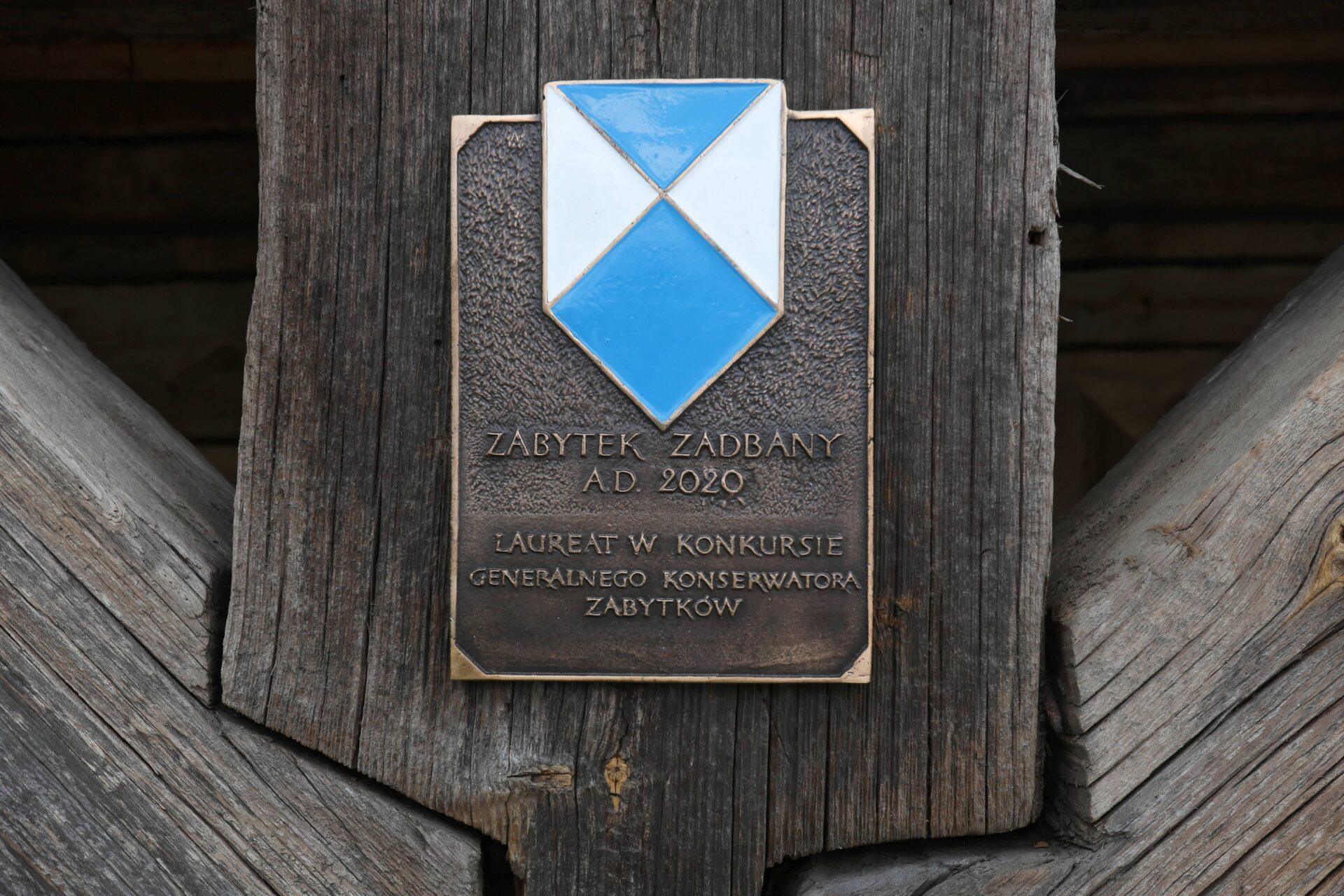
These plaques are used to mark buildings entered into the official register of historic monuments. The symbol itself has an international pedigree. It comes from the 1954 Hague Convention for the Protection of Cultural Property in the Event of Armed Conflict and was designed by Polish architect and conservationist Jan Zachwatowicz – one of the key figures behind postwar heritage protection and the reconstruction of Warsaw. He served as Poland’s general monument conservator from 1945 to 1957.
So next time you spot one of those plaques on a townhouse, palace, church, or tenement building, you are looking not just at a legal marker, but at a small piece of Poland’s postwar story.