

This article is a part of Poland Unpacked. Weekly intelligence for decision-makers
Citronex Group, which produces around 60,000 tons of tomatoes annually and sells approximately 520,000 tons of bananas, is planning the largest investment program in its history. “We are focusing on growth in Poland and Europe. We also intend to enter new segments of horticulture,” says CEO Rafał Zarzecki.
The Zgorzelec-based Citronex Group (south-western Poland at the border with Germany – ed.) – one of the largest importers and distributors of bananas in Central and Eastern Europe – is rolling out an extensive investment program in Poland and abroad. The company is also expanding its greenhouse horticulture operations and preparing to enter new segments of agricultural production.
Investment plan worth several hundred million złoty
The investment plans of the Citronex Group cover projects with a total value of several hundred million złoty. One of the group’s key ongoing initiatives is the construction of a state-of-the-art seedling production facility in the vicinity of Świebodzin in western Poland. This marks Citronex’s entry into a completely new line of business.
“This is the largest investment in the history of our group. Its value is approximately PLN 220 million (EUR 51 million). It will be one of the most advanced facilities of its kind in Europe. Its core activity will be the production of seedlings for industries related to food production,” says Rafał Zarzecki, CEO of Citronex.
The company is also planning to develop its ornamental plant segment.
“The new facility will be equipped with, among other things, advanced automation systems, robotic grafting technology, and extensive hygiene protocols designed to reduce the risk of spreading diseases and viruses in greenhouse and field cultivation,” adds Rafał Zarzecki.
The plant will serve not only Polish growers. The company is also in talks with customers from Germany and other countries in the region. The first plants are expected to leave the new facility at the end of 2026.
Revenue from fruit and vegetable business to exceed PLN 2 billion
Revenue of the Citronex Group from its fruit and vegetable operations in Poland, Romania, and Hungary reached approximately PLN 1.9 billion (EUR 440 million) last year.
“By the end of 2026, we aim to achieve a figure close to PLN 2 billion (EUR 465 million). Maintaining a similar revenue level is possible thanks to a stable customer base and the acquisition of new clients. We do not expect significant changes in product pricing,” assures CEO Rafał Zarzecki.
Beyond its food production activities, the Citronex Group is also one of the leading companies in the TSL sector (transport, forwarding, logistics). It is expanding its network of fuel stations under the Dyskont Paliwowy brand, as well as operating Poland’s largest network of truck wash facilities. Its travel-oriented offering is complemented by Picaro hotels and restaurants located along key transport routes.
Expert's perspective
Consumption of tomatoes and bananas in Poland
At the same time, Poland’s share in EU tomato production has been increasing. In 2025 it reached 6.4%, compared with 4.5% in 2015. This growth reflects not only higher domestic output, but also declining supplies from other countries, including Greece and Spain. Spanish producers are additionally facing rising competition from Morocco.
Alongside growing domestic production, Poland’s imports of fresh tomatoes have also increased. Over the past 10 years they have risen by more than 60%, while exports have declined by 18%. In 2025, the negative balance of Poland’s foreign trade in fresh tomatoes amounted to 157,000 tons. While lower than the record 168,000 tons in 2024, it was more than three times higher than a decade earlier, when it did not exceed 50,000 tons.
These changes are primarily driven by rising imports from the Netherlands. Despite fluctuations in individual years, the medium-term trend also shows increasing importance of supplies from Morocco and Turkiye. Poland imports tomatoes mainly in the winter months, when domestic supply is limited due to high production costs. In recent years, however, this pattern has begun to shift. Milder winters and more favorable weather conditions have increased domestic supply during the winter season.
After rapid growth until 2020, banana consumption in Poland has begun to decline slightly, driven in part by rising retail prices. In 2024, consumption stood at 8.6 kg per capita – similar to 2023 and 8% lower than in 2020. In the first half of 2025, according to data from the Institute of Agricultural and Food Economics–National Research Institute, a slight rebound was recorded, up 1.6% year on year. Banana consumption in Poland is growing relative to apples, although the domestic market appears to be relatively saturated. Bananas now account for the largest share in the structure of fresh fruit consumption in Poland. Price dynamics also play a role, as demand for bananas is relatively sensitive to price increases.
Changes in domestic consumption are consistent with import trends. According to Statistics Poland (GUS), imports of fresh bananas grew at an average annual rate of 9.4% between 2015 and 2020. In 2021–2025, the trend reversed, with an average annual decline of 2.5%. In 2025, Poland imported 496,000 tons of bananas worth EUR 359 million. In volume terms, imports fell by 4.7%, although the first months of 2026 brought a slight rebound.
Notably, Polish banana exports to some markets, including Romania, have been declining since 2020. This may be linked to investments in local banana ripening facilities carried out in that country several years earlier.


Tomato and cucumber production
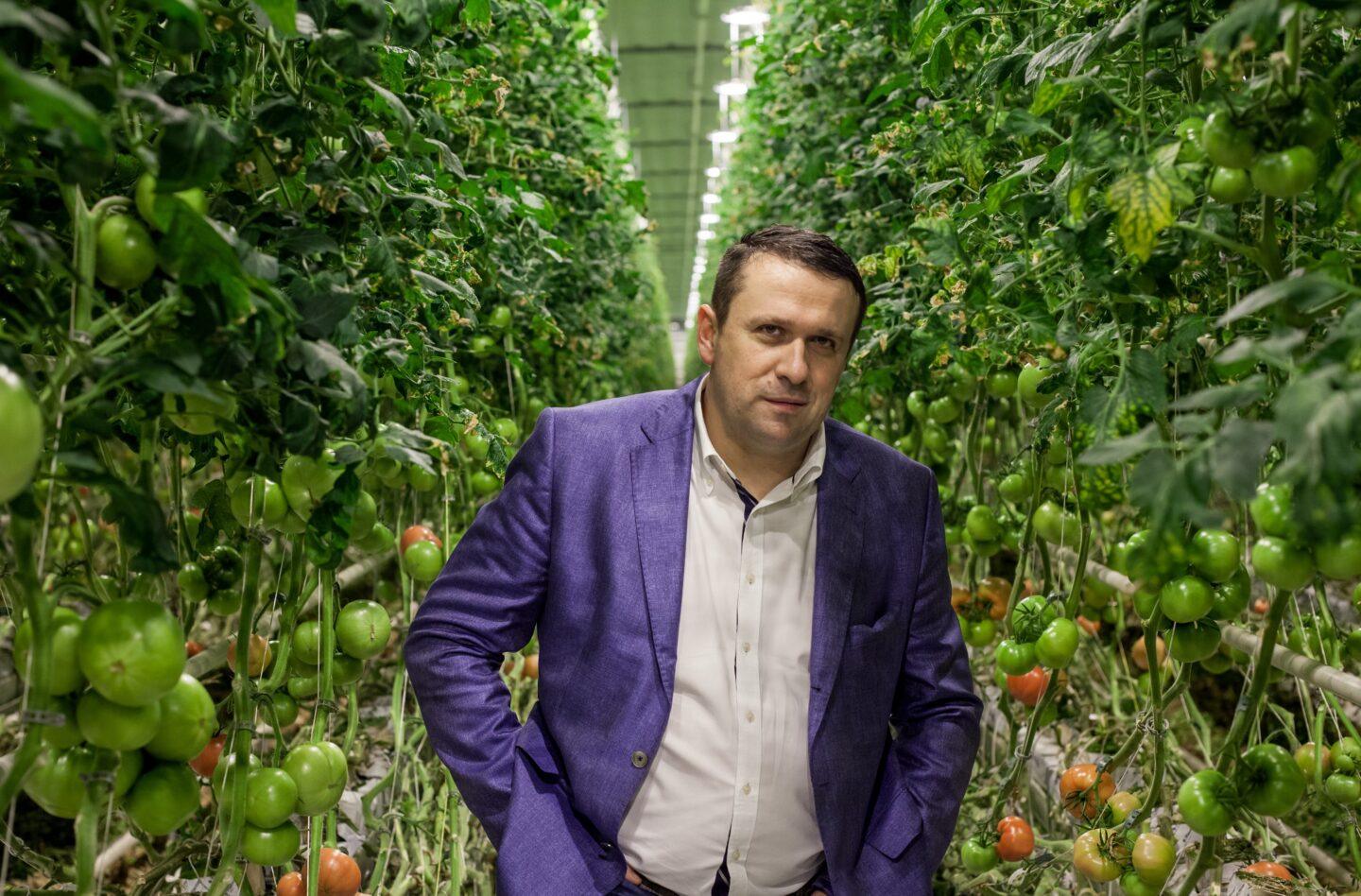
The Citronex Group operates greenhouse complexes in Bogatynia, Siechnice, and Ryczywół (western Poland – ed.), with a total area of approximately 79 hectares. The company specializes in the production of “raspberry” tomatoes, which are primarily sold on the domestic market.
“We are awaiting an amendment to the local spatial development plan for one of our locations. We are ready to expand the facility there by 10 hectares. The investment will cost around EUR 18 million (approximately PLN 77 million). We estimate our share of the Polish greenhouse tomato market at around 10%. In season, we produce between 900,000 and 1 million kilograms of tomatoes per week, and around 60,000 tons annually. Tomato output is many times lower than banana sales, but this segment is important for the entire group because tomatoes achieve higher unit prices, especially in winter. The tomato business accounts for around 30% of our group’s revenues,” says Rafał Zarzecki.
The company estimates its share of the Polish greenhouse tomato market at around 10%. In season, it produces between 900,000 and 1 million kilograms of tomatoes per week, and around 60 million kilograms annually.
Citronex is also expanding its tomato business outside Poland. The group is preparing a new greenhouse investment in Romania.
“Our subsidiary has already obtained a building permit and is carrying out site preparation work. According to plans, the first phase of the investment will cost around EUR 25 million (approximately PLN 107 million). The first plantings are scheduled for August 2027, after construction is completed,” Zarzecki explains.
Citronex also plans to enter another segment of the greenhouse vegetable market. The company is analyzing potential locations for new greenhouses dedicated to year-round cucumber production.
“Our goal is to create a system that ensures continuous availability of fresh cucumbers throughout the year. In Poland, such solutions are not yet widely implemented on a large scale. We are considering implementing the project in existing greenhouse sites requiring modernization. We are still at the conceptual stage. We plan to start the investment, worth around EUR 20 million (approximately PLN 86 million), next year,” says Zarzecki.
Banana leader
The core of the Citronex Group’s business remains banana import and trading. This segment accounts for approximately 70% of revenues. The group operates a banana ripening facility in Zgorzelec and sells around 520,000 tons of bananas annually across 15 European countries.
“In 2024, we completed the construction of a modern banana ripening center in Belgium. The investment amounted to approximately EUR 8 million (around PLN 34 million) and represents our first project in Western Europe. The new facility allows us to serve customers in Belgium, the Netherlands, northern France, and western Germany. Our operations in Belgium are developing faster than initially expected. In the first year alone, the plant’s capacity was utilized at around 40–50%,” says Rafał Zarzecki.
The Citronex Group maintains a dominant position in the banana market. Its share in the Polish market is estimated at around 50–60%, while in Romania it exceeds 70%. The company also holds a strong position in Hungary.
“We hold around 70% of the market there. From Hungary, we serve neighboring countries, including Croatia, Austria, and Slovakia. We remain open to further investments in Western Europe,” Zarzecki adds.
Expert's perspective
Rising costs are keeping greenhouse vegetable producers awake at night
Another major challenge for the sector – and one of the heaviest burdens for companies – is rising labor costs. Additional pressure comes from regulatory requirements and the associated expenses for legal and administrative services.
The structure of the workforce has also changed recently. Workers from Ukraine are increasingly being replaced by people from Colombia, Vietnam, and other South American countries. This shift brings new challenges, including communication difficulties, language barriers, and cultural differences that affect work organization.
Energy costs remain a significant burden as well. This applies not only to electricity but also to heating fuel used in greenhouse production. Its price has increased from around PLN 17 per unit in the previous quarter to around PLN 20 in the next. At the same time, transport costs for fuel are rising, driven by higher fuel prices.
All these factors are leading to lower profits and, at times, situations where revenues do not cover production costs. In response, companies are trying to increase efficiency, including by introducing piece-rate wage systems.
The situation of producers could be improved by measures limiting imports of vegetables from outside the EU, particularly from the east. The inflow of products such as cucumbers pushes down domestic prices and further worsens conditions for Polish companies.
A major threat to producers is also tomato diseases and pests, in particular the tomato brown rugose fruit virus (ToBRFV).
Challenges facing the sector
According to Rafał Zarzecki, the Polish greenhouse sector is highly fragmented. In recent years, relatively few new, modern facilities have been built, while greenhouse construction costs have increased significantly.
“The cost of building one hectare of a modern greenhouse has doubled over the past five years and currently stands at around EUR 200 per square meter (for a facility without supplemental lighting). If Poland wants to maintain its position in greenhouse vegetable production, the industry will require substantial modernization investment,” says Rafał Zarzecki.
However, this does not exhaust the list of challenges.
“Among the most important issues facing the horticulture sector, I would also include phytosanitary risks, especially the tomato brown rugose fruit virus. Equally important are geopolitical changes affecting global banana supply chains and rising energy costs,” he adds.
The energy transition is increasingly affecting the greenhouse sector.
“An example is Siechnice, where the heat source was switched from coal to gas. We regret the limited involvement of the government in the protected cultivation sector, as well as the lack of dialogue between heat producers and horticultural facilities. Combined heat and power plants took advantage of the outbreak of the war in Ukraine to raise prices, but later did not reduce them once the situation stabilized. That is why we are also investing in our own heat sources, preparing for further regulatory and cost changes related to CO₂ emissions,” says Zarzecki.


Key Takeaways
- Citronex Group is implementing a broad investment program in Poland and abroad. The company is expanding its banana ripening and trading operations, greenhouse horticulture, and entering new segments of agricultural production.
- By the end of 2026, Citronex aims to generate approximately PLN 2 billion (EUR 465 million) in revenue from its food production activities. The banana business accounts for around 70% of revenues, while greenhouse tomato production and sales represent approximately 30%.
- The group’s most significant challenges include rising energy, transport, and labor costs, as well as phytosanitary risks. Geopolitical shifts affecting global banana supply chains also remain an important factor.