Poland Unpacked week 38 (7 - 13 September 2026)
Welcome to this week’s edition of our Poland Unpacked, where we deliver key insights and trends shaping the economic, corporate and political landscape. Catch the most important insights from Poland in this week’s briefing.
This article is a part of Poland Unpacked. Weekly intelligence for decision-makers
For four days, Kielce in central Poland became a shop window for Poland’s military ambitions. The 34th International Defence Industry Exhibition (or MSPO), held on September 8–11, was the largest in the fair’s history: 1,209 exhibitors from 43 countries, including more than 500 Polish companies, spread across 11 halls and outdoor display areas.
Around 60 official foreign delegations attended. Canada was this year’s Lead Nation. The scale of the show reflects a broader shift: Poland is no longer merely one of Europe’s biggest defence spenders. It is trying to turn that spending into industrial clout.
The headline deal concerned Piorun, the shoulder-launched anti-aircraft missile made by state-owned Mesko. Poland’s Armament Agency (AU) signed the first implementing contract under an PLN 8 billion framework agreement, covering several thousand missiles and launch mechanisms for the Polish armed forces, with deliveries planned for 2026–30. The system is also gaining ground abroad, with Norway, Lithuania and Latvia involved in the broader procurement framework. Another important agreement gave Poland a licence from South Korea’s Hanwha Aerospace to manufacture spare parts and carry out final assembly of HOMAR-K multiple rocket launchers at home.
Much of the real significance, however, lay in deals that were less spectacular than a multibillion-zloty contract. Huta Stalowa Wola and Northrop Grumman agreed to establish licensed production and maintenance capabilities in Poland for Bushmaster automatic cannons. PGZ companies announced further cooperation on drones, the NAREW air-defence programme and military robotics, while PGZ (state-owned giant) and ICEYE signed a letter of intent related to a Polish military satellite system. Huta Stalowa Wola also presented the full-size demonstrator of its new Niedźwiedź heavy infantry fighting vehicle, weighing more than 40 tonnes and intended to be ready for serial production around 2029.
MSPO matters beyond the tanks, missile launchers and polished exhibition stands. Poland has spent years buying weapons at extraordinary speed; it now wants more of the value to remain at home. The new emphasis is on licences, local assembly, maintenance, engineering know-how and domestic supply chains. The question for the next few years is no longer simply how much Poland can buy. It is how much of its new arsenal it can learn to build itself.
The Ministry of State Assets (MAP) plans to sell 40-45% of the PGZ group, a major player in the arms making industry. It is not considering a listing on the Warsaw Stock Exchange, despite strong investor interest in the defense industry. Germany’s Rheinmetall, for instance, is valued at nearly EUR 50 billion, while Niewiadów, listed in Warsaw, has a market capitalization of PLN 2.5 billion (EUR 579 million).
A listing would require an amendment to the law, and the coalition government expects the president, who is associated with the opposition Law and Justice (PiS) party, to veto it. MAP therefore wants Orlen, the state-controlled fuel giant, to become the new owner. Experts say Orlen could become a supplier to PGZ companies, although the investment would make financial sense only if it secured a majority stake. Orlen declined to comment. Here's the full story that XYZ wrote as the first.
We are not done with defense yet. Polish Innovation Labs, a private ammunition maker whose products are sold under the PFA brand, is currently using only part of its production capacity of 6 million rounds a month. Sales stand at 1.5-2 million rounds. Even so, the company expects both the civilian and military markets to expand and plans to raise capacity to 10 million rounds a month. It also wants to start making components, reducing its reliance on foreign suppliers. It needs PLN 150 million (EUR 34.7 million) and is talking to funds about raising the capital. It must also secure long-term contracts, and is discussing these with the Ministry of National Defense. Read about their plans.
But business is not all about the military. Ever heard of HandsManFood? It’s a family-owned company that began in 2009 as a logistics-services provider. Today it is a leading producer of frozen fruit and vegetables. More recently it has been building its own snack brand, Chillberry, which sells frozen fruit coated in chocolate and toppings.
The founders’ sons are developing the new business lines. In 2025 the group increased revenue by 25% to PLN 208 million (EUR 48.2 million). This year it aims to reach PLN 300 million (EUR 69.5 million), and over the next three years it plans to double its scale. Here's their story and ambition.
The most important event in the Polish economy last week was the meeting of the Monetary Policy Council (RPP), the National Bank of Poland’s (NBP) monetary-policy decision-making body. Next week, meanwhile, a new batch of economic data will begin to come in, including figures on industrial output and services.
As expected, interest rates were left unchanged. The main policy rate therefore remains at 3.75%. In August, according to Statistics Poland’s preliminary estimate, inflation stood at 3.4% year on year, slightly below the upper limit of the inflation target, which is 3.5%.
Inflation can, however, be expected to rise further in the coming months because of very high energy commodity prices. In the second half of August, the government’s CPN package – comprising fuel-tax cuts and a price cap – was still in force. It was suspended in September. Falling food prices, by contrast, are helping to hold inflation down. In August they fell by as much as 0.9% year on year. That disinflationary effect is, however, likely to fade in the months ahead.
At a press conference following the RPP meeting, NBP Governor Adam Glapiński said interest rates were unlikely to change before the end of the year. He cautioned, however, that much would depend on energy prices and their impact on the economy. There is little to suggest that the conflict between the United States and Iran will end soon. Meanwhile, the European Central Bank (ECB) decided on Thursday to raise interest rates by 0.25 percentage points. Next week the U.S. Federal Reserve may also tighten monetary policy.
The results of the latest edition of PISA 2025, the OECD study comparing the reading, mathematics and science skills of 15-year-olds, were also released. They show that, after the sharp decline recorded in 2022, the performance of Polish students has stabilized. Results remain clearly above the OECD and EU averages, though they are still below pre-pandemic levels. At the same time, the study confirms that weaker performance is a trend seen across many countries, while East Asian economies continue to dominate the top of the global rankings. Here's more on the matter.
Poland leads NATO in defense spending relative to the size of its economy. In 2025 it devoted 4.5% of GDP to defense, having increased spending by as much as 2.7 percentage points of GDP since 2010. The rise has been particularly pronounced on NATO’s eastern flank and accelerated after Russia’s invasion of Ukraine. Poland also rose to sixth place in NATO in nominal defense spending, at USD 46.8 billion.
At the same time, higher spending by European countries has reduced the U.S. share of the Alliance’s total defense expenditure from around 70% to 60%. Contrary to the claim that Poland had previously been “free-riding,” it was already among the NATO members spending relatively heavily on defense before 2022, keeping expenditure at around 2% of GDP. In a broader global comparison, Poland ranked 11th in 2025 in terms of defense spending as a share of GDP, although, for obvious reasons, countries including Ukraine, Israel and Russia spent considerably more. Here's the full analysis.
Last week, Americans commemorated the victims of the 9/11 terrorist attacks. Thousands of people were killed, and the United States subsequently invoked Article 5 of the North Atlantic Treaty. At the time, America’s European allies, including Poland, rallied to its side in the fight against terrorism. Today, 25 years later, it is Europe that fears whether the United States will honor its alliance commitments under the presidency of the isolationist Donald Trump.
For now, however, European governments continue to receive regular briefings from the Americans on the international situation. Last week was another in which Prime Minister Donald Tusk warned the public to be prepared for “different scenarios.”
On Thursday, during a meeting of the Visegrad Group in Bratislava, Prime Minister Tusk said he had received a report from CIA Director John Ratcliffe.
“Poland and Europe as a whole must be prepared for different scenarios when it comes not only to the situation on the Russian-Ukrainian front, but also on the European Union’s eastern flank,” the prime minister stressed.
His remarks triggered another public debate, dominated by calls for greater transparency over the information the prime minister is sharing.
“It cannot be the case that the prime minister tries to create a sense of fear, anxiety and chaos in Polish society while providing no information about the threats Poland actually faces,” said Mateusz Morawiecki, leader of the opposition Development Plus party and a former prime minister.
Nor was this the only debate centered on Poland’s security. The beginning of last week was dominated by alarmist headlines reporting a victory for the far-right Alternative for Germany in Saxony-Anhalt. Although these were only state-level elections, the historic win by the pro-Russian far right prompted a cascade of forceful reactions in Poland.
The relationship between Poland’s right wing and AfD is, in this context, far from straightforward. On the one hand, part of Poland’s far right, represented by a section of Confederation, belongs to the same European Parliament group as AfD. On the other, German politicians openly insult Poland and Poles, question the permanence of Poland’s western border and portray Poland as a threat to German security on a par with Russia.
For these reasons, part of the Polish right rules out cooperation with any future German government involving AfD. Yet, surprisingly, there are also political forces that, despite AfD’s openly anti-Polish rhetoric, are cheering it on in its bid for power in Germany. Why? Read our analysis here to find out.
Two Polish companies, DL Invest and Beyond.pl, are considering submitting bids to build an AI gigafactory in Poland, according to our information. The project is part of a program overseen by the European EuroHPC initiative. Executives from both companies confirmed the plans in conversations with us. DL Invest says it is ready to compete for the project in Bielsko-Biała, while Beyond.pl is analyzing the tender requirements and possible cooperation models. The deadline for bids is November 12, 2026, with the selected gigafactories expected to come online in 2028.
There is, however, one problem - and it is not simply access to capital. The main obstacles concern energy: the ability to secure grid connections quickly, electricity prices and the length of administrative procedures. According to Employers of Poland, delivering such a project in Poland could take four to six years, while the EU program assumes a significantly shorter timeline. Business groups are therefore calling, among other things, for strategic data-center investments to receive special status, priority access to grid connections and streamlined procedures. Business is calling for change. What will the ministry do?
A group of Polish companies, including Asseco Data Systems, is also looking for opportunities linked to investment in modern facilities abroad. One example is a project in Togo carried out through Cyber Defense Africa (CDA), a company established by the Togolese government and Asseco Data Systems. Its role is to protect the country’s digital infrastructure against cyber threats. CDA operates a modern security operations center that monitors networks and systems around the clock and responds to detected threats. It is also responsible for running the country’s national incident-response team. The project is to be developed over 12 years, with a total budget of EUR 80 million, or around PLN 340 million.
The money will be spent not only on expanding the infrastructure itself, but also on new technologies and skills. How does the project work? What investment plans does Asseco Data Systems have? Read more in our interview with the company’s CEO.
The ambitious plans of Polish - and not only Polish - companies have also been assessed by PwC. We obtained a company report showing that Poland could attract more than USD 200 billion in data-center investment by 2050, while spending over the next decade alone could exceed USD 75 billion. According to PwC’s analysis, global investment in data centers could reach USD 31.6 trillion by 2050 under the base-case scenario, and nearly USD 50 trillion if artificial-intelligence adoption accelerates. Poland could capture a significant share of European investment, provided it has sufficient access to energy and grid infrastructure. Under PwC’s base-case scenario, data-center investment in Poland is projected to total USD 75.3 billion in 2027–2036 and USD 200.8 billion by 2050. Poland benefits from relatively low construction costs, a cool climate, a growing digital market and investment in the energy sector. A scenario involving greater digital sovereignty could be particularly favorable, with investment in Poland rising 34% above the base case. At the same time, market growth could be constrained by limits on connecting new facilities to the grid and the rising power requirements of AI infrastructure. Here's all you need to know on the matter.
As for activity among startups and technology companies, the agreements signed by space-tech company ICEYE are worth noting. The startup signed an agreement with Arianespace under which the two sides will explore opportunities to launch the Polish-Finnish company’s satellites aboard the Ariane 6 rocket. The cooperation would focus primarily on missions for European governments and institutions. ICEYE also signed a letter of intent with representatives of the public sector regarding support for the “Polish Starlinks” project.
Meanwhile, Polish fund OTB Ventures participated in a funding round for French deep-tech company Arlequin AI. The EUR 28 million raised will be used to develop an innovative AI architecture based on topological neural networks (TNNs). The software is intended to help governments, intelligence agencies and financial institutions detect hidden terrorist networks, money-laundering schemes and disinformation operations. Booksy founder Stefan Batory has announced mass layoffs affecting one-fifth of the workforce. The company is also set to undergo restructuring. “We are accelerating the adoption of new ways of working and introducing innovations powered by artificial intelligence,” Batory explained. Booksy is a Polish company that created the eponymous online appointment-booking platform for the beauty, wellness and healthcare sectors.
Poznań’s Pop Culture Gallery in Stary Browar turns its spotlight to the human figure in Polish art with “Poza twarzą” (“Beyond the Face”), a sweeping exhibition drawn from the historic collection of Kraków’s Towarzystwo Przyjaciół Sztuk Pięknych (TPSP). The show ranges from 19th‑century canvases by Jan Matejko and Jacek Malczewski through Young Poland symbolism to contemporary interventions by Magdalena Abakanowicz, Roman Opałka and Daniel Rycharski. Rather than a chronological parade of masterpieces, it stages dialogues - Matejko with his student Wyspiański, rural imagery with Rycharski’s “Winter Garden 3” - to ask how we see, remember and represent people across time.
This is a rare chance to encounter canonical Polish works outside a museum, in a space that recently hosted Warhol, Versace and Iris van Herpen. The exhibition invites you to read portraiture broadly: not only faces, but bodies, landscapes, still lifes and even the “disappearance” of the figure as ways of telling human stories. Open from 10 September to 10 February 2027, it’s an ideal evening or weekend stop on a Poznań visit.

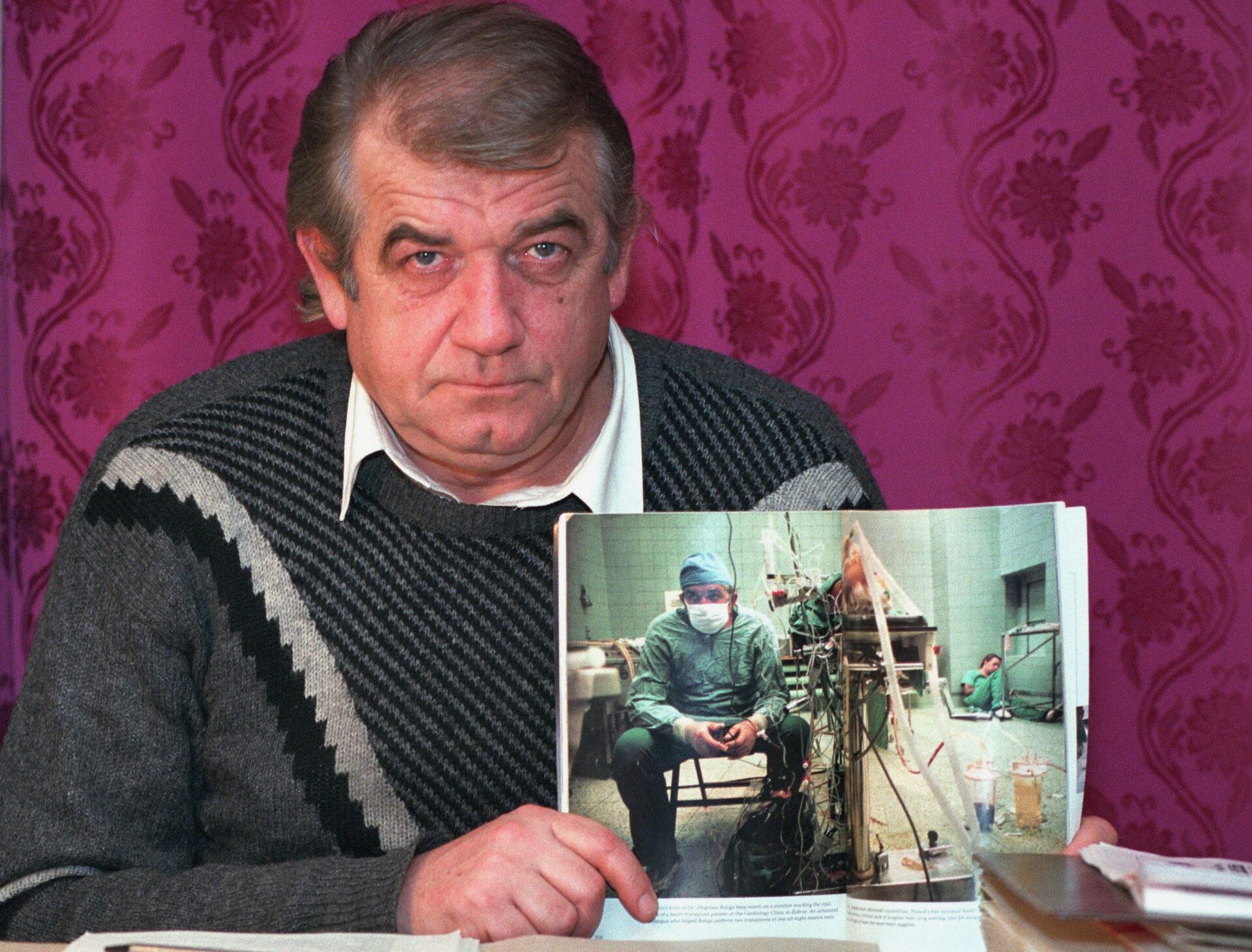
September 16 is the UN’s International Day for Interventional Cardiology, which gives Poland Unpacked a good excuse to revisit one of the most famous medical photographs ever taken.
In 1987, National Geographic photographer James L. Stanfield captured Polish heart surgeon Zbigniew Religa sitting exhausted beside his patient after a transplant at the Silesian Centre for Heart Diseases in Zabrze. Religa stares at a monitor amid a jungle of cables; in the corner, one of his assistants is asleep on the floor. The operation had followed another transplant in the same 21-hour stretch.
The photograph became an icon. There are no white coats posing for posterity, no heroic smiles – just a surgeon too tired to celebrate and a patient whose new heart is still beating. Religa, who helped pioneer heart transplantation in communist Poland and later became health minister, would become one of the country’s best-known doctors.