

This article is a part of Poland Unpacked. Weekly intelligence for decision-makers
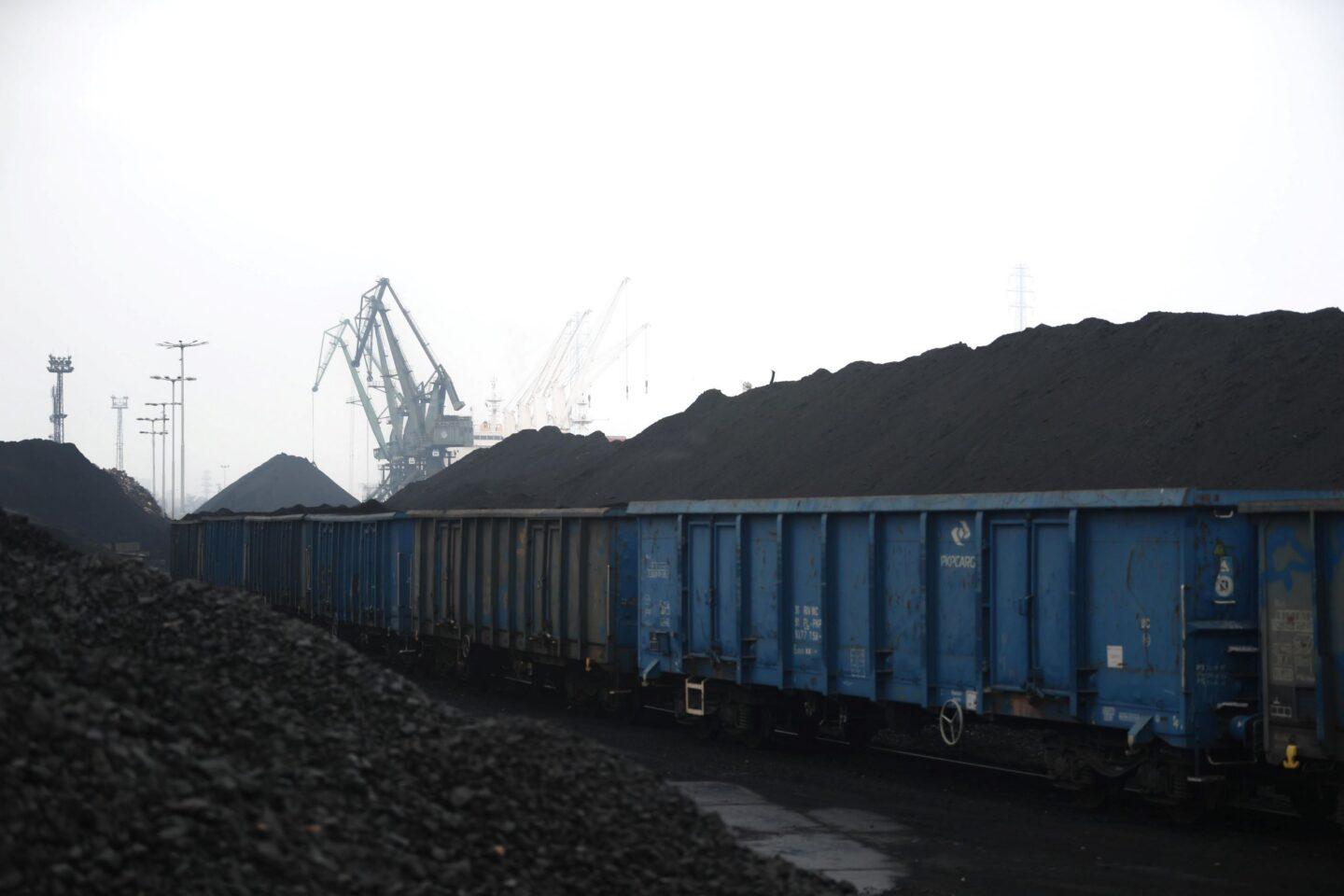
With winter approaching, tensions in Poland's coal market are mounting. On the one hand, the government insists there will be no shortage of coal. On the other, it has given state-owned Węglokoks the green light to import the fuel. The company specializes, among other things, in coal trading. Yet since the emergency purchases launched in 2022, it has not bought coal from abroad — until now. It has decided to bring in two shiploads and has left the door open to further deals.
“Węglokoks has contracted two coal shipments from Colombia. Decisions on further purchases will depend on actual customer demand and market conditions,” says Michał Łyczak, the company's spokesman.
Concerns and a dismissal
Warnings that Poland's coal stocks are dwindling rapidly, and that a severe winter could leave the country short of supplies, have been circulating in the industry for weeks. The outbreak of war in the Middle East sent commodity prices, including those of natural gas, into turmoil. Gas became so expensive that energy companies found it more economical to generate electricity from coal than from the blue fuel. In August alone, output at Poland's hard-coal-fired power plants rose by 21 percent year on year. For January through August, the increase amounted to nearly 11 percent. This drove up coal consumption and raised concerns about its availability this winter.
Initially, industry insiders discussed the risk of coal shortages only behind closed doors. The first person to voice these concerns publicly was Andrzej Gajewski, then chief executive of Orlen Termika, one of Poland's largest district heating companies, which supplies heat to Warsaw and other areas. Speaking in mid-September, he said the company had built up sufficient reserves but warned that the country as a whole could face difficulties.
“If we have a cold winter, there won't be enough coal. We'll all be scraping the bottom of the barrel. I believe this is the biggest risk facing us today,” Gajewski said at the 30th Polish District Heating Forum in Międzyzdroje.
The following day, Gajewski was dismissed as chief executive of Orlen Termika. According to our sources, his remarks at the forum were the reason for his removal.
No risk of shortages, yet imports resume
The Polish government's message is clear: the country has enough coal, and there will be no shortage. Warnings from Łukasz Deja, chief executive of Polska Grupa Górnicza (PGG), that stocks are shrinking rapidly have largely gone unheeded. Speaking at the Future Mining Forum & Expo in Katowice in September, the head of Poland's largest producer of thermal coal said demand from the power sector was so strong that stocks held at mines would be “practically close to zero” by year-end.
We asked Energy Minister Miłosz Motyka whether Poland could run out of coal.
“Quite the contrary: we will not run short of coal. We are monitoring the power and district heating sectors, meeting with industry representatives, and have been informed that there is no such risk,” Motyka replied.
At the same time, however, state-owned Węglokoks received approval from the Ministry of State Assets to resume coal imports. According to our sources, the ministry would rather err on the side of caution and prepare for every eventuality.
“The current shipments are coming from Colombia. Our longstanding relationships with foreign suppliers mean we can also source coal from other countries, depending on market needs,” Łyczak says.
The coal is being supplied to power plants and district heating companies in Poland.
“We are seeing somewhat greater interest in imported coal from the power and district heating sectors. The start of the heating season and the international situation may be contributing to this increased interest,” Łyczak explains.
PGE is also importing coal
Among state-controlled companies, Polska Grupa Energetyczna (PGE) also imports coal through its subsidiary PGE Paliwa. The energy group does not disclose how much coal it brings into Poland or whether it has increased its purchases this year.
“PGE Paliwa continuously analyzes current and projected demand for coal on the Polish market. It makes purchasing decisions in line with the company's business objectives while ensuring continuity of hard-coal supplies for the generating units of the PGE group and the proper fulfillment of contracts with third parties,” PGE's press office says.
The group therefore imports coal for its own facilities as well as for external customers, including smaller district heating plants. The fuel supplied to the power generation sector is mainly fine coal. Medium-sized and coarse coal screened out of the shipments is sold by PGE Paliwa to intermediaries such as coal merchants. Their customers include households that heat their homes with coal, as well as agricultural and horticultural businesses.
Just a few years ago, PGE intended to sell its coal-trading subsidiary. The company became part of the state-owned group in 2017, alongside energy assets acquired from France's EDF. Those plans have since changed.
“PGE Paliwa is not in the process of being sold,” the group's press office says, bringing the matter to a close.
Help for JSW
According to our sources, importing coal from abroad is also intended to help Jastrzębska Spółka Węglowa (JSW), a state-controlled producer of coking coal used to make coke and steel. Its mines also produce thermal coal. Our sources say some of the imported coal is to be blended with coal from JSW's mines. Polish power plants are expected to use such blends more extensively.
“For years, JSW has sought to increase its production of coking coal, which commands a higher price than thermal coal. In the thermal coal market, the company is a supplementary supplier alongside the main players, PGG and Bogdanka. The high caking properties of coal produced at JSW's mines prevent it from being burned freely in power plants. It therefore needs to be blended with coal that has different characteristics,” explains Jakub Szkopek, an analyst at Erste Securities Polska.
JSW is struggling financially. The coal group reported a net loss of PLN 1.04 billion in the first half of 2026. High operating costs and low prices for its key products have left the company teetering on the brink of a liquidity crisis for months.
At the end of September, JSW's supervisory board approved yet another restructuring program. Among other measures, it calls for improving liquidity by securing advance payments and selling selected assets, deferring payments to Poland's Social Insurance Institution (ZUS), curbing capital expenditure, optimizing operating costs and reducing headcount.
For the full year 2026, the company aims to extract 13.3 million metric tons of coal, of which 11.2 million metric tons will be coking coal for the steel industry.
“JSW's new 2026–35 restructuring plan is ambitious. It is good that management is setting demanding targets, but meeting them will be difficult. A quarter of the workforce will leave the company in the near future. Under these circumstances, achieving the production targets will be a major challenge. The company has not been particularly flexible so far, but it will now have to adapt to new conditions,” Szkopek says.
Imports are rising
According to data from the Katowice branch of the Industrial Development Agency (ARP), Poland imported 3.67 million metric tons of coal in the first half of this year, up 41.8 percent from a year earlier. Thermal coal accounted for 3.1 million metric tons. Most imports came from two countries: Kazakhstan, which supplied 62 percent, and Colombia, which accounted for 36 percent.
The figures may be incomplete, as they cover only declarations submitted by entities that fulfilled their statistical reporting obligations.
Coal imports are necessary primarily because the Polish market does not offer sufficient supplies of coal with the characteristics required by households. Imported fuel is also purchased by district heating companies and industrial plants, among others.


Key takeaways
- Węglokoks has ordered two shiploads of Colombian coal, which are expected to reach the Polish market soon. The state-owned company is resuming imports after receiving approval from the Ministry of State Assets. “Decisions on further purchases will depend on actual customer demand and market conditions,” says company spokesman Michał Łyczak.
- PGE Paliwa, a subsidiary of Polska Grupa Energetyczna, also imports coal. The group does not disclose the volume of its imports or whether it has increased purchases recently. Imports are intended to help secure reserves over the coming months. At the same time, the Ministry of Energy maintains that there are no signs of coal supply problems and insists that shortages will not occur. The chief executive of Orlen Termika, who expressed a different view, was recently dismissed.
- Some imported coal will be blended with coal from JSW's mines. The aim is to help JSW increase sales and improve its financial position. The company specializes in coking coal for steelmakers, but its mines also produce thermal coal. Because this coal must be blended with coal of different characteristics, imported supplies can help create a mix suitable for use in Polish power plants.