Today, more than 2,400 founders are waiting to be entered in the Register of Family Foundations. This is a relatively new legal way for wealthy entrepreneurs to manage succession within their families. Responsibility for registration rests with the Regional Court in Piotrków Trybunalski. Interest in this organizational and legal structure is growing, while the processing capacity of court clerks remains limited. Applicants are being informed that the waiting time for registration can now stretch to as much as 14 months. The backlog at the court may prove costly for foundations for which, after all, time is money.
Private companies – backed by fund capital and stock-market investors – could, in a short time, meaningfully strengthen Poland’s military capabilities. The problem is that the state continues to keep them at arm’s length. Why? In an interview with XYZ, Michał Lubiński, an adviser to the management board of Niewiadów Polska Grupa Militarna, discusses large-scale contracts and investments, the fraught relationship between private defense firms and the state, and controversies from his own past.
As work proceeds on amendments to the Consumer Credit Act, some organizations are calling for a dismantling of the 29-year status quo in Poland’s credit information market. They are pressing for demonopolization, arguing that it would lead to lower service costs and higher data quality.
Poland’s e-commerce leader had aimed to become a regional powerhouse after acquiring the international Mall Group for PLN 4 billion (EUR 850 million). Yet the integration proved far more challenging than expected, costing the company hundreds of millions of additional zlotys. Experts agree that this historic deal has failed, and the planned sale of part of its foreign operations at a significant loss is paradoxically a positive move. “We are taking over commercially healthy assets,” emphasizes a representative of the Mutares fund, with which Allegro has reached an agreement.
Wednesday news of a potential takeover of InPost triggered a buying frenzy in the logistics group’s shares. Investors pushed the price up so sharply that funds betting on a decline were forced to close their positions. To do so, so-called short sellers must buy shares back on the market – fueling the rally further and deepening their losses. According to our calculations, more than 20 funds positioned against InPost have already been hit. Their exposures are steadily shrinking, and losses have now exceeded EUR 100 million
The helicopter manufacturer is set to expand production capacity and diversify operations at its Świdnik facility. Employment is expected to rise by around 10%. The company signed an agreement securing funding to support the investment.
Poland is a fantastic proving ground and a technology hub. But it is Germany, Italy, or Spain that offer the critical mass needed to fully unlock the potential of UniCredit’s financing capabilities, explains Wojciech Sobieraj, chief executive of Vodeno. The company provides a Banking-as-a-Service (BaaS) platform which – using UniCredit’s banking license – enables other firms to embed banking services directly into their own ecosystems.
Although the 14 companies managing Poland’s Investment Zone did not deliver a blockbuster performance in 2025, many of them posted record results. In 2026 they are expecting major projects, including in the defense sector.
The launch of the first wind farm in the Polish section of the Baltic Sea will mark a watershed moment for the country’s energy sector. The coming months will also bring a number of other developments of major importance for the industry. We have selected several that we see as pivotal for both the market and energy consumers.
Over the past three years, Polish banks have benefited from high interest rates, and in recent quarters they have also set aside significantly lower provisions for Swiss franc loans while issuing an increasing number of mortgage loans. According to experts from five advisory and auditing firms, 2026 should be a good year for the sector, but a repeat of record profits is out of the question. The reasons include the rise in corporate income tax (CIT) and a decline in net interest margins, which cannot be fully offset by higher fees. Key challenges will be deepening customer relationships and the prudent use of artificial intelligence.


 Katarzyna Witwicka-Jurek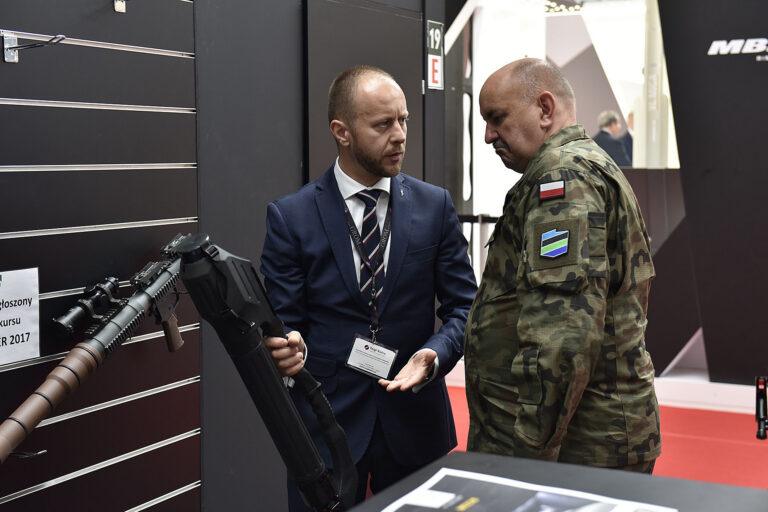
 Łukasz Maziewski
  Grzegorz Nawacki
 Piotr Sobolewski
 Mariusz Bartodziej
 Mikołaj Śmiłowski
 Małgorzata Grzegorczyk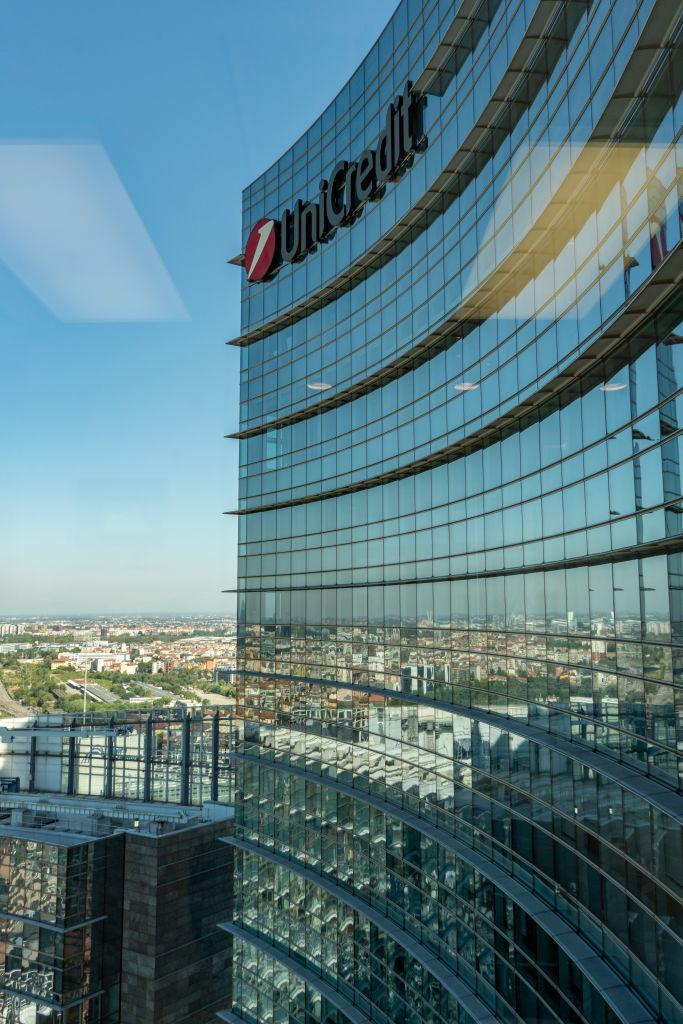


 Barbara Oksińska