

This article is a part of Poland Unpacked. Weekly intelligence for decision-makers
Business-service centers based in Kraków are cutting jobs. For years, the business-services sector has been a pillar of the local labor market. “The city is not losing its position; rather, it is moving into the next stage of development,” says Adam Biernat, director of the Municipal Labor Office.
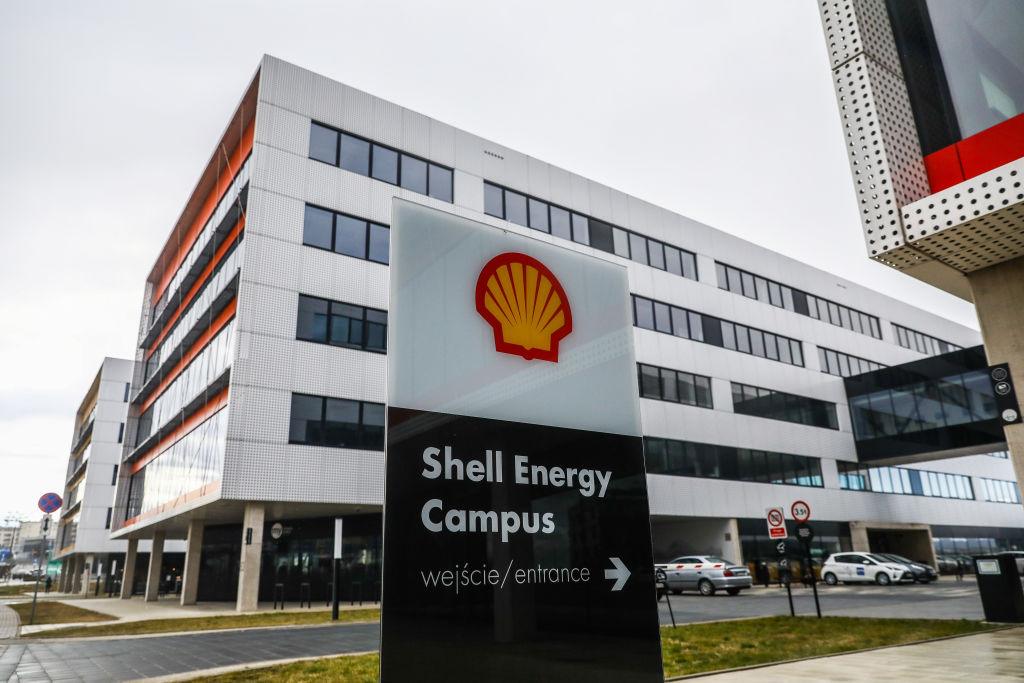
The business center of the international oil major Shell has operated in Kraków for 20 years. Initially, the office provided only finance and accounting services. Today, it has more than a dozen business lines serving Shell operations worldwide. At its peak, the center employed 5,000 people. By the end of 2025, headcount had fallen to 4,700. Over the past two years, the workforce has shrunk by 300 employees.
“This is a natural process for any company that grew very dynamically over a long period and has now reached a stage of maturity. Within the company, we promote a model called ESSA: eliminate, simplify, standardize and automate. Moving through these stages increases efficiency, but it also reduces headcount. After 20 years in operation, our growth potential is now significantly more limited. Especially as Shell is undergoing a global reorganization and adapting to market conditions, which has also involved workforce reductions, and that affects us as well.
Read also: Five trends shaping modern business services centers in Poland
“This process in Kraków will continue, although at present it is difficult to speak in concrete numbers. Market conditions are highly volatile and uncertain. We do not know at what pace the energy transition will unfold or how quickly our group will change. There are still many unknowns,” explains Grzegorz Mucha, managing director of Shell Business Operations in Kraków.
Shell will not move its office to India
On the local market, there are concerns that Shell could ultimately relocate its services to other regions of the world, such as India. The head of the company’s Kraków office, however, insists that there are no plans to shut down operations in Kraków.
“The Shell competence center remains in Kraków. We have no plans to change the location. Last year, we extended a long-term lease for 23,000 sq m of office space. We operate across three buildings and remain one of the largest employers on the Kraków labor market,” says Grzegorz Mucha.
He argues that Kraków is an ideal location for this type of activity.
“Shell’s headquarters are in Europe, so we are in the same time zone, culturally close, and benefit from excellent technical, transport, and office infrastructure. We are still cheaper than comparable offices in the United Kingdom, the Netherlands, or Germany, primarily due to labor costs. But Kraków offers even more advantages. For a global corporation such as Shell, reliable access to high-speed internet, modern office space, and good air connections to other major European cities also matter,” the head of Shell’s Kraków office explains.
Mass layoffs in Kraków
Shell is not the only employer in Kraków that has recently decided to reduce headcount. In just the first quarter of 2026, 14 companies notified the Municipal Labor Office (GUP) in Kraków of planned collective redundancies. They intend to lay off 1,290 employees. These positions are mainly tied to business services, including finance, accounting, data processing, and website management. However, job cuts are also taking place in manufacturing, for example in the automotive electrical equipment sector (285 employees).
In the full year 2025, 34 companies submitted notifications to the GUP, declaring plans to reduce 4,443 jobs through collective redundancies. In comparison, in the first quarter of the previous year alone, the office received applications from 10 companies covering 1,877 employees.
Read also: From mass hiring to selective growth in Poland’s IT sector
According to the Municipal Labor Office, the scale of layoffs at the start of 2026 is lower than a year earlier, which may suggest a certain easing of negative trends. On the other hand, employment reductions remain high in the business-services sector, which is a cornerstone of the local labor market. Nearly every second employee in the corporate sector works in business services.
“This is precisely the area where we are currently seeing the strongest restructuring pressure. However, this is not a problem unique to Kraków, but part of a broader, global shift in how companies operate. Businesses are automating processes, implementing AI-based solutions, digitizing customer service, and relocating some tasks to locations with lower labor costs,” explains Adam Biernat, director of the Municipal Labor Office in Kraków.
The evolution of the sector
Experts confirm that changes in the business-services sector serving large corporations are a trend visible not only in Kraków.
“The market for shared-service centers in Poland is undergoing continuous transformation. On the one hand, new investments are still flowing in, both from Europe and the United States, although the structures investors want to build are smaller and more specialized than just a few years ago. On the other hand, mature centers are undergoing transformation, including process optimization and the rollout of automation, which in some areas may mean job reductions. This is not, however, a sign of market weakness, but rather its natural evolution,” says Dominika Tarczyk, senior manager at the recruitment agency Michael Page.
She adds that centers employing between 100 and 200 people currently dominate, and that roles themselves have become broader, covering entire processes rather than isolated fragments. As a result, what we are seeing is not so much a decline in employment as its transformation. Simple, repetitive tasks are disappearing, while demand for more specialized skills is increasing.
“Importantly, this change is taking place while maintaining balance. The number of roles being phased out is largely offset by new vacancies. Companies are primarily looking for people with experience in the business-services sector who understand processes and can improve them. Project management skills and the ability to combine operational knowledge with management are becoming increasingly important. For managerial positions, it is now standard to combine team leadership responsibilities with active involvement in process execution,” explains Dominika Tarczyk.
Kraków is not backing down
Officials at the Municipal Labor Office (GUP) emphasize that Kraków remains one of the strongest business-services hubs in Poland and in the broader Central and Eastern European region. Its key advantage is a strong talent pool. Employers highlight the unusually large number of highly experienced specialists available in the city, including professionals with more than 10 years of experience in the business-services sector.
“This is a form of capital that cannot be built quickly and continues to define the city’s competitive edge. Kraków’s strength is therefore determined not only by the number of jobs, but increasingly by the quality and maturity of available skills. We are aware that not every laid-off employee will automatically and easily find new work. Some workers, particularly those with experience and high qualifications, have strong prospects of relatively quick re-employment. However, those involved in more routine processes may need support in reskilling or in developing new competencies,” says Adam Biernat, director of the Municipal Labor Office in Kraków.
The labor office meets with representatives of Kraków-based companies to discuss their expectations, development plans, and the competencies in demand on the market. This allows it to tailor its activities to current needs.
“Collective redundancy data are concerning insofar as they reflect a real transformation in a key sector for Kraków. However, they do not signal a breakdown in the labor market. The city is not losing its position; rather, it is moving into the next stage of development – one less based on simple processes and more on experience, technology, specialization, and future-oriented skills,” adds Adam Biernat.
Specialists in demand
These changes are clearly illustrated by the employment structure at Shell’s Kraków office, which has evolved significantly over 20 years of operations.
“Today, more than 50 percent of our workforce consists of highly qualified employees or managers. We are therefore increasingly focusing on specialists with strong competencies and experience. We no longer offer as many entry-level positions for recent graduates as we used to. A significant share of roles is now filled through internal recruitment, so that as many employees as possible can remain within the company while expanding their skill sets,” emphasizes Grzegorz Mucha, Managing Director of Shell Business Operations in Kraków.
The Kraków center is Shell’s second-largest location in Europe, ranking just behind its headquarters in London.


Key Takeaways
- In recent weeks, Shell has cut 300 jobs at its Kraków business-services center. At the end of 2025, the oil major employed 4,700 people there. Shell does not rule out further workforce reductions, describing them as a natural process for a company that, after years of rapid growth, has reached a mature stage. At the same time, it insists it is not closing its Kraków operations. “The Shell competence center remains in Kraków. We have no plans to relocate it. We remain one of the largest employers on the Kraków labor market,” says Grzegorz Mucha, Managing Director of Shell Business Operations in Kraków.
- Kraków is facing a wave of job cuts in business-services centers. City officials, however, maintain that it remains one of the strongest hubs for business services in Poland and Central and Eastern Europe. Its key advantage is access to a large pool of highly experienced specialists. “Collective redundancy data are concerning insofar as they reflect a real shift in a key sector for Kraków. However, they do not signal a breakdown in the labor market,” says Adam Biernat, director of the Municipal Labor Office (GUP) in Kraków. In total, since the beginning of the year, 14 companies have notified the GUP of planned collective redundancies, affecting 1,290 employees.
- According to experts, layoffs in business services reflect a global trend. “Mature centers are undergoing transformation, including process optimization and the rollout of automation, which in some areas may mean job reductions. This is not, however, a sign of market weakness, but rather its natural evolution,” notes Dominika Tarczyk, senior manager at the recruitment agency Michael Page.