

This article is a part of Poland Unpacked. Weekly intelligence for decision-makers
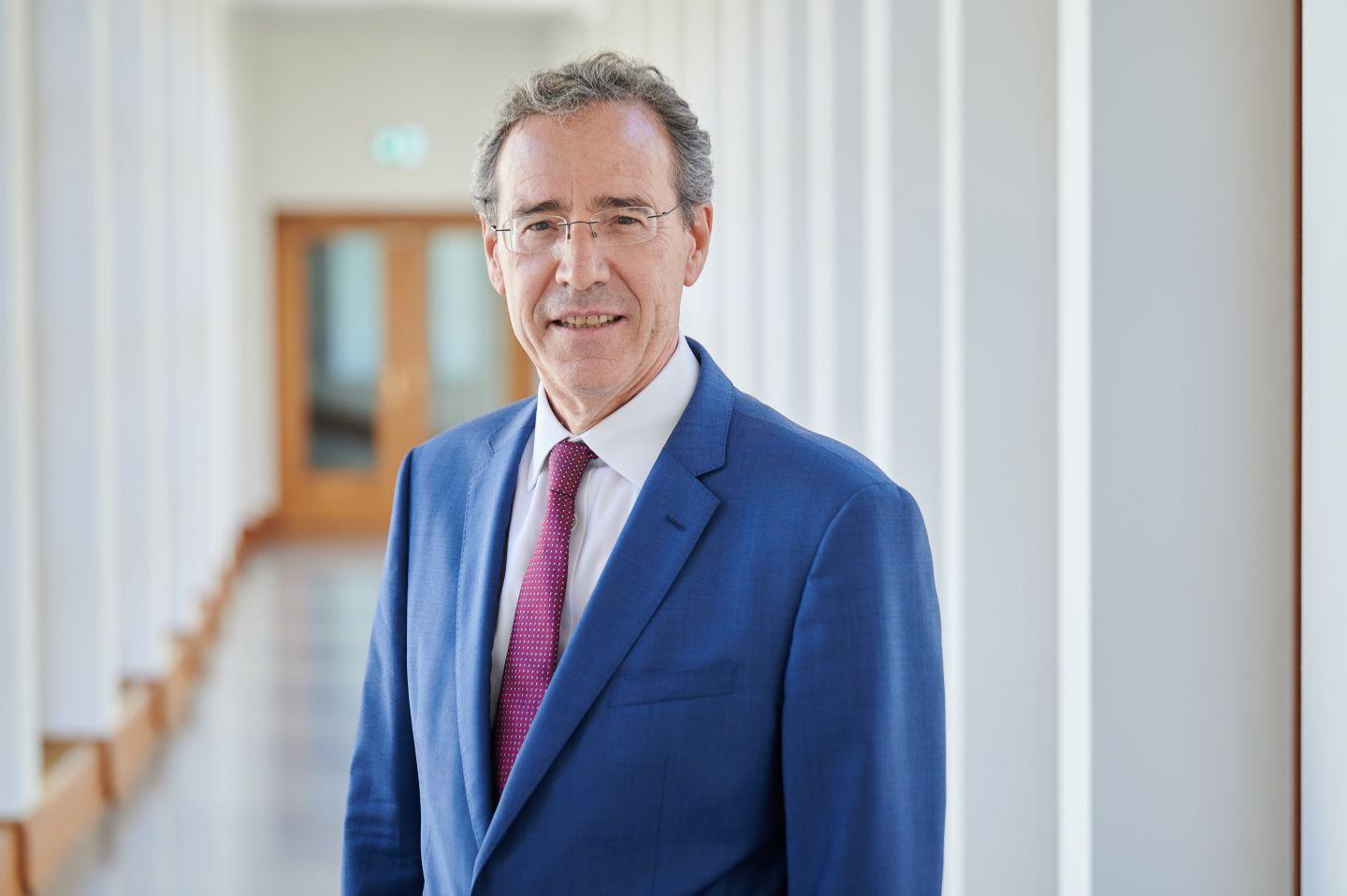
Miguel Berger, Germany’s ambassador to Poland, explains how military cooperation will change once the treaty signed on June 17 enters into force. He also discusses the progress of cultural property restitution, plans for a memorial to the victims of World War II, and whether Poland could become a shareholder in Airbus.
Małgorzata Grzegorczyk, XYZ: On June 17, Poland and Germany signed an agreement on military cooperation. How does it differ from the agreement made in 2011?
Miguel Berger, German Ambassador to Poland: In 2011, we made an agreement. This time, we are talking about a treaty between Poland and Germany. Since military cooperation has deepened following the outbreak of the war in Ukraine, we are providing it with a new framework. That means we will work together even more closely.
Naturally, this will take place within the framework of NATO. But in our view – and I am confident this is also the view of the Polish side – our security is now so closely interconnected that we must do everything we can to strengthen cooperation in the Baltic region, counter hybrid threats, improve military mobility and logistics, and, above all, deepen cooperation between our armed forces. This treaty places that cooperation on a new foundation.
Now that the treaty has been signed, it must be approved by the Polish government and officially published. Once that has happened, we will begin implementing its provisions and draw up a timetable for the next steps.
Will the German government also have to approve the treaty?
It already has. Because of differences in our constitutional systems, Germany was able to complete its approval process before the treaty was signed.
Naval rotation, permanent presence in Lithuania
You mentioned cooperation in the Baltic Sea region. What will that involve?
The situation in the Baltic has changed fundamentally since Finland and Sweden joined NATO. The key challenges now are Russia's shadow fleet, hybrid threats, and the security of critical infrastructure. Our cooperation is already very close, particularly because NATO's maritime headquarters is currently located in Rostock. We have an agreement with Poland that the headquarters will move to Gdynia in 2028. After that, it will relocate to Sweden. So there will be a rotational arrangement.
We are also continuing the presence of the German armed forces in Poland. We previously deployed Patriot missile systems in Rzeszów, while Eurofighter fighter jets were stationed in Malbork and Mińsk Mazowiecki. In July, we will begin cooperating on the construction of the East Shield project. Soldiers from German logistics units will remain in Poland for several months to assist with the construction work.
How many soldiers will be involved?
Around 150. They will arrive in Poland at the end of June and begin their deployment in July.
A German brigade is to be stationed in the Rudninkai area, south of Vilnius, about 20 kilometers from the Belarusian border. Could similar units also be deployed elsewhere?
That brigade will reach full combat readiness in 2027. Its location in Lithuania means it will be crucial not only for the defense of the Baltic states but also for Poland. This is also one of the key elements of our treaty. Together, we must build the infrastructure and logistical capabilities needed to support the Baltic states in the event of a conflict.
Does that mean more German troops in the region?
Yes. The brigade in Lithuania will consist of around 5,000 soldiers. Other NATO countries with forces in Lithuania, such as the United Kingdom, Canada, and the United States, have smaller troop contingents there, and their deployments are rotational. Our presence will be different. German soldiers will be stationed there together with their families, creating what will effectively be a German village. It will be a permanent deployment.
Who has agreements with whom?
Does Germany have agreements similar to Poland’s arrangements with the United Kingdom and France?
No. The strengthening of cooperation is a direct result of Russia’s aggression. That is why Poland has an agreement with the United Kingdom, and Prime Minister Donald Tusk has announced a similar arrangement with Italy. These are responses to security challenges that are not present in other parts of Europe.
Germany has one of the closest forms of military cooperation with the Netherlands. The Dutch land forces are largely integrated into German military units. We also have a Franco-German military unit.
Is compulsory military service needed in Germany?
Six months ago, the Bundestag passed legislation based on a model similar to the Swedish system. The first step is to introduce incentives: higher salaries and efforts to encourage young people to join the armed forces. Our plan is to increase the size of the Bundeswehr to 260,000 soldiers by 2035, compared with 180,000 today. That is a very significant increase. We need to see whether there will be enough volunteers. If not, we will need to reopen the discussion about introducing mandatory basic military service.
Many NATO countries will have to answer a similar question.
The return of historical treasures
Beyond military cooperation, Poland and Germany are also working together on the restitution of cultural property. What does that cooperation look like?
A few days ago, an event was held at the Krasiński Palace during which Gaude Mater Polonia [a fragment of a medieval manuscript – ed.] and the ring of King Sigismund I the Old were presented. The transfer of these objects is the latest example of cooperation that began during government consultations in December 2025. This cooperation between Poland’s Ministry of Culture and National Heritage and Germany’s Federal Foreign Office has now been ongoing for seven months.
Experts are examining German museums and collections to determine whether they hold items from the list compiled by the Polish side. Whenever we find something that should be returned to Poland, we do everything we can to make that happen. It is a very effective and constructive cooperation.
What needs to happen for a return to take place?
The owner must give consent. In most cases, these are museums. In the case of the Jagiellonian ring, the owner was the municipal museum in Pforzheim, and it was the city council that decided to return it. German institutions are very open to cooperation on restitution. I am pleased about this, especially because for more than 10 years there were not even any discussions on the issue.
However, together we concluded that it was time to have a substantive conversation about restitution. In December, during the intergovernmental talks, we handed over several dozen documents from the Teutonic Order, which are of great historical importance to Poland.
A memorial in a prime location
Speaking of history, what is the current status of the planned memorial to the victims of World War II?
The project is moving forward quickly. The Bundestag decided to build the memorial in December last year – which, as you can see, was a month marked by several important developments for both Germany and Poland. We launched a competition that attracted more than 160 applicants, including many from Poland. The Polish-German jury will meet in July. The winner will most likely be announced in December in Berlin. I am optimistic that construction will begin without delay.
How much will the memorial cost?
A budget of EUR 5 million has been allocated. The memorial will be built in a prominent location near the Federal Chancellery and the Bundestag.
More negative than positive views
Government cooperation is at its strongest level in years. Meanwhile, Poles remain relatively negative toward Germans.
We still need more Poles to travel to Germany and more Germans to visit Poland. We support school exchanges and parliamentary meetings. As neighbors and important members of the European Union, we must discuss common challenges. In my view, if we look at border regions, Polish provinces and German states cooperate very well with each other. However, we need to strengthen the broader political dialogue. This is one of our priorities. I believe the Polish ambassador in Berlin shares a similar view.
In the latest survey by Instytut Zachodni (Western Institute) in Poznań, one-quarter of respondents expressed a positive attitude toward Germany, while a large share of respondents were neutral or had no opinion. Just under one-third expressed more negative feelings.
 Interactive chart
 Have you noticed this shift?
In my view, the problem is that we do not have enough political dialogue. We need to talk more frequently about challenges in order to overcome stereotypes. There are still too many of them.
Exemplary economic relations
Interactive chart Interactive chart Fortunately, this does not affect Polish-German trade relations, does it?
Economic relations are one of the elements behind Poland’s success. During the German-Polish Forum on June 17, marking the 35th anniversary of the signing of the Treaty on Good Neighborliness, Foreign Minister Radosław Sikorski said that bilateral trade had increased 33-fold during that period. That is an extraordinary development.
The AHK, the German Chamber of Commerce and Industry, is the largest foreign business chamber in Poland. Some 6,500 German companies operate here. At the same time, we are seeing more and more Polish companies expanding into Germany. The Mühlendamm Bridge in Berlin will be renovated by Poland’s Budimex for EUR 1 billion.
An increasing number of Polish companies are also entering the German market. We welcome this because we need balanced trade relations. We are pleased with the dynamic growth in trade. Last year, it increased by 3.5%. Poland is Germany’s fourth-largest trading partner, with bilateral trade reaching EUR 181 billion.
Interactive chart What needs to be done to make the relationship even stronger?
Poland needs to answer the question of how it will respond to demographic change. What impact will it have on the market for skilled workers? Will the country need immigration of qualified workers? The second issue frequently raised by German companies is research and development. Poland invests 1.4% of GDP in this area, while Germany invests 3%. Companies also often point to labor law, which could become more flexible. That is all. Beyond these issues, businesses are satisfied.
Poland’s advantage is that, unlike many other countries, it is not dependent on one or two sectors. It has a broad industrial base, skilled workers, strong universities, and is advanced in digitalization. These are positive signs for the future.
Some jobs may be relocated if wages continue to rise. Poland therefore needs a strategy for replacing jobs vulnerable to higher labor costs with investments in high value-added sectors. That is the kind of strategy the country will need in the coming years.
Poland as an Airbus shareholder? You have to want it
Poland has been invited as a guest to the G20. Does the country’s growing international standing mean it could participate in other important initiatives? Could Poland become a shareholder in Airbus?
Let us start with the G20. Poland brings to this group the experience of an exceptionally successful transformation after the communist era. It is primarily a success of the Polish people, but also of the European Union: its single market, cooperation within the bloc, and support.
As for Airbus, the decision must be made by the Polish government. Does it want to play a larger role in a company established by Germany and France, whose official shareholders today also include Spain? In my view, the company is open to new shareholders, but the decision lies with Poland. Airbus employs more than 1,000 people in Poland at its Warsaw facility, LOT will purchase A220 aircraft, and discussions are also underway on further projects.
However, I would not link the purchase of Airbus shares with the G20. The G20 is an international forum focused on finance and the economy. Airbus is a matter of intra-European cooperation.
The EU versus China: what Brussels is doing
Since we are talking about industry, do you believe the European Union is doing enough to protect its industrial base?
There are serious discussions underway within the EU and the European Council about what our trade and investment relationship with China should look like. Over the past two years, the EU’s trade deficit with China has grown dramatically – to EUR 1 billion per day. No European country has a trade surplus with China. Poland’s deficit stands at EUR 48 billion, while Germany’s is even higher.
This is partly linked to the undervaluation of the renminbi. Chancellor Friedrich Merz has commissioned an analysis to determine whether China is deliberately weakening its currency. U.S. tariffs and China’s industrial overcapacity have led to European markets being flooded with Chinese products. At the same time, we have to acknowledge that China has developed technologically at remarkable speed and, in many areas, has reached Europe’s level or even surpassed it.
We will need to take steps to protect our industries. Discussions on this issue will continue within the EU in the coming weeks and months.
Perhaps for some industries, it is already too late...
I believe there is still time. This is not only about protecting ourselves from China. We also need to do our own homework: strengthen competitiveness, reduce regulatory burdens, reinforce the single market, and work toward a capital markets union. Some measures will need to be introduced sooner rather than later.


Key Takeaways
- The new treaty replaces the previous 2011 agreement and responds to the changing security environment following Russia’s aggression against Ukraine. It provides for closer cooperation between the armed forces, the development of military logistics, the protection of the Baltic Sea region, and joint action within the East Shield project. Germany has also announced that it will maintain its military presence in Poland.
- Ambassador Miguel Berger emphasizes the importance of the permanent German brigade in Lithuania and the expansion of infrastructure needed to support the Baltic states. The treaty is intended to improve military mobility and strengthen the defense capabilities of the entire region within NATO. Germany is also considering expanding the size of its armed forces, while not ruling out a return to compulsory military service in the future.
- Economic cooperation has reached record levels, but, according to the ambassador, both countries need to further develop political and social dialogue in order to reduce mutual stereotypes. Berger also highlights the need to strengthen the competitiveness of the European economy in response to growing pressure from China.