

This article is a part of Poland Unpacked. Weekly intelligence for decision-makers
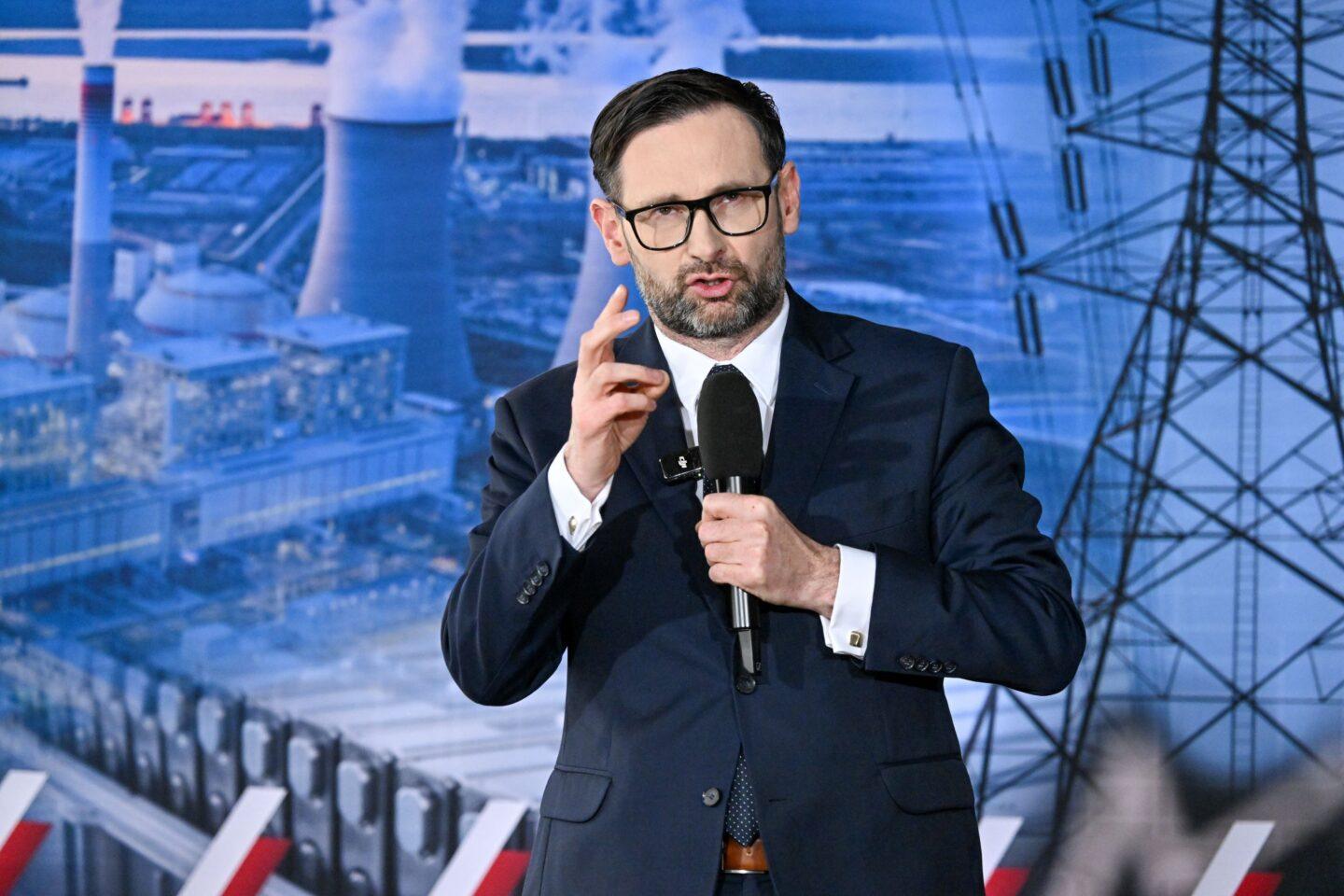
“If I were asked to return to a state-controlled company while Poland was governed by PiS as part of a coalition, I’d decline,” says Daniel Obajtek, Member of the European Parliament and former CEO of Orlen. In an interview with XYZ, he discusses life in the European Parliament, the future of industry, his views on renewable energy and coal, Orlen’s investments, and the prospect of a return to Russian energy imports.
Barbara Oksińska, Grzegorz Nawacki: Which role suits you best: entrepreneur, CEO, or Member of the European Parliament?
Daniel Obajtek, PiS MEP and former CEO of Orlen: I’ve never severed my ties with business. I still run my own company, and as an MEP I continue to meet with entrepreneurs because my work focuses primarily on economic affairs. That said, I have to admit I’m deeply disappointed with what’s happening in the European Parliament. The longer I work here and observe how politics in Brussels operates, the more of an economic radical I become.
What has made you more radical?
We need an economy with as few regulations as possible – one that operates quickly and efficiently. Instead, today’s European economy is built around regulation. And that’s despite the European industrial sector already delivering relatively low returns on investment. A limited amount of regulation can create favorable conditions for doing business, but it can also kill it outright. Unfortunately, the European Union is now destroying the conditions needed for business to grow. I find that alarming.
The years of crises triggered first by the COVID-19 pandemic and then by the war in Ukraine demonstrated how important local manufacturing is. Yet the EU has failed to draw any meaningful conclusions from those experiences.
The European automotive industry is a prime example. Burdened by excessive regulation, it has lost its competitiveness. It all began with the decision to ban the sale of new internal combustion engine vehicles from 2035. Today, everyone can see that this decision has been a complete disaster for the automotive industry. European manufacturers are cutting jobs, while Chinese producers continue to gain ground.
Meanwhile, in Brussels, politicians hold debates, deliver speeches in plenary sessions, and record videos for social media. At the end of the day, however, nothing changes. European Commission President Ursula von der Leyen promised reform. In practice, she proposed what amounts to a revolution: after 2035, just 10 percent of vehicles with internal combustion engines would still be allowed to leave factories – and only if they are made using green steel. Yet producing green steel on an industrial scale, for example using hydrogen, is simply not economically viable today.
Who's who
Daniel Obajtek
Since 2024, he has served as a Member of the European Parliament, elected from the Law and Justice (PiS) party list. From 2018 to 2024, he was CEO of the energy and fuels group Orlen. Previously, he headed the energy company Energa and Poland’s Agency for Restructuring and Modernization of Agriculture.
A proposal to cut industry’s costs
Anyone on the sidelines can criticize. As an MEP, shouldn’t you be trying to fix the European Union instead?
We’re doing everything we can, but unfortunately we’re in the minority in Brussels. We’re building a broad coalition, and we’re gradually succeeding. Together, we want to restore the competitiveness of European industry.
We’re calling for the EU to abandon plans to introduce the second phase of its emissions trading system, ETS 2, which would, in my view, devastate the economies of Central and Eastern Europe. In fact, I don’t believe the EU emissions trading system should exist at all. Today, it is no longer a tool for driving the energy transition – It has become a tax that feeds directly into the prices of finished goods.
I have an idea for reforming the system, and I’ve already convinced several European commissioners that it deserves consideration. The concept is to replace ETS obligations with investment incentives. Imagine a company that emits CO₂ and wants to build a new production facility. If that investment supports the green transition of its sector, the company’s participation in the ETS could be suspended up to the value of the investment it makes in the project.
We also need to develop additional energy sources. I know many companies that would like to invest in geothermal energy but need financial support. I’m also holding extensive discussions in Brussels about small modular nuclear reactors and ensuring that this technology is included in EU funding programs. I’m pushing for nuclear energy to receive financial backing from EU funds.
So it’s not true that my work in the European Parliament is entirely pointless. But it is still not enough to bring about meaningful change. I’m convinced that within three years, right-wing movements will become the dominant force in Brussels and take the lead in shaping the EU’s economic policy.
Political storm over renewables and coal
When you were at the helm of Orlen, the company announced a goal of achieving carbon neutrality by 2050 and launched major investments in zero-emission energy sources. Today, your political camp argues that the green transition is fundamentally harmful and has embraced the slogan “renewables-schmrenewables.” How do you see that?
There are different schools of thought on economic policy within my party. I have always supported a diversified energy mix. Such a mix does not rule out coal, but it does mean generating electricity from a range of sources.
I’m not opposed to coal-fired power because it is becoming less carbon-intensive and will continue to decarbonize. But if we want to rely on coal for many years to come, we need to take a rational approach to the mining sector. If there are mines where coal is no longer economically viable because production costs are too high, those mines should be closed. That’s simply common sense. At the same time, however, we should be opening new mines that can supply coal with the right calorific value and operate profitably.
That’s why I’m calling on those who want to preserve coal-based power generation to show me a plan identifying which mines should be closed and how many new ones will be opened. I don’t make empty promises – I’m a man of action. So I will support coal power, but on one condition: that we optimize the sector by closing unprofitable mines and building new ones.
There is a risk that mining unions will oppose the closure of loss-making mines.
I don’t see that as a risk. After all, I’m also talking about opening new mines. First build them, then close the old ones.
That’s a fairly distant prospect, given that building a mine from scratch takes many years.
But it’s not my fault that the country is being governed by incompetents. When I took over at Orlen, I was constantly told that I wouldn’t be able to merge Orlen with Lotos even within 15 years, and that I wouldn’t complete any major investment projects within a decade. Yet we did it.
So my question is: what is the state there for? For strategically important projects, the government can use fast-track legislative procedures and pass special-purpose laws. It simply has to act.
I believe a diversified energy mix is essential because it enables the deployment of new technologies. Coal, meanwhile, provides stability to our power system, and that is not going to change anytime soon.
We should also build gas-fired power plants, offshore wind farms in the Baltic Sea, onshore wind farms, solar power installations, and energy storage facilities. Over the longer term, we also need nuclear power, including small modular reactors, which represent the future of the sector.
Orlen moves ahead with Small Modular Reactors
You announced that Orlen, together with Synthos Green Energy (SGE), would build several dozen small modular nuclear reactors (SMRs). Today, Orlen’s management says the agreement was unfavorable and needs to be renegotiated. Were you satisfied with that partnership?
The current management board of Orlen is not even fit to run a lemonade stand. So far, its members have not made a single decision or launched a single investment that had not already been prepared by my team. And today, the company’s managers are taking credit for diversified gas and oil supplies, the Baltic offshore wind farm, LNG carriers, Norwegian reserves, and the company’s record market capitalization.
Those who were supposed to reverse the merger with Lotos and dismantle major investment projects are now implementing all of them. The same thing is happening with SMRs. If I were still sitting on Orlen’s management board, I guarantee that by the turn of 2025 and 2026 we would have broken ground on the construction of the first reactor.
Orlen Synthos Green Energy (OSGE) is a typical joint venture, with each party holding a 50 percent stake. It just so happens that SGE has exclusive rights to the BWRX-300 reactor technology and was a pioneer in introducing this technology in Poland. Our agreement also allowed for a third nuclear-sector partner to join the company. Orlen’s management kept this project frozen for two years and did not move it forward by even a single step. That is a scandal.
Yet Orlen did manage to negotiate the transfer of the reactor technology rights to OSGE. That puts Orlen in a stronger position.
But in the meantime, Canada has already started construction of a small reactor. Meanwhile, SGE has expanded beyond Poland and begun establishing partnerships with other European countries around this technology. And we are waiting for Orlen to finish negotiations and make a decision.
I believe small modular reactors are essential for Polish industry because they can help reduce energy costs. We analyzed many technologies and selected the BWRX-300 model because of the progress already made with this technology in Canada. Today, Poland should also already be building such reactors rather than still debating the issue.
Before we decided to become involved in SMRs, we commissioned several studies on the matter. Their conclusion was that the investment was economically justified.
A problematic investment
The construction of the Olefins III petrochemical facilities, meanwhile, faced questions over its economic justification. Orlen’s current management has described the project as unnecessary, overpriced, and completely irrational. Stock market analysts had questioned the project’s viability from the very beginning.
But the project is still going ahead. Olefins are the future of Polish petrochemicals. The existing facilities were built back in the Gierek era [Edward Gierek was the communist leader of Poland in 1970s – ed.], and we needed new, more efficient production capacity.
All the controversy surrounding the investment was just a media stunt, because in practice Orlen is continuing with the project. And it will do so at an even higher cost, because it delayed the investment by two years.
If the management board concluded that the project was unprofitable, it had more than enough time to halt the work. In the end, it turned out that the only thing it changed was the name.
However, the project was already at an advanced stage. And it was not only the name that changed – the investment outlays were also reduced, from PLN 51 billion (EUR 11.8 billion) to just under PLN 36 billion (EUR 8.3 billion). That is a significant difference.
Our program envisaged expanding Olefins with additional production units. It evolved over the years and became larger. There was no ambiguity on this matter – everything was clearly set out in the strategy.
The current management cut part of the program and changed its name. But in practice, it is the same investment.
But it is a smaller and cheaper one.
It is the same project; only its scope has been reduced. I would like people to finally stop saying that this project does not make economic sense.
As long as civilization exists, the world will need petrochemicals – and not less of them, but more and more. Of course, it is obvious that markets sometimes face unfavorable macroeconomic conditions. There may be periods when the environment remains challenging for several years, followed by a recovery, and then such an installation can recover all its losses within three or four years.
An investment of this kind is built with a 50-year horizon in mind. We can follow the rest of Europe’s path and shut down refineries because they are considered unprofitable. But it only took a few attacks in the Middle East for fuel production margins to hit record levels again.
That is how business works.
Billions lost
One thing that was unquestionably unfavorable for Orlen during your tenure was the transfer of PLN 1.6 billion (EUR 369 million) to a Swiss company for oil that was never delivered.
If prosecutors intended to bring charges against me in this matter, they would have done so long ago. I am not worried about it in the slightest. This is a scandal involving Orlen’s current management board. It is the current management that should explain why it terminated the transaction and why it dismissed all the experts at the company.
Do you have a clear conscience regarding this matter?
But I am not the person who lost that money.
The transaction took place while you were CEO.
Orlen has 300 subsidiaries, and each of them has its own management board and makes its own decisions. I believe this matter will be clarified.
Orlen should continue making acquisitions
During your tenure, Orlen acquired, among others, Energa, Lotos, and PGNiG. You also wanted to take over the fertilizer company Puławy, which is part of the Grupa Azoty group. In your view, should Orlen continue acquiring Polish companies?
If I were still CEO of Orlen, Grupa Azoty would not be facing such severe financial problems as it is today. A merger with Orlen is the only way to save Poland’s fertilizer industry. It should be carried out immediately – but once again, that requires decisions to be made.
We also laid the groundwork for acquiring Azoty’s new plastics plant in Police. The current Orlen management is only now beginning to consider this option.
We looked at the market more broadly. We were interested in another Polish company as well. We had plans to acquire fuel stations in Germany, Austria, and Romania, as well as a German refinery.
At the same time, we were holding talks with the Ukrainian side about gaining access to retail and logistics infrastructure in the fuel sector. And I would have finalized those discussions without waiting for the war to end.
That would have allowed us to enter the Ukrainian market at relatively low cost. Of course, it would have involved risks, but the goal would have been to establish a presence there before the Germans or the French.
Crisis in the fuel market
Meanwhile, the global oil and fuel markets are facing a crisis this year. How do you assess the Polish government’s intervention in this area?
This is exactly the kind of example I was referring to earlier when discussing the actions of the European Union. The EU talks extensively about producing synthetic fuels and green hydrogen, even though these products cannot be commercialized today. At the same time, it has shut down around 30 refineries in Europe as part of implementing its green agenda.
Now a crisis has emerged in the Middle East, along with the blockade of the Strait of Hormuz. The Chinese have taken over a significant share of petroleum products transported by sea, while Europe, when it comes to supplies of diesel and aviation fuel, has been left… well, you know where.
And in such a situation, the government decides to pursue a policy of regulated fuel prices at service stations. Problems like these should be solved in a completely different way. Orlen should have immediately purchased additional fuel supplies, stabilized prices, and increased product availability on the wholesale market – so that Poland would not face fuel shortages.
But the management board preferred to go to the minister and ask for help. And now they are even claiming that we have cheap fuel.
According to statistics, during the government intervention Poland had some of the lowest fuel prices in Europe. Meanwhile, during your tenure as CEO, fuel shortages did occur, with widespread “pump failures” reported at Orlen stations.
Were those really low prices? I recommend checking what fuel prices were during my time as CEO after adjusting for crude oil prices and the dollar exchange rate. Those were low prices.
If this regulation actually made any sense, the government would not have introduced a windfall tax on energy companies’ excess profits. Because where would the industry supposedly be generating those profits from?
That tax, combined with Orlen’s record dividend payout, is simply a raid on the company’s resources because the state budget is short of money. If the finance minister wanted an additional PLN 4 billion (EUR 923 million), there were other ways to achieve that. It would have been enough for PERN [state-owned company that operates Poland’s crude oil and fuel pipeline network plus strategic storage terminals – ed.] to sell 2 percent of Orlen’s shares, and the State Treasury would have generated an even larger return from that transaction.
You mention the pump failures, but let’s remember that during your tenure the situation in the Middle East was also tense. At that time, however, you worked with the government to support the economy.
I would never have allowed myself to introduce a windfall tax or pay out such large dividends from Orlen.
Taxes are decided by the finance minister. Did you really have that kind of influence?
Yes. As CEO of Orlen, I had political influence. That money should have gone into investments carried out by the company rather than into the state budget.
First, you praise the fact that Orlen achieved record profits during your tenure, and now you criticize the company for generating high profits. Fuel price intervention was good under your leadership, but bad now…
Because during my tenure Orlen delivered very strong results, but it was also carrying out massive investment projects. Now, money from the company is being used to plug a hole in the state budget.
Orlen and Russian energy supplies
Do you think Europe will return to Russian commodities after the war in Ukraine ends? What could that mean for Poland?
This is a very difficult topic, but I’ll put it briefly: if Europe returns to Russian oil and gas, Orlen will cease to exist.
So either Orlen itself will also return to Russian commodities, or it will lose competitiveness?
That is exactly what has happened in the Czech market, where Orlen operates refineries.
I have always believed that when sourcing commodities, companies need alternative options. That is necessary so that no one can blackmail you – for example, by threatening to cut off supplies.
Shortly after Russia’s invasion of Ukraine, the Czech government began modernizing the pipeline infrastructure that allows the country to import oil from sources other than Russia. When I was CEO of Orlen, I considered various scenarios because I did not know how refineries in Slovakia and Hungary would respond.
The new Orlen management decided differently – it completely cut off Russian oil supplies in Czechia. And what happened? It lost that market because competitors are using cheaper raw materials from the East.
If we create a similar situation in Poland – where neighboring countries produce fuels at significantly lower costs – Orlen will not survive.
So what do you propose?
The fact is that the Druzhba pipeline, which once transported Russian oil to Western Europe, runs through Poland. That is our bargaining chip.
Secondly, Orlen should not close itself off to any alternatives if the company’s very survival is at stake.
Are you suggesting that, in the worst-case scenario, Orlen should return to Russian commodities?
It was during my tenure that Orlen cut itself off from Russian oil and gas. So I am the last person who could be accused of being pro-Russian.
However, if other European refineries are using cheap feedstock, Orlen will have to do the same. You can call it a sin, but that is how competition for market share works.
Similarly, I would not have cut off Russian oil supplies in Czechia so quickly, given that Slovak and Hungarian refineries had not done so. Either everyone stops using Russian oil in a given region, or no one does.
Otherwise, we will suffer economically because our products will become uncompetitive on price. So we must do everything we can to ensure that Europe does not import oil and gas from Russia.
Business or politics?
Since we are discussing different scenarios, what are your plans if PiS (Law and Justice – ed.) were to return to power after next year’s parliamentary elections? Do you see yourself remaining in politics, or would you rather return to business?
I am not thinking about that at all. I do not look at opinion polls because they are conducted to shape public sentiment and are therefore unreliable.
Instead, I travel around Poland. I receive many invitations to public meetings, I talk to businesses and local governments, and I see what the real mood in the country is. I see how deep the disappointment with the current government has become.
I am convinced that in autumn 2027, voters will show this government a red card. But how things will unfold – whether PiS will govern independently or as part of a coalition – we do not know.
I am someone who is not particularly flexible. I do not bend under pressure. If I were to return to a state-owned company while the country was governed by a coalition, I would decline.
I would no longer have the same power and ability to get things done that I had when I managed Orlen. And I hate being unable to deliver results. I hate failing to get things done. I cannot stand having to make decisions while trying to satisfy 50 different people.
I would not agree to that. I already have my experience – I built Poland’s largest company together with my team. And no one can take that away from me.
And looking at the near future, you announced that you would join a hunger strike by employees of the Inowrocław Salt Mine Solino. The workforce of the Orlen-owned company fears losing strategic infrastructure related to oil and fuel storage. Was that a serious declaration?
Yes, that is what I announced. I will keep my word.
Good to know
Orlen’s major investments
Daniel Obajtek led Orlen from 2018 to 2024. During that period, he made a number of major investment decisions. Not all of them won approval from experts, and some are now heavily criticized by the company’s current management board.
Major mergers and acquisitions
During that period, Orlen became known for large-scale acquisitions. The biggest companies taken over by the group included energy company Energa, Polish Oil and Gas Company (PGNiG), and Grupa Lotos.
The Lotos merger generated the greatest controversy. To secure European Commission approval for the transaction, Orlen had to agree to a package of remedies. As a result, it sold, among other assets, a 30 percent stake in the Gdańsk Refinery (along with rights to dispose of part of the fuel produced at the facility) to Saudi company Saudi Aramco, as well as more than 400 Lotos fuel stations to Hungarian energy group MOL.
The Supreme Audit Office (NIK) later concluded that selling assets as part of the merger for PLN 5 billion (EUR 1.15 billion) below their appraised value was an act of poor management. According to auditors, the merger also created risks for Poland’s fuel security.
Orlen also acquired the struggling newspaper distributor Ruch and local media publisher Polska Press.
The Olefins III megaproject
In 2018, Orlen decided to expand its petrochemical facilities in Płock as part of the Olefins III project. The facility was intended to produce, among other things, olefins used in the manufacturing of plastics.
Initially, the investment was expected to cost PLN 8.3 billion (EUR 1.9 billion). In 2023, however, Orlen’s then-management increased the planned spending to PLN 25 billion (EUR 5.8 billion).
The company’s current management board argued that, once the infrastructure required for operating the facilities was included, the total cost of the project would have reached PLN 45–51 billion (EUR 10.4–11.8 billion).
However, the project had already advanced so far that halting it would have resulted in multibillion-zloty losses. In December 2024, Orlen decided to launch the New Chemistry project, which will use the infrastructure already built. It is expected to cost around PLN 34 billion (EUR 7.8 billion) and begin operations in 2030.
Orlen’s current management describes it as a project being carried out out of necessity.
The Swiss scandal
In 2023, Orlen’s Swiss subsidiary, Orlen Trading Switzerland (OTS), entered into unfavorable crude oil purchase agreements. The company spent around PLN 1.6 billion (EUR 369 million) on the transactions, but the oil was never delivered.
Former members of OTS’s management board have been charged in connection with the case. Orlen’s current management says the money was spent without adequate security measures and in violation of the company’s internal procedures.
Small modular nuclear reactors
In 2021, Orlen signed an agreement with Synthos Green Energy (owned by billionaire Michał Sołowow) to establish Orlen Synthos Green Energy (OSGE). The aim was to develop small modular nuclear reactors (SMRs) in Poland using the BWRX-300 technology offered by GE Hitachi.
Daniel Obajtek, then CEO of Orlen, spoke of building as many as 79 such reactors in Poland.
Initially, OSGE faced difficulties obtaining the so-called fundamental decision for its nuclear projects. At the time, the decision was issued by the climate ministry as a political approval for the project. The Internal Security Agency (ABW) issued a negative opinion on the matter.
Despite this, at the end of 2023, during the final days of Mateusz Morawiecki’s government, OSGE received positive decisions for several locations.
Today, OSGE continues the process of developing nuclear energy projects in Poland. The first reactors are planned to be built in Włocławek, where Orlen has production facilities, and near Oświęcim, where Synthos operates manufacturing plants.
Investments in renewable energy
Orlen was the first fuel and energy company in Central Europe to declare a goal of achieving CO₂ neutrality by 2050.
A key element of this strategy is the construction of offshore wind farms. The first Baltic Sea wind farm is scheduled to begin operations in 2026, with further projects under development.


Key Takeaways
- “I am deeply disappointed with what is happening in the European Parliament,” said Daniel Obajtek, PiS MEP and former CEO of Orlen. In his view, EU policies are undermining local industry. He believes the carbon emissions trading system (ETS) needs to be reformed. The MEP proposes that companies should be exempt from paying for emissions if they invest in the green transition. At the same time, he distances himself from statements by some PiS politicians who oppose the development of renewable energy sources. He also says he will support coal-based power generation only on one condition: that Poland closes unprofitable coal mines and builds new ones.
- Daniel Obajtek, who headed Orlen from 2018 to 2024, rejects accusations that the company made a misguided investment in petrochemical facilities and that it signed an unfavorable agreement on the development of small modular nuclear reactors. He also says he bears no responsibility for the PLN 1.6 billion (EUR 369 million) lost during his tenure by Orlen’s Swiss oil-trading subsidiary. Instead, he argues that if he were still running the fuel company, it would already have started construction of a small modular nuclear reactor and would have saved fertilizer producer Grupa Azoty from its financial troubles.
- The MEP also argues that if Europe returns to Russian oil and gas, Orlen will cease to exist. “You can call it a sin, but that is how competition for market share works. Either everyone cuts ties with Russian oil in a given region, or no one does,” Daniel Obajtek says.