Poland Unpacked week 41 (28 September - 4 October 2026)
Welcome to this week’s edition of our Poland Unpacked, where we deliver key insights and trends shaping the economic, corporate and political landscape. Catch the most important insights from Poland in this week’s briefing.
This article is a part of Poland Unpacked. Weekly intelligence for decision-makers
This is the first project of its kind in Poland’s history, and XYZ was the first to report it. A group of Polish entrepreneurs will invest PLN 500m (EUR 114.2m) in a small modular reactor project being developed by a company owned by billionaire Michał Sołowow.
The investors include Rafał Brzoska, founder and CEO of InPost (a parcel delivery and logistics company); Dariusz Gałęzewski, co-founder of Oshee (a sports and functional drinks company); Krzysztof Pawiński, CEO and one of the owners of Maspex (a large food and beverage producer), together with his daughter Marta Pawińska; Mati Staniszewski, co-founder and CEO of ElevenLabs (an AI company specializing in voice and audio); Piotr Dąbkowski, co-founder of ElevenLabs; Michał Wypychewicz, co-owner of ZPUE (an electrical engineering company); Dominik Doliński, a partner at Oshee; Michał Brański, co-owner of WP Holding (a large internet and technology group); and Bruno Wejchert, a partner at Strike Capital investment fund.
Synthos Green Energy will also have foreign investors, who will contribute PLN 1.35 bn (EUR 308.4m). One of them is GE Vernova, which will invest EUR 100m (PLN 437.8m). Synthos Green Energy is the exclusive regional partner responsible for developing BWRX-300 reactors in parts of the European market. In Poland, it plans to build SMRs with oil and gas group Orlen. The company is focusing on three locations where 14 SMR units could be built. The project has encountered some turbulence, with negotiations with Orlen dragging on. Michał Sołowow has now announced, however, that an agreement has been reached. Read the full story.
What does International Personal Finance (IPF), which two months ago became the owner of Poland’s Provident, among other businesses, have in store? Entering new markets, acquiring competitors and even buying a bank. “We won’t run out of money,” says Gerard Ryan, IPF’s CEO, who gave XYZ the company’s only interview in Poland. Have a read.
KGHM, Poland’s copper giant, will invest EUR 645.9 million with Australian mining group South32 to expand the Sierra Gorda mine in Chile. KGHM acquired the project in 2012 for EUR 2.49-2.58 billion. Today, the mine is generating cash and has begun repaying its debt. In the first half of 2026 alone, it repaid EUR 445.4 million of debt. If conditions in the copper market remain favorable, it will repay the entire debt within four to five years. KGHM is considering further investments in Chile, but not only there. The company’s management board will soon travel to Morocco. Here's more.
Lech Kaniuk, a well-known figure on Poland’s and Sweden’s technology scenes and co-founder of PizzaPortal.pl, iTaxi and SunRoof, is building another business together with Lars-Erik Wessman. It is Kepta Legal, a startup that aims to revolutionize corporate legal services through artificial intelligence and process automation.
What does that mean in practice? Kepta Legal is building a comprehensive legal-services platform for companies. It offers software on a subscription-based SaaS model designed to serve as a company’s internal legal infrastructure. When a legal service is needed, a Kepta Legal lawyer joins the process. With the knowledge accumulated on the platform, the lawyer can complete the task more efficiently and at a predetermined price. Here's the idea.
Inflation came in at 4% year on year in September, according to Statistics Poland’s (GUS) flash estimate. That was markedly higher than August’s 3.4% and above the upper end of the central bank’s inflation target range, which stands at 3.5%. As in other countries, the increase was driven by higher energy commodity prices and, in turn, more expensive fuel.
As a result, futures markets had begun pricing in the possibility of substantial interest-rate increases, potentially taking the benchmark rate to as much as 5% next year, from 3.75% today.
That outlook may already be out of date. On Thursday evening, October 1, President Karol Nawrocki signed legislation extending the Lower Fuel Prices program (CPN). The scheme had already been used twice following the outbreak of war between the US and Iran, with its second iteration expiring at the end of August. It provides for a cut in VAT on fuel, lower excise duties and the introduction of maximum prices. The program is to be financed by an additional tax levied on energy companies.
As a result, inflation is likely to ease again in the coming months and could return to the central bank’s target range. That makes rate increases less likely.
Last week also brought Poland’s balance-of-payments data for the second quarter of 2026. The key takeaway is that the current-account deficit widened slightly. The figures also show that two sectors that matter greatly for Poland’s competitiveness – business services and IT – remain in good shape. Exports of services increased in both areas. For now, then, there is little sign of the “AI apocalypse” that many observers had feared.
The government also published a new debt-management strategy covering 2027–30. It points to a sizeable fiscal tightening ahead. The general-government deficit is expected to fall by as much as 2.6 percentage points of GDP within two years – or by 3 percentage points once rising debt-servicing costs are excluded. That could weigh significantly on economic growth. Here's how.
We also examined estimates of Poland’s corporate-income-tax gap: the revenue that should have reached the state budget but did not. The conclusion is that there is little consensus. Estimates produced by different institutions vary widely. Full article here.
Poland’s political heart beats, as in most countries, in its capital. But last week, as in the week before, political analysts were looking elsewhere – to the country’s former capital, Kraków.
The southern city held an early mayoral election. The contest is not yet over: a run-off will take place on October 11. It will pit Łukasz Gibała, a left-liberal independent candidate largely outside national parliamentary politics, though with a past spell in the Sejm, against Monika Piątkowska, a senator from the governing Civic Coalition (KO) who has been personally backed by Prime Minister Donald Tusk.
Gibała is the clear favorite, though victory is not assured. His presence in the second round also makes it harder to translate Kraków’s vote into broader conclusions about national politics. Most experts stress that point. Political parties, however, have been happy to trumpet their results and present the contest as a prelude to the national battle of 2027. That is more political PR than a serious reading of the national landscape.
At the national level, last week’s political argument centered on inflation and fuel prices. Inflation, at 4%, has returned to a level not seen for some time and is being driven in large part by global fuel-price trends. Parliament recently passed the government’s proposed windfall tax on excess profits at fuel companies, above all state-controlled giant Orlen.
This was the government’s second attempt to introduce such a tax. The first failed after President Karol Nawrocki referred the legislation to the Constitutional Tribunal. The second attempt proved more successful. Nawrocki again sent the law to the tribunal, but this time for an ex-post review, which in practice allows it to enter into force.
Before that, Tusk had used two short appearances in the form of a YouTube podcast to explain to the public why fuel prices had climbed to record highs, and then appealed directly to the president to sign the legislation. In a televised address on Thursday, Nawrocki in turn said he expected the government to cut fuel prices immediately.
It was another episode in the political war between the prime minister and the president – and this time Tusk came out on top. Nawrocki regularly vetoes government legislation and openly criticizes the coalition cabinet. On this occasion, however, he yielded to pressure from the prime minister and did not veto the bill.
For more on how the confrontation between the prime minister and the president is blocking larger reforms, see our recent piece on the “unbearable burden of cohabitation” – or, put more simply, on Donald Tusk and Karol Nawrocki living together like cats and dogs. Here it is.
Poland has begun testing the European Digital Identity Wallet, or EUDI Wallet, which is designed to work across the European Union. In Poland, the system will be integrated into the government’s mObywatel app. One of the most important changes will be selective disclosure of personal data: for example, users will be able to prove they are over 18 without revealing their name or date of birth.
The wallet will also be able to store digital diplomas and micro-credentials confirming acquired skills. That could change how qualifications are verified in the labor market, including in cross-border recruitment.
Companies and public institutions are already testing how to integrate their systems with the new solution. When will EUDI Wallet become available to Polish users, and how will it work? We explain in our article.
We also look at how a Polish company spent years developing unmanned ground vehicles before they became a major focus of military modernization. The company is Macro-System. Today, it is testing its platforms with soldiers from NATO countries. Its vehicles can perform a range of tasks, from transporting supplies and evacuating casualties to reconnaissance and combat missions.
Their key advantage is modularity: the same vehicle can be quickly adapted for a different mission. During exercises with the Belgian army, the GOBLIN unmanned ground platform carried out reconnaissance, logistics and casualty-evacuation tasks. The company has also tested its systems during international exercises involving Poland, Lithuania and France.
Our article here looks at how such robots are developed and what their manufacturer is learning from soldiers testing the equipment in realistic operational conditions.
Another company that caught our attention is Osavul, a Ukrainian startup founded during Russia’s invasion. Its technology is now used by NATO as well as public-sector and defense institutions in more than 10 countries. The company has just raised EUR 8.5 million in a funding round led by cybersecurity-focused 33N Ventures, with Poland’s Balnord also taking part.
Osavul combines data on disinformation, cyberattacks and physical hostile activity to identify not only ongoing incidents, but also signals that may point to an attack being prepared. The startup has more than 50 deployments, while the value of contracts signed in 2025 increased fourfold. It now wants to use the experience gained from working with the military and public administration to expand further into the commercial market, with energy, transport, logistics and financial services among its target sectors. Here's the full story.
Data leaks, meanwhile, are increasingly becoming more than a purely technological problem. Cases involving MyDr and Revolut show the different ways information can fall into the wrong hands – from cyberattacks to fraudsters exploiting the genuine domain of a public institution.
Experts also warn about the uncontrolled use of AI tools by employees. Data security therefore increasingly requires a combination of technology, procedures and properly trained staff. Companies need not only to secure their systems, but also to know where their data is stored, who can access it and how they will respond when an incident occurs. Here's more on the matter.
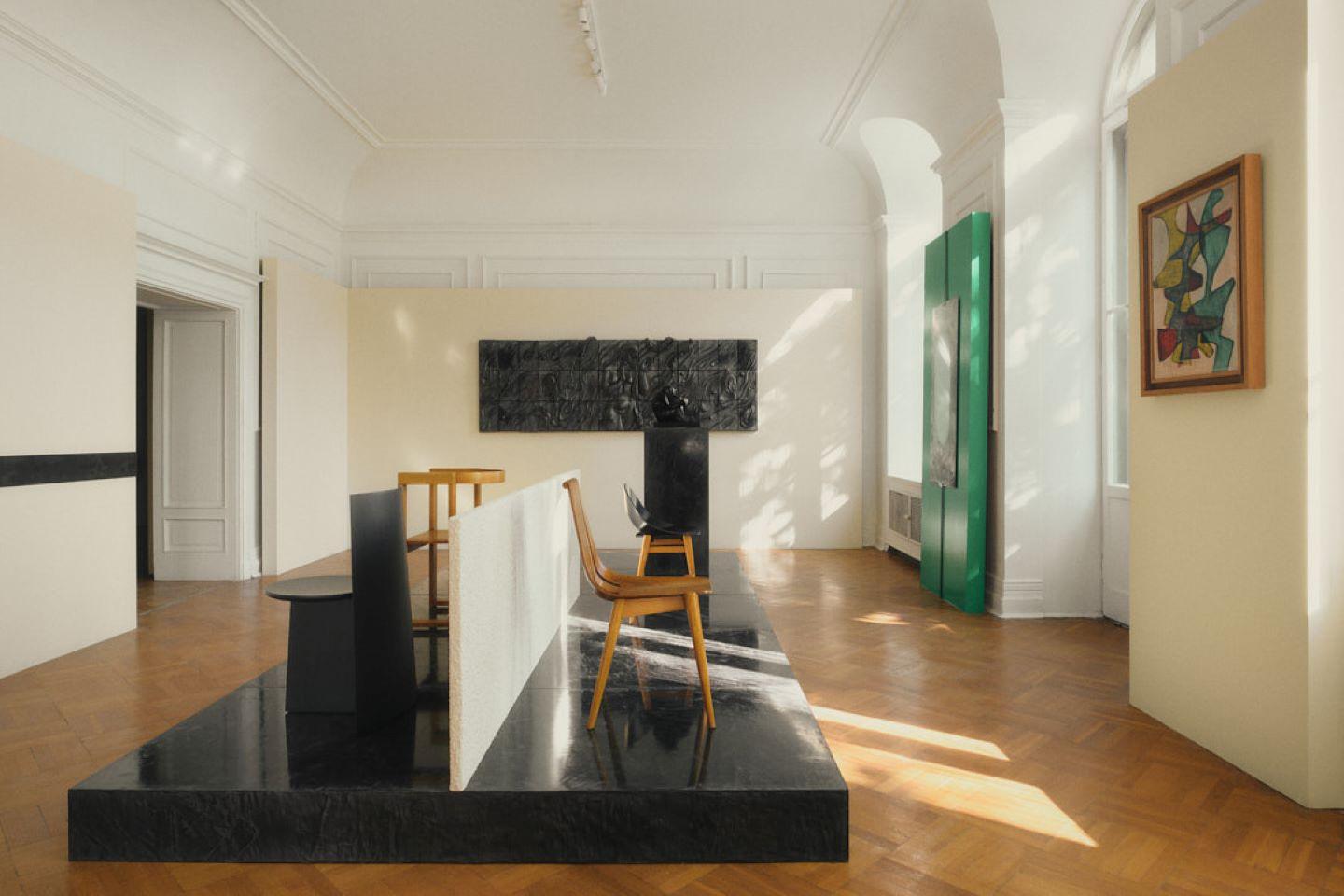
Polish modernism was never simply about clean lines and geometric restraint. It was also about making do: turning plywood, glass, scraps and limited industrial capacity into objects that could still look strikingly modern. The exhibition Polish Modernism: A Fight for Beauty, first shown during Milan Design Week 2026 and now on view in Warsaw, brings together figures such as Katarzyna Kobro, Bohdan Lachert, Teresa Kruszewska and Roman Modzelewski to show how Polish designers built their own version of modernity – often with more imagination than resources.
The Warsaw edition, staged in the decidedly non-modernist Villa Gawrońskich, also adds works by Erna Rosenstein, Maria Jarema and Jerzy Nowosielski, alongside contemporary designers including Maja Ganszyniec and Tomek Rygalik. The result is less a nostalgic parade of design classics than a surprisingly current argument about scarcity, waste and respect for materials. Worth seeing before it closes on October 11 -particularly if your idea of Polish design begins and ends with a red Modzelewski armchair.
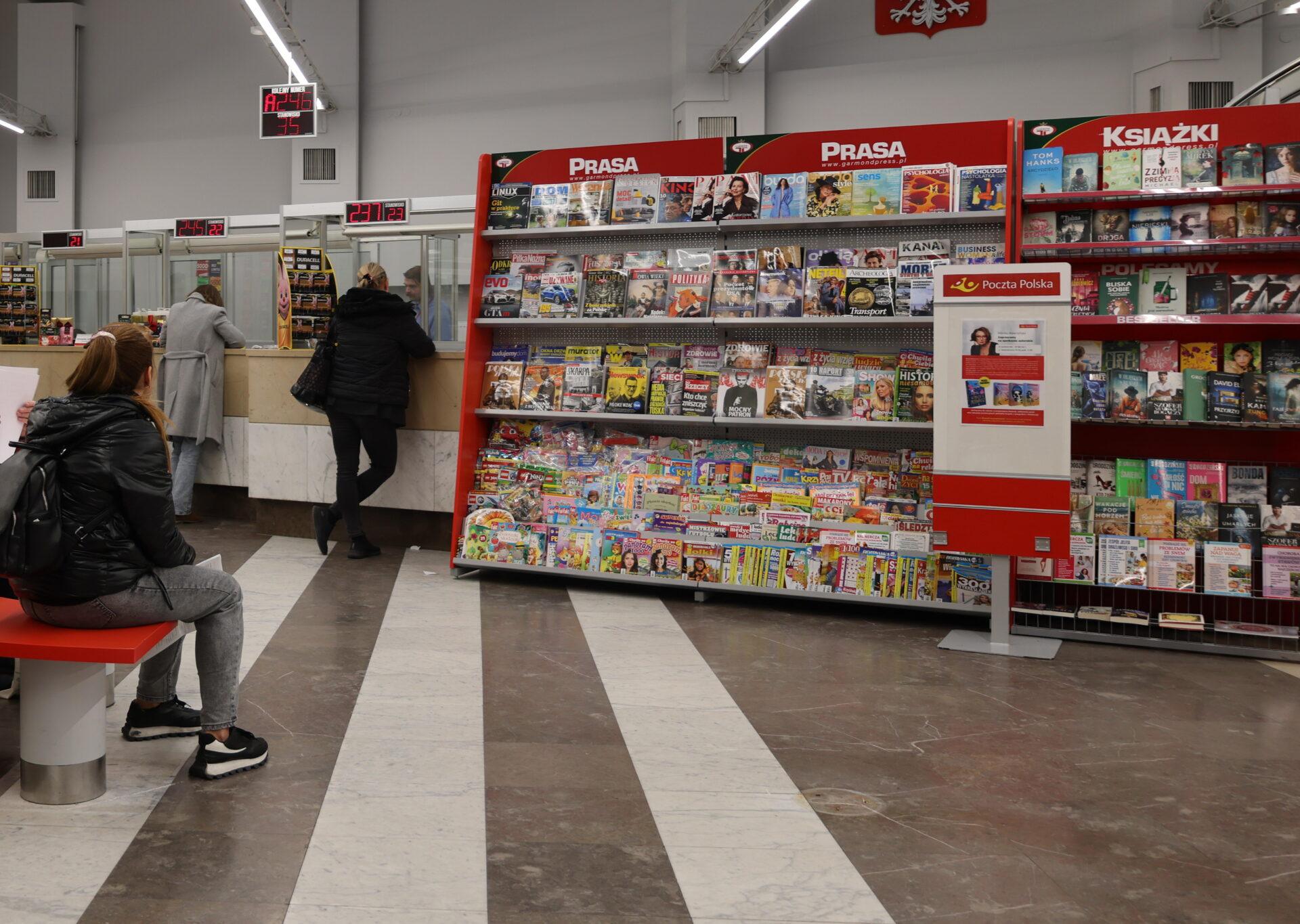
October 9th is World Post Day, so let’s celebrate an institution that has long doubled as a national source of comedy. Poczta Polska, the state postal operator, is associated in the popular imagination with queues, paper forms, missed deliveries and the mysterious ability of an “attempted delivery” notice to appear even when someone insists they were home all day. Jokes about parcels travelling at geological speed and post offices selling everything except stamps have become part of everyday folklore.
There is a reason the humor endures. Poczta Polska is one of those institutions almost every Pole has encountered, giving it the same comic potential as railways, bureaucracy or visits to a government office. The jokes are often exaggerated, but their persistence says something broader about Polish humor: irritation is rarely wasted when it can be converted into a one-liner. World Post Day may celebrate the global postal system. In Poland, it can also celebrate the national art of complaining about it.