
Poland Unpacked week 42 (5-11 October 2026)

Welcome to this week’s edition of our Poland Unpacked, where we deliver key insights and trends shaping the economic, corporate and political landscape. Catch the most important insights from Poland in this week’s briefing.

Loading the Elevenlabs Text to Speech AudioNative Player...
Topic of the week
A week of knife attacks shocks Poland
Michał Szcześniewski

A series of knife attacks and threats involving teenagers has shaken Poland. On Wednesday, October 7, a 19-year-old student attacked nine people at a vocational school in Ostrołęka, north-east of Warsaw. Five students, two teachers and two bystanders were injured. Police later discovered that the suspect had also been carrying a backpack containing a homemade explosive device. The following day, a 15-year-old former pupil attacked a primary school in Leszczydół-Nowiny, near Wyszków, killing a 37-year-old female employee and injuring two others, including the headteacher. In a separate incident in Sierpc, police detained a 17-year-old suspected of planning an attack at his school and seized two knives. On Saturday, a 21-year-old woman attacked staff and students at a school in Warsaw.

Prime Minister Donald Tusk convened an emergency meeting with senior ministers, the police chief and the coordinator of Poland's intelligence services. Schools across parts of the Mazovia region suspended classes on Friday, October 9, while police increased patrols around educational facilities. Reports circulating on social media about a supposed coordinated wave of school attacks, dubbed "Bloody Friday", fuelled anxiety among parents and pupils. Police said they had found no evidence confirming the alleged online challenge or that the incidents were connected. Nevertheless, investigators began examining online activity and potential warning signs, with particular attention to threats circulating on social media.

The government is now considering a broader overhaul of school security. Education Minister Barbara Nowacka has announced plans to give headteachers greater powers to respond to threats, alongside additional safety training and psychological support.

As at Sunday morning, Police stated more than 64,000 educational facilities were inspected and 117 people detained nationwide. Police operations are ongoing across Poland to ensure the safety of children, young people and all staff working in educational institutions - said the police.

Business
Three reinvention stories and an influencer pizza
Michał Szcześniewski

What do an educational publisher, a premium fashion brand and a home furnishings retailer have in common? All three are rethinking their business models as consumer expectations, technology and competition reshape their markets.

Nowa Era, one of Poland’s leading educational publishers, is betting on AI, digital learning and acquisitions to grow despite a shrinking student population. With PLN 580m in annual revenue, the company is expanding beyond textbooks. CEO Andrzej Kozłowski explains in an interview with XYZ why the future of education is hybrid, why ChatGPT alone is not enough for schools and how parent company Sanoma plans to spend its EUR 300m acquisition war chest.

Kazar, the Polish premium footwear brand, is taking its next step – into clothing. After 35 years in business, founder Artur Kazienko wants to add PLN 100–150m in annual revenue within five years and increase the share of international sales from around 28% to 50%. A potential IPO and the creation of a broader premium fashion group are also on the table. In our interview, he explains how a Polish brand can compete beyond its home market.

Home&you, meanwhile, is trying to put its own house in order. After three years of losses totaling PLN 53m and a shrinking market share, the home furnishings retailer is undertaking a major overhaul. Led by the founder’s daughter, it is moving toward the affordable premium segment, investing in e-commerce and planning 30 new stores. The target: more than PLN 1bn in annual revenue by 2031. Here's their plan.

For several days now, everyone in Poland has been talking about Książulo. The influencer, whose real name is Szymon Nyczke, can draw crowds to restaurants with a single review published in YouTube. He has now launched a new business. Pizza sold under his Muala brand is available at Żabka, a convenience-store chain with 13,000 outlets in Poland. XYZ has attempted to estimate how much Książulo has earned from YouTube advertising, brand partnerships - including one with Pepsi - and his other business activities. All the numbers and figures you need to know.

Economy & Markets
Rates on hold, risks on the rise
Marek Skawiński

The most important event in the Polish economy last week was the meeting of the Monetary Policy Council (RPP), the National Bank of Poland’s rate-setting body. The council decided to leave interest rates unchanged, keeping the benchmark rate at 3.75%. The decision came as no surprise to markets.

According to Statistics Poland’s preliminary estimate, inflation reached 4% year-on-year in September, exceeding the upper limit of the central bank’s 3.5% target range. However, forecasts suggest inflation will return to the target range in October, following the reinstatement of the government’s fuel price relief scheme on October 3. The move became fiscally possible thanks to an unexpected U-turn by President Karol Nawrocki, who signed legislation imposing a windfall profits tax on fuel companies.

The recent inflation spike has been driven by an external shock. So far, however, core inflation shows little evidence of price pressures spilling over into other sectors of the economy. Nominal wage growth is also on a downward trend. These factors likely tipped the balance in favor of keeping rates on hold. NBP Governor Adam Glapiński nevertheless pointed to several inflation risks, including persistently strong domestic demand, a potential economic recovery abroad – particularly in Germany – rising agricultural commodity and industrial producer prices, and fiscal policy.

In our structural research, we examined just how exceptional Poland’s economic growth has been in historical perspective. We looked at how many economies managed to sustain per capita GDP growth at least as fast as Poland’s over the 1998–2023 period, and how much their initial level of development mattered. The findings suggest that while Poland’s growth rate was not unprecedented, achieving it from a relatively high income base was remarkably rare. The analysis also highlights the challenges ahead: as Poland narrows the gap with the world’s wealthiest economies, further convergence will increasingly depend on productivity gains and innovation. Have a read.

In a separate analysis, we explored what determines sovereign credit ratings, drawing on recent research by Olivier Blanchard and his co-authors. We assessed how rating agencies weigh public debt levels, projected fiscal balances, and the relationship between debt-servicing costs and economic growth. The findings suggest that agencies place greater emphasis on accumulated debt than on future fiscal prospects, while country-specific factors also play a substantial role. We also considered what these conclusions mean for Poland, particularly in light of projected increases in public debt and the risk of a sovereign credit rating downgrade. Full analysis here.

Our economists also published their regular monthly roundup of developments in the Polish economy and financial markets. Here it is.

Politics & Policy
A week of political sparring
Rafał Mrowicki

On Thursday, Poland’s lower house of parliament, the Sejm, passed legislation on digital services aimed at enabling the removal of online content inciting violence. Some of the teenagers recently arrested in Poland had also posted such material online.

President Karol Nawrocki vetoed similar legislation earlier this year. This time, however, most lawmakers from Law and Justice (PiS), the main opposition party that backs the president, abstained rather than voting against it. MPs from the far-right Confederation party opposed the bill, arguing that it would restrict freedom of speech. The legislation implements the EU’s Digital Services Act (DSA).

The Sejm also passed legislation restricting alcohol sales and advertising. If signed into law by the president, it will ban alcohol advertising from next year, along with retail alcohol sales between 10 p.m. and 6 a.m., except at bars, restaurants and other hospitality venues.

Meanwhile, President Karol Nawrocki visited the Philippines, where he discussed a strategic partnership with President Ferdinand Marcos Jr. He also found time to step into the boxing ring for a training session with Manny Pacquiao.

The Polish National Foundation will not be dissolved during the current parliamentary term. Established under the previous PiS government, the foundation was used for political purposes and received millions of zlotys from state-owned companies. The current governing coalition had pledged to shut it down, but the foundation is now embroiled in legal disputes with companies that no longer want to contribute funding.

The Sejm’s Constitutional Accountability Committee has recommended bringing Adam Glapiński, governor of the National Bank of Poland, before the State Tribunal, a special court responsible for holding senior public officials accountable for violations of the constitution or laws committed in office. The proceedings leading to the recommendation lasted more than two years. Lawmakers accuse Glapiński of several breaches, including violating the central bank’s obligation to remain politically neutral and indirectly financing the government’s budget deficit.

Polish politics is also heating up ahead of next year’s parliamentary elections. On the opposition side of the political spectrum, competition among right-wing parties for voters’ attention is becoming increasingly close. Within the governing coalition, Prime Minister Donald Tusk remains the dominant political figure.

Two prominent public intellectuals are also becoming increasingly active in grassroots political initiatives: law professor Marcin Matczak and economist Marcin Piątkowski. Both insist they have no plans to establish political parties. However, similar assurances have been made in the past by political newcomers who subsequently played significant roles in Polish elections.

The winner of Sunday’s early mayoral election in Kraków, Poland’s second-largest city, will be known after the weekend.

On Monday, meanwhile, the parliamentary inquiry into Pegasus spyware will present its final report. It may recommend criminal investigations into politicians from the former PiS-led government.

Startups / VC / Tech
Poland’s space offensive
Cezary Szczepański

Good news for Poland’s space industry. Vinci, an investment fund owned by the BGK Group, Poland’s state development bank, has launched a PLN 500m SpaceTech Fund. The money is intended to help Polish technology companies scale up and expand internationally. Meanwhile, BGK is also preparing financing for local government projects aimed at developing the space sector.

The fund plans to invest in 15–20 companies, with individual investments ranging from PLN 10m to as much as PLN 100m.

Polish startups have also been attracting fresh capital. Stormy, founded by a Polish entrepreneur, develops software that automates the management of service businesses. It has raised USD 1.7m in a funding round backed by Polish venture capital firms Kaya and SMOK, as well as the renowned American startup accelerator Y Combinator. Meanwhile, Polish VC firm OTB Ventures joined a USD 47m funding round for biotech startup Sensible.

We also recommend the story of Open Loyalty, a Polish company building loyalty programs for clients around the world. Backed by the OEX Group and the Karwatek brothers, the company has operated internationally from day one. Its technology powers loyalty programs for more than 70 companies across 30 countries, including global brands such as Heineken, Aldo and Intersport. The programs generate USD 4bn in revenue across more than 60 countries, a figure Open Loyalty aims to increase to USD 10bn in the coming years. That is just one of the ambitious targets behind its ongoing business transformation. Full story here.

After months of incursions into Polish airspace by Russian drones and missiles, one Polish developer decided to take matters into his own hands. Piotr Kukier created Strażnik (Guardian), an app that aggregates information from multiple sources, including Ukrainian tools tracking Russian drone operations. There is a catch, however. During a Russian attack on Ukraine, the app incorrectly showed a drone crossing into Polish territory. Our article explores how Strażnik came into being, what went wrong and why Poland’s public sector has struggled to meet citizens’ demand for such a tool.

Finally, Łukasz Wejchert, Marcin Żukowski, Aniela Hejnowska and other seasoned investors and entrepreneurs reflect on two decades of Poland’s startup ecosystem. They revisit investment missteps, success stories and lessons learned, while asking a question that still looms over the industry: what is holding more Polish startups back from becoming global businesses? Learn from our article here.

After hours
An observer of ordinary things
Michał Szcześniewski

Once the weather is no longer sunny, why not spend an hour indoors this autumn? Warsaw’s National Museum has something to offer. Adolph Menzel. The Tireless Observer brings together 160 drawings, prints and paintings by one of 19th-century Germany’s most distinctive artists - and one who was born in Wrocław (then Breslau). Menzel had an eye for both the grand and the ordinary: royal ceremonies and historical scenes, but also workers, bodies, landscapes and the small details of everyday life. He was rarely without a sketchbook and reportedly carried several of them at once, ready for whatever caught his attention.

There is another reason not to postpone the visit. Much of the exhibition consists of fragile works on paper from the National Museum’s own collection, normally kept in storage and shown only for limited periods. The Warsaw show is the largest presentation of Menzel’s work ever staged in Poland, supplemented by loans from Berlin, Poznań and Wrocław. It runs until December 13 after which many of these works will quite literally disappear back into the drawers.
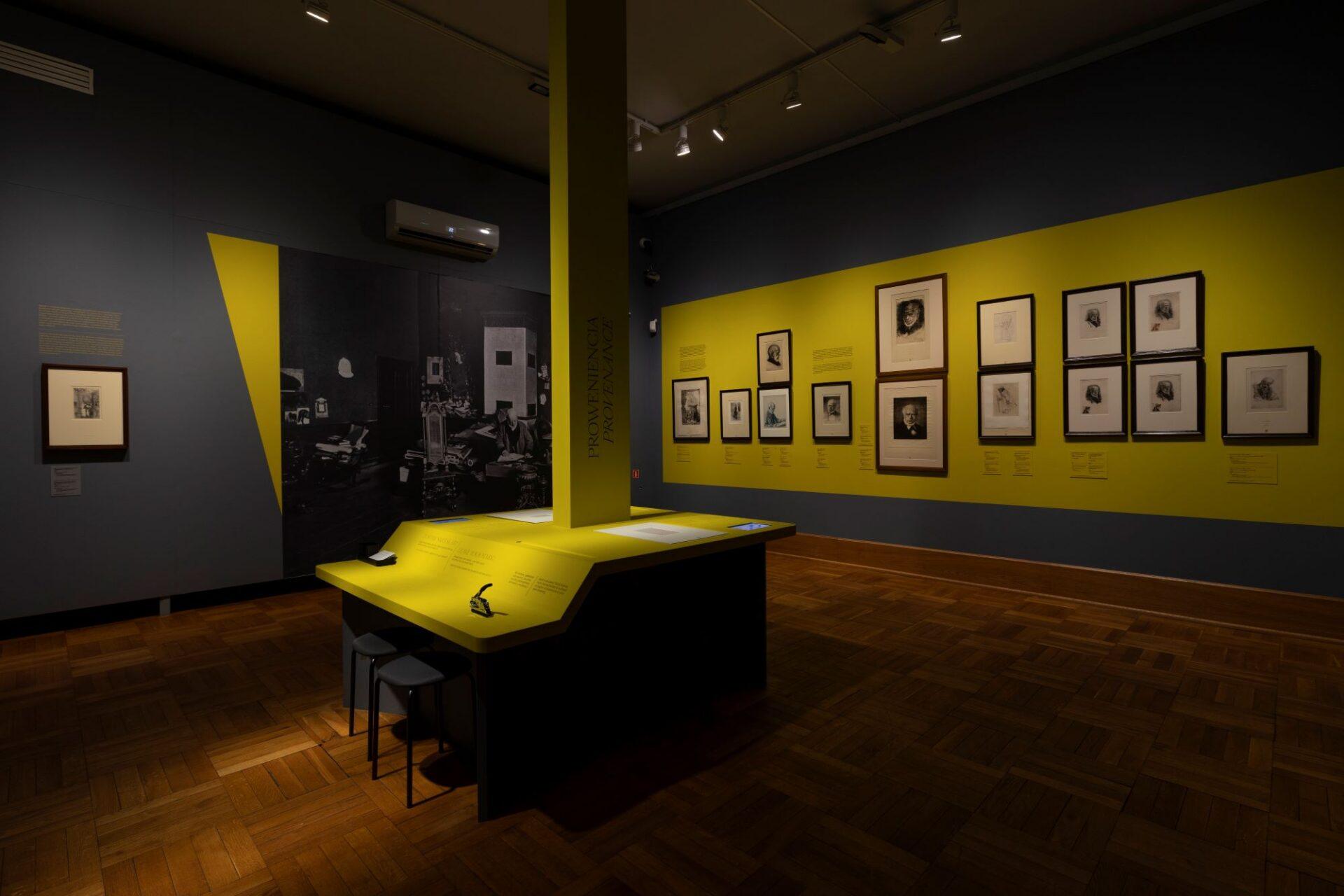
Wystawa „Adolph Menzel. Niestrudzony obserwator” w Muzeum Narodowym w Warszawie.
The Warsaw show is the largest presentation of Menzel’s work ever staged in Poland, supplemented by loans from Berlin, Poznań and Wrocław. Photo: Bartosz Bajerski/ press materials from the National Museum in Warsaw
fun fact about poland
The Polish art of storing summer
Michał Szcześniewski

Before cloud storage, Poles had the basement. Every autumn, kitchens across the country begin an annual exercise in analogue backup: cucumbers are pickled, mushrooms preserved, beetroot bottled and fruit turned into jam, then dispatched to cupboards, pantries and cellar shelves for safekeeping. The result is a domestic archive of summer, stored not on servers but under screw-top lids.

The habit is less about nostalgia than useful redundancy. A row of jars turns a short harvest into winter supplies, transforms surplus into something that will keep for months and ensures that even in February there is something recognizably homemade on the table. Modern supermarkets may have made such stockpiling unnecessary. They have not made the satisfying clink of a well-filled pantry obsolete.
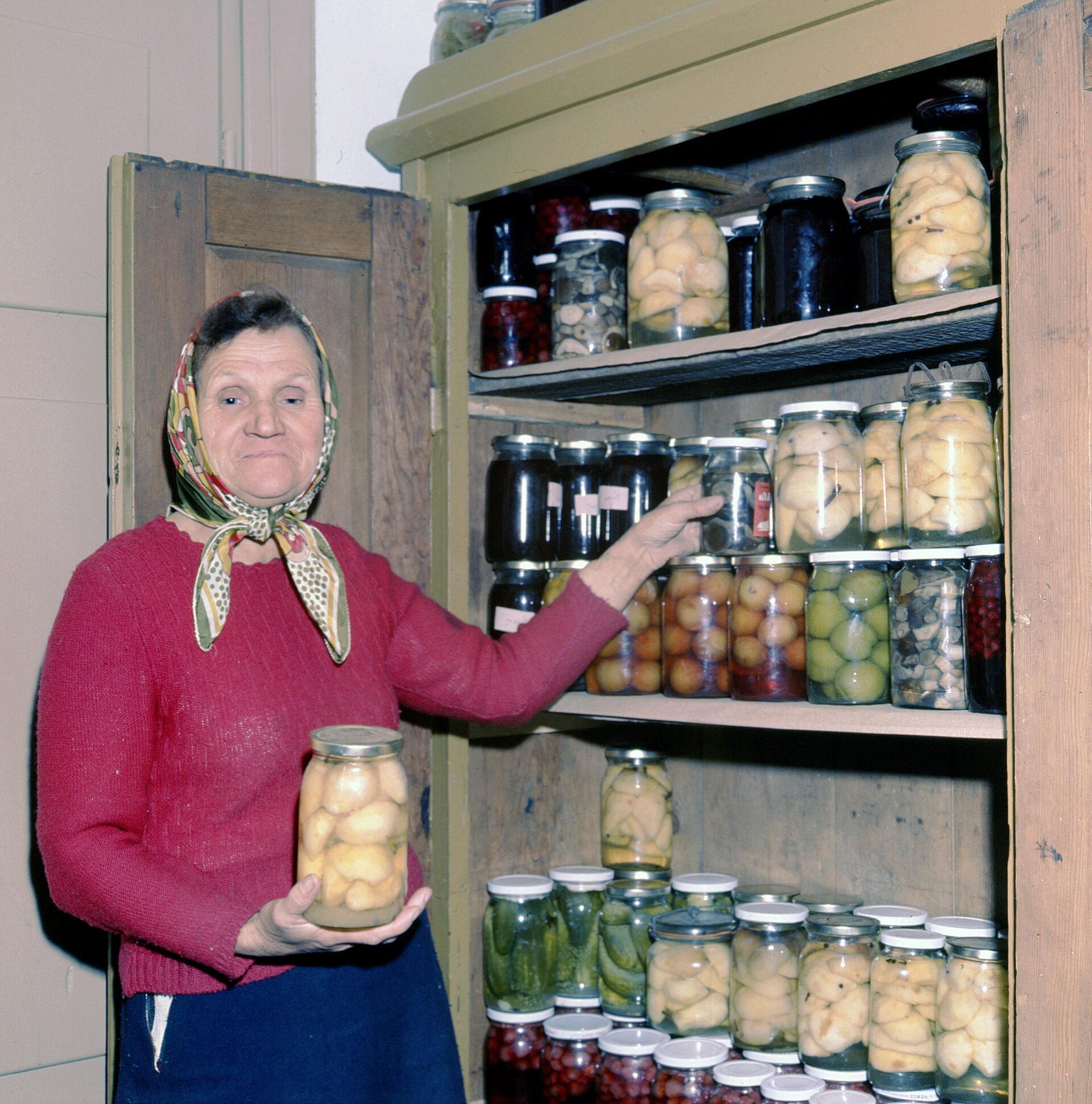
That 70s Show in Poland. Photo: PAP/Afa Pixx/Zenon Żyburtowicz