Poland Unpacked week 20 (4 May - 10 May 2026)
Welcome to this week’s edition of our Poland Unpacked, where we deliver key insights and trends shaping the economic, corporate and political landscape. Catch the most important insights from Poland in this week’s briefing.
This article is a part of Poland Unpacked. Weekly intelligence for decision-makers
It is quite rare for a major company to emerge in Poland without many people having heard of it. Yet that is the case with DL Invest, a privately owned real-estate group managing assets worth PLN 5bn (EUR 1.2bn). It recently acquired a listed vehicle in London, is pushing aggressively into the data-center market and is negotiating the acquisition of assets worth EUR 200m. An IPO is also on the horizon. Dominik Leszczyński, the founder and chief executive of DL Invest, spoke to us about the company’s history and growth plans. Enjoy the read.
Kuchnia Vikinga has taken a very different approach, making sure it stays firmly in the spotlight. The company operates in the boxed-meal market and, thanks in part to strong marketing, sales are growing rapidly. It is now investing heavily, scaling up new business lines and aiming to build a pan-European brand in pursuit of PLN 3bn (EUR 700m) in revenues. In Poland, two boxed-meal providers have already changed hands at valuations exceeding PLN 300m (EUR 70m). A third could soon be worth more than PLN 1bn (EUR 235m).
For 11 years Krzysztof Krawczyk headed CVC in Poland. During his tenure the global private-equity giant completed several headline-grabbing deals. A few weeks ago he stepped down, in what came as a major surprise. Even more surprising is his new venture. As XYZ has learned, he has become a major investor in G2A, a Poland-born but globally operating gaming marketplace. The plan calls for a major expansion push – here are the details.
Construction has begun in Kraków on one of Europe’s largest urban-logistics projects. But this development is only part of a much bigger story. 7R, which has completed more than 100 projects in Poland with a combined value of EUR 1.4bn, is increasingly positioning itself as a regional player. It is preparing to expand into Czechia and Germany. Here's all you need to know about it.
It is still very rare for a Polish company to acquire a market leader in another country. PZU has managed just that by acquiring MetLife in Ukraine – a company with a 50% share of the local life-insurance market. The deal will not only propel the Polish giant from fourth place to first in that market, but also diversify its revenue streams.
The key event last week was the meeting of the Monetary Policy Council, Poland’s monetary-policy decision-making body. As expected, interest rates were left unchanged for a second consecutive meeting. The reference rate therefore remains at 3.75%.
The backdrop to the decision was the preliminary April inflation reading, which came in at 3.2% year on year. That marked an increase from 3% in March, despite the government’s Lower Fuel Prices programme (CPN), which includes cuts to fuel VAT and excise duty.
At the press conference, Adam Glapiński, governor of the National Bank of Poland, stressed that inflation remains within the NBP’s target range (2.5% +/- 1 percentage point), and that the risk of a sustained rise above 3.5% is limited. He pointed to weaker wage growth, the absence of excessive demand and a stable zloty as factors containing inflationary pressure.
At the same time, the risk of interest-rate increases has risen, largely because of high oil prices and uncertainty linked to the war in the Middle East. Markets are now pricing in rates rising to as much as 4.5% within a year, an increase of 0.75 percentage points, although economists still do not regard such a scenario as likely.
The week brought little in the way of macroeconomic data. We therefore examined Poland’s economic position against that of regional peers over the short term, focusing on 2025-26. Poland continues to post the fastest growth in the region (3.9% year on year in the fourth quarter of 2025), although an acceleration is visible across most countries. In nine out of 11 economies, growth at year-end exceeded the average for 2025. A slight slowdown is expected in 2026. The IMF forecasts Poland’s growth easing from 3.6% to 3.3%, with weaker momentum across most of the region (seven countries). Poland’s distinctiveness within the region is also worth noting: despite a high fiscal deficit, it shows no imbalance in the current-account balance.
We take an even shorter-term view of Poland in our summary of data from the real economy and financial markets over the past month. March figures point to very strong economic conditions: both retail sales and industrial production reached their highest levels since 2022. Caution is warranted here, however, for two reasons. First, a number of one-off factors contributed to the strength of the results. Second, rising inflation may eventually weigh on economic activity by discouraging consumption amid slowing real wage growth. External demand may also weaken if the conflict in the Middle East drags on.
In a separate analysis, we examine Poland’s future growth prospects against the backdrop of the European Union. Although Poland has been the fastest-growing large economy in the bloc for several years, the pace of real GDP growth has been slowing steadily. According to IMF forecasts, average growth in 2027-31 is expected to amount to 2.5% annually. That would mark the weakest five-year performance since 1997. Growth would still outpace the EU average (1.4%), but the gap is also expected to narrow to its smallest level.
Former Polish justice minister Zbigniew Ziobro confirmed that he is currently in the United States after leaving Hungary, where he had been granted international protection under the government of Viktor Orbán. Mr. Ziobro denied reports that he had “fled” Poland and said he would willingly appear before “an independent American court” if extradition proceedings were launched. Polish Justice Minister Waldemar Żurek said Warsaw would ask both the US and Hungary to clarify the legal basis that allowed Mr. Ziobro to travel despite the cancellation of his Polish passport in late 2025. Deputy Justice Minister Dariusz Mazur suggested Ziobro may have used a so-called “Geneva passport” — a travel document issued to protected persons — reportedly obtained through the former Hungarian authorities. The Polish government has also announced plans to seek Mr. Ziobro’s extradition from the US.
Mr. Ziobro and his former deputy, Marcin Romanowski, are both wanted in connection with alleged abuses involving Poland’s Justice Fund. Prosecutors accuse Mr. Ziobro of leading an organised criminal group and overseeing the unlawful distribution of public funds, with investigators alleging 26 separate offences linked to abuse of office and manipulation of grant procedures. Mr. Romanowski, who also received protection in Hungary, has reportedly disappeared from his Budapest residence after his lease expired at the end of April. Polish courts have reissued a European Arrest Warrant against him, while a similar request concerning Mr. Ziobro remains pending. The case has become one of the most politically charged corruption investigations targeting former officials of the previous Law and Justice (PiS) government.
EUR 44bn (around PLN 188bn) will flow to Poland under the SAFE program. On Friday, the Polish authorities became the first to sign an agreement with the European Commission on loans that Poland will use to purchase defense equipment. Poland is the program’s largest beneficiary, and the first procurement contracts will be signed later in May.
There is no political consensus around SAFE. President Karol Nawrocki vetoed the legislation implementing the program, meaning that the police and Border Guard will not receive additional funding. The right-wing opposition has also criticized SAFE, including the loan’s interest-rate terms.
Last week brought proposals for two referendums. The first came from Marcin Mastalerek, a long-time associate of former president Andrzej Duda. In his view, the current system – in which the president and prime minister block one another – is dysfunctional. In an interview with XYZ, he said he would like to ask Poles about a broader range of issues.
President Karol Nawrocki also wants a referendum. He plans to ask Poles about EU climate policy. The proposed referendum question itself already suggests that the policy is responsible for higher living costs and rising electricity prices.
During celebrations marking the Constitution of 3 May, the president also announced the members of a council tasked with drafting a new constitution. However, it consists largely of figures associated with Law and Justice, the largest opposition party, whose candidate Karol Nawrocki was in last year’s presidential election.
On the occasion of another May holiday, Labor Day, we examined Poland’s working class. As elsewhere, it is drifting away from the left and increasingly looking towards conservative parties.
President Karol Nawrocki has appointed a new head of the National Security Bureau. The post went to Bartosz Grondecki, a former deputy interior minister in the Law and Justice government and a diplomat. He replaced the historian Sławomir Cenckiewicz.
At XYZ, we asked Justice Minister Waldemar Żurek about the future of institutions such as the Constitutional Tribunal and the National Council of the Judiciary. In the interview, he also announced planned changes to the commercial court system.
The European Court of Human Rights has ordered Poland not to obstruct judges elected to the Constitutional Tribunal in March from taking office. Some of them still have not been allowed to adjudicate.
Meanwhile, more Polish courts have issued rulings requiring recognition of same-sex marriages contracted in other European Union countries. The decisions follow a November ruling by the Court of Justice of the European Union. The government has still not taken a clear position or action. We also raised the issue with the justice minister.

Two startups with Polish roots, ElevenLabs and Iceye, had a particularly eventful week. The former — the company behind the world’s most popular text-to-speech tool — surpassed USD 500m in annual recurring revenue (ARR) and brought in new investors, including BlackRock, NVIDIA, and celebrities Jamie Foxx and Eva Longoria.
Meanwhile Iceye, one of Europe’s fastest-growing space companies, is reportedly seeking to raise USD 250m in its next funding round. If completed successfully, the deal would push its valuation above USD 2.4bn.
Against that backdrop, the USD 2m pre-seed round closed by startup Elastics may sound modest. But its idea — a tool for automating trading on prediction markets — was enough to convince the French fund Frst and a group of prominent business angels, including the founders of ElevenLabs.
It is a remarkably fast-growing slice of the pie. According to a KPMG report, Polymarket and Kalshi generated more than USD 40bn in trading volume in 2025 alone, while the market itself expanded by more than 300%.
In recent days, dental startup FRESH 32, headquartered in Ljubljana, secured funding from Polish investors through Smok Angels. Meanwhile Labplus, a startup from Wrocław, won a grant worth more than PLN 8m (around EUR 1.9m) to automate, using AI, the referral of patients to innovative therapies. Separately, Value4Capital (V4C), a fund focused on investments in Central Europe, announced the signing of a preliminary agreement to acquire a majority stake in Elocity.
The example of Smok Angels best illustrates a broader trend: Polish funds are accelerating their investments in foreign startups. The value of transactions recorded in the first quarter of 2026 alone exceeded the totals seen in some previous full years. Full picture here.
Whether this marks a one-off surge or the start of a lasting trend in venture capital remains to be seen. We took a closer look.
Poland is also seeing strong growth in genuinely innovative technologies. One example is a project led by scientists at Wrocław University of Science and Technology to develop a breakthrough biomaterial, which has secured EU funding. The researchers already fear, however, that Poland may lack a company capable of commercializing the technology. As a result, they are looking for a business partner in California. Here's the story.
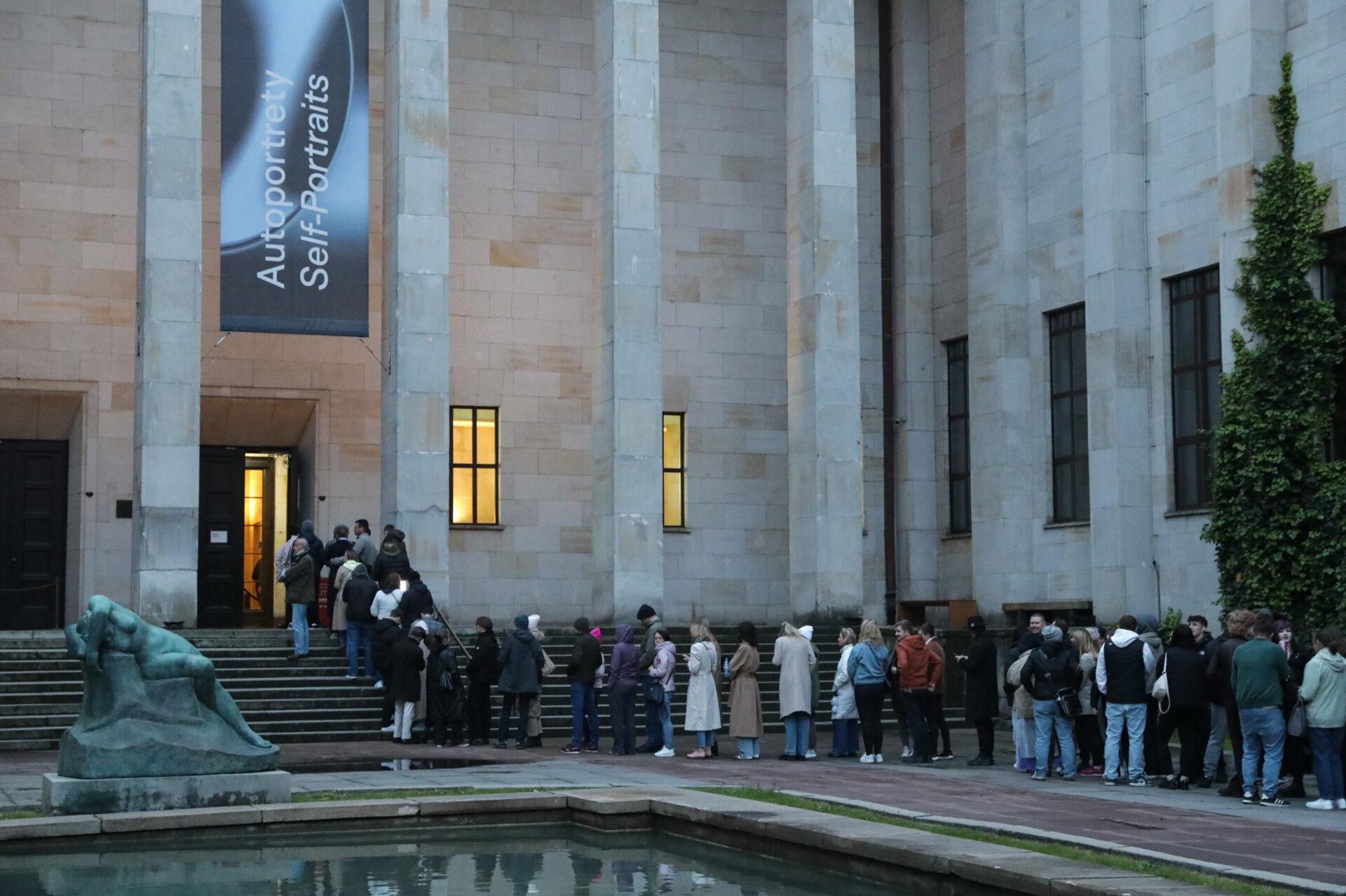
Poland’s Museum Night (Noc Muzeów) falls on 16 May 2026. Across the country, cities such as Warsaw, Wrocław, Gdańsk, Poznań, Łódź, Lublin and many others are joining in, with some places even shifting the event to a different date – Kraków, for example, is holding its edition on 15 May.
It’s a nationwide night out that feels less like one centralized event and more like a patchwork of local cultural adventures. Museums, galleries and all sorts of usually closed-off places open their doors after dark. In Warsaw alone, the city says 331 venues and 361 events are on the program, including 46 new locations, while the National Museum is promising free entry, special tours and a few behind-the-scenes surprises.
That mix is exactly why Noc Muzeów still works so well: it is part civic ritual, part treasure hunt, and part excuse to wander the city at an hour when it usually belongs to night buses and taxi queues. The beauty of it is that the offer is broad enough for everyone: families, culture hunters, and people who simply like seeing familiar streets feel slightly magical for one night a year.

World Migratory Bird Day is observed twice a year during the second Saturday in May (and again on the second Saturday in October).
For Poles, the white stork - “bocian” - is less a bird and more a national mascot that arrives with a convenient side effect: it doubles as a weather‑checking, village‑vibing, baby‑delivery‑adjacent tradition. Our emblematic migrant beats most countries’ symbolic fauna by actually showing up every spring, gracefully nesting on rooftops, power poles, and even the occasional church, as if to confirm that rural life is still charmingly unhurried.