Poland Unpacked week 23 (25 - 31 May 2026)
Welcome to this week’s edition of our Poland Unpacked, where we deliver key insights and trends shaping the economic, corporate and political landscape. Catch the most important insights from Poland in this week’s briefing.
This article is a part of Poland Unpacked. Weekly intelligence for decision-makers
The most interesting story in Polish business right now is that a Pole has become the head of Europe’s most powerful business organization. It is a bit like a Pole being elected president of UEFA. Maciej Witucki told us how he came to lead BusinessEurope, which represents 20 million companies, and shared his views on Europe’s biggest challenges and what it will take for the continent to succeed in an increasingly competitive global arena. Here's the interview.
For many years, Grzegorz Gacek worked at Coca-Cola, rising to the position of head of Europe. Then, one day, he left the corporate world behind in favor of Poland’s mountains. He is now building a group of luxury hotels and is about to open another property. He argues that Poland has “enormous tourism potential that remains largely underappreciated abroad”. His story is well worth reading - here.
Another Polish entrepreneur, Maciej Biesiada, has taken on the challenge of reviving Duka, the Scandinavian home-furnishings chain that went bankrupt several years ago. “It was an expensive but extremely valuable lesson,” he says of his first attempt, which did not go according to plan. Yet he remains undeterred. He has already invested millions of zlotys and is prepared to commit more. Here is his plan.
Peter Bosek is one of the most influential figures in European banking. He leads Erste Group, the most important banking player in Central and Eastern Europe. He accepted an invitation to speak with XYZ, discussing the Austrian group’s strategy and whether further acquisitions are on the horizon. He also shared his views on whether the digital euro will put traditional banking on the defensive, what chances banks have against technology giants, and why lenders today should focus on growing alongside the economy rather than merely showcasing strong results at investor presentations. Go to full interview here.
Erste entered the Polish market through the acquisition of Santander’s Polish operations. It is one example of Poland’s ability to attract foreign investment. The data suggest it is outperforming many other countries in this regard. While the number of investment projects declined across Europe, Poland recorded double-digit growth, according to EY’s latest ranking. The newest figures bring three pieces of good news. They also contain several warning signs that deserve attention. Have a read here.
Lech Poznań, freshly crowned Polish football champions, are preparing for a campaign to reach the UEFA Champions League. Qualification would deliver a huge financial windfall. Yet even without it, the club’s revenues are set to exceed PLN 200m (about EUR 47m) for the first time. Here is a closer look at the finances of Poland’s most successful football club.
Inflation in Poland came in at 3.1% year on year in May, according to the preliminary estimate published by Statistics Poland (GUS). The figure came as a major surprise, significantly below the market consensus of 3.7%. It was also lower than in April, when prices rose by 3.2% year on year. The main factor behind the slowdown was an exceptionally modest increase in food and non-alcoholic beverage prices. In May, these rose by just 0.5%, compared with roughly 1.9–2.4% in previous months. Fuel prices, by contrast, continued to push inflation higher, although much of the increase was offset by the government’s Lower Fuel Prices program (CPN), which includes cuts to excise duty and VAT, as well as the introduction of fuel price caps.
Retail sales data were less encouraging. Sales rose by 1.3% year on year in April, largely due to statistical base effects. Even so, the figures also contained some negative signals, particularly weaker sales of durable and semi-durable goods such as consumer electronics and household appliances, as well as clothing.
In recent days, we have also received data on the profitability of medium-sized and large Polish companies. The figures cover non-financial enterprises employing at least 50 people. In the first quarter of 2026, net profitability reached 3.8%. That was clearly higher than a year earlier, when it stood at 3.4%, but still below the long-term average. We took a closer look at the data and examined how elevated inflation may affect corporate profitability.
Last week, we also analyzed developments in Poland’s labor market. Our first analysis focused on the country’s highest-paid occupations. Unsurprisingly, these include doctors, software developers and data analysts. However, the list also features senior civil servants and public officials. In a second analysis, we argue that a quiet revolution is under way in the labor market. It is not about AI, but rather about trends such as the growing number of women in employment and the rising share of people working part-time.
The first funds from the SAFE program have reached Poland. In recent days, contracts were signed for the first orders placed with Polish defense companies, and on Friday Poland received an initial EUR 6bn advance payment. In total, Poland is set to receive EUR 43.7bn under the SAFE program.
A series of false alarms has taken place. Following a spoofing incident targeting the home of Tomasz Sakiewicz, the head of a right-wing television network, another false alarm concerned the apartment of President Karol Nawrocki’s mother. The authorities have detained four people in connection with the incidents. They are believed to be linked to false alarms involving the home of the television executive, Jarosław Kaczyński, the leader of the opposition Law and Justice (PiS) party, and Sławomir Cenckiewicz, until recently a close associate of President Nawrocki and head of the National Security Bureau (BBN).
Meanwhile, Piotr Krawczyk, the former head of Poland’s Intelligence Agency, revealed that Polish intelligence services paid YouTubers to promote narratives favorable to Poland during the crisis on the Belarusian border. His remarks have raised concerns among experts, who argue that they disclose the methods used by Polish intelligence. Read the full story here.
The prime ministers of Poland and the United Kingdom signed a defense partnership treaty on Wednesday. President Karol Nawrocki has criticized the prime minister for failing to consult him on the agreement.
The president wants to strip Ukrainian President Volodymyr Zelenskyy of the Order of the White Eagle, Poland’s highest state decoration. The move follows the Ukrainian president’s decision to name one of the country’s military units after the Heroes of the UPA. The UPA, or Ukrainian Insurgent Army, took part in the massacre of Poles in Volhynia during the Second World War. Volhynia was an eastern region of pre-WW2 Poland that is now part of Ukraine.
In Kraków, Mayor Aleksander Miszalski was removed from office in a referendum - after two years in the role. Miszalski heads the regional structures of the Civic Coalition (KO), Prime Minister Donald Tusk’s party. Similar recall referendums may also take place in other cities governed by KO mayors.
On Wednesday, scientists staged a large protest in the capital against chronic underfunding of research and higher education. They called on the government to allocate 3% of GDP to science.
On Friday, the Sejm passed a law on the status of a “closest person”, which would allow same-sex couples to formalize their relationships. Until now, no such possibility existed in Poland. President Karol Nawrocki has said he will not sign the bill unless it is amended.
A week earlier, the government issued a regulation allowing the transcription of same-sex marriage certificates issued in other European Union countries. The measure follows a ruling by the Court of Justice of the European Union in a case involving two Polish men who married in Germany.
At XYZ, we also examined tensions within PiS. With one year to go before the election, the party’s polling numbers are at their lowest level in years, while internal disputes continue to intensify. Get to know more on this matter here.
Relations between the president and his political camp have also become strained. The president appointed Judge Zbigniew Kapiński as First President of the Supreme Court. Jarosław Kaczyński, the PiS leader, opposes the decision. In 2000, Judge Kapiński ruled that former president Lech Wałęsa had not lied about his past links to the communist-era security services. More than a decade later, documents became public indicating that Wałęsa had cooperated with the security apparatus of communist Poland for a decade before he rose to lead the Solidarity movement.
Side note: this week will mark one year since the presidential election won by President Karol Nawrocki.
A major shift is coming to Poland’s e-commerce market. TikTok Shop will launch in Poland on June 15. Users will no longer just watch – they will be able to buy as well. For sellers, brands and content creators, it offers a new sales and monetization channel. For the broader e-commerce sector, it will test whether purchases driven by short videos and livestreams can become a mass-market phenomenon in Poland.
TikTok representatives have confirmed our reporting from a year ago. The platform’s commerce arm aims to connect brands, influencers and customers – and reshape a market currently dominated by marketplace platforms. Here's the full story.
The week also brought important news for Poland’s startup ecosystem. Venture-capital fund 4growth VC, which effectively disappeared from the investment landscape at the beginning of the year, is making a comeback. The reason for its hiatus was prosecutorial charges brought against members of its management team in connection with their previous activities at Alior Bank. The fund has since implemented a recovery plan approved by PFR Ventures and private investors.
Jan Kastory and Tomasz Pasiewicz have joined 4growth VC’s management team. Both bring many years of experience in the financial and investment sectors. The revamped team is expected to announce new investments shortly. Read all about it here.
Polish companies also recorded notable successes. Polish technology firm SP Tech Solutions won the DB Mindbox program run by Deutsche Bahn. The partnership with the German rail operator is expected to serve as a springboard for international expansion.
Sebastian Kulczyk, one of Poland’s wealthiest entrepreneurs, has backed Tequipy, a Polish startup founded by former Revolut executives. Manta Ray, together with Smedvig Ventures and Unfold VC, has invested EUR 3 million (approximately PLN 12.8 million) to support the development of a platform that automates IT equipment management for globally operating companies.
Meanwhile, Iceye, the Polish-Finnish space technology company, secured EUR 300 million (approximately PLN 1.28 billion) in financing from a consortium of seven banks led by Citi and Danske Bank. The funding will support further scaling of operations and the development of what the company describes as “sovereign satellite intelligence”.
The mood was equally upbeat for the founders and investors behind PlumResearch. The company, which provides audience and media-consumption data to the global entertainment industry, has been acquired by Ampere Analysis, one of the world’s leading players in media and entertainment analytics.
A note of caution, however, is warranted. Polish startup founders are increasingly struggling with severe professional burnout. The problem is driven not only by ambition, but also by factors such as investor agreements. I recommend reading our journalists’ in-depth article here, which explores the nature of the problem.
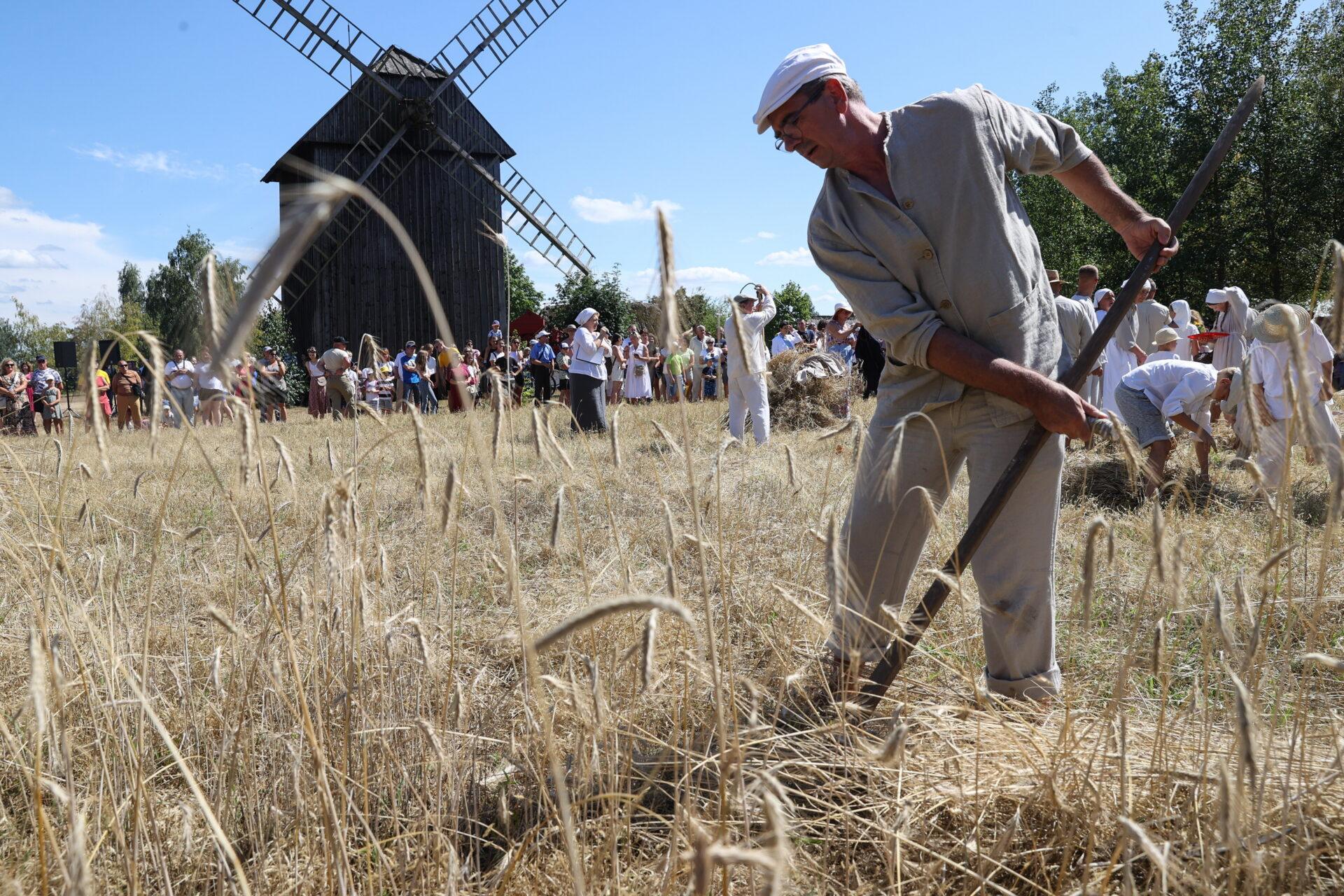
Late spring and summer are the best time to discover Poland’s skanseny – open-air countryside museums. Why? Because there entire villages seem lifted from the past and set down in a park. They are part history lesson, part slow travel, part picnic spot: wooden churches, farmhouses, windmills, craft workshops. And often a lot of fresh air. Skanseny are also one of the easiest ways to see how diverse Polish regional culture really is. So, here are some recommendations.
Museum of Folk Architecture in Sanok set on a hillside above the San River in south-eastern Poland.
Also high on the list are:
- the Mazovian Village Museum in Sierpc (central Poland),
- the Kielce countryside museum (central Poland),
- the Opole Village Museum in Bierkowice (south-western Poland).
In the north, the Kashubian Ethnographic Park in Wdzydze Kiszewskie is especially good if you want to understand regional identity shaped by lakes, forests, and local tradition.
Closer to major cities, don’t miss:
- the Museum of Łowicz Countryside in Maurzyce (near Łowicz – between Warsaw and Łódź),
- the Lublin Village Museum in Lublin,
- the Radom Village Museum in Radom.
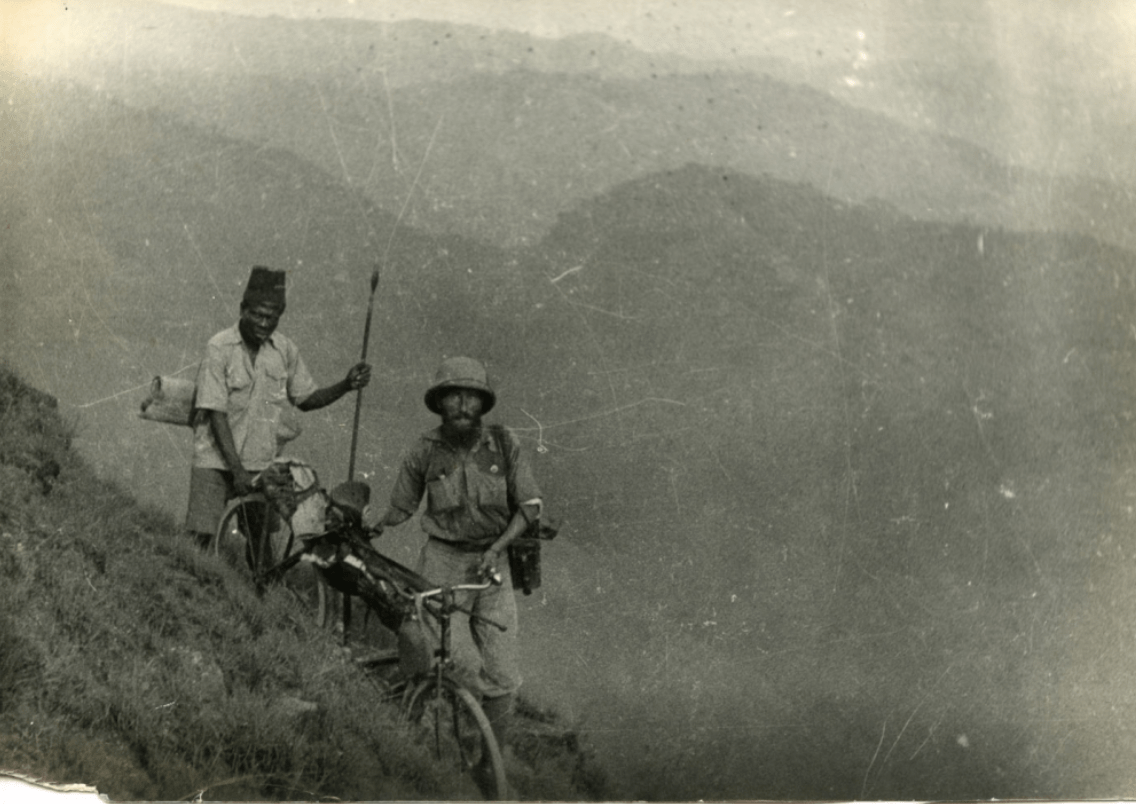
3 June is World Bicycle Day, which is why we have this story for you. Few people know that a Polish traveler was one of the first to cross Africa solo – mostly by bicycle.
Kazimierz Nowak left Poznań in 1931 and spent nearly five years covering close to 40,000 kilometers across the continent: from Libya to South Africa and back north again. He rode a worn-out seven-year-old bike, walked long stretches, and improvised when needed – crossing the Sahara on a camel, paddling a custom-made canoe he named after his wife, and even traveling on horseback when his bicycle fell apart.
Nowak’s journey was not just about adventure. During the Great Depression, he struggled to support his family and financed the expedition by sending photos and reports to Polish and German newspapers. He traveled without major sponsors – aside from donated bicycle tires – likely because he did not align with Poland’s colonial ambitions at the time. When he finally returned to Europe in 1936, nearly broke, he still had to borrow money to get home. Go to https://kazimierznowak.pl/galeria-zdjec/ for photos and his story.