
Poland Unpacked week 24 (1 - 7 June 2026)
Welcome to this week’s edition of our Poland Unpacked, where we deliver key insights and trends shaping the economic, corporate and political landscape. Catch the most important insights from Poland in this week’s briefing.
This article is a part of Poland Unpacked. Weekly intelligence for decision-makers
Poland and Ukraine have stumbled into a fresh political row, reigniting one of the most sensitive historical disputes between the neighbors. In late May, President Volodymyr Zelensky named a Ukrainian military unit after the “Heroes of the Ukrainian Insurgent Army” (UPA). The move, intended in Kyiv as a nod to national military traditions and wartime resilience, has triggered a sharp backlash in Poland.
The reaction in Poland has been unusually unified across political divides. Criticism of the UPA reference has come from both government and opposition figures, reflecting the enduring sensitivity of the issue. According to Poland’s Institute of National Remembrance (IPN), the UPA killed between 80,000 and 100,000 Polish civilians during the Second World War in what is now western Ukraine (Volhynia).
For years, Warsaw has pressed Kyiv to allow exhumations and proper burials of the victims. Ukraine, for its part, resists formally recognizing the massacres as genocide. In Ukrainian public discourse, UPA symbols are still used by some as emblems of anti-Soviet resistance, creating a stark divergence in historical narratives.
President Karol Nawrocki escalated the dispute further. He announced that on June 8 he would ask the Chapter of the Order of the White Eagle to consider stripping Mr. Zelensky of Poland’s highest state decoration. The Ukrainian leader received the award in April 2023 from then-president Andrzej Duda for strengthening Polish-Ukrainian relations and contributing to European security amid Russia’s full-scale invasion.
The decision also places Prime Minister Donald Tusk in a difficult position. Any formal revocation of the Order of the White Eagle requires not only a recommendation from the Chapter but also the prime minister’s countersignature. Whichever way Mr. Tusk decides, he risks political costs without clear gains.
Both sides are attempting to contain the fallout. Kyrylo Budanov, head of the Ukrainian president’s office, travelled to Warsaw for a series of meetings with senior Polish officials. The talks focused largely on the controversy and its implications.
Polish officials delivered a consistent message. Mr. Kosiniak-Kamysz - Deputy PM - stated that while Poland and Ukraine remain partners on security, “in matters of history we must tell each other the truth.” He stressed that “the memory of the victims of Volhynia is non-negotiable.” Mr. Przydacz - Polish president's adviser - warned that any attempt to glorify UPA figures would meet a “firm response” from Warsaw.
Ukrainian representatives signaled awareness of the political sensitivity in Poland and expressed openness to dialogue. Discussions also included possible ways to defuse the situation, though no concrete outcomes have been announced so far.
Last week saw the European Financial Congress, the annual gathering of the financial sector. On the second day in Sopot, everyone was talking about an interview that Tomasz Chróstny, president of Poland’s Office of Competition and Consumer Protection (UOKiK), gave to XYZ. The agency no longer supervises work on the consumer credit bill. Mr. Chróstny did not mince his words.
He argued that banks and lending companies are lobbying for solutions that serve their own interests while weakening consumers’ position. In his view, Poland’s financial sector has spent decades avoiding responsibility for practices that proved detrimental to customers, citing currency options, insurance-linked investment products, and foreign-currency mortgages as examples. Find out what consequences may follow from transferring responsibility for the consumer credit bill to the Ministry of Finance. Read the full interview here.
Another flashpoint in relations between government and business concerns Orlen, the state-controlled energy and fuel group, and its discussions with Synthos, part of businessman Michał Sołowow’s portfolio, over the construction of small modular nuclear reactors (SMRs). Mr. Sołowow is Poland's richest person — a self-made billionaire industrialist and amateur rally driver who built a global empire spanning chemicals, ceramics, and flooring, with operations in over 60 countries.
Their joint venture, Orlen Synthos Green Energy (OSGE), in which the partners each hold a 50% stake, has been operating since 2022. Yet construction of the first reactor has still not begun, as the parties continue to negotiate financing arrangements and certain contractual provisions. Will Orlen ultimately prioritize Poland’s second large-scale nuclear power plant and walk away from the partnership? Read the full story here.
There is also an example of successful cooperation between business and government – albeit in France. InPost, Poland’s largest logistics operator, will invest an additional EUR 500 million in France, bringing its total commitment there to EUR 1.4 billion. The company announced the investment during the Choose France Summit attended by President Emmanuel Macron. Rafał Brzoska, founder, chief executive, and co-owner of Amsterdam-listed InPost, believes that when it comes to the treatment of investors, France ranks number one in Europe. What exactly is the Polish company planning in France? Read our article to find out.
The most important developments of the past week were the publication of Poland’s preliminary GDP figures for the first quarter of 2026 and the Monetary Policy Council’s decision on interest rates.
Poland’s real GDP grew by 3.5% year on year in Q1 2026. This was a weaker result than in the previous quarter, when GDP growth reached 4%. On a quarter-on-quarter basis, GDP increased by 0.6%, slightly above Statistics Poland’s (GUS) flash estimate.
Private consumption remained the largest contributor to GDP growth in the first quarter of 2026. Household consumption added 2 percentage points to overall growth, broadly in line with the previous two quarters. On an annual basis, using non-seasonally adjusted data, private consumption rose by 3.2%, compared with 4.2% in Q4 2025. This remains a solid result, though weaker than at the end of last year.
Public consumption also made a significant contribution to growth. Its contribution amounted to 1.2 percentage points, while annual growth reached 6.3%. Investments also supported GDP growth for the third consecutive quarter, although their contribution was smaller than in previous quarters.
Poland’s GDP growth slowed quite noticeably in the first quarter, although the country continues to compare favorably with other EU economies. In the coming quarters, the pace of private consumption growth will be crucial. Despite a surprisingly strong inflation reading for May, inflation is expected to rise in the months ahead. As a result, Q1 2026 may prove to have been the period of the strongest real income growth of the entire year. This is likely to weigh on the pace of consumption growth. On the other hand, the economy will continue to benefit from investment financed by European funds, including the National Recovery Plan (KPO) and SAFE.
The Monetary Policy Council (RPP) decided to leave interest rates unchanged. Consequently, the reference rate remains at 3.75%. The decision came as no surprise, particularly in light of the May inflation reading of 3.1%, which was significantly lower than market expectations, as well as the slowdown in wage growth in the enterprise sector to 5.4% in April. In our analysis (read it here), we show that May was the first month in several years in which central banks around the world raised interest rates more often than they cut them.
The Polish labor market is characterized by a relatively high share of mandate contracts and self-employment alongside standard employment contracts. Read our analysis where we identify the occupations in which each form of employment predominates.
Ukraine is becoming a key trading partner for Poland. In the first quarter of 2026, Ukraine was the seventh-largest destination for Polish exports, accounting for 3.8% of the total. Since the outbreak of the war, the value of exports to Ukraine has more than doubled – from EUR 6.3 billion in 2021 to EUR 13.9 billion over the past 12 months. In our analysis here, we examine how the structure of Polish exports to our eastern neighbor is evolving.
Welcome to the next episode of how to correct a political misstep by the Polish government. Previously, it managed to do so after initially blocking the enforcement of a ruling by the Court of Justice of the European Union (CJEU). The Court held that Polish authorities are obliged to register same-sex marriages concluded abroad. The government initially refused to comply with the judgment, but following protests and public pressure it accepted the ruling. And administrative offices began to acknowledge the existence of same-sex marriages within the Polish legal order.
Several uncertainties remain, however. What are they? You can read about them in Rafał Mrowicki’s article.
Domestic politics has also become embroiled in a dispute over… artists. Parliament is expected to begin debating a bill on professional artists in the coming weeks. The proposal aims to bring professional artists into the social security system. People working in the cultural sector rarely hold permanent employment contracts and are often engaged under specific-task contracts, which provide neither pension contributions nor sickness benefits.
At first glance, the bill appears relatively unremarkable. Yet it has triggered a fierce online backlash. Some politicians and commentators have criticized the idea of supporting artists at the expense of other taxpayers. Sławomir Mentzen, the leader of Confederation, described the initiative’s beneficiaries as “layabouts” and “freeloaders”. The government has rejected such criticism, arguing that the proposal is primarily about ensuring a basic social safety net for people working in the cultural sector.
The controversy, however, seems to have exposed yet another fault line between different social groups. Such divisions are difficult to bridge through legislation alone. And as the next election campaign draws nearer, we can expect more conflicts of this kind to be stirred up by politicians.
ElevenLabs is today one of the most powerful companies in the world developing voice-based artificial intelligence. Founded and largely built by Poles, it is conquering global markets - without forgetting Poland. Last week, during a presentation at the ElevenSummit in Warsaw, Mati Staniszewski, co-founder of ElevenLabs, unveiled a preview of the upcoming v4 model, which is designed to speak not only more fluently, but also with emotion, intent, accent, whispering, and even singing.
– “This model has not been released yet. This is an exclusive demo. It is the first time we are showing samples of it to anyone,” the ElevenLabs founder said from the stage.
What can it do? And why did the President of Poland attend the presentation? More in the full article here.
This week, we also conducted our first interview with the new CEO of PFR Ventures, the public institution supporting startups and VC funds. What does she reveal? In a conversation with XYZ's editor-in-chief, Rozalia Urbanek discloses that the institution is in advanced talks with funds that will join the Innovate PL program, which has more than PLN 2.4 billion (approx. EUR 550 million) available for investment.
PFR Ventures also aims to increase the number of active investors in Poland.
Polish science is outperforming business. We have seen the latest data on patent filings by Polish universities. The long-standing leader has retained its position, but with a weaker result. Universities are beginning to catch up with technical universities. What the strength of Polish innovation? Learn from the article here.
It was also a heated week on the startup market. Ingenix raised EUR 13 million in a seed-extension funding round led by Sofinnova Partners. The startup develops technology supporting drug discovery research.
Meanwhile, the Polish-Ukrainian dual-use company Molfar closed the first tranche of a EUR 2 million funding round. It builds radar systems capable of detecting microdrones and small unmanned aerial vehicles. Separately, the Polish VC fund Smok participated in a funding round for fintech startup Paypercut. Polish startup Microamp also achieved success, securing a contract from the UK Ministry of Defence to deploy technology in the field of tactical 5G mmWave communications.
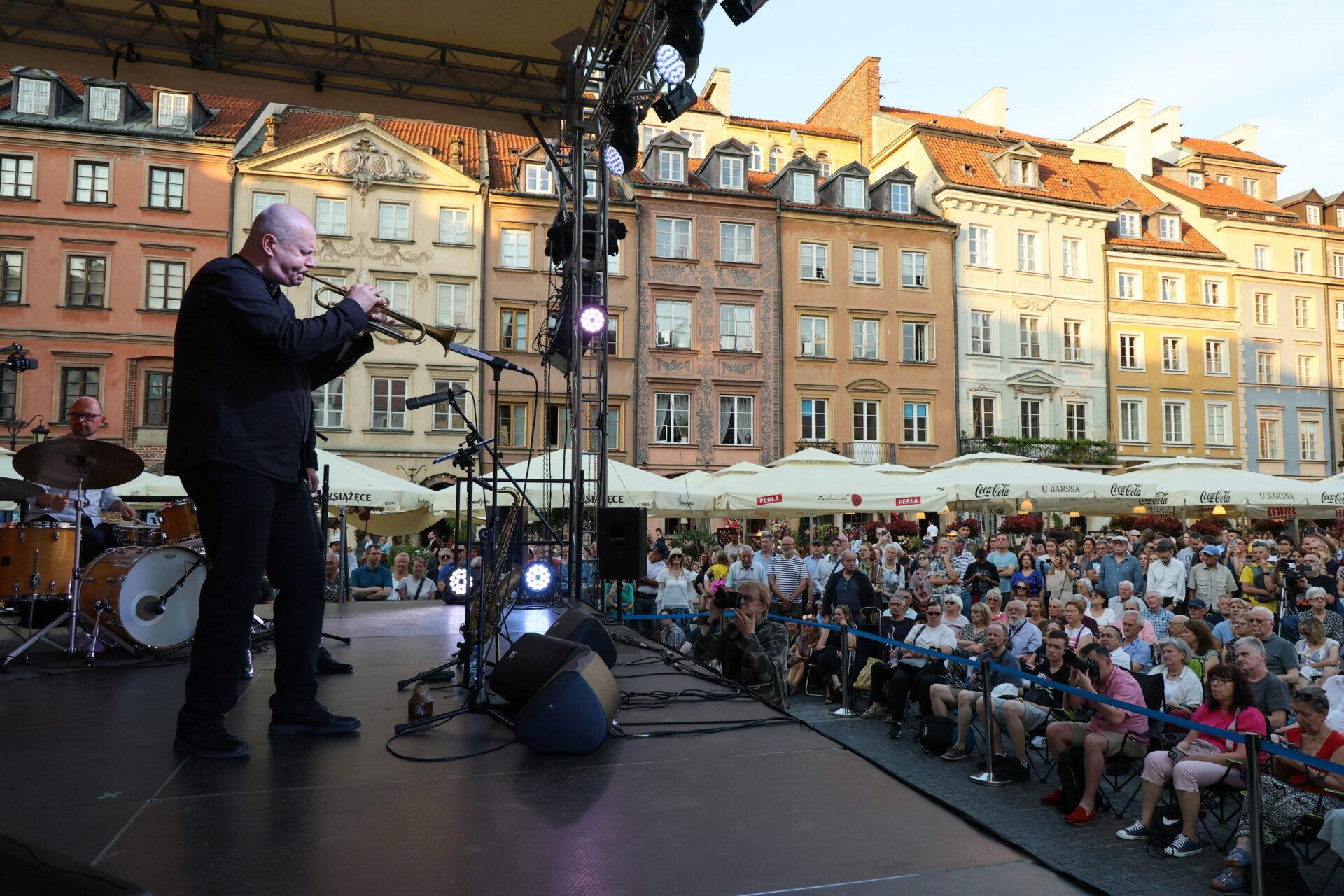
International Open Air Festival Jazz at the Old Town (Jazz na Starówce) is one of the best ways to spend a summer evening in Warsaw.
Between 4 July and 29 August you get a weekly free open-air jazz concert on the Old Town Square, surrounded by one of the city’s most beautiful historic settings. What makes Starówka so special is that it feels both old and alive at the same time — a place with narrow streets, colorful rebuilt townhouses, the Royal Castle nearby, and a skyline that carries the memory of a city almost completely destroyed and then carefully brought back to life.
That is why the concert works so well here. You can listen to good jazz in a setting that is full of history and atmosphere, then simply let the evening continue as the lights come on over the Old Town. From there, a walk down to the Vistula is the natural next step: the river boulevards are one of Warsaw’s favorite warm-weather hangouts, so the night can move from music to a calm, open-ended stroll by the water. Summer Warsaw nights at their best.
See details and line-up here: https://www.jazznastarowce.pl/jazz-old-town-square/
Poland’s infamous bus route no. 666 was never meant to be a theology lesson. Just a short, practical shuttle from Gdynia to the Hel Peninsula – a spit of sand, sea breezes and lighthouses whose name, delightfully for headline writers, sounds like “Hell.”
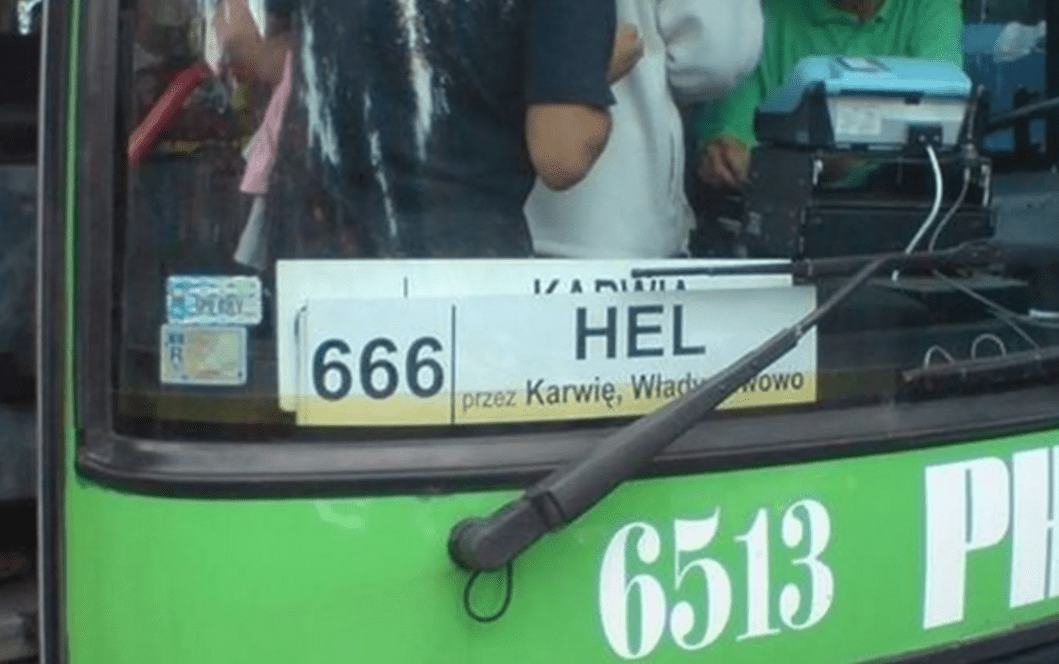
For years the route enjoyed cult status: tourists, meme-hunters and long-suffering commuters would snap photos of the display and post them with glee, because what’s more Polish than a little ironic humor on your way to the seaside? That charm, however, collided with earnest protests from religious groups who argued that a public vehicle carrying the “devil’s number” was inappropriate. In 2023 the operator quietly renumbered the service to 669, ending the run of photo-ops and leaving a small but vocal online community convinced the state had banished one of the country’s stranger local traditions.
Fast-forward to summer 2026 and the gag’s been reclaimed with a grin: FlixBus has reintroduced “route 666” on a seasonal service to Hel, this time leaning into the absurdity as a marketing move as much as a transit decision. The company framed the number’s return as cheeky, pointing out the sheer PR value of a bus that’s literally the “Highway to Hel”. So, Poland’s most notorious route is back on the timetable. Enjoy your ride.