Poland Unpacked week 44 (19-25 October 2026)
Welcome to this week’s edition of our Poland Unpacked, where we deliver key insights and trends shaping the economic, corporate and political landscape. Catch the most important insights from Poland in this week’s briefing.
This article is a part of Poland Unpacked. Weekly intelligence for decision-makers
High fuel prices are taking their toll on airlines, and LOT is no exception. Poland’s national carrier announced this week that it would suspend some routes during the winter season and reduce flight frequencies on others. “2027 could be a very difficult year for the aviation industry,” warns one expert.
85 million hot dogs, 50 million coffees and 16.5 million pizzas a year. That is how much Żabka, Poland’s largest convenience-store chain, sells. With 13,000 stores, the company has become a giant in Poland’s fast-food market. Are restaurants, bars and cafés ready to compete with a rival on almost every street corner? And does Żabka’s expansion threaten traditional food-service businesses? Experts and restaurant owners are divided.
Polish companies are attracting growing interest from international investment funds. One of them is Pale Fire Capital, founded by Czech billionaires who made their fortunes in technology and are now, among other ventures, working to revive Groupon. Their ambition is to build companies worth USD 1 billion. Here is what they are looking for in Poland.
Hyrox, the German-born fitness competition combining running with strength exercises, is taking the world by storm – Poland included. In less than a decade, it has grown into a business worth around EUR 600 million (PLN 2.6 billion). Now Polish entrepreneur Jarosław Bieniecki, the founder of Runmageddon, Poland’s largest obstacle-course racing event, is throwing down the gauntlet. He wants to capitalize on the global fitness-racing boom and Poland’s reputation to build a brand that inspires lasting loyalty. Here is what Fitness IQ is all about – and how Bieniecki plans to grow it.
The third full week of October brought a wealth of fresh macroeconomic data from Poland, covering retail sales, wages, industrial output and construction activity.
In its latest data revision, Statistics Poland (GUS) raised its estimate of Poland’s GDP growth in 2025 from 3.6% to 3.8%. It also revised growth upwards by 0.2 percentage points in each of the first two quarters of 2026.
The latest figures reinforce the picture of a Polish economy that remains resilient to external economic turbulence. Despite a supply shock, growth remains robust. Retail sales in constant prices rose by 3.3% year on year in September, according to GUS. This was slightly weaker than in July and August (3.8–3.9%), but still a respectable performance. As in previous months, durable goods recorded the strongest growth. Sales of cars, motorcycles and parts increased by 13.1% year on year, while sales of furniture, consumer electronics and household appliances rose by 10.7%. Fuel sales dragged down the overall figure. Their nominal value increased by 17.9% year on year, even as volumes fell by 9.8%, implying a price increase of more than 30%. Encouragingly, however, consumers have not cut back on other spending despite higher fuel prices.
Average wages in the corporate sector rose by 5.9% year on year in September, but real wage growth slowed to 1.7% – its lowest level since August 2023. This reflected elevated inflation, which reached 4.1% in September.
September’s GUS figures also reveal a stark contrast between industry and construction. Industrial output grew by 3.3% year on year, while construction and assembly output contracted by 7.2%. Industry’s solid performance may reflect a recovery in investment demand from domestic and foreign companies, alongside stronger household consumption. Construction, meanwhile, continues to suffer from stagnation in the housing market and delays to major infrastructure projects. The outlook for these projects remains uncertain amid the risk of further delays and funding constraints.
The outlook for consumption over the coming months remains moderately positive, although slower real wage growth could weigh on retail sales. Towards the end of the year, the government’s Ceny Paliwa Niżej (Lower Fuel Prices, or CPN) program should help support households’ purchasing power by bringing down inflation. The real test, however, will come in early 2027, when the government must decide whether to extend the scheme. If CPN expires while oil prices remain high, another rise in inflation could further erode real wage growth and dampen consumption.
Poland nevertheless remains among the EU countries facing the greatest pressure on public finances. According to the autumn Excessive Deficit Procedure (EDP) notifications, its fiscal deficit is expected to reach 7.1% of GDP in 2026 – the second-highest in the EU after Hungary’s 7.5%. Between 2023 and 2026, Poland is also set to record the largest increase in public debt in the bloc, from 49.5% to 67.6% of GDP, a rise of 18.1 percentage points. Despite a projected modest improvement in the fiscal balance, the scale of the imbalance remains substantial, underscoring the need for fiscal consolidation in the years ahead.
In this week’s structural analysis, our economists examine how economic conditions influence parliamentary election results in Poland as the next election campaign approaches. They also explore the political incentives behind the postponement of fiscal tightening in recent years and assess what may lie ahead after the next election. Here's the analysis.
Prime Minister Donald Tusk spent several days in India last week, accompanied by Finance Minister Andrzej Domański, whom he announced as deputy prime minister from the floor of the Polish parliament. Tusk met his Indian counterpart, Narendra Modi, as well as representatives of local businesses in the ICT and aviation sectors. Photographs of Tusk wearing a turban became a viral sensation on the Polish internet – an unexpectedly lighthearted symbol of a serious visit aimed at strengthening Poland’s economic ties with India.
Meanwhile, extraordinary things were happening back home. Few recent sittings of the Sejm, Poland’s lower house of parliament, have exposed so many divisions within the governing coalition.
After nearly two years of stalled efforts to liberalize Poland’s abortion laws, the Sejm passed two bills easing restrictions.
The first partially decriminalizes abortion assistance, removing prison sentences for those who help arrange or perform the procedure, including doctors. The second restores the right to terminate a pregnancy in cases of severe and irreversible fetal abnormalities or an incurable illness threatening the fetus’s life. This provision was struck down in 2020 by the Constitutional Tribunal, then dominated by judges loyal to the ruling Law and Justice (PiS) party. That decision sparked an unprecedented wave of women’s protests across Poland, after which support for Jarosław Kaczyński’s party suffered a lasting decline.
Some politicians from the conservative Polish People's Party (PSL), a member of the governing coalition, opposed the changes. Yet the reforms have not entirely satisfied pro-choice campaigners either.
Abortion was not the only issue dividing the coalition. The Sejm also rejected a PSL proposal to abolish the two-term limit for local government leaders. The party has long pushed to remove these restrictions, arguing that they undermine voters’ freedom of choice. In practice, however, PSL has particularly strong roots in smaller local-government networks, where term limits work against its political interests.
The proposal was defeated by just a handful of votes. PSL politicians accused their coalition partner, the Left, of undermining coalition unity. In reality, however, all the governing parties were divided on the issue. One of the most outspoken opponents of abolishing term limits, Funds and Regional Policy Minister Katarzyna Pełczyńska-Nałęcz, submitted her resignation from both her ministerial post and the leadership of Poland 2050 in protest against PSL’s position. She also had harsh words for Tusk.
The prime minister’s return to Poland should help calm tensions within the coalition. Yet the turmoil of just a few days has shown that increasingly lively discussions about the governing parties contesting the next election on a single joint list will, for now, have to take a back seat to putting out the coalition’s immediate fires.
The growing threat from drones is making early detection increasingly important. Asseco Poland is developing Puszczyk, a system that combines technologies from several providers, including acoustic sensors and an Ericsson solution that uses mobile networks. The aim is to detect and track unmanned aircraft more accurately before they reach protected sites.
Detection alone, however, is not enough to ensure effective protection. Rapidly relaying alerts to security services, regularly updating AI models and minimizing false alarms are equally important. Experts also emphasize the need for common standards for data exchange, better coordination and careful consideration of the costs of maintaining detection networks.
We also took a closer look at Poland’s venture capital market. According to the latest analyses, VC investment in Poland reached a record PLN 5.03 billion in the first three quarters of 2026, driven largely by major funding rounds for ElevenLabs and ICEYE. In the third quarter alone, 48 startups raised PLN 407 million.
Funding from the public European Funds for a Modern Economy (FENG) programme is helping to increase the number of early-stage investments, but capital for more mature companies remains scarce.
Meanwhile, Polish VC funds are becoming increasingly active abroad. Another emerging trend is investment in startups incorporated and established outside Poland, particularly in the United States.
An interesting development in the market: Belgian unicorn Aikido Security has acquired Polish startup Cyberly and plans to use its technology to build a new cybersecurity platform. Until now, Aikido has focused on automated software security. It now aims to expand into protecting employees, email systems and corporate devices.
Warsaw-based Cyberly was founded in 2024 and found a buyer just two years later. During that time, the startup attracted more than 200 corporate clients worldwide, with its solutions used to protect over 300,000 people. Aikido was drawn to the Polish company by its technology and the experience of its founders. Ultimately, the prospect of faster growth through the Belgian company’s international sales network and resources helped seal the deal.
Last week, we also explored how Wordware has changed course, shifting its focus to a new product called Sauna. Two years ago, the startup raised around PLN 120 million (USD 30 million) in seed funding to develop a platform for building AI agents using natural language. Today, it is pursuing a different business.
Sauna is already operating in the United States and is now entering the Polish market. In an interview with XYZ, Filip Kozera, Wordware’s founder and CEO, explains why he decided to abandon the company’s original direction.
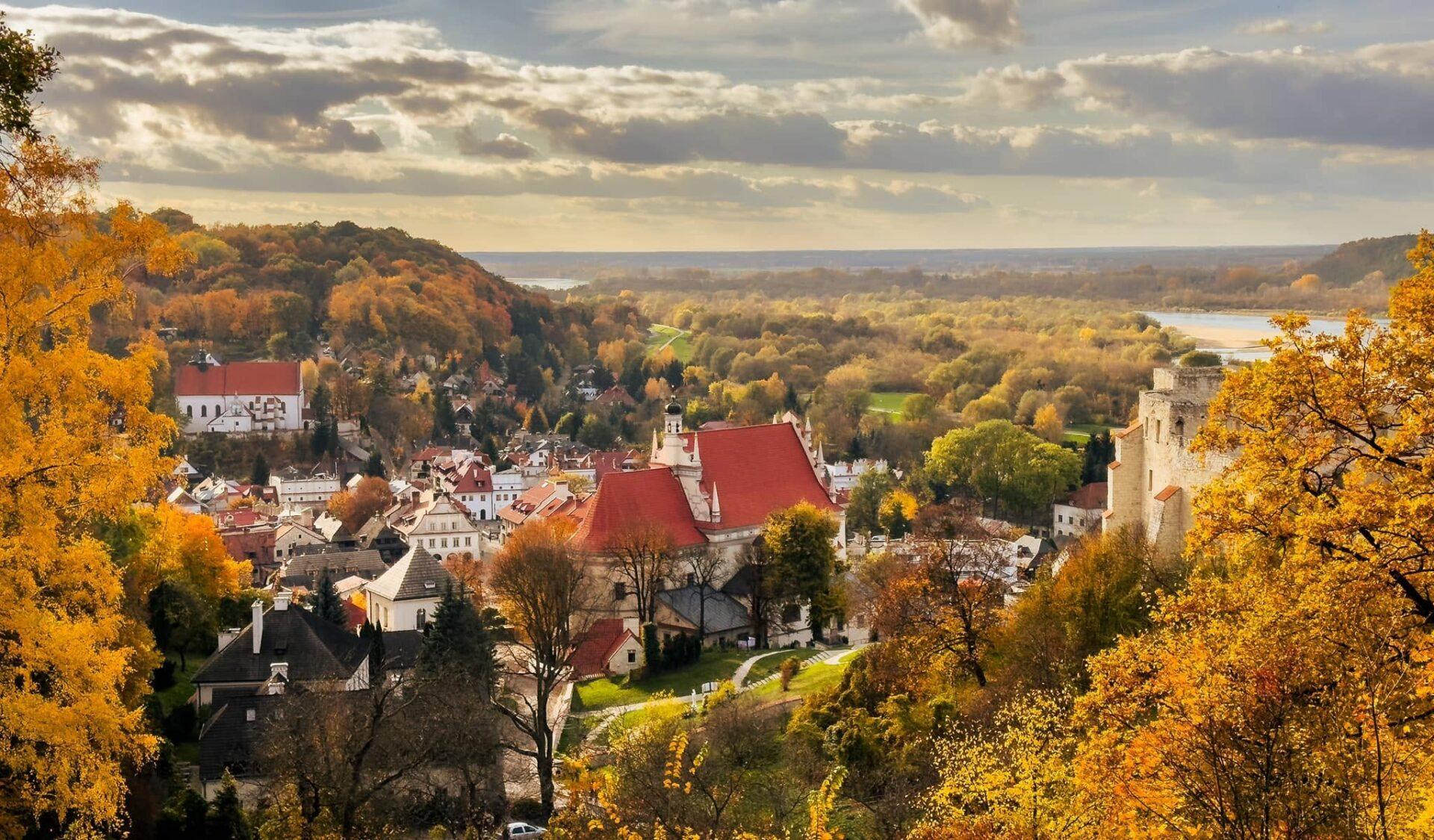
Some Polish towns are best visited in summer. Kazimierz Dolny makes a strong case for autumn. Perched on the banks of the Vistula, roughly two hours southeast of Warsaw by car, this picturesque town offers cobbled streets, Renaissance townhouses and hills that turn spectacular shades of gold and copper as the season progresses. Once a prosperous trading hub, Kazimierz is now a favourite retreat for artists, photographers and weekend escapees.
Climb the Hill of Three Crosses (Góra Trzech Krzyży) for panoramic views of the town and river, or wander through its charming market square, preferably with a hot coffee in hand. But the real autumn magic lies just beyond the town centre. The surrounding landscape is famous for its wąwozy lessowe – narrow ravines carved into soft loess soil, where steep, tree-lined walls and tangled roots create an almost fairytale-like setting. Woodland trails offer plenty of opportunities to admire the autumn colours without embarking on a heroic hike.
Afterwards, return to town for a leisurely meal and a kogut kazimierski, the local rooster-shaped pastry. It is the sort of weekend getaway that requires little planning, no mountaineering equipment and a surprisingly large amount of camera storage.
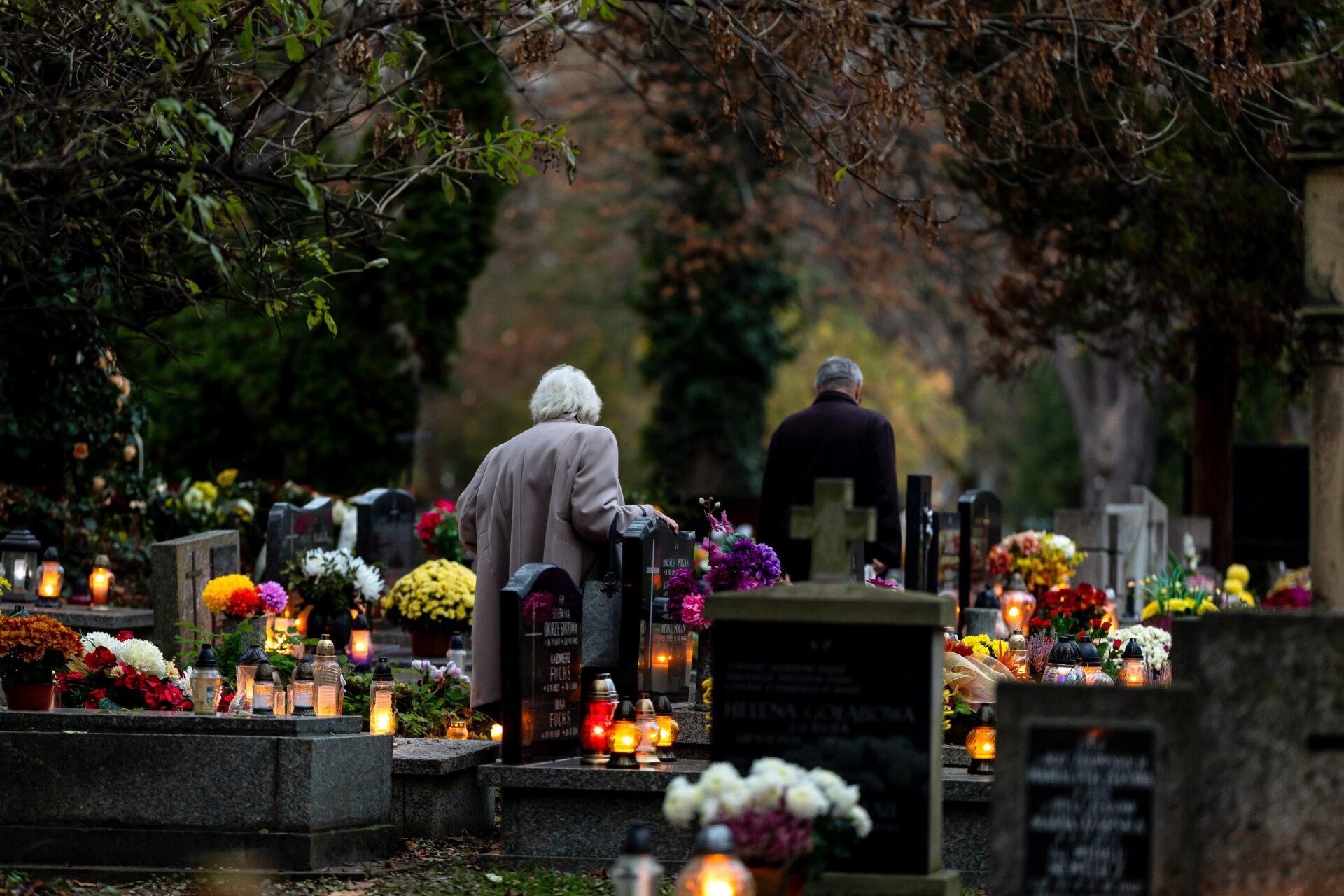
Every year on November 1, Poland comes to a near-standstill. The reason is a mass migration to cemeteries. All Saints’ Day (Wszystkich Świętych) is when millions of Poles hit the roads, often travelling hundreds of kilometers to visit family graves. Traffic jams stretch, parking spaces become precious commodities, and police officers are deployed to manage the annual invasion of the living into the resting places of the dead. In Poland, even eternal rest requires considerable logistical planning.
And then there's preparations. These can resemble a home-improvement project. Graves are scrubbed, polished and decorated with chrysanthemums, wreaths and an impressive assortment of candles and glass lanterns (znicze). There is an unspoken expectation that the family plot should look its best, preferably no worse than the one next door. As darkness falls, Polish cemeteries transform into extraordinary seas of flickering light, with thousands of flames illuminating the paths between tombstones. It is a striking combination of religious tradition, family duty and a distinctly Polish determination to keep everything spotless - even in the afterlife.