Poland Unpacked week 32 (27 July – 2 August 2026)
Welcome to this week’s edition of our Poland Unpacked, where we deliver key insights and trends shaping the economic, corporate and political landscape. Catch the most important insights from Poland in this week’s briefing.
This article is a part of Poland Unpacked. Weekly intelligence for decision-makers
The biggest deal in the history of the Polish stock market is underway. Canadian retail giant Alimentation Couche-Tard, owner of the Circle K brand, has launched a tender offer to acquire 100% of Żabka Group for PLN 32.6 billion — a transaction that could reshape Poland’s retail landscape.
Żabka, Poland’s largest modern convenience chain, has built a powerful ecosystem around quick shopping, ready-to-eat meals, digital services and parcel collection. By the end of June, the company operated 12,800 stores in Poland, and more than 13,000 outlets including its Romanian network and autonomous Nano stores. Over the 12 months ending March 2026, Żabka generated $8.5 billion in sales and approximately $1.1 billion in adjusted EBITDA.
For Couche-Tard, Żabka is much more than a network of stores. CEO Alex Miller says the Polish company is “at the forefront of changes that will shape the future of convenience retail.” The Canadian group says Żabka will keep its brand, franchise model and operational independence, while Romania will remain a key market for further expansion. The deal is expected to generate around $250 million in annual synergies. Closing is expected by the end of the fourth quarter of 2026, pending regulatory approvals.
Canadians praise Żabka’s business model, but another Polish solution is also gaining in Europe. Clicktrans, a platform connecting customers with transport companies and helping reduce empty truck runs is making its way across Europe. The company has attracted investment from Spire Capital Partners, which aims to turn it into a European leader within the next few years. While the value of the deal has not been disclosed, XYZ estimates it reached several dozen million złoty. Spire typically invests €5–10 million in companies.
Meanwhile, Poland will have to rely on foreign technology in the small modular reactor (SMR) sector. According to the World Nuclear Association, commercial SMRs are already operating in Russia and China, with further projects underway in North America and Asia.
Canada has already begun construction preparations for the BWRX-300 reactor — the same technology planned for Poland by Orlen and Synthos Green Energy. However, the companies have yet to resolve disagreements over the investment. Without progress on SMRs, Poland risks falling behind in a technology that could become crucial for energy security and long-term economic growth.
The key macroeconomic release of the past week was Poland's preliminary inflation reading, which came in at 3.0% year over year, up from 2.5% in June. The increase largely reflected the expiration of the government's Lower Fuel Prices (CPN) program, which ran from April through June. The scheme temporarily reduced VAT and excise taxes on fuel while also imposing retail price caps.
What stands out, however, is that food prices moved in the opposite direction. In July, they fell by 0.4% year over year. Nor was this a seasonal effect: in previous Julys, food prices typically increased, in some years quite sharply. We examine what is driving the decline and what it could mean for Poland's interest-rate outlook.
Last week also brought new data on life expectancy in Poland in 2025, offering several noteworthy insights.
First, the gap between women and men remains substantial, although it has narrowed somewhat in recent years. A girl born in 2025 can expect to live 82.5 years, compared with 75.4 years for a boy born the same year.
Second, regional disparities remain significant. The difference in life expectancy between women in the Tarnobrzeg region, where they live the longest, and men in the Skierniewice region, where they have the shortest life expectancy, is nearly 12 years.
Third, people tend to live the longest in some of Poland's poorest regions. The finding appears paradoxical, but particularly among women, the highest life expectancy is recorded in regions with the country's lowest GDP per capita.
Russia violated Polish airspace for the first time in ten months after a Kh-101 cruise missile crashed near the village of Tarnawa-Kolonia, close to Lublin, in eastern Poland. No one was injured. Prime Minister Donald Tusk said the missile would have been shot down had it continued deeper into Polish territory, adding that it had posed no direct threat to civilians.
Residents of the Lublin region were woken by air-raid sirens in the early hours of the morning. The alarm lasted several minutes, but no emergency text alerts were issued by the Government Security Center (RCB). Mr. Tusk said the sirens had been activated more quickly than the text-alert system could respond, while announcing plans to improve the warning system. In an interview with XYZ, security expert Przemysław Mazur argued that the incident exposed serious shortcomings in Poland's emergency warning and crisis-management procedures.
The missile incident came just hours after Mr. Tusk met Volodymyr Zelensky in Lublin as the Ukrainian president returned from Washington, where he had held talks with President Donald Trump. Their discussions focused on Polish investment in Ukraine and continued military support. Poland is also negotiating a potential transfer of its remaining MiG-29 fighter jets to Ukraine in exchange for Ukrainian drones. Bulgaria has also expressed interest in acquiring the aircraft.
Meanwhile, Poland's political right continues to realign. After months of tensions within Law and Justice (PiS), former prime minister Mateusz Morawiecki has formally launched his new political association, Rozwój Plus. More than 40 MPs have joined the initiative, allowing it to establish its own parliamentary caucus. The new grouping may eventually seek one of the deputy speaker positions in the Sejm, although any changes to the parliamentary presidium are unlikely before September.
Mr. Morawiecki ended his first week outside PiS by hosting a large political picnic and policy forum in Warsaw, where more than 1,000 participants gathered to discuss the movement's programme and future direction.
Poland also has a new Commissioner for Human Rights (Ombudsman). Sylwia Gregorczyk-Abram, a lawyer and civil-rights activist, formally took office after being sworn in before parliament. PiS lawmakers walked out of the chamber during the ceremony, having opposed her appointment. During the previous PiS government, she was one of the most prominent critics of its judicial reforms and campaigns that, in her view, undermined the rule of law.
President Karol Nawrocki signed five more bills into law, including legislation banning mobile-phone use in primary schools and another broadening the legal definition of workplace bullying. He also administered the oath of office to Sławomir Patyra, a newly appointed judge of the Constitutional Tribunal. Since the governing coalition began overhauling the court earlier this year, the president has refused to recognize some of its appointments.
Thursday will mark the first anniversary of Mr. Nawrocki's presidency. He is expected to address supporters outside the Presidential Palace, while PiS plans to unveil part of its policy platform ahead of next year's parliamentary election.
The summer period has been anything but quiet for Poland’s technology scene. This week brought several financing rounds involving Polish startups. For example, energy-sector company Pstryk raised PLN 30 million (about EUR 7 million) from a group of investment funds and strategic investor Axpo. Another company, Uniperks, secured additional funding: PLN 1 million (about EUR 230,000) from investors and PLN 2 million (about EUR 460,000) in public support from the Polish Agency for Enterprise Development (PARP).
Polish investment funds were also active internationally. TDJ participated in a funding round for Bulgarian company Tiger Technology, which raised around PLN 37 million (about EUR 8.6 million). Mateusz Sumara, Investment Director at TDJ Growth, spoke to us about the fund’s future investment plans. Its focus is on high-growth companies, not only from Poland.
Funds are not the only calling card of Poland’s startup ecosystem. Polish company Green Capital has adopted an ambitious international growth strategy. The developer of renewable-energy projects and independent power producer (IPP), founded in 2015, is currently working on the Atlas GigaHub.1 project in Argentina’s Patagonia region. The project envisages the construction of a large-scale AI infrastructure campus combining a data center with a target capacity of around 3 GW, renewable-energy installations with nearly 10 GW of capacity, and energy-storage systems. Here is what we know about the investment and the company’s plans.
This week we also took a closer look at the development of Polish proptech—the segment of startups focused on real estate technologies. These companies have been operating for years, but recently many have achieved significant milestones. In 2025, for example, US private-equity firm K1 Investment Management invested in Polish company Singu following its merger with UK-based Micad. More such projects are emerging as the market continues to mature. Poland is preparing its response to this growing opportunity.
Another trend worth watching is the major shift underway in the structure of employment among IT specialists in Poland. In the coming years, demand for workers in the data-center sector could reach as many as 450,000 people. Experts argue this could be positive news amid the expansion of artificial intelligence and the changing nature of programming-related jobs. Will Polish IT specialists successfully retrain for the next wave of technology growth?
If you are in Warsaw until 15 November, set aside an hour for the Nabi exhibition at the Royal Łazienki. It is one of those shows that rearranges how you look at art. The group — loosely orbiting Gauguin in late-19th-century France — rejected painting as a mirror of reality and treated it instead as a field of color, mood, and idea. What you'll see are not just canvases from the Musée d’Orsay orbit, but the birth of a mindset that leads straight to Matisse, abstraction, and modern design.
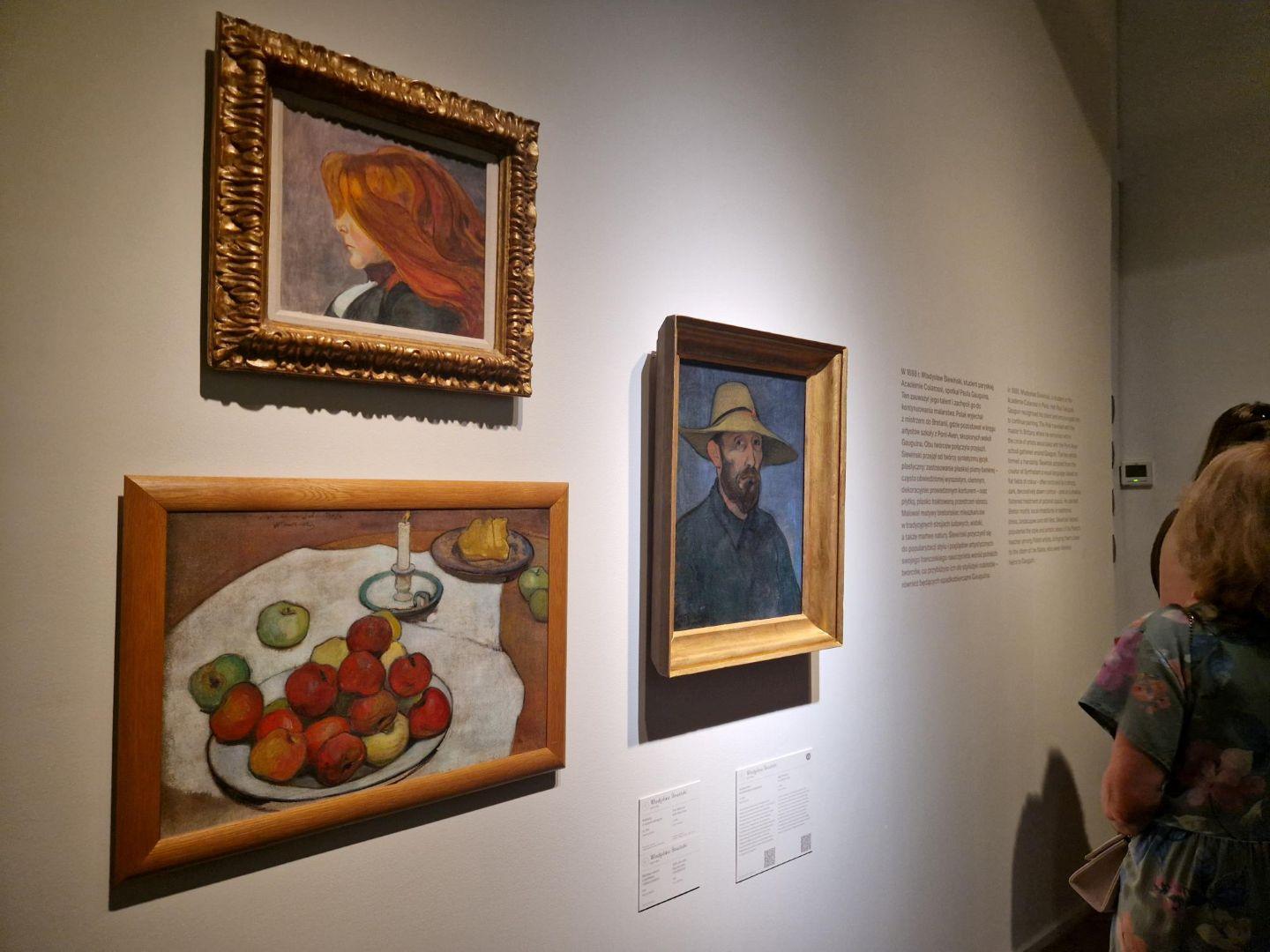
What makes this exhibition especially worth your time is its breadth and its Polish thread. The curators show the Nabis not just as painters but as early architects of everyday aesthetics — designing furniture, interiors, and objects where art spills off the wall into life. Along the way, the story loops through Parisian networks with strong Polish connections: the Natanson brothers’ “La Revue Blanche,” Zapolska’s milieu, and artists like Ślewiński or Wyspiański translating these ideas back home. It is a compact, elegant lesson in how artistic revolutions actually travel — less as manifestos, more as influence.
More info: https://www.lazienki-krolewskie.pl/en/wydarzenia/nabisci-prorocy-nowej-sztuki
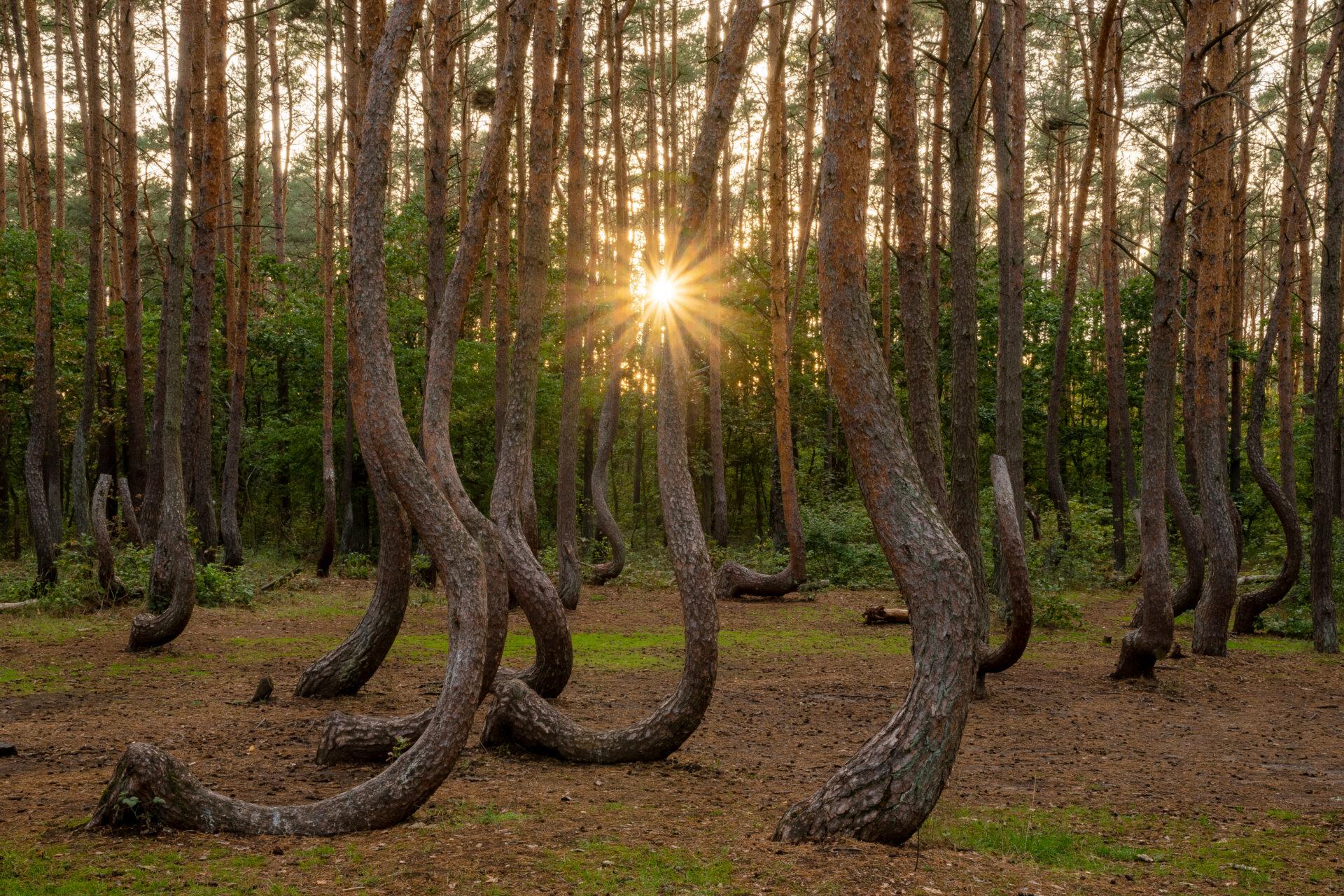
In a forest near Nowe Czarnowo (north-western Poland, google Krzywy Las), a few dozen pines bend at a sharp right angle, as if nature briefly forgot its own rules. The result is the so-called Crooked Forest: one of those places that feels less like a landscape and more like a question mark planted in the ground. Scientists still disagree about what caused it, which is part of the appeal — the leading explanation is that people deliberately shaped the trees for later use in carpentry, though other theories are far less tidy.
Some say the trunks were cut when the trees were young and the lower branches kept growing. Others, naturally, reach for the extraterrestrial option. Either way, the Crooked Forest is a wonderfully strange reminder that not every mystery needs solving to be worth visiting; sometimes it is enough that a place looks odd, old, and just a little mischievous.