According to the Labor Force Survey (BAEL), the number of people in work reached 17.237m in the first quarter of 2026, Poland’s Central Statistical Office (GUS) reported. That was down by 109,000 from the previous quarter, though the decline reflects the seasonality typical of the start of the year. For that reason, year-on-year data provide a better benchmark.
Until now, data on pay levels across different professions has not inspired much confidence among seasoned economists. That is why the arrival of the “Data Blender” should be welcomed
The net profitability of non-financial companies employing at least 50 people reached 3.8% in the first quarter of 2026. That was markedly higher than a year earlier, when it stood at 3.4%.
Retail sales measured at constant prices rose by 1.3% year on year in April, according to Statistics Poland (GUS). The weak growth rate was largely the result of statistical effects
The European Commission (EC) today published its new macroeconomic forecast (the so-called spring forecast), covering the period through 2027. Here are several key takeaways.
New industrial production data are in. In April, seasonally adjusted industrial output rose by 2.5% year on year. In manufacturing alone, growth came in at 1.9%.
The latest data from Statistics Poland (GUS), on the country’s foreign trade in the first quarter of 2026 point to several surprising developments. Imports from China lost momentum, energy commodity prices surged after the Strait of Hormuz was blocked, yet Poland still managed to maintain an almost balanced trade account.
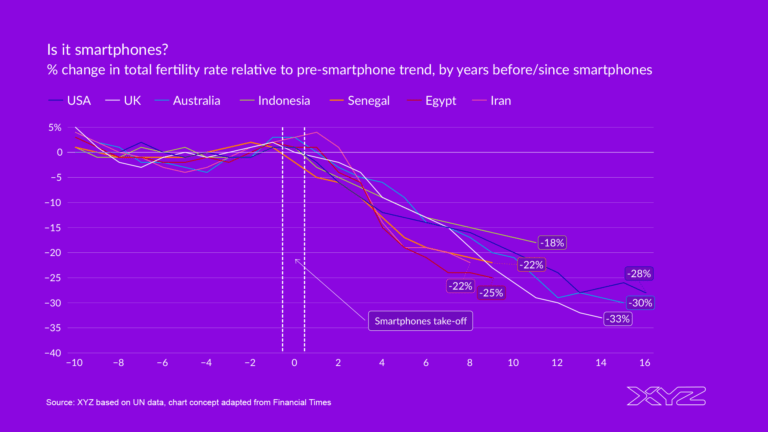
Are smartphones really responsible for the fertility crisis? A widely discussed article in the Financial Times suggests that fertility rates fell by as much as 30% after smartphones became widespread. A closer look at the data and methodology, however, shows that the actual effect is far smaller – and in some countries nonexistent.
The competitiveness of Poland’s economy periodically becomes a subject of public debate – usually in connection with the latest editions of international rankings or troubling macroeconomic data. Yet it is worth examining what competitiveness rankings actually measure, and what they are incapable of measuring.
Poland’s current level of spending on R&D is below the EU average. The experience of other countries suggests that the business ecosystem matters more than public spending alone. Here are eight charts illustrating expenditure on research and development.


 Marek Skawiński


 Michał Kulbacki