The Monetary Policy Council (RPP) has kept interest rates unchanged. The National Bank of Poland (NBP) argues that the current economic backdrop differs markedly from the pandemic-and-war period, limiting the risk of a renewed surge in price pressures. Even so, geopolitical factors linger in the background and could quickly alter the picture.
Introduced with twin ambitions, Poland’s 500/800 Plus program has delivered on social support but fallen short on demographics – raising questions about whether its current form is still fit for purpose.
Biedronka, Lidl and Dino are locked in an escalating battle for market share. As prices fall and stores multiply, profitability is coming under pressure.
A spike in oil prices has pushed Poland’s inflation higher. A new fuel price scheme aims to contain the damage – but hinges on forces beyond Warsaw’s control.
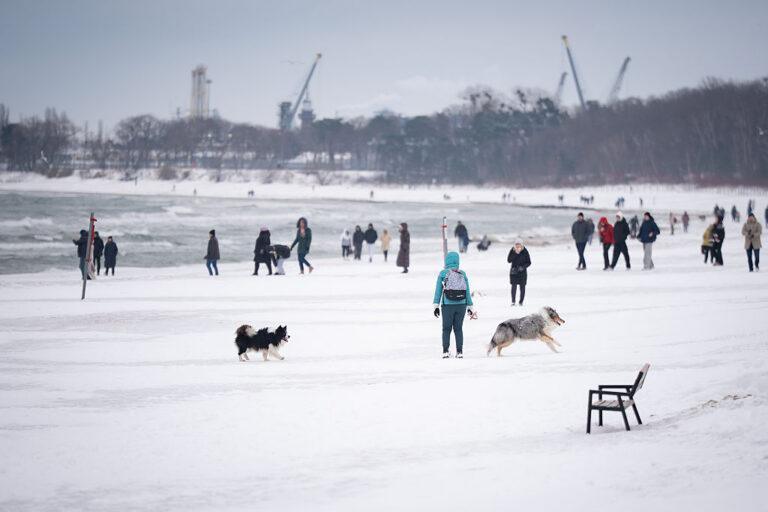
Retail sales in constant prices rose by 5% year on year in February, according to data from Statistics Poland. This is a fairly solid result, slightly better than in January, when growth reached 4.4% y/y. A closer look at the structure of growth, however, suggests that the figures are somewhat skewed by the coldest winter in 16 years.
The latest World Happiness Report shows that, in terms of life satisfaction, Poland has climbed to its highest position in history, surpassing countries such as the United Kingdom and Canada. This forms part of a broader trend in which Central and Eastern European countries are rapidly improving their position on the happiness ladder.
The economic conditions in which different generations come of age vary across countries and eras. The data suggest that Poles born in the mid-1990s hit a particularly favorable moment: a period of rapid economic growth that boosted their incomes as they entered adulthood. At the same time, they grew up amid high unemployment and the lingering costs of the post-communist transition. We compared their situation with that of their peers in other countries.
While 19 EU countries have embraced the SAFE program with minimal controversy, Poland has turned it into a political battleground. The country is set to receive the largest allocation – EUR 43.7bn – yet experts argue that, relative to GDP and on a per capita basis, Poland’s share is not exceptional.
In December 2025, Poland’s services output, adjusted for seasonal effects, rose by 9.9% year on year, according to data from Statistics Poland (GUS). This marks yet another strong performance in the services sector. The growth rate far outpaces that of manufacturing, where seasonally adjusted production increased by 4.7% y/y in December.
In February, the average gross wage in the corporate sector reached PLN 9,002.47 (EUR 1,900), according to the latest release from Statistics Poland (GUS). This represents a year-on-year increase of 6.3%, matching the nominal wage growth recorded last month, but marking a clear slowdown compared with December 2025, when wages rose by 8.6%. It is the slowest pace of wage growth in almost five years, dating back to early 2021.


 Michał Kulbacki

 Marek Skawiński
 Krzysztof Figlarz